
Notes
Biology B2
Content of the notes (1)
Page 1
Biology
Pyramid of Biomass
Biomass- the dry mass of an organism.
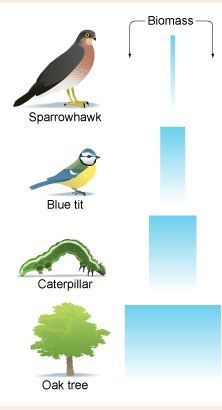
Pyramids of biomass reveal the mass of living material at each stage in a chain. The amount of material and energy decreases from one stage to the next. The arrows between each item in a food chain always point in the direction of energy flow - in other words, from the food to the feeder.
A pyramid of biomass is a chart, drawn to scale, showing the biomass at each stage in a food chain. The bars become narrower as you reach the top. This pyramid of biomass is for the food chain:
oak tree → caterpillar → blue tit → sparrowhawk
Note that you do not need to draw the organisms but you must draw your pyramid of biomass to scale. Each bar should be labelled with the name of the organism. In your examination, you will not be asked to draw a pyramid of numbers.
Classification
Classification is organising living organisms into groups.
These systems help us to understand how organisms are related (evolutionary relationships) and how they interact with each other (ecological relationships).
Natural classification systems are based on the evolutionary relationships and genetic similarities between organisms.
Artificial classification systems are based on appearance rather than genes. They're used to identify organisms.
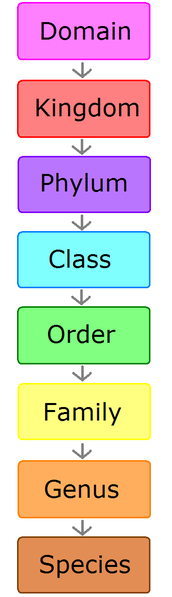
Genus- a group of closely-related species
Species- a group of organism that can interbreed to produce fertile offspring.
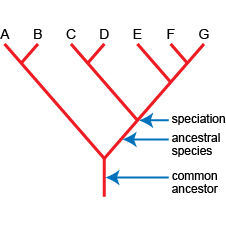
Evolutionary trees show:
How closely related different species are to each other
Common ancestors and relationships between species
The more recent the common ancestor, the more closely related the two species- and the more characteristics they're likely to share.
Ozone Pollution
The rapidly increasing population is putting pressure on the environment because more resources are being used up so more pollution is being produced.
Global Warming
Fossil fuels (coal, oil and natural gas) release lots of carbon dioxide when burned. Carbon dioxide is a greenhouse gas and they trap heat in the atmosphere which causes global temperature rise. This is global warming.
Scientists have predicted that if global temperature continues to go up, sea level will rise, weather systems will become less predictable and agricultural output will fall.
Ozone layer
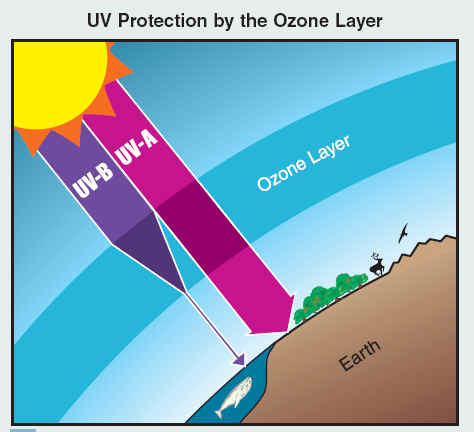
CFCs (Chlorofluorocarbons) used to be used in aerosols, fridges, air-conditioning units and polystyrene foam. They break down ozone in the upper atmosphere and this allows more harmful UV rays to reach the Earth's surface. Being exposed to UV waves means the risk of cancer will increase as well as killing plankton in the sea. This could cause a massive effect in the sea ecosystem as plankton are at the bottom of the food chain.
Competition
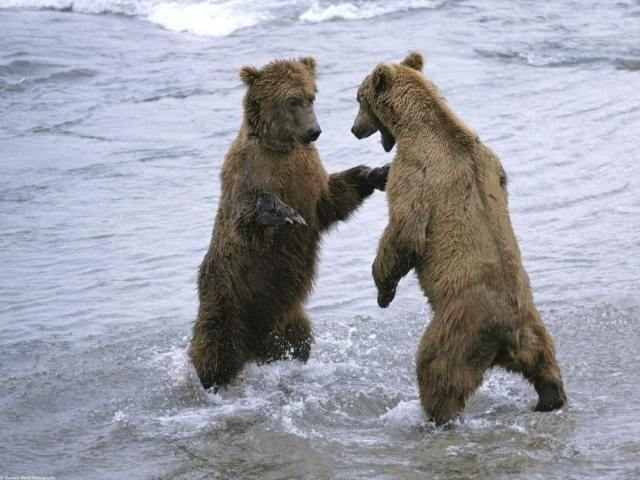
In order to survive and reproduce, organisms must compete against each other for the resources they need to live (eg food, shelter, mates). Similar organisms in the same habitat will be in the closest competition because they'll be competing for similar ecological niches. "A species' ecological 'niche' is how it fits into its ecosystem. It depends on things like where the individuals live and what they feed on."
Inter-specific competition- is where organisms compete for resources against individuals of ANOTHER species.
Intra-specific competition- is where organisms compete for resources against individuals of the SAME species.
Intra-specific competition often has a larger impact on organisms because the same species need exactly the same needs so they will have to compete for lots of resources.
Prey and predators
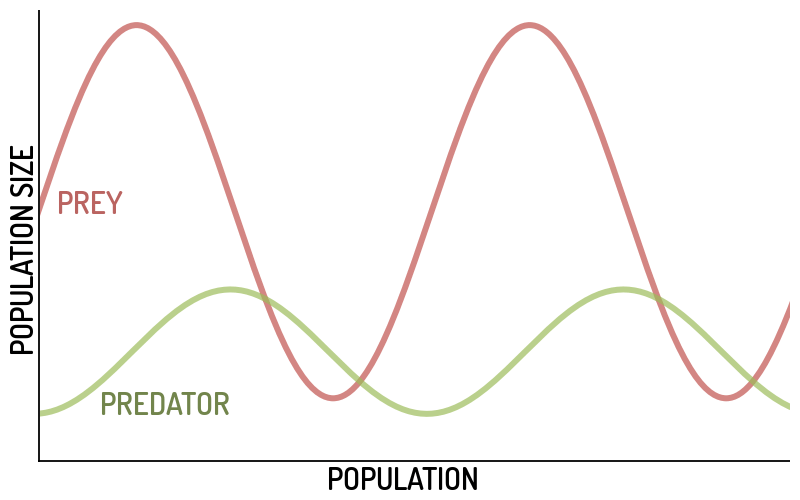
The population of any species is usually dependant on the amount of food available. If the population of prey increases so will the population of predators. But if the population of predators increases the number of prey will decrease.
Predator-prey cycles are always out of phase with each other because it takes a while for one population to respond to changes in the other population. For example if the number of rabbits increase, the number of foxes won't immediately because it takes time for them to reproduce.
Some of the resources that animals compete for:
food
water
space
Animals may also compete for mates so that they can reproduce.
Remember that plants make their own food using photosynthesis, so they do not compete for food. Here are some of the things that plants do compete for:
light
water
space
mineral salts
Human beings are very successful organisms. We compete with animals for food resources, and we compete with both animals and plants for space and water.
*Organisms that are adapted to their environment are better able to compete for resources.*
parasitic and Mutualistic relationships.
Some organisms depend entirely on other species to survive. So where an organism lives and its abundance (population size) is often influenced by the distribution and abundance of these species:
Parasites- live off a host. They take what they need to survive, without giving anything back. This often harms the host (which makes it a win-lose situation.)
Tapeworms absorb lots of nutrients from the host, causing them to suffer from malnutrition.
Fleas are parasites, dogs gain nothing from having fleas (unless you count hundreds of bites!)
Mutualism- is a relationship where both organisms benefit (a win-win relationship).
'Cleaner species' e.g. oxpeckers live on the backs of buffalo. Not only do they eat pests on the buffalo, like ticks, flies and maggots (providing the oxpecker with food), but they also alert the animal to any predators that are near by hissing.
Lots of plants are pollinated by insects, allowing them to reproduce. In return, the insects get a sip of sweet, sugary nectar.
Peas, beans and clover are leguminous plants. They have colonies of nitrogen-fixing bacteria in nodules attached to their roots. The plants gain nitrates from the bacteria, and the bacteria gain sugars from the plants. This is another example of mutualism.
Conservation
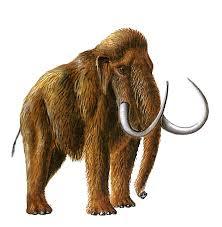
Individuals that are poorly adapted to their environment are less likely to survive and reproduce than those that are well adapted. Similarly, it's possible that a species that is poorly adapted to its environment will not survive and will become extinct.
If the following factors fall below critical level, species are at risk of extinction:
The number of habitats- it's hard for organisms to find resources like food and shelter if there aren't enough suitable habitats to support them.
The number of individuals- if there are only a few individual members of a species left, it'll be hard to find mates. It also means there won't be much genetic variation in the population.
Genetic variation- this is the number of different alleles (forms of a gene) in a population. If genetic variation is low, then a species is less likely to be able to adapt to changes in the environment or survive the appearance of a new disease.
Factors that can cause a species to become extinct include:
changes to the environment, such as a change in climate
destruction of habitats
hunting
pollution
competition from other species.
New Page
Information
- Description
- Biology Note on Biology B2, created by KatyWright on 01/10/2014.
- Created by
- KatyWright
- Views
- 17
- Rating