
Notes
Food - storage, structure and role
Content of the notes (1)
Page 1
Nutrition is the way in which an organism obtains its food
A nutrient is any substance that is important in sustaining life (the major nutrients are proteins, carbohydrates, lipids, vitamins, minerals, and water). They are chemical substances present in food that are use by organisms to maintain metabolism and the continuity of life.
Nutrients are used
as a source of energy
to make chemicals needed for cell or metabolic reactions
as the raw materials for the growth and repair of stuructures in an organism.
ELEMENTS
Common elements
Carbon
Hydrogen
Oxygen
Nitrogen
Phosphorous
Sulfur
Dissolved salts
Sodium
Magnesium
Chlorine
Potassium
Calcium
Trace elements
Iron
Copper
Zinc
*with the exception of C, H, O, the above elements are referred to as minerals
Compounds made from carbon are said to be organic compounds
Biomolecules / biochemicals are substances made by living things that have important metabolic roles. They are organic compounds that contain carbon, hydrogen, and other elements.
Carbohydrates
Lipids (fats and oils)
Proteins
Vitamins
ELEMENTS: C,H,O
FORMULA: Cx(H2O)y
(where x and y are the same number i.e. there is always twice as much hydrogen as oxygen in a carbohydrate e.g. C6H12O6 (glucose)
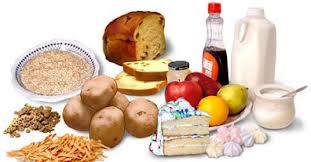
SOURCES: bread, rice, potatoes, pasta
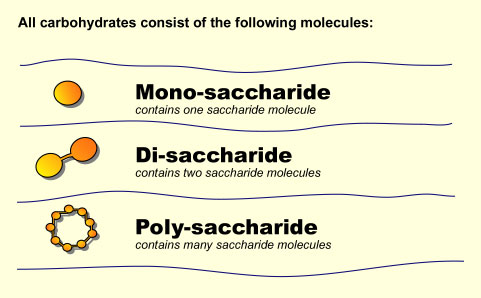
monosaccharides
disaccharides
polysaccharides
MONOSACCHARIDES
Single sugar units (ring of carbon atoms)
Sweet & soluble in water
Energy providers
5 carbon sugars- pentoses (e.g.ribose, deoxyribose)
6 carbon sugars - hexoses (e.g. glucose --> main molecule from which organisms get their energy - fruit,sweets), fructose (sweeter than glucose - fruit) and galactose.
DISACCHARIDES
Two monosaccharides joined together
Sweet & soluble in water
Energy providers
e.g. sucrose (table sugar - glucose + fructose)
maltose (found in germinating seeds - glucose + glucose)
lactose (found in milk - glucose + galactose)
POLYSACCHARIDES
Many monosaccharides linked together
Not sweet & insoluble in water
Food storage / structural support
e.g. starch (amylose)--> carbohydrate stored by plants
composed of branched and unbranched chains of glucose molecules
food storage in plants
easily digested (glucose molecules arranged in a line)
rice, potatoes, flour, bread, pasta
cellulose --> structural carbohydrate in plants (cell wall)
composed of long chains of glucose molecules bonded together
more cross bonding between chains than starch as it is not readily broken down it acts as a source of fibre in animal diets.
chitin --> strong polysaccharide in the exoskeleton of arthropods (crabs, beetles, lobsters, and the cell walls of fungi
offers structural support
glycogen--> polysaccharide stored by animals
many glucose molecules, more branched than starch
stored predominantly in muscle and liver cells
ELEMENTS: C,H,O
RATIO: No set ratio (very little oxygen)
e.g. C200H4O11
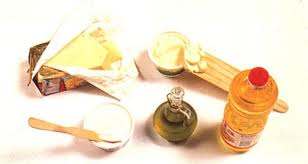
FAT: Lipids that are solid at room temperature (20 degrees)
OIL: Lipids that are liquid at room temperature (20 degrees)
Triglyceride: A lipid with 3 fatty acids linked to a glycerol, acts as the fat and oil energy reserves of plants and animals. (smallest lipid)
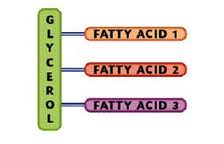
Phospholipid: Fat-like substances where one of the fatty acids is replaced by a phosphate group or has a phosphate group attached to it. (major component of cell membranes).
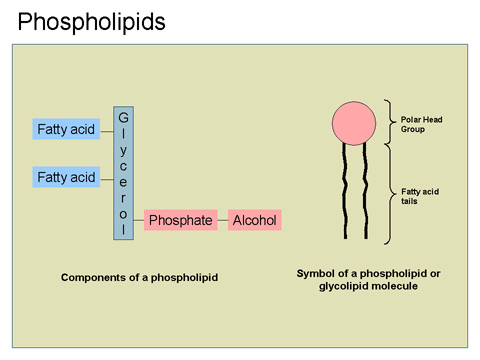
SOURCES: meat, milk, butter, chesse, plant oils, margarine.
STRUCTURAL ROLE
phospholipids --> cell membranes
under the skin --> heat insulation and energy store (adipose tissue)
protective layer around the internal organs e.g. kidneys
protective wax cuticle on the outside of plants e.g. holly
METABOLIC ROLE
energy storage --> contains more than 2x energy for the same mass of carbohydrate or protein.
energy source --> realeased during respiration
storage of fat soluble vitamins e.g. vitamin D
some lipids function as hormones e.g. oestrogen
ELEMENTS: C, H, O, N (P/S sometimes)
COMPOSED OF: Amino acids, linked in chains folds and branches. The bond between amino acids is called a peptide bond.
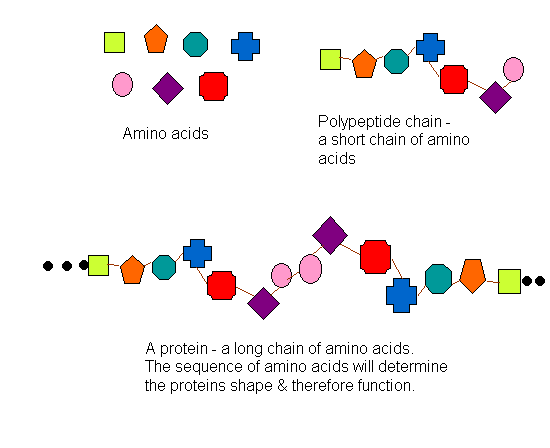
A peptide has a small number of amino acids
A polypeptide has more than 20 amino acids
A protein is a long polypeptide (at least 200 amino acids)
Each protein has a specific 3 dimensional, functional shape.
The
The arrangement and sequence of amino acids determines the type of protein produced.
Fibrous proteins
Long chains in parellel form (little/ no folding) strong and tough e.g. collagen, myosin, keratin.
Globular proteins
Tightly folded amino acid chains giving a spherical shape e.g. enzymes
Protein synthesis takes place within the ribosomes of the cell.
Structural role
Keratin --> protein found in hair, finger nails, toenails, and the outer dead layer of skin.
Myosin --> major protein involved in the contraction of skeletal and cardiac muscle.
Collagen --> Major protein in cnonective tissue (elasticity of skin).
Metabolic role
Many proteins function as enzymes (biological catalysts).
Many proteins act as hormones, they are chemical messengers in th blood that help regulate many metabolic activities.
Vitamins are organic compunds needed in small quantities in the diet to ensure a good standard of health. They are complex, carbon-based substances that the body cannot make.
VITAMIN C (WATER SOLUBLE --> ASCORBIC ACID)
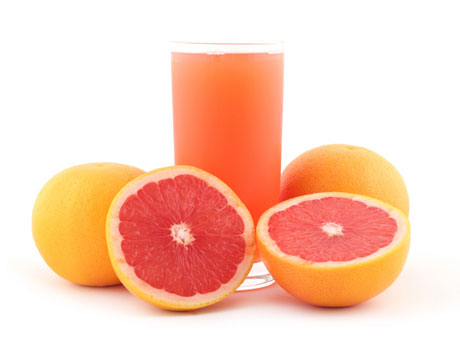
Common sources: vegetables, fruit (espcially citrus fruits such as ornages and lemons)
Required by the body to assist with the absorption of iron from the gut and also to maintain strong connective tissue and for the growth and maintenance of bones and teeth.
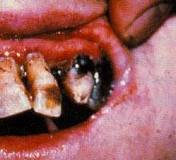
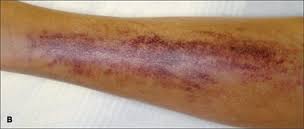
Deficiency of vitamin C can result in scurvy.
Symptoms of scurvy include: internal bleeding, easy bruising, bleeding gums, loose teeth, poor healing.
VITAMIN D (FAT SOLUBLE --> CALCIFEROL)
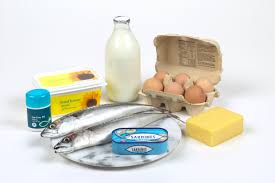
Good sources: milk, eggs, liver, fish liver oils, produced by the skin when exposed to U.V. light
Required by the body for the absorption of calcium and phosphorous from the gut and also to ensure healthy bone formation and maintenance.
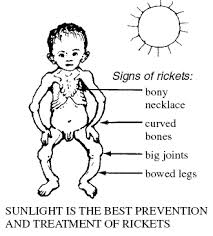
Deficiency of Vitamin D can result in a disease called rickets (in children) and osteomalacia (in adults)
Symptoms include: late teething and walking, deformed legs and arms, and weak bones.
ENERGY TRANSFER REACTIONS
All the reactions in an organism can be referred to as its matabolism. Metabolism can be divided into anabolism, and catabolism.
ANABOLISM
Smaller molecules are converted into larger ones (requires energy) e.g. protein synthesis/ photosynthesis
CATABOLISM
Complex molecules are broken down into simpler ones (release of energy) e.g. digestion/respiration.
Minerals are soluble inorganic salts that contain elements essential for a healthy metabolism. They are neeed in minute quantities by the body to maintain a healthy body.
Plants obtain their minerals by abosorbing them from soil water.
Animals obtain their minerals through their diet.
Plant mineral requirements
CALCIUM --> required for the formation of the middle lamella, located between the cells to 'glue' them together.
MAGNESIUM --> required for the production of chlorophyll
Animal mineral requirements
CALCIUM --> required for the healthy formation of teeth and bones.
IRON --> required for the formation of haemoglobin
WATER
Component of the cell's cytoplasm and also of the body's fluids.
Universal solvent --> an ideal transport medium for many soluble substances
Plays a role in a number of metabolic processes e.g. photosynthesis and respiration.
Enables dissolved substances to move through cell membranes.
Controls the shape of the cell, the red blood cells are biconcave in shape and as such is extremely efficient at carrying oxygen, its shape is determined by the correct level of water in the cell.
Good absorber of heat energy. A great deal of heat is required to increase temperature. As water is a temperature-stable medium it is ideally suited for metabolism and for homeostasis.
Participates in chemical reactions:
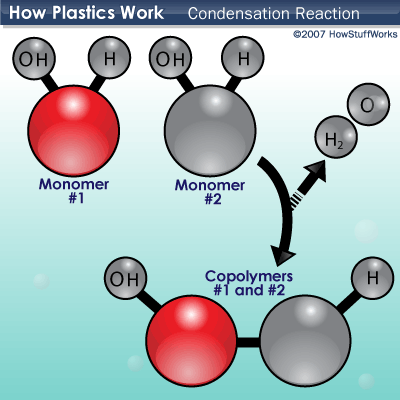
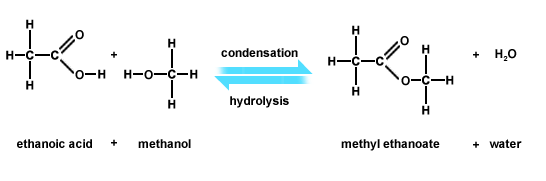
Condensation reactions: where smaller molecules join to form larger molecules with the loss of a water molecule
Hydrolysis reactions: where a molecule gains water and is broken down to form smaller molecules.
Photosynthesis: where water is borken down to supply hydrogens and electrons
Respiration: where water is formed as an end product.
http://www.youtube.com/watch?v=iJIUHJwkHMI (Embed)
http://www.youtube.com/watch?v=pxp_Ogf3xIo (Embed)
http://www.youtube.com/watch?v=ebaQkkw2DCs (Embed)
http://www.youtube.com/watch?v=6fhSGWdbm9g (Embed)
http://www.youtube.com/watch?v=xS8uUsxYo3g (Embed)
SOURCES
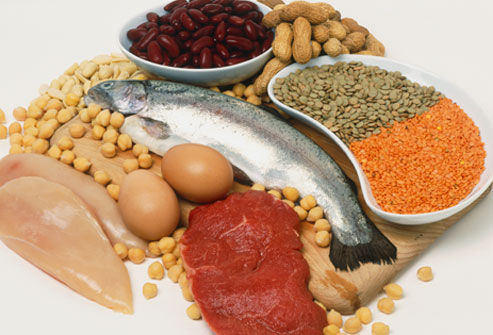
SOURCES: Meat, fish, eggs, nuts, peas & beans, milk
Food + Experiments
Carbohydrates
Lipids (Fats+oils)
Proteins
Vitamins, Minerals + Water
Information
- Description
- notes for leaving cert biology - food
- Created by
- Deleted user · Oct 2016
- Updated
- Dec 20, 2016
- Views
- 154
- Tags
- History
-
- Created by eimearkelly3 · Jun 26, 2013
- Copied by Adi Woolner · Oct 3, 2016
- Rating