
Notes
Evolution
Content of the notes (49)
Page 1
Diet and Exercise
Different amounts of Energy needed, based on metabolic rate
Balanced diet includes everything needed for a healthy body.
Energy taken in; Energy used; weight lost
Page 2
Weight problems
Starvation
underweight
deficiency disease (casued by lack of vitamins and minerals.)
fatigue
poor resistance
irregular periods
Obese
overweight
coronary heart disease
type 2 diabetes
high blood pressure
Page 3
Inheritance, exercise and health
Exercise
Regular exercise improves health as it increase metabolic rate and lowers cholesterol
Exercise increases amount of energy used by the body
decrease amount of stored fat
it also builds muscles and boosts metabolic rate
Inheritance
This effects the health factors, such as metabolic rate and cholesterol rate.
some people may inherit factors that effect their metabolic rate
some people may inherit factors that can effect their blood cholesterol
inherited factors that increase blood cholesterol levels can cause heart disease
Page 4
Pathogens,Microorganisms that cause disease
Pathogens and disease
reproduce rapidly, may produce toxins
viruses reproduce inside cells, damaging them
usually caused by bacteria and viruses
Page 5
Bacteria- cells
bacteria are very small cells
which reproduce inside your body
they make u feel ill by
damaging cells and producing toxins
Page 6
Viruses- not cells
viruses are not cells
they replicate themselves by invading your cells
and using machines to create copies
this will cause you cells to burst
releasing new viruses
the damaged cells make you ill
Page 7
Defense system
skin,hair and mucus stop a lot of viruses getting inside your body
and try to prevent microorganisms getting in to the body through cuts
small fragments of cells called platelets help clot blood quickly
if something does make it through you immune system kicks in
white blood cells travel in your blood and crawl into every part of you
when they come invading microbes they have 3 lines of attack:
consuming them white blood cells digest them
producing antibodies to kill invading cells, they are produced rapidly to kill viruses and bacteria
producing antitoxins which counteract toxins produced by the invading bacteria.
Page 8
Semmelweis
discovers how disease is passed from person to person
introduces hand washing in hospitals
called antiseptic which kills bacteria on the doctors hands
Page 9
Using drugs to treat disease
antibiotics cure bacterial diseases by killing bacteria
medicines such as painkiller relief symptoms, but don't kill pathogens
viruses are hard to destroy because they reproduce inside cells so there is a risk of damaging cells
antibiotics can kill bacteria but can't kill viruses
Page 10
Growing and investigating bacteria
Bacteria can be grown on agar jelly
All materials used must be sterilized
prevents unwanted microorganisms contaminating the culture
Uncontaminated cultures can be used for investigations of antibiotics and disinfectants
Page 11
Changing pathogens
bacteria can develop resistance to antibiotics through natural selection
new strains can cause epidemics or pendemics
epidemics- spread of disease in a country
pendemics- spread of a disease internationally
pathogens can change causing mutations
these can spread rapidly due to lack of immunity to new strains
strain- genetic variant microorganism
Page 12
Immunity/diseases
vaccines immunize against disease
vaccination works on both bacteria and viruses
vaccines contain dead or inactive pathogens
this encourages white blood cells to produce and remember the antibodies to destroy the pathogens
here immunization , vaccinating large numbers protects society from the risk of disease
Page 13
Natural selection
natural selections means the fittest organisms survive to breed
if a gene mutates the new characteristics may allow an organism to survive better
Page 14
Ecological & Evolutionary
comparing similarities and differences allow classifications of organisms to survive better
classification allows a evaluation of evolutionary relationships
Ecological
species with similar characteristics have similar genes because they share a recent common ancestor, so they're closely related. They often look alike and tend to live in similar types of habitats e.g whales and dolphins
occasionally, genetically different species might look alike too. E.g dolphins and sharks look pretty similar because they've both adapted to living in the same habitat. They have evolved from different ancestors
evolutionary trees show common ancestor and relationships between organisms. The more recent the common ancestor, the more closely related the two species.
Evolutionary
if we see organisms in the same environment with similar characteristics it suggests they might be in competition. E.g for the same food source
differences between organisms in the same environment. E.g dolphins swim in small groups, but herring swim in giant shoals
Page 15
Theories of evolution
Charles Darwin
Charles theory was only just accepted
his theory works like this
individuals within species show variation because of the differences in their genes e.g. some rabbits have big ears and some have small ones.
individuals with characteristics that bake them better adapted to the environment have a better chance of survival and so are more likely to breed successfully e.g big eared rabbits are more likely to hear a fox sneaking up on them, and so are more likely to live and have millions of babies small eared rabbits are more likely to end up as fox food
so, the genes that are responsible for the useful characteristics are more likely to be passed on to the next generation e.g all the baby rabbits are born with big ears.
his idea was against religious beliefs about how life on earth developed
Darwin couldn't give an explanation for why these useful characteristics appeared or how individual organisms passed on their beneficial characteristics to their offspring.
there wasn't enough evidence to convince many scientists because changes of organisms were not taught this topic
Lamarck
Lamarck argued that if a characteristic was used a lot by an organism then it would become more developed during its lifetime. e.g if a rabbit used its legs to run a lot to escape predators then its legs would get longer
he also believed that these acquired characteristics would be passed down on to the next generation e.g the rabbits's offspring would have longer legs.
his hypothesis was rejected because experiments didn't support his hypothesis however the discovery of genetics supported Darwin's idea because it provided an explanation of how organisms born with beneficial characteristics can pass them on.
Page 16
Mutations
a mutation is a change in an organisms DNA
most of the time mutations have no effect, but they do have benefits when producing useful characteristics
which will give the organism a better chance of surviving and reproducing
it is likely to be passed on to future generations by natural selection
the mutation will increase e.g some species of bacteria have become resistant to antibiotics due to a mutation
Page 17
Cloning
animals can be cloned by putting a nucleus in an empty egg and placed in a surrogate mother
a tissue culture could be made by taking some cells form the plant an growing them in special conditions
plant cloning can be made quickly and easily by taking cutting from good parent plants and plant them to produce genetically identical copies of the parent plant
the study of animal clones could lead to a greater understanding of the embryo and if aging and age related disorders
cloning could be use to help endangered species
also cloned animals may not be as healthy as normal ones e.g dolly the sheep
Page 18
Adult cell cloning
the nucleus which has a complete set of chromosomes of a cell is placed into and empty egg cell which is stimulated by an electric shock which make sit divide, and transplanted in to a host mother, creating a clone
scientist have used adult cell cloning to clone animals such as dolly the sheep
Page 19
Genetic engineering
enzymes are used to cut a gene from a chromosome and is inserted in another
genetic engineering transfers a gene for one organism to another to give a desired characteristic
the same method can be used to transfer useful genes into animals and plants, at an early stage of development
Genetically modified crops have had their genes modified e.g to make them resist viruses, insects or herbicides ( chemical used to kill weeds)
sheep have been genetically engineered to produce substances, like drugs in their milk that can treat human disease
genetic disorders like cystic fibrosis are caused by faulty genes this is being treated by gene therapy
Pros and cons of GM
Con's
the affect of GM can affect the number of weeds and flowers ( so the population of insects ) that live in crops. reducing farmland diversity
a lot of people think that GM crops are not safe also that this could develop allergies to the food
transplanted genes could get into the environment e.g herbicide resistance gene may be picked up by weeds, creating a new super weed
Pro's
GM crops can increase the yield of crop, making more food,
people living in developing nations often lack nutrients in their diets e.g golden rice is being tested which contains beta-carotene a lack of this can cause blindness
GM crops are being grown elsewhere ( not in the UK) without any problems
Page 20
Advantages of making choices about technology
produces medical drugs
crops are resistant to herbicides and insects
may provide cures for genetic disorders
Disadvantages of making choices about technology
"playing" God
could reduce or contaminate the gene pool
long term affects of eating GM crops aren't known
Page 21
Genetic and environmental differences
clones may have differences due to environmental causes
difference within species can be because of genetic factors due to differences in the genes they have they have inherited, and environmental factors such as diet and exercise
Page 22
Types of reproduction
sexual reproduction involves the joining of gametes from two parents leading to a variety of offspring's
clones- genetically identical copies of one parent
clones are produces during asexual reproduction, where no gametes join
Sexual reproduction
this where genetic information from two organisms is combined to produce offspring which are genetically different to either parent
the mother and father produce gametes e.g egg and sperm cells and animals
in humans , each gametes contain 23 chromosomes.
the egg and sperm then fuse together ( fertilization ) to form a cell with the full number of chromosome ( half from mother , half from father )
this is why the offspring inherits from both parents its received a mixture of chromosomes and its the chromosomes that decide how you turn out
this mixture of genetic material produces variation in the offspring.
Asexual reproduction
an ordinary cell can make a new cell by diving in 2.
the new cell has the exact same genetic information ( i.e genes ) as the parent cell
is asexual reproduction there is only one parent
there is no fusion of gametes
no mixing of chromosomes and no genetic variation between parent and offspring
the offspring are genetically identical to the parent, they are clones
describe how they work:
x-shaped chromosomes have two identical halves
so, each chromosomes splits down the middle
to form two identical sets of half chromosomes (i.e two sets of DNA strands) a membrane forms around each set
the DNA replicates itself to form two identical cells with complete sets of x-shaped chromosomes
Page 23
Inheritance
genes control characteristics of your body
genes are passed in gametes form parents to offspring
offspring have similar characteristics to their parents
Page 24
Genes, Chromosomes and DNA
most cells in you body have a nucleus. The nucleus contains your genetic material in the form of chromosome
the human cell nucleus contains 23 pairs of chromosomes. There are two No. 19 chromosomes, two No. 12's, two No. 3's etc
chromosomes carry genes. Different genes control the development of different characteristics. e.g hair color
a gene is a short length of the chromosome which is quite a long length of DNA
the DNA is coiled up to form the arms of chromosomes
Page 25
Carbon cycle
the carbon cycle is powered by photosynthesis. Co2 is removed from the atmosphere by green plants and algae, and the carbon is used to make carbohydrates, fats and proteins in the plants and algae
some of the carbon is returned to the atmosphere as Co2 when the plants and algae respire. Some of the carbon becomes part of the fats and proteins in animals when the plants and algae are eaten. The carbon then moves through the food chain
some of the carbon is returned to the atmosphere as Co2 when the animals respire
when plants, algae and animals die, other plants ( detritus feeders ) and microorganisms feed on their remains. When these organisms respire, Co2 is returned to the atmosphere.
animals produce waste, and this too is broken down by detritus feeders and microorganisms. Compounds in the waste are taken up from the soil by plants as nutrients - they're put back in the food chain again.
some useful plants and animal products, e.g wood and fossil fuels, are burnt by combustion. This also releases Co2 back into the air.
so the carbon is constantly being cycled - from the air, through food chains and eventually back out into the air again.
Page 26
Decay processes
organisms take nutrients from the environment which are returned when they die
decay is started by detritus feeders who produce waste material that are then eaten by microorganisms called decay organisms
decay happens quicker in warm, moist aerobic conditions
Page 27
Energy transfers
less energy is available at each stage of the food chain as it is lost through movement, waste and into the surroundings
the rest is used for growth
Page 28
Pyramids of biomass
biomass at each stage of the food chain is less that the previous stage
biomass- amount of dry living mass in an organism
main source of energy for organisms is the suns radiation
green plants turn the light energy to chemical energy during photosynthesis
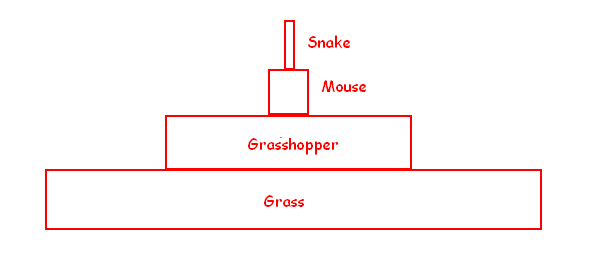
each bar on a pyramid of biomass shows the mass of living material at that stage of the food chain- How much all the organisms would weigh at each level if you put them all together.
so the one for fox above would have a big biomass and the hundreds of fleas would have a very small biomass. Biomass pyramids are practically always pyramid shaped
Constructing pyramid of biomass
the bar along the bottom of the pyramid always represents the producer i.e plant
the next bar will be the primary consumer ( the animal that eats the plant )
then the secondary consumer ( the animal that eats the primary consumer )
and so on up the food chain
Interpreting pyramid of biomass
you should be aware that the grass is older than the grass hopper
so thousands of grasshoppers are feeding on the grass
and quite a lot of mice are eating the grasshoppers
and a few snakes are eating the mice
biomass and energy are still decreasing as you go up the levels
Page 29
Recycle and organic waste
recycling waste reducing landfills and methane
and recycles nutrients in the waste
Page 30
Adaptation in animals
adaptations help and animal survive
animals in cold climates are usually large with a small surface area;
volume ratio, and vice versa for hot climates
coat color may provide year round camoflage
Page 31
Adapt and survive
some microorganisms are adapted to live in the most extreme environments
organisms get necessary material for survival form their surroundings and other organisms
organisms are adapted to survive in the condition they normally live
Page 32
Adaptations in plants
plants lose water vapor from stomata on the leaf's surface
to conserve water plants reduce the surface area of leaves, store water have extensive root systems.
Page 33
Competition in animals
animals compete for ; food, water and mates
the best adapted animals are good competitors
Competition in plants
plants complete for; water, light, space and nutrient and mineral ions from the soil
Page 34
Measuring environmental change
environmental changes the distributions of organisms
changes can be caused by living factors, arrival of a new predator or disease, or non-living factors, temperature and rainfall
environmental changes can be measured with non-living indicators such as thermometers and rain gauges
organisms, indicator species, can be used to disclose pollution levels
Page 35
Impact of change
distribution of organisms can be affected by living and non-living factors
data on the effect of environmental change isn't always easy to interpret
Page 36
Drugs
both legal and illegal drugs may harm your body
drugs- a chemical that affects your behavior or thoughts
chemicals in cannabis may cause mental illness in some people
cocaine and heroine is very addictive, and you may suffer from withdrawal symptoms when trying to stop taking them
Page 37
Legal and illegal drugs
medicinal drugs used to control disease and can only be prescribed by a doctor
recreational drugs- used only for pressure and affect the brain and nervous system
recreational drugs can be legal like caffeine or alcohol or illegal like cannabis or heroin
impact of legal drugs is greater than illegal as they are more readily available
Page 38
Does cannabis lead to hard drugs?
obtaining cannabis from dealers may put people in contact with harder drugs
chemicals in cannabis can cause mental illness particularly in teenagers
Page 39
Drugs in sport
some athletes use illegal performance enhancing drugs such as steroids to give them an unfair advantage in competition
moat would consider this unethical
Page 40
Developing new medicines
placebo- don't contain a drug, are used to see if drugs do have an effect
double blind trials- neither doctor nor patient knows which is the drug and which is the placebo, to remove bias
drugs are tested in labs, on animals and in clinical trial on healthy and ill patients
thalidomide, a sleeping pill, was found to cure morning sickness but caused birth defects so now treats leprosy
Page 41
How effective are medicines?
statins lower cholesterol levels and have lowered heart disease by 40%
double blind trials should be used to test non prescribed medicines to remove bias
Page 42
Responding to change
nervous system allows reaction to surroundings
receptors in sense organs detect external stimuli
impulse sent along sensory neurone to the brain
brain coordinates response, which is sent down to the motor neurone
effector then responds
Page 43
Reflex actions
reflex actions are automatic responses to a stimulus and usually keeps us out of danger
between neurons there are synapses that use chemicals to pass the impulse over the gap
reflex arc is similar to normal response, but instead of going to the brain, the impulse is processed by a relay neurone in the spinal chord
Page 44
Hormones and the menstrual cycle
oestrogen- produced by the ovaries and it inhabits the production of FSH to stimulate the production of LH and the womb lining
lutenising hormone (LH)- made in the pituitary gland and it stimulates the release of the matured egg
follcile stimulating hormone (FSH)- made in the pituitary gland and causes and egg to mature and stimulates the production of oestrogen
menstrual cycle lasts 28 days with ovulation at 14 days
Nerves:
very fast action
act for short time
act on a very precise area
Hormones:
slower action
act for a long time
act in a more general way
Page 45
Artificial control of fertility
the contraceptive pill may contain oestrogen and progesterone to inhibit FSH
FSH can be given to help an infertile woman produce eggs
Fertility treatments
Advantages
reduces family size
women can plan pregnancies
couples that couldn't have children before can now
Disadvantages
pill can cause effects
IVF is expensive
embryos maybe destroyed
ethical and religious implications
Page 46
Controlling condition
internal conditions of the body must stay constant
controlled by the nervous system and hormones
water, ion content temperature and blood sugar levels are controlled
Page 47
Hormones and the control of plant growth
plants respond to light, phototropism, gravity, geotropism and moisture, hydrotropism
auxin is the plant hormone that controls light and gravity
in a root the auxin gathers on the underside, and makes the plant where there is less auxin to grow more, bending the root towards the ground
in a shoot auxin gathers on the underside and makes the part where there is more auxin to grow, bending the shoot away from the ground
Page 48
Using hormones
misuse of plant hormones could affect the environment
can have side affects
Page 49
Menstrual cycle
when the bleeding starts- the uterus lining breaks down for about four days
the lining of the uterus builds up again- from day 4 to day 14, into a thick spongy layer of blood vessels are ready to receive fertilized egg
an egg released from the ovary at day day 14
the wall is then maintained for about 14 days until day 28 if no fertilized egg has landed on the uterus wall by day 28, the lining starts to break down and the whole cycle starts again
Information
- Description
- Note on Evolution, created by menah saddique on 17/10/2016.
- Created by
- menah saddique · Oct 2016
- Updated
- Oct 31, 2016
- Views
- 33
- Rating