
Tissue
Slides in this set (7)
-
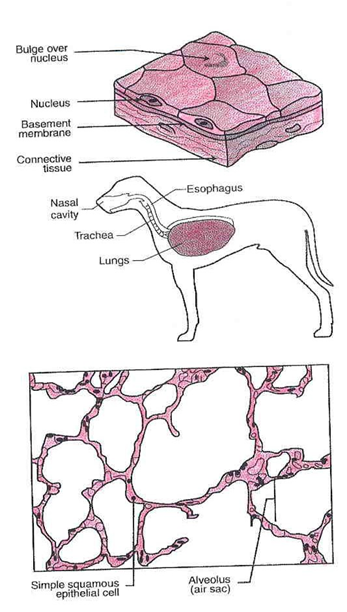
- Description: A single layer of flattened, hexagonal-shaped cells. The nuclei are disk shaped and centrally located. They often appear as raised bumps in the centre of the flattened cell, giving cells a ‘fried-egg’ appearance.
- Location: Alveoli of lungs (simple squamous cells make up the walls of air sacs in lungs), lining in blood and lymphatic vessels, lining in heart and major body cavities, filtration units (glomeruli) in kidney.
- Function: In regions of the body where protection is not important, simple squamous epithelium allows diffusion, filtration, secretion and absorption.
-
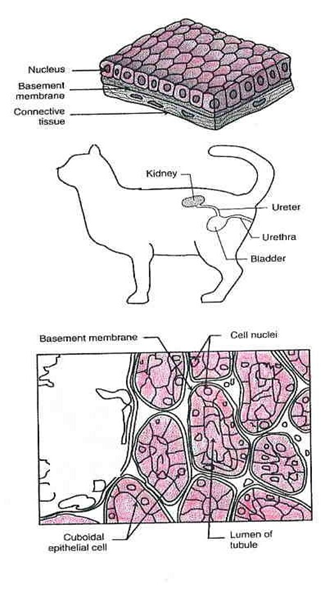
- Description: A single row of tightly packed, cube-like cells, each of which contains a round, centrally located nucleus.
- Location: Tubules of the kidney, terminal bronchioles in the lungs, choroid plexus of the brain, glands and their ducts, surface of ovaries.
- Function: Cells in kidney are engaged in absorption and secretion; cells in bronchioles are ciliated and assist with movement of particles away from lungs. Cells in choroid plexus and in glands secrete substances.
-
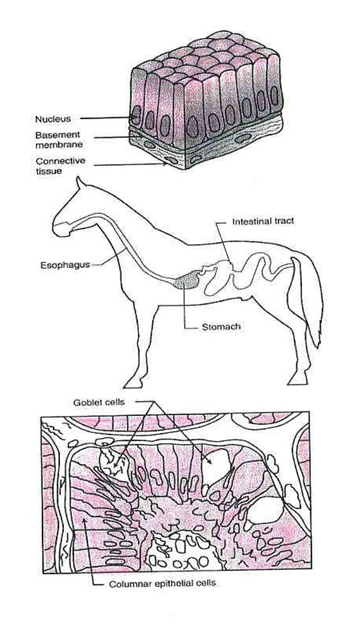
- Description: A single row of tall, slender cells with oval nuclei. Nuclei are generally located near basal border. Surface may or may not be ciliated. Goblet cells can be seen interspersed among cells.
- Location: Non-ciliated variety lines the digestive tract from stomach to rectum, gall bladder, and excretory ducts of some glands; ciliated cells are found in uterine tubes, uterus, and small bronchi of lungs.
- Function: Absorption in intestine and secretion in stomach, glands and intestines. Ciliated cells assist with movement of particles out of lungs and with movement of an egg through uterine horns.
-
Stratified Squamous Epithelium
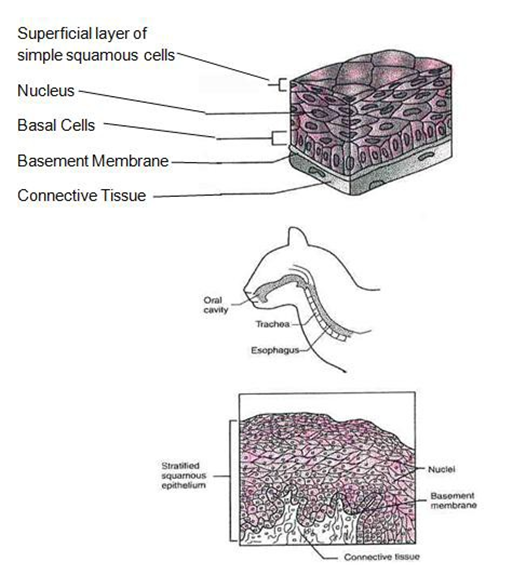
- Description: A multilayered tissue in which cells along basement membrane are metabolically active and dividing. These basal cells are cuboidal or columnar, and as they mature they are pushed to the surface, lose their organelles and flatten into thin flakes. In skin maturing cells fill with keratin.
- Location: Lining of mouth, oesophagus and vagina. Keratinised cells are found in the epidermis.
- Function: In areas that are prone to abrasion, stratified squamous protects underlying tissues.
-
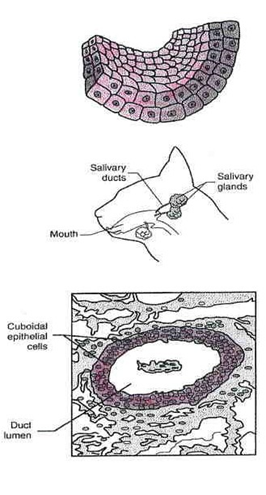
Stratified Cuboidal Epithelium
- Description: Generally, two layers of cuboidal cells.
- Location: Duct of mammary glands, sweat glands and salivary glands
- Function: Secretion, absorption and secretion
-
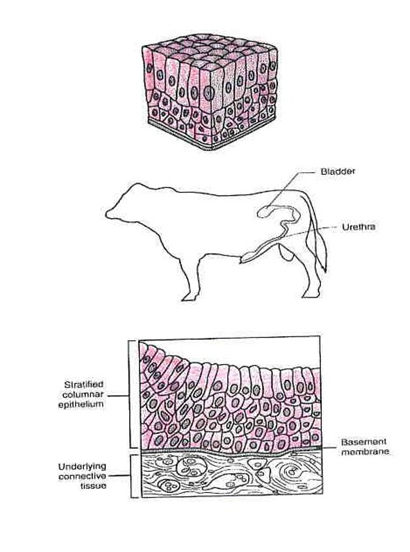
Stratified Columnar Epithelium
- Description: Several layers of cells in which basal cells are cuboidal and superficial cells are columnar.
- Location: Large ducts of mammary gland and in small portion of urethra of some male animals. This type of epithelium is rare.
- Function: Secretion and protection.
-
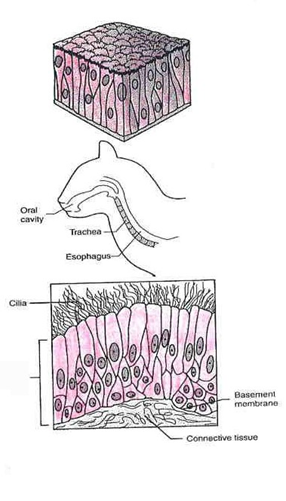
- Description: Pseudo stratified epithelium appears stratified but is not. Each cell is attached to basement membrane, but not all of them reach luminal surface. Cells vary in shape in height. Their nuclei occur at different distances from basement membrane. Cells are generally ciliated and are often associated with goblet cells.
- Location: Respiratory tract, including nasal cavity, larynx, pharynx, trachea and bronchi.
- Function: Surface layer of mucus traps particles which are moved away from the lungs by beating cilia.
Information
- Description
- Different tissues
- Created by
- Alison Rae · Oct 2020
- Updated
- Oct 9, 2020
- Views
- 1
- Tags
- Rating