
Flashcards
NY PS/ES regents example questions (geologic ages)
Cards in this deck (7)
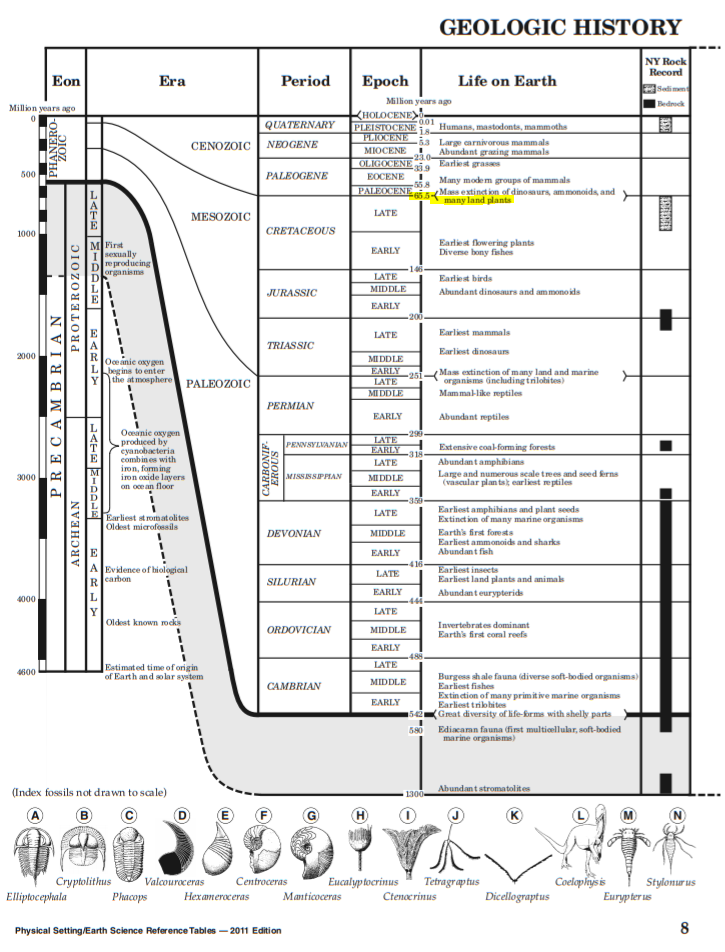
- 1Geologic history is divided into eras, periods, and epochs based on the: (1) type of rock deposited at different times throughout history (2) half-life of radioactive isotopes found in rocks (3) inferred movements of Earth’s landmasses (4) fossil evidence found in bedrock(4) fossil evidence found in bedrock
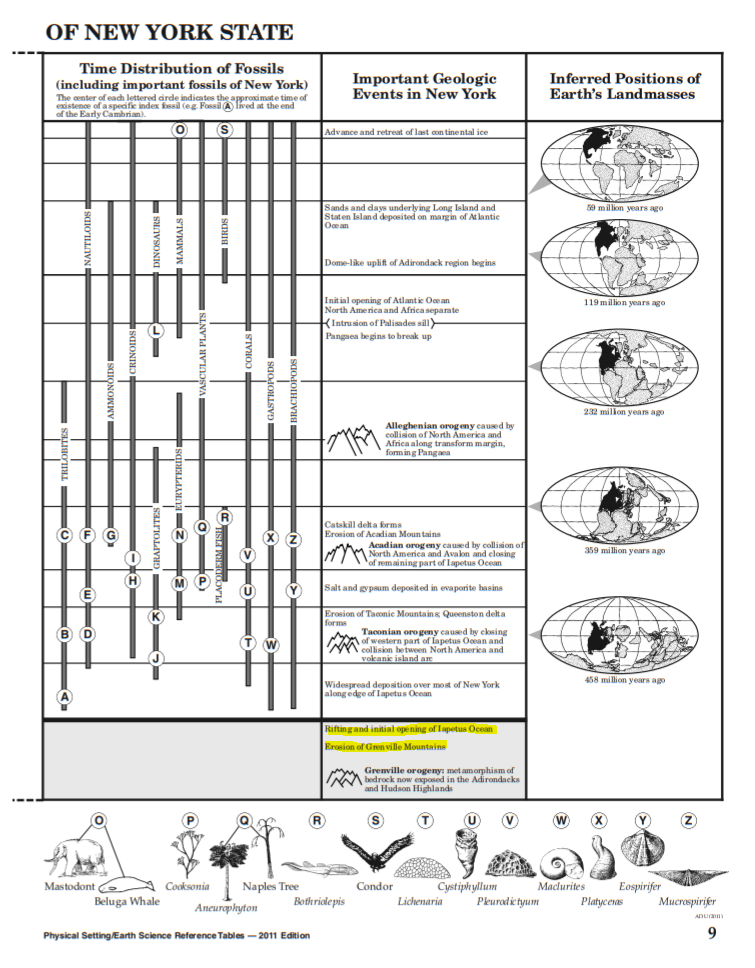
remember that the main differences between the eras, periods, epochs, etc. are the types of organisms that were alive. Scientists know this because of fossils they have found - 2Which important geologic event in New York State occurred just after the Grenville Mountains were starting to erode? (1) Pangaea began to break up. (2) The Iapetus Ocean began to open. (3) The Catskill Delta formed. (4) The Taconic Mountains were eroded.(2) The Iapetus Ocean began to open.
Look at the bottom of page 9 to find these events. - 3Scientists infer that oxygen first began to enter Earth’s atmosphere after the appearance of: (1) the earliest grasses (2) the earliest flowering plants (3) coal-forming forests (4) oceanic cyanobacteria(4) oceanic cyanobacteria
This bacteria uses photosynthesis and released oxygen into the atmosphere. There needed to be oxygen already in the atmosphere before bigger, more complicated organisms like grass, flowers, and trees could evolve. - 4—(3) many land plants
look at the 65.5 million year mark on page 8 to find this info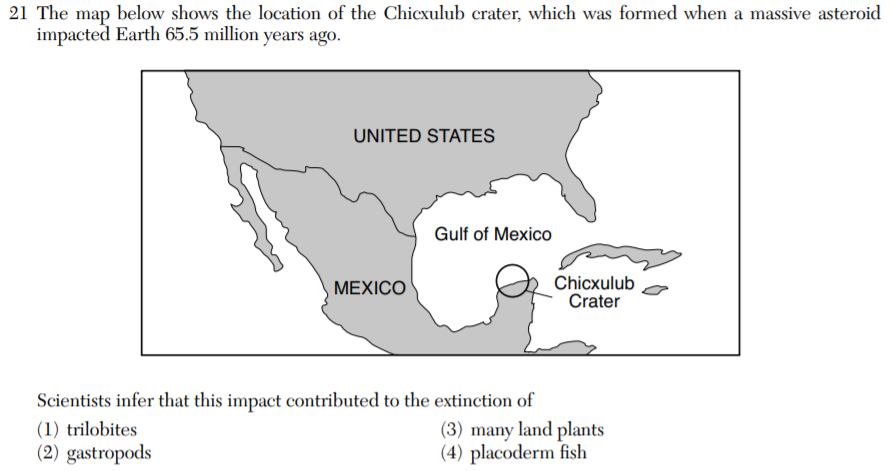
- 5These rock layers indicate evidence of past crustal movement based on the principle of: (1) down-warping (2) crosscutting (3) original horizontality (4) contact metamorphism(3) original horizontality
This principal means that sedimentary layers are originally horizontal when they are deposited. Therefor, the tilt in these layers gives us a hint that these rocks have moved some since they were formed.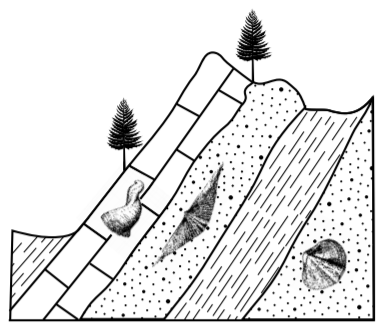
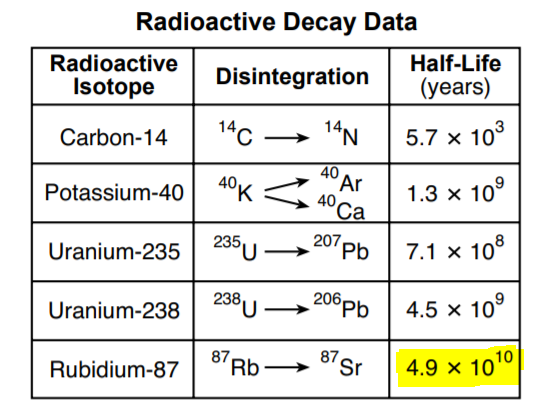
- 6Which radioactive isotope takes the greatest amount of time to disintegrate? (1) potassium-40 (3) uranium-238 (2) uranium-235 (4) rubidium-87(4) rubidium-87
Rubidium has the largest half-life on this chart. So it will take the longest.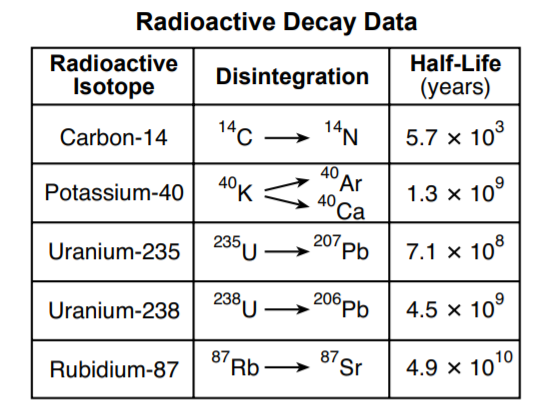
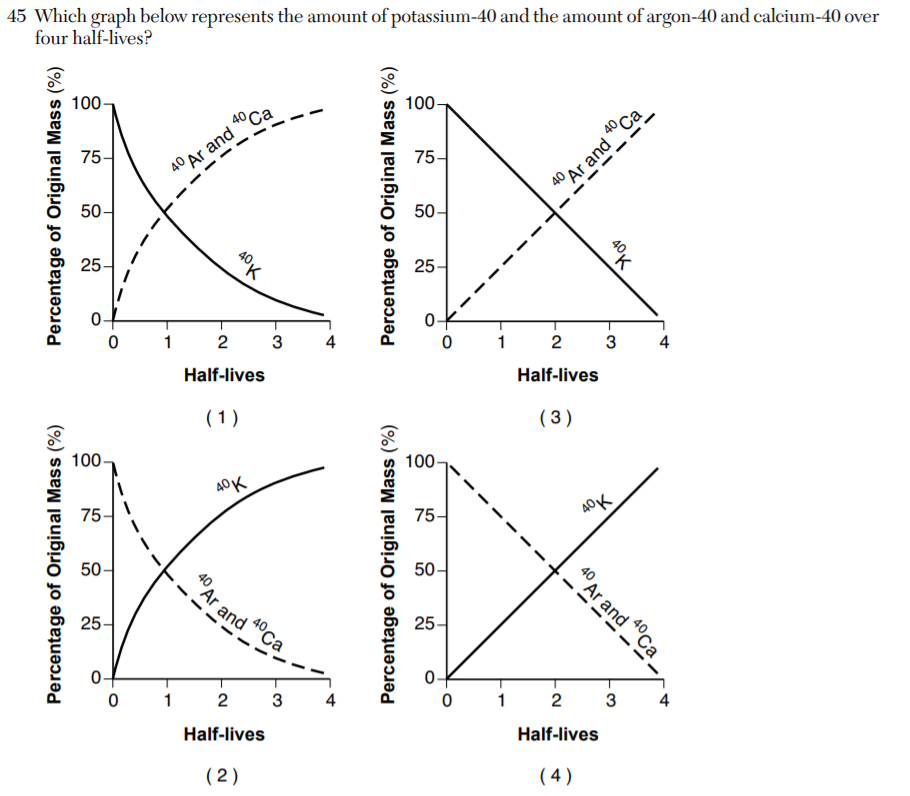
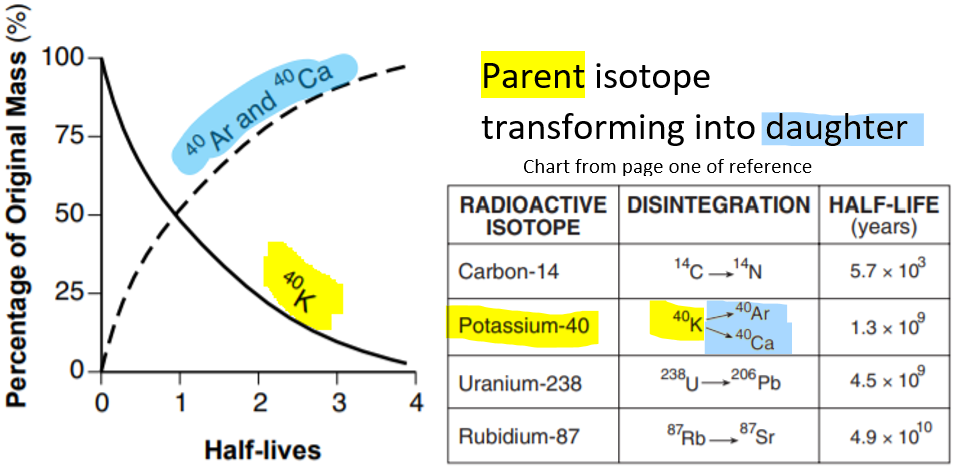
- 7Which graph below represents the amount of potassium-40 and the amount of argon-40 and calcium-40 over four half-lives?
Information
- Description
- Example questions from previous regents exams that have to do with geologic ages, events, and fossils. It may be helpful to use the reference chart while looking at these flashcards just like you would during the exam. Here is the reference chart I used: http://www.p12.nysed.gov/assessment/reftable/earthscience-rt/esrt2011-engrp2.pdf
- Created by
- Alex L
- Views
- 7
- Rating