
Adjectives mind maps
1,756 mind maps by 1,581 users · Page 1 of 44
This Adjectives page on GoConqr gathers mind maps on comparisons, adjective order and -ed and -ing forms. School students can use them to practise these topics, while teachers can find material for lessons and revision. There are over 1,500 mind maps by more than 1,400 users, mostly for secondary-level study; pick a map to explore.
Select topic
- Types of adjectives79
- Descriptive adjectives55
- Adjectives to describe people and feelings97
- Adjective synonyms and antonyms56
- Adjective order and position95
- Adjective suffixes7
- -ed and -ing adjectives114
- Gradable and extreme adjectives61
- Adjectives and prepositions28
- Adjectives and adverbs35
- Comparatives and superlatives836
- Comparative adjectives386
- Superlative adjectives371
Mind maps
-
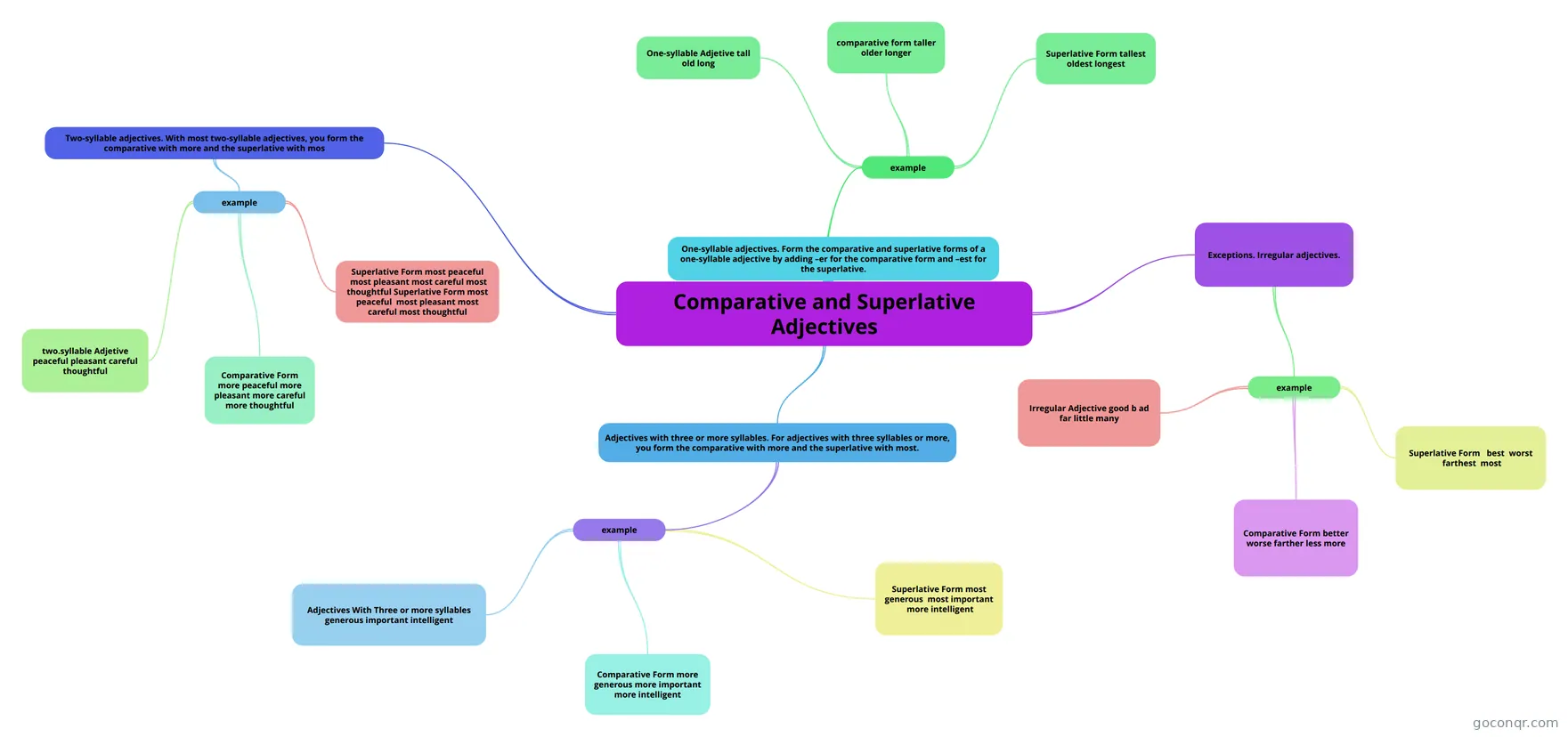 Comparative and Superlative Adjectives
-
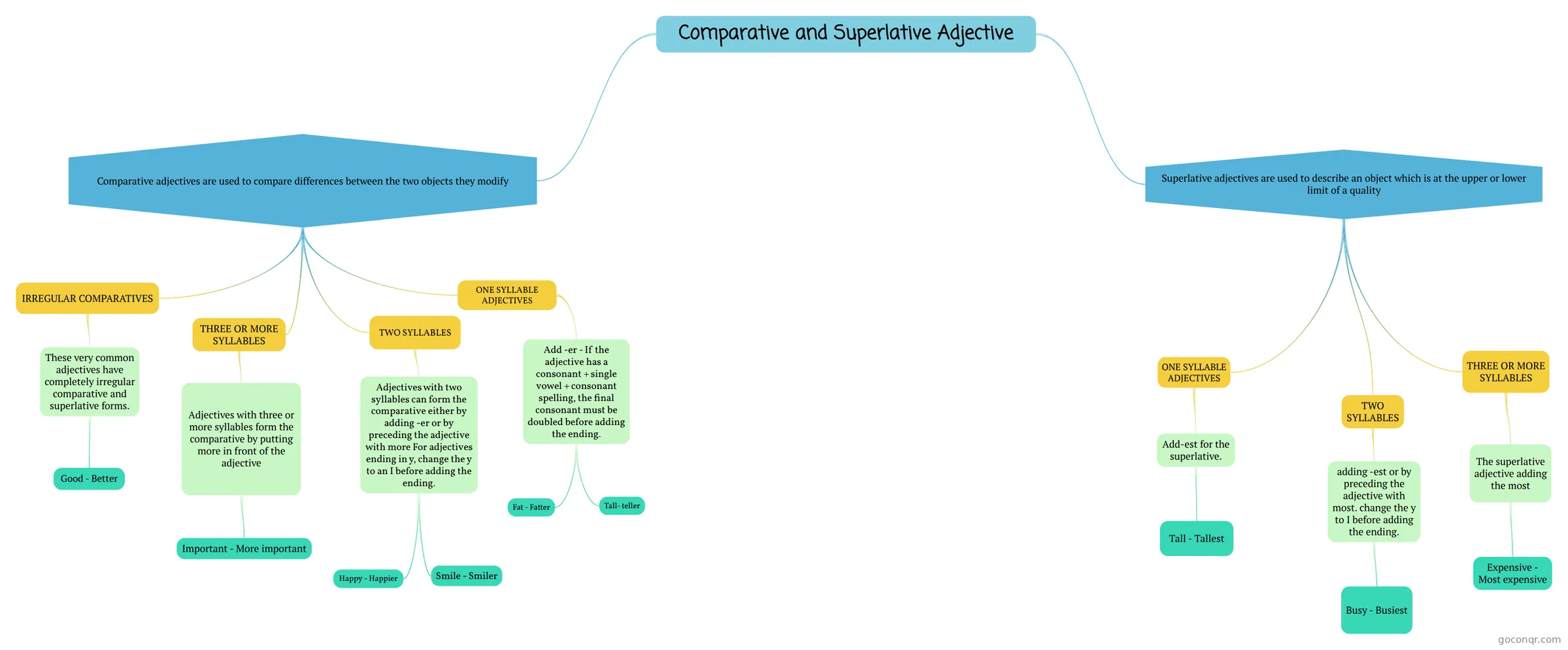 Comparative and Superlative Adjective
-
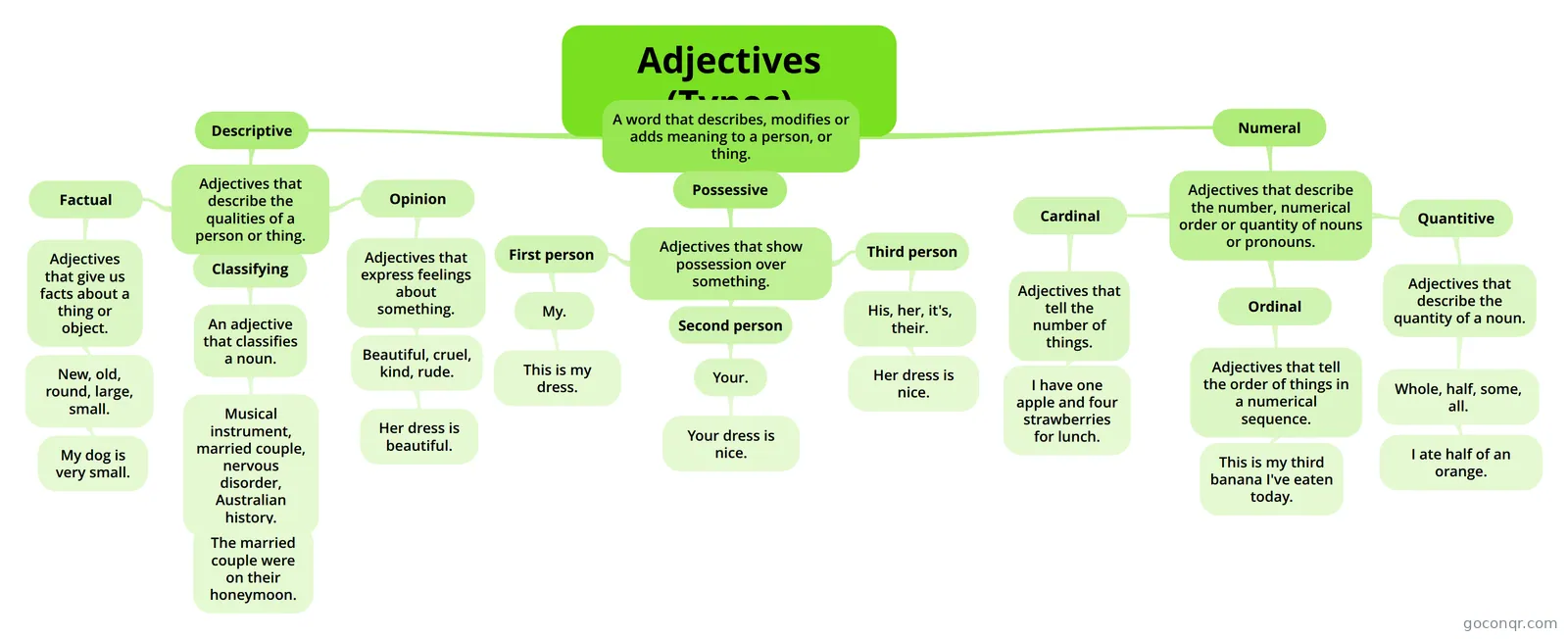 Adjectives (Types)
-
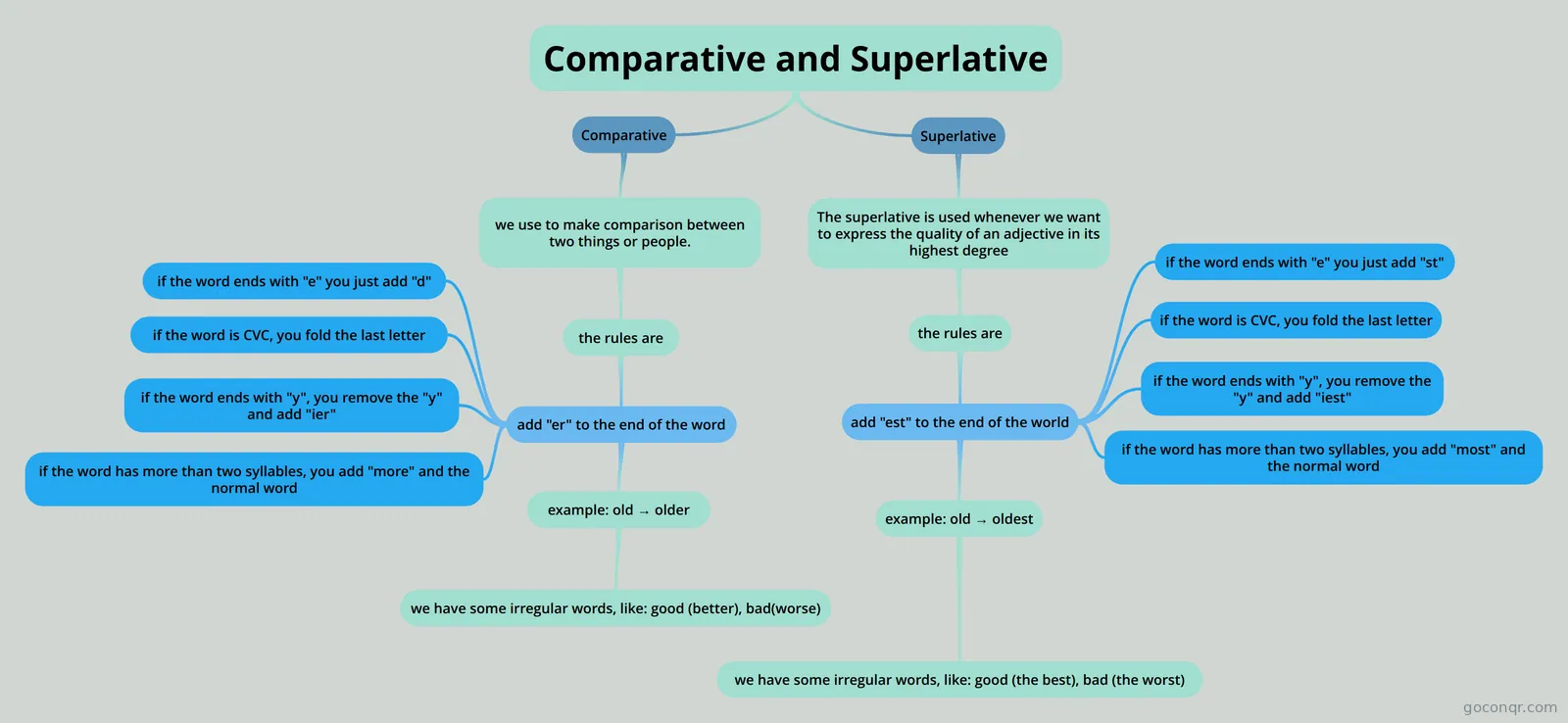 Comparative and Superlative
-
SUPERLATIVES
-
Comparative adjectives
-
COMPARISONS
-
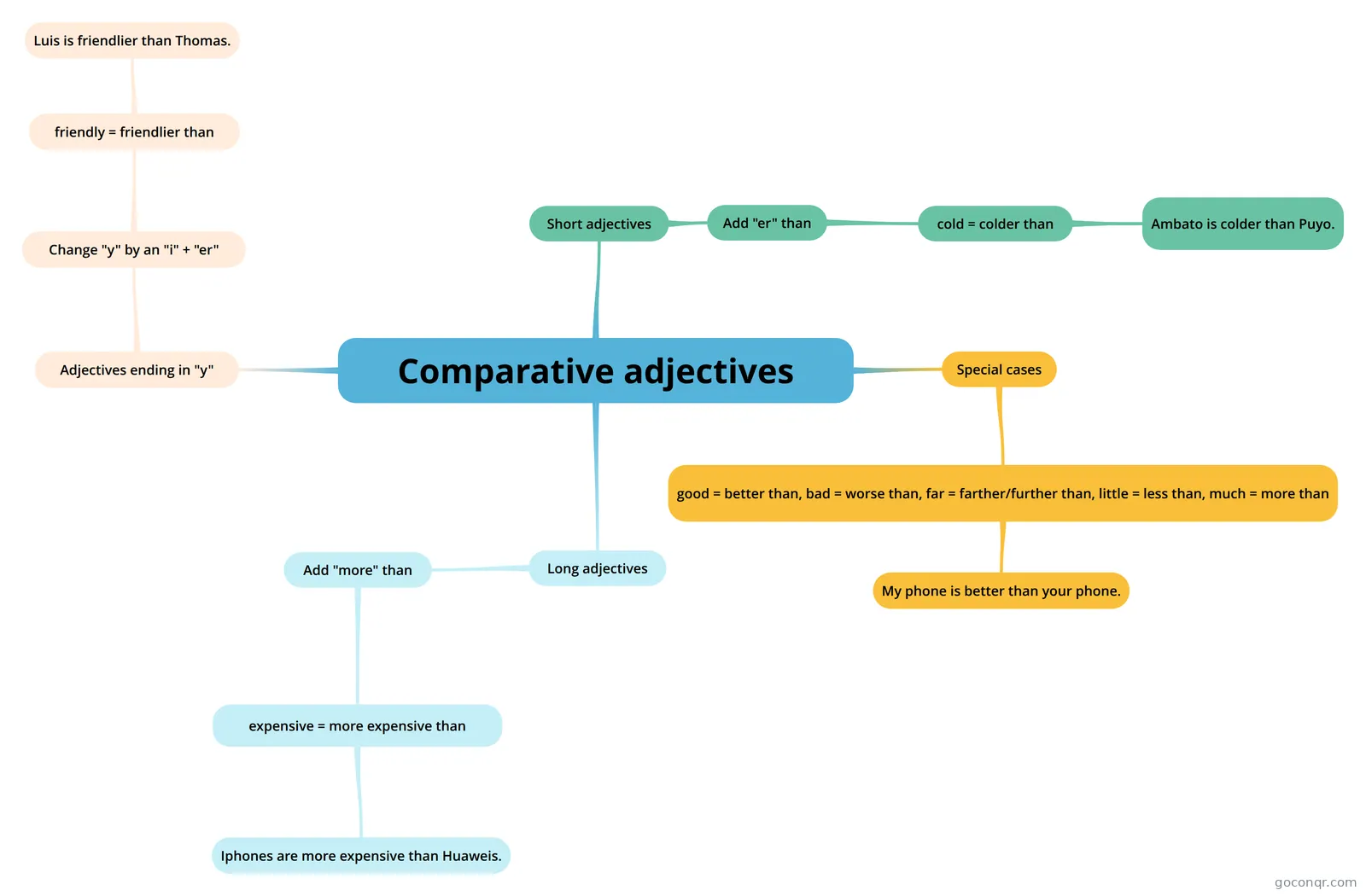 Comparative adjectives
-
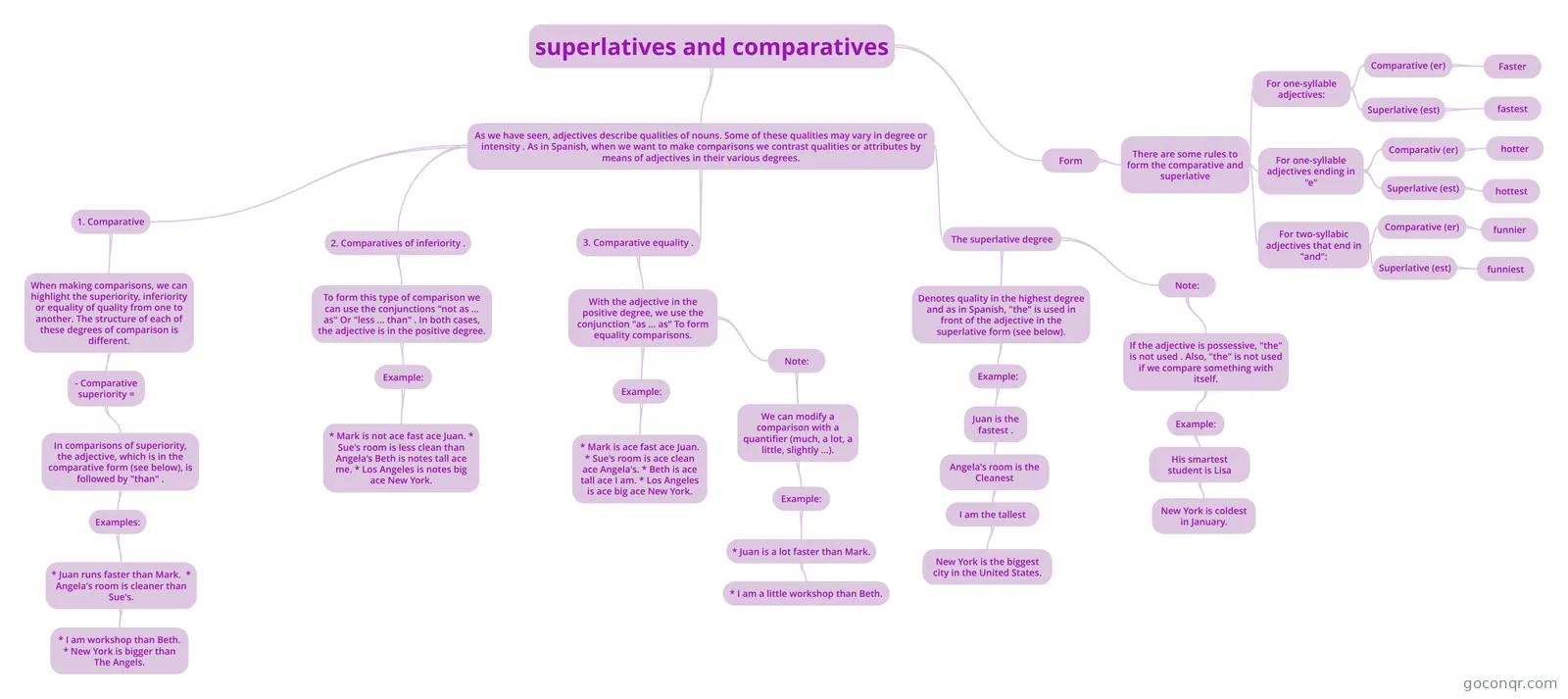 superlatives and comparatives
-
comparative and superlative :)
-
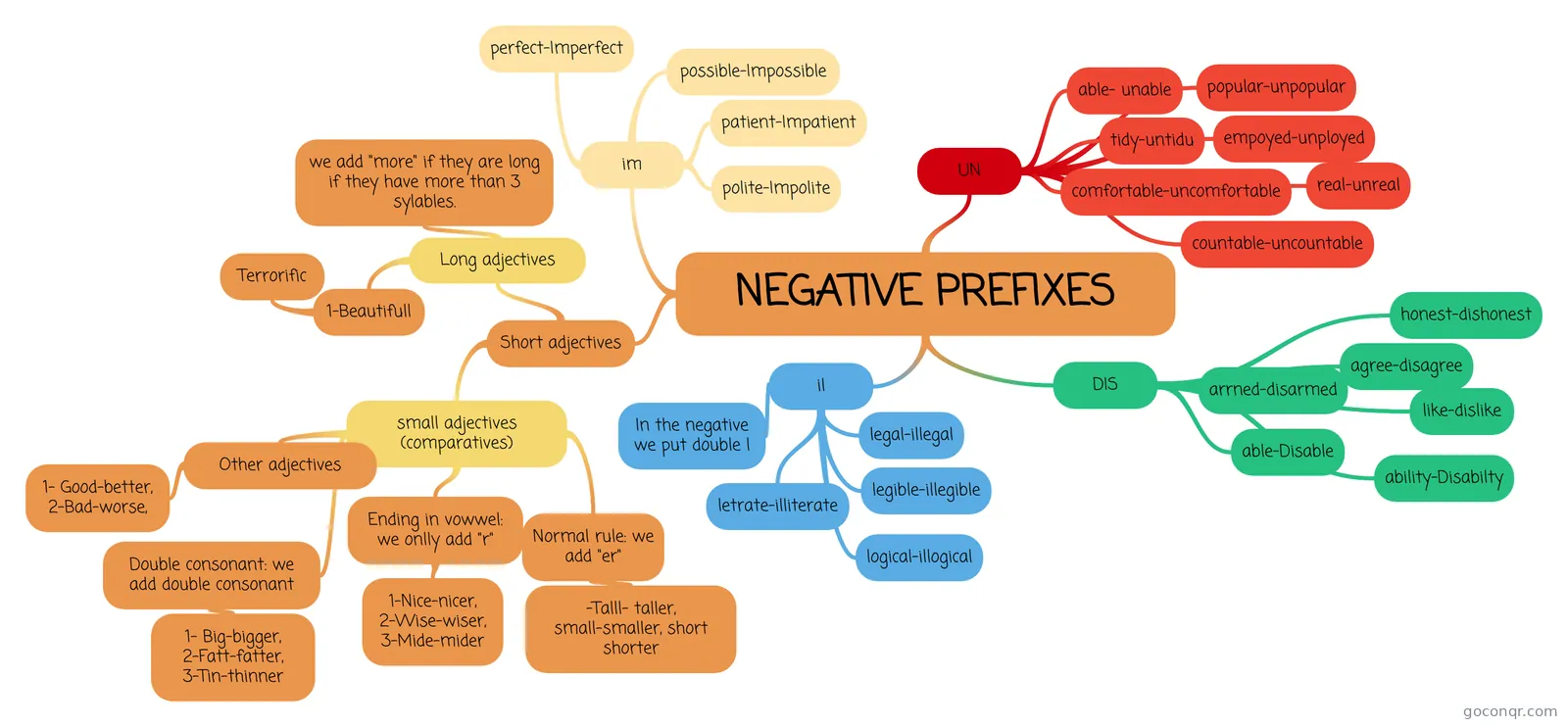 NEGATIVE PREFIXES
-
ADJECTIVES MIND MAP
-
Superlatives Superlatives
-
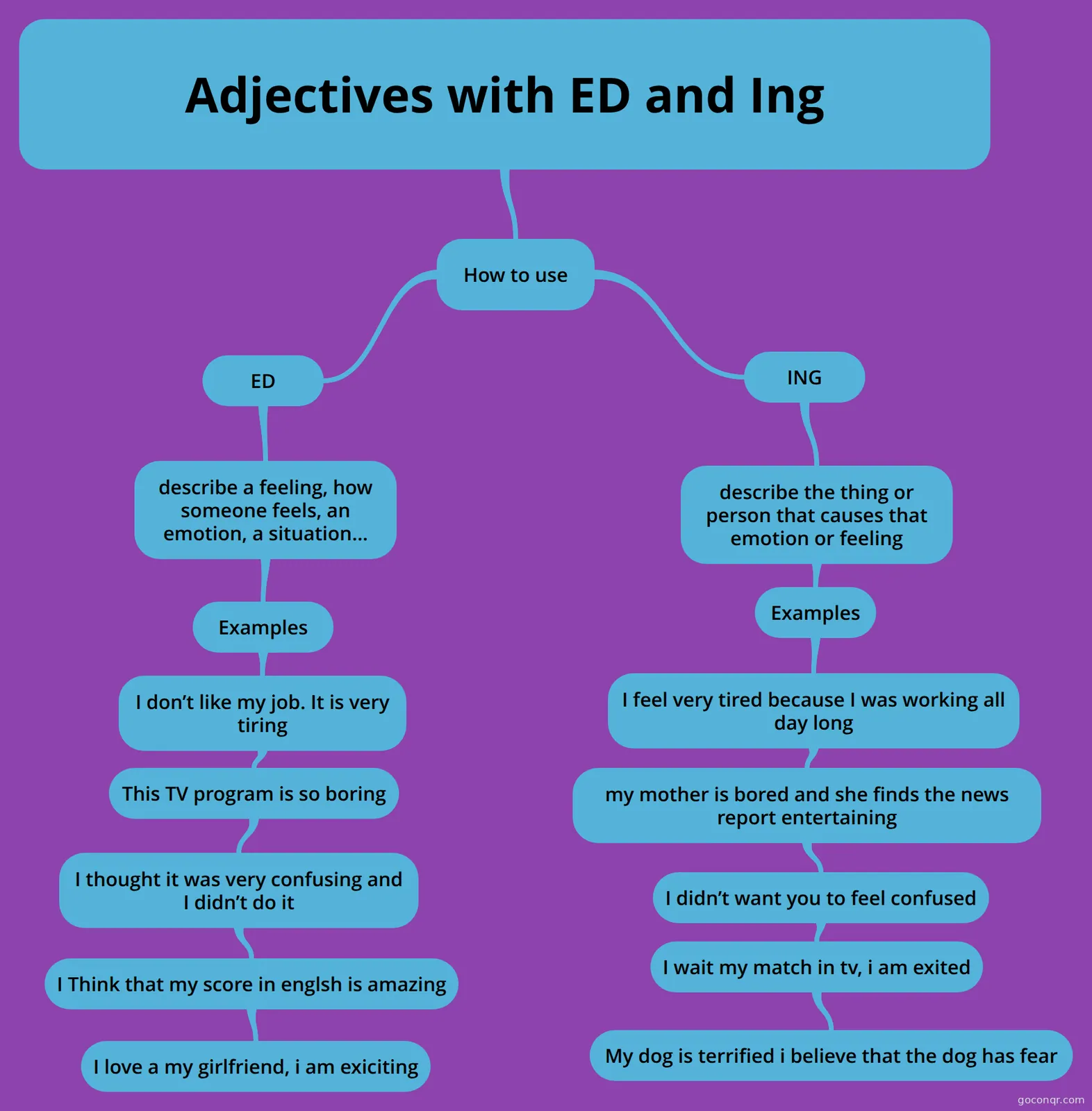 Adjectives with ED and Ing
-
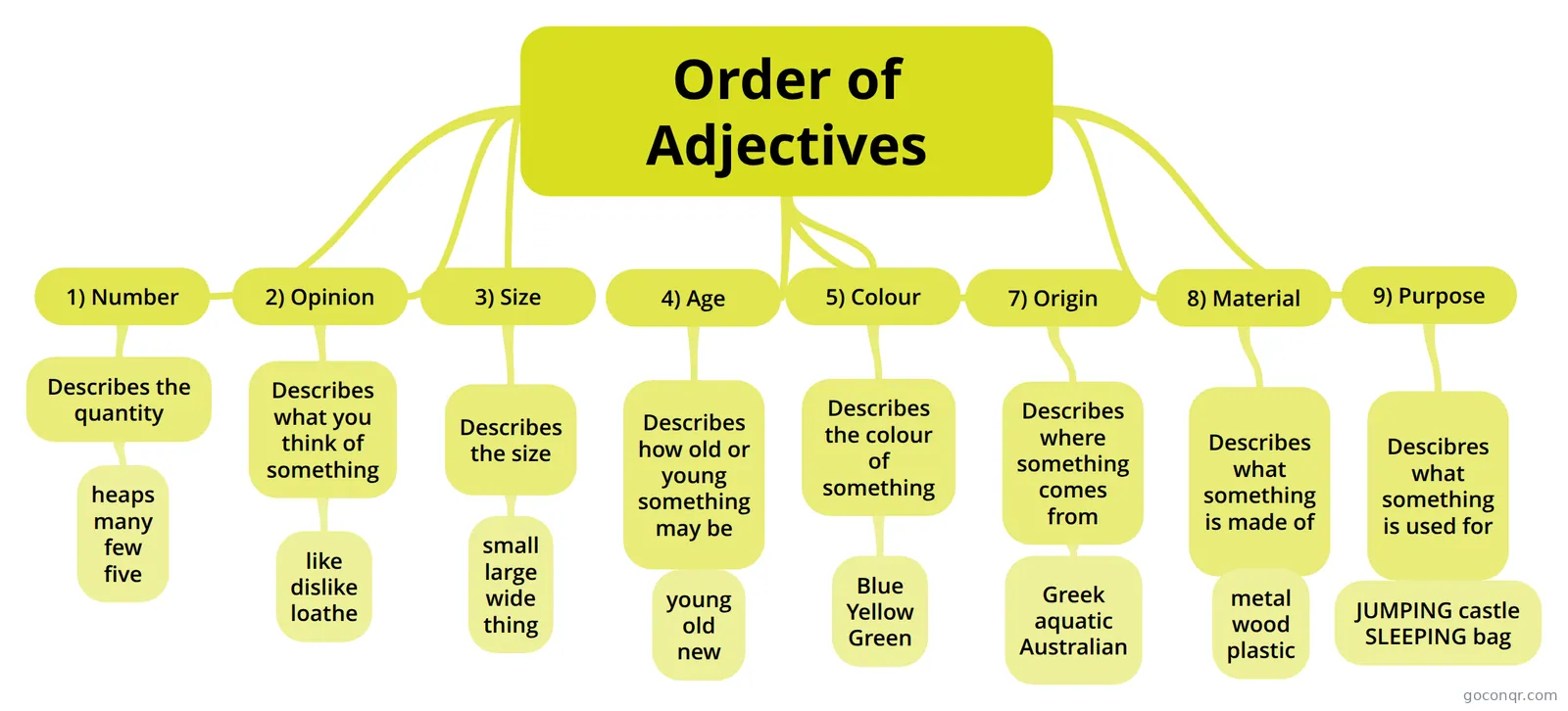 Order of Adjectives
-
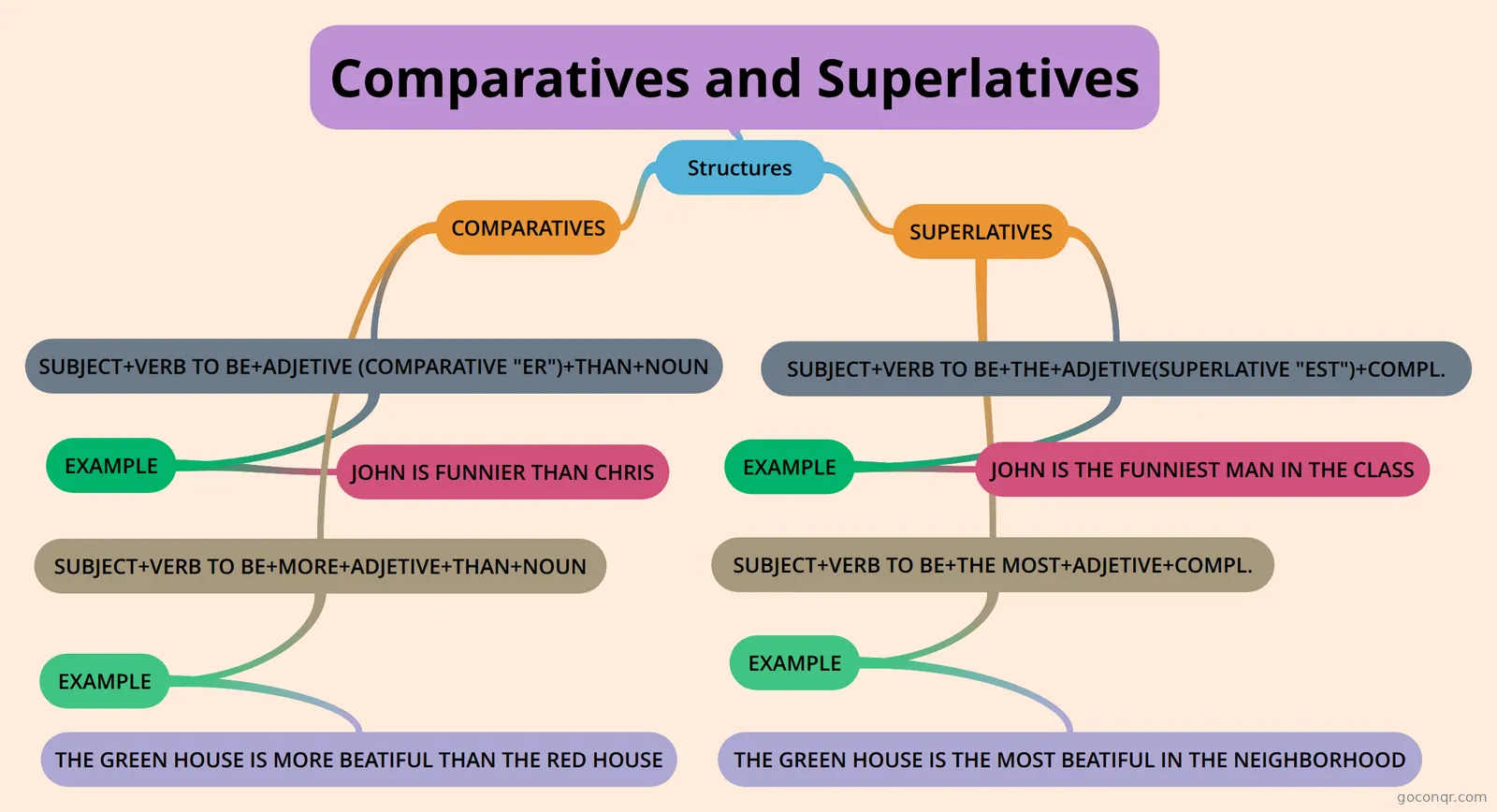 Comparatives and Superlatives Basic structures of comparative and superlative adjectives.
-
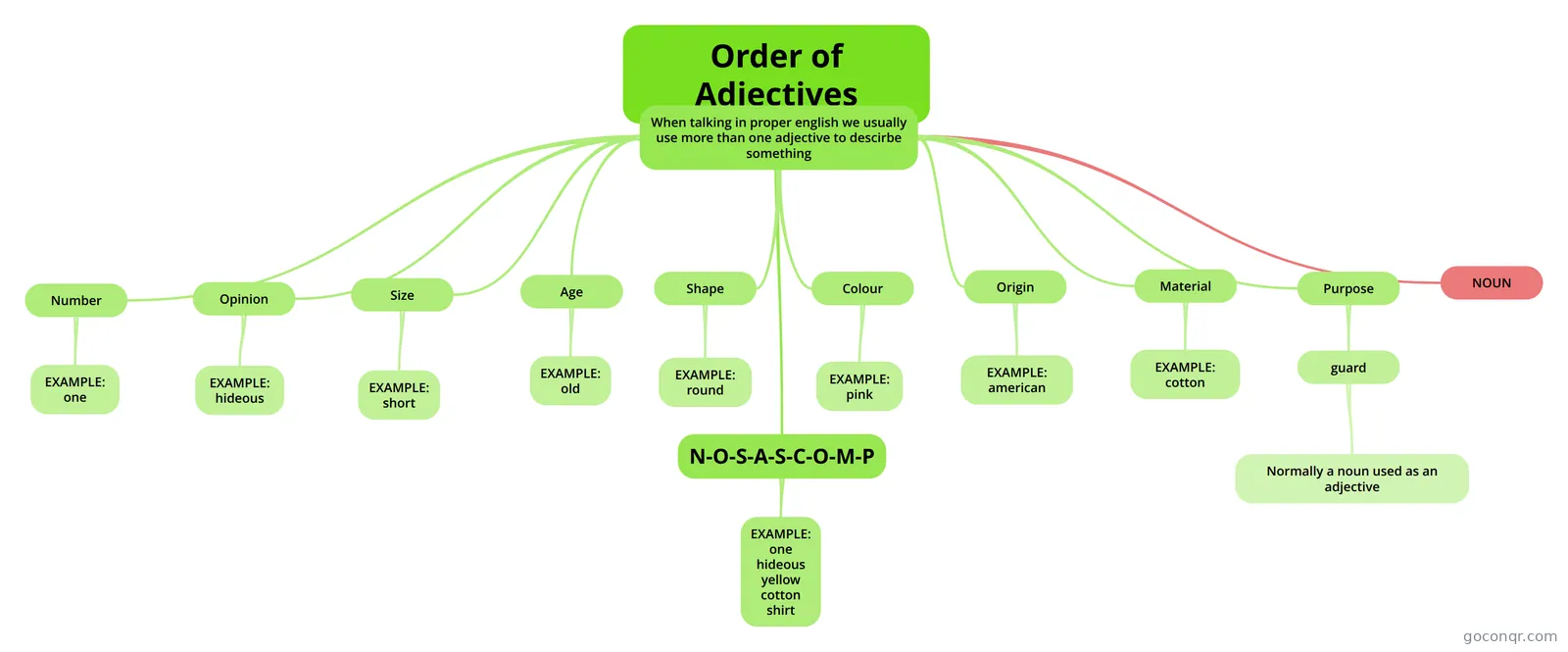 Order of Adjectives
-
ADJECTIVES ED and ING. Use of adjectives
-
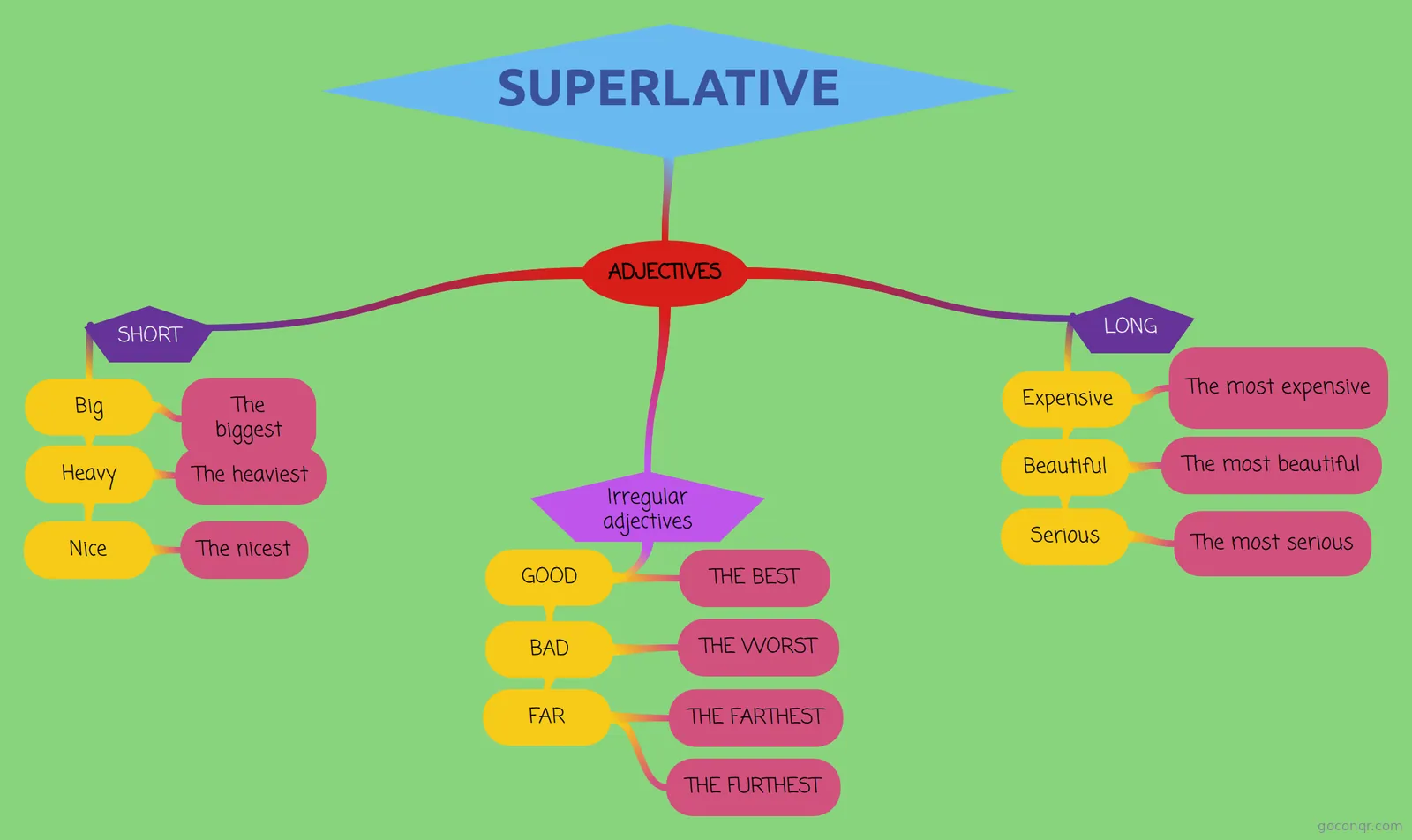 SUPERLATIVE Superlative diagram
-
COMPARATIVES
-
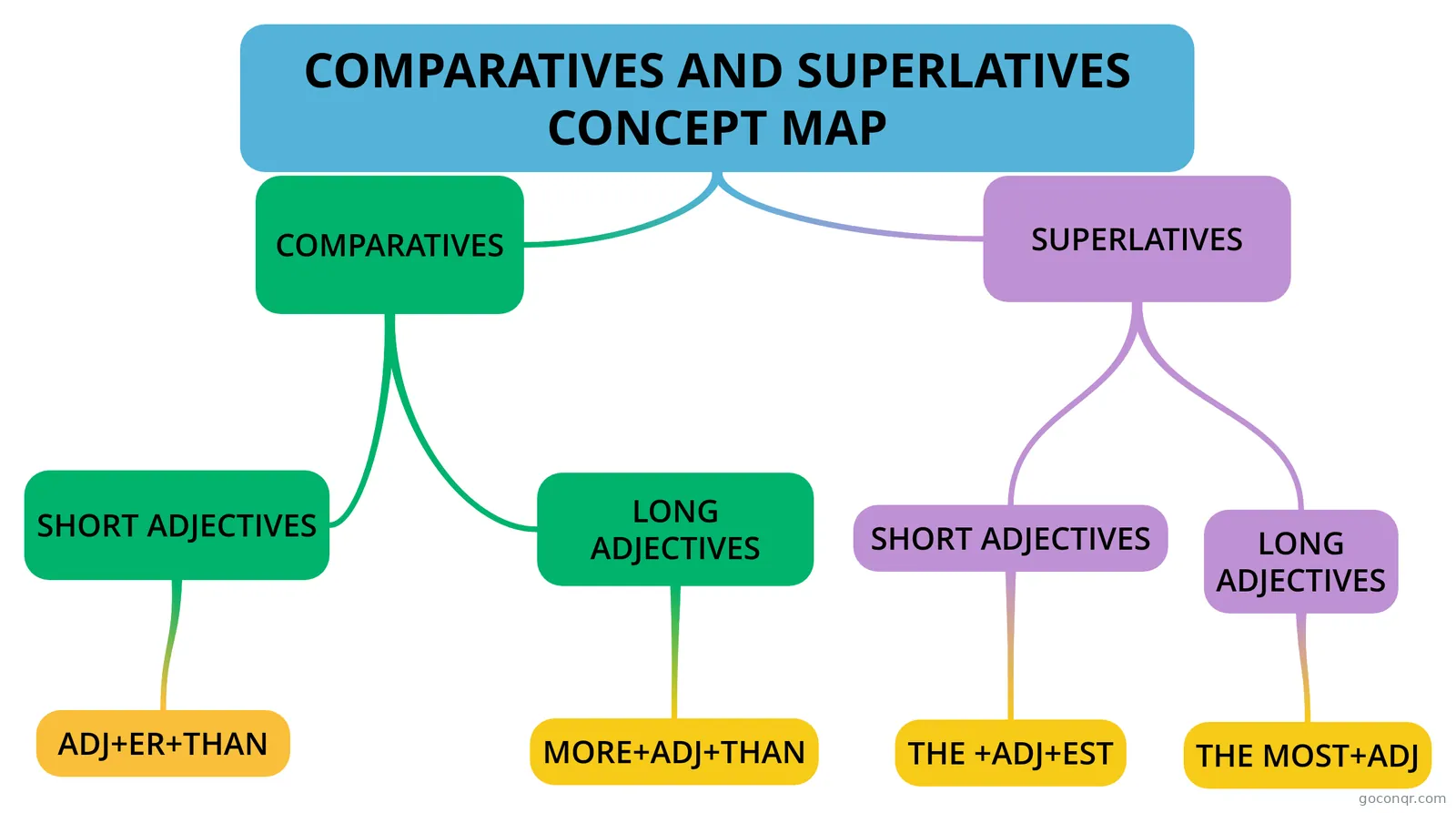 COMPARATIVES AND SUPERLATIVES CONCEPT MAP
-
ADJECTIVES HOW TO USE ED/ING ADJECTIVE IN A EMOTIONAL INTELLIGENCE TOPIC
-
personality this is a mind map of personalities
-
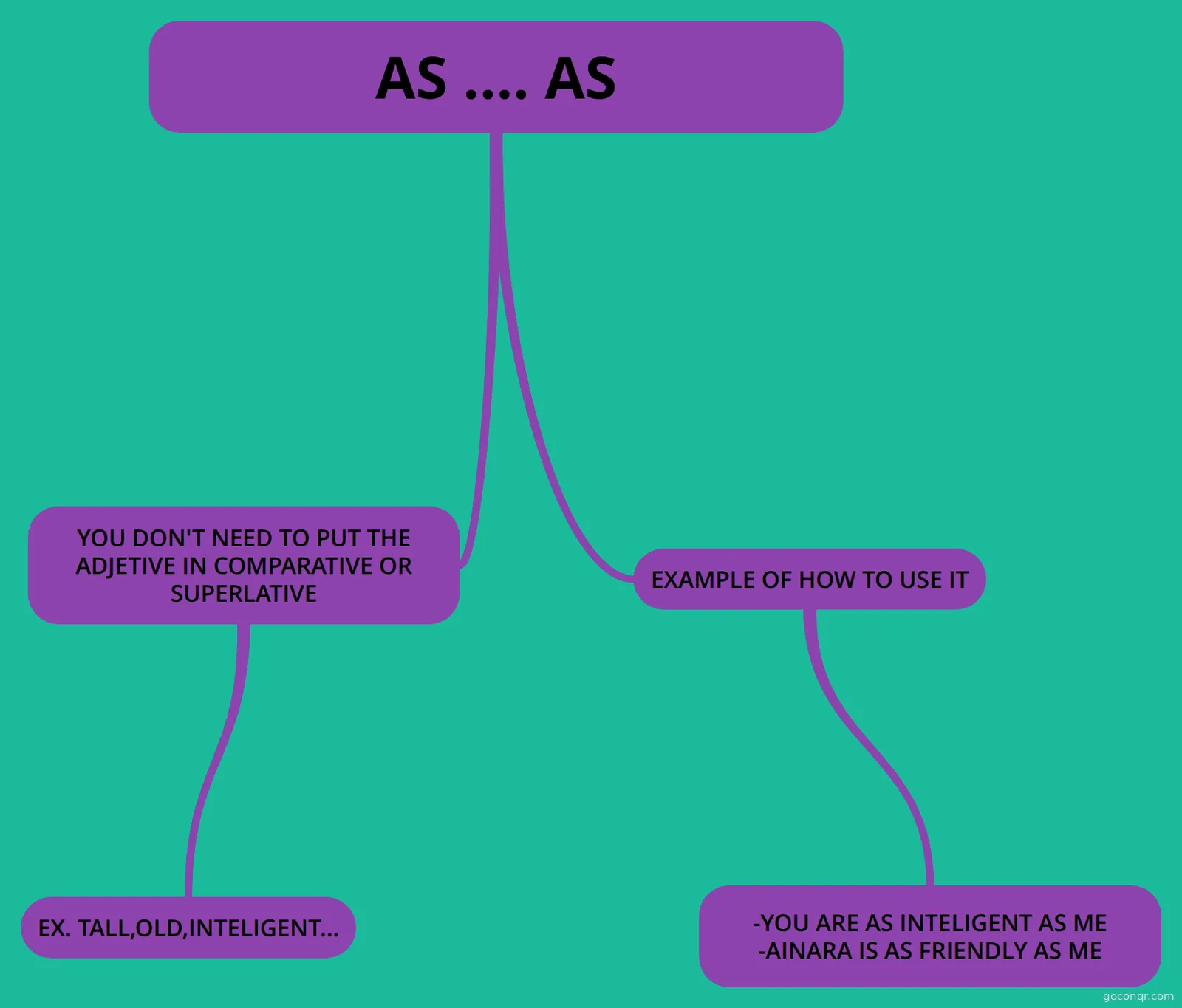 AS .... AS I THINK YOU WILL NEED IT TO STUDY
-
Watermelon Mapa mental Exam
-
My Mother adjectives
-
ADJECTIVES ORIGINAL
-
Adjectives
-
UNIT 1
-
the rules of Comparative and Superlative form of adjective
-
Adjectives
-
Superlatives and Comparatives
-
Comparative and Superlative Comparatives and Superlatives Mind Map
-
Comparative and superlative
-
Today's Lesson #20 April 29/2021
-
ADJECTIVES
-
Types of Adjectives
-
Types of Adjectives
-
ADJECTIVES MIND MAP
-
TYPES OF ADJECTIVES
More Adjectives resources
About adjectives mind maps
GoConqr OriginalUsing adjectives mind maps
These maps organise adjective topics into branches, so you can follow a rule alongside examples. Start with Comparative and Superlative Adjectives if you want to see both forms together. It shows how one-syllable adjectives can take -er and -est. For a different starting point, Adjectives (Types) separates descriptive and factual adjectives.
Other maps focus on adjective order or on words ending in -ed and -ing. Order of Adjectives groups adjectives by features such as size, age and colour. The map on -ed and -ing forms pairs words such as interested and interesting.
Revise with a map
Follow one branch at a time and make your own examples before checking the map again. If you want to test a rule in sentences, switch to a quiz on the Adjectives unit page. Flashcards there offer another way to review. Choose a topic and trace its branches.
Frequently asked questions
Which mind map can I start with for adjective order?
Start with “Order of Adjectives”. It groups adjectives under headings such as opinion, size, age, shape and colour, and includes an example. Follow the branches to see the categories, then use them to think through the order of adjectives in a phrase.
What do the maps cover besides comparisons?
The listing includes maps on adjective types, adjective order, negative prefixes and adjectives ending in -ed and -ing. “Adjectives (Types)” includes descriptive and factual adjectives, while the map on -ed and -ing forms brings together pairs such as interested and interesting.
Are these mind maps free to use?
Yes. Every resource listed here is free to open and study without an account. The maps were made by GoConqr users. A free account also lets you make your own quizzes, mind maps, flashcards and notes, and save your quiz scores.