
Assessment and Evaluation flowcharts
49 flowcharts by 43 users · Page 1 of 2
This page gathers Assessment and Evaluation flowcharts on topics from formative assessment to exam quality. They support university students and professional candidates practising assessment concepts, as well as teachers looking for classroom material. There are more than 20 user-made flowcharts, mostly at university level, with some for professional candidates. Pick a flowchart to explore.
Select topic
- Assessment, Evaluation and Testing: Key Differences25
- Principles and Purposes of Assessment38
- Assessment Design and Planning13
- Types of Assessment and Evaluation216
- Formative and Summative Assessment140
- Classroom Assessment Methods and Tools77
- Authentic and Alternative Assessment201
- Language Assessment and English Learners69
- Test Development and Test Items20
- Validity and Reliability27
- Rubrics and Grading27
- Standardized and Norm-Referenced Tests15
- Feedback in Assessment10
Flowcharts
-
Formative Assessment of learning: A review of publications in French
-
Evaluation and the classroom teacher
-
Strategies for Assessing
-
Dynamic Assessment:
-
Big ideas of authentic assessment
-
Pre-Assessment for Differentiation
-
TYPES OF EVALUATION
-
Characteristics of a Good Exam
-
Untitled
-
designing assessment task
-
characteristics of a goog exams
-
CHARACTERISTICS OF A GOOD EXAM
-
ARTE 387 - Large Scale Assessments flowchart
-
INSTRUMENT TOOLS
-
Untitled
-
Untitled
-
HOMEWORK 1
-
Untitled
-
Untitled
-
Graphic Organizer
-
ASSESMENT TOOLS
-
Assessment
-
Reading
-
Untitled
-
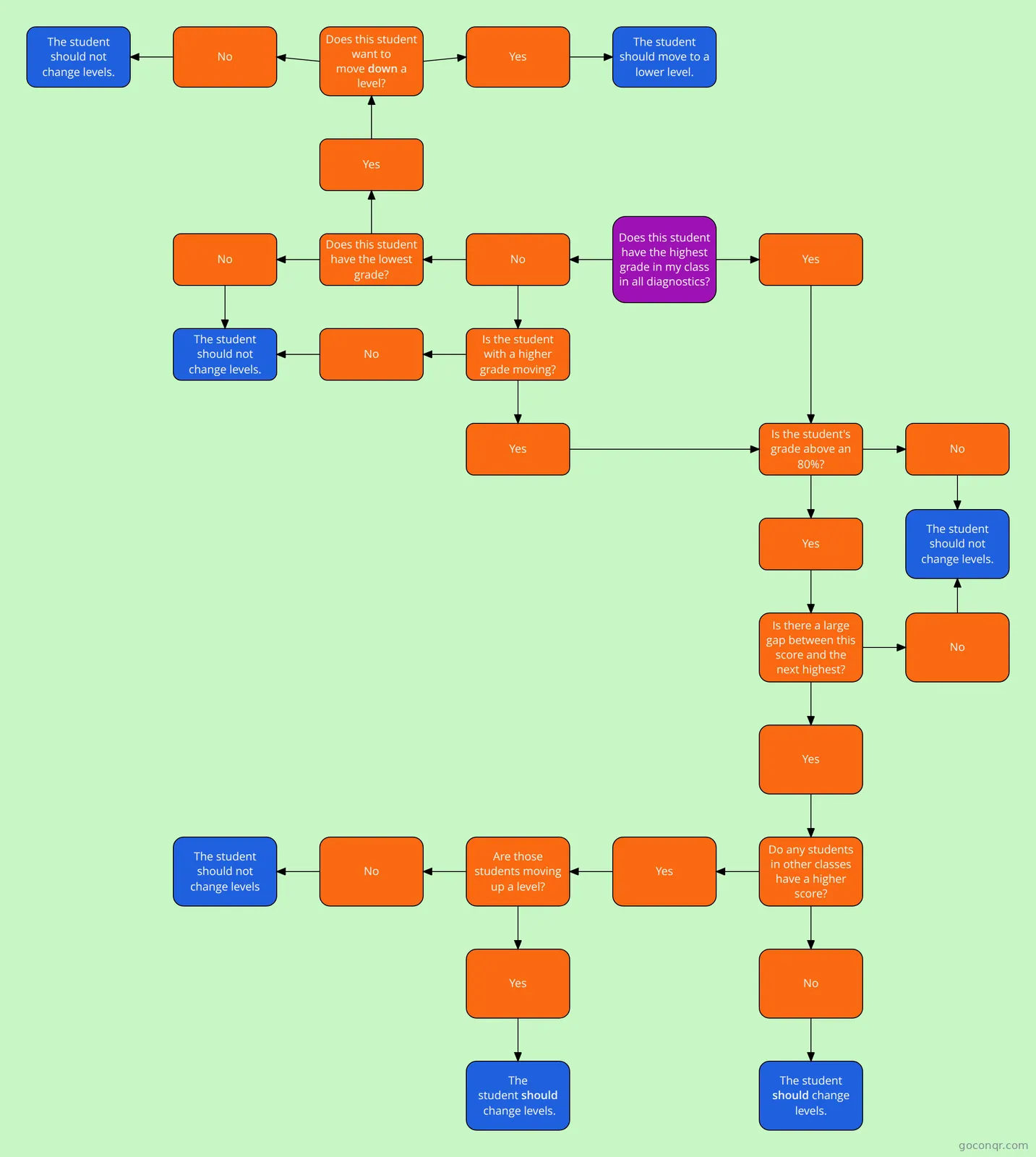 Level change flow chart Help with level change decisions
-
Untitled
-
Concept Maps
-
Deciding which students pass to the next level
-
Assessment vocabulary and grammar
-
Untitled
-
Untitled
-
Untitled
-
Untitled
-
Characteristics of a good exam
-
Untitled
-
Jumps Speaking activities to show the communicative competences
-
Untitled
-
metodología
-
Untitled
-
Untitled
More Assessment and Evaluation resources
About assessment and evaluation flowcharts
GoConqr OriginalUsing Assessment and Evaluation flowcharts
These flowcharts set out different aspects of assessment and evaluation. Strategies for Assessing covers formative and summative assessment and ways to check understanding. Big ideas of authentic assessment introduces assessment through real-world tasks. The flowchart on dynamic assessment brings together assessment, instruction and learning goals.
Where to start
Start with Strategies for Assessing if you want to compare assessment types. Follow the connections in the flowchart, then try explaining them in your own words. For a classroom planning angle, Pre-Assessment for Differentiation looks at tracking student learning and using pre-assessment.
If you are reviewing exam quality, Characteristics of a Good Exam covers reliability and validity. Revisit the flowchart after a break and see which connections you can recall. When you want to check definitions or match assessment types to their timing, switch to a quiz on the unit page. Choose a flowchart and trace its ideas.
Frequently asked questions
Which flowchart should I start with?
Try Strategies for Assessing for an overview of assessment types, including formative and summative approaches. If you are more interested in planning for different learners, start with Pre-Assessment for Differentiation instead. Its flowchart looks at tracking student learning and using pre-assessment.
Are these flowcharts free to use?
Yes. Every flowchart listed here is free to open and study, without an account. The resources were made by GoConqr users. A free account also lets you save quiz scores and make your own quizzes, mind maps, flashcards and notes.
Who are these flowcharts for?
Most of the listed resources are at university level, with some for professional candidates. University students and professional candidates can use them to review assessment concepts, while teachers can explore resources on topics such as differentiation, assessment strategies and exam quality.