
Assessment and Evaluation mind maps
1,463 mind maps by 1,150 users · Page 1 of 37
This GoConqr page gathers over 1,400 Assessment and Evaluation mind maps by more than 1,100 users, covering peer assessment, authentic assessment and exit tickets. University students and professional candidates can revise assessment approaches, while teachers can explore material for their work. Most resources are at university level; pick a map to get started.
Select topic
- Assessment, Evaluation and Testing: Key Differences25
- Principles and Purposes of Assessment38
- Assessment Design and Planning13
- Types of Assessment and Evaluation216
- Formative and Summative Assessment140
- Classroom Assessment Methods and Tools77
- Authentic and Alternative Assessment201
- Language Assessment and English Learners69
- Test Development and Test Items20
- Validity and Reliability27
- Rubrics and Grading27
- Standardized and Norm-Referenced Tests15
- Feedback in Assessment10
Mind maps
-
Authentic Assessment This mind map shows different authentic assessments teachers can use in the classroom with ESL students. It...
-
Authentic Assessment & Emergent Bilinguals
-
Traditional Assessments vs. Authentic Assessments Traditional Assessments vs. Authentic Assessments
-
Authentic Assessment This mind map explores 5 big ideas about authentic assessment and explores how they can be applied in diver...
-
Authentic Assessment: What's the Big Idea? A look at the various forms of authentic assessment and how they can be applied in an ESL classroom
-
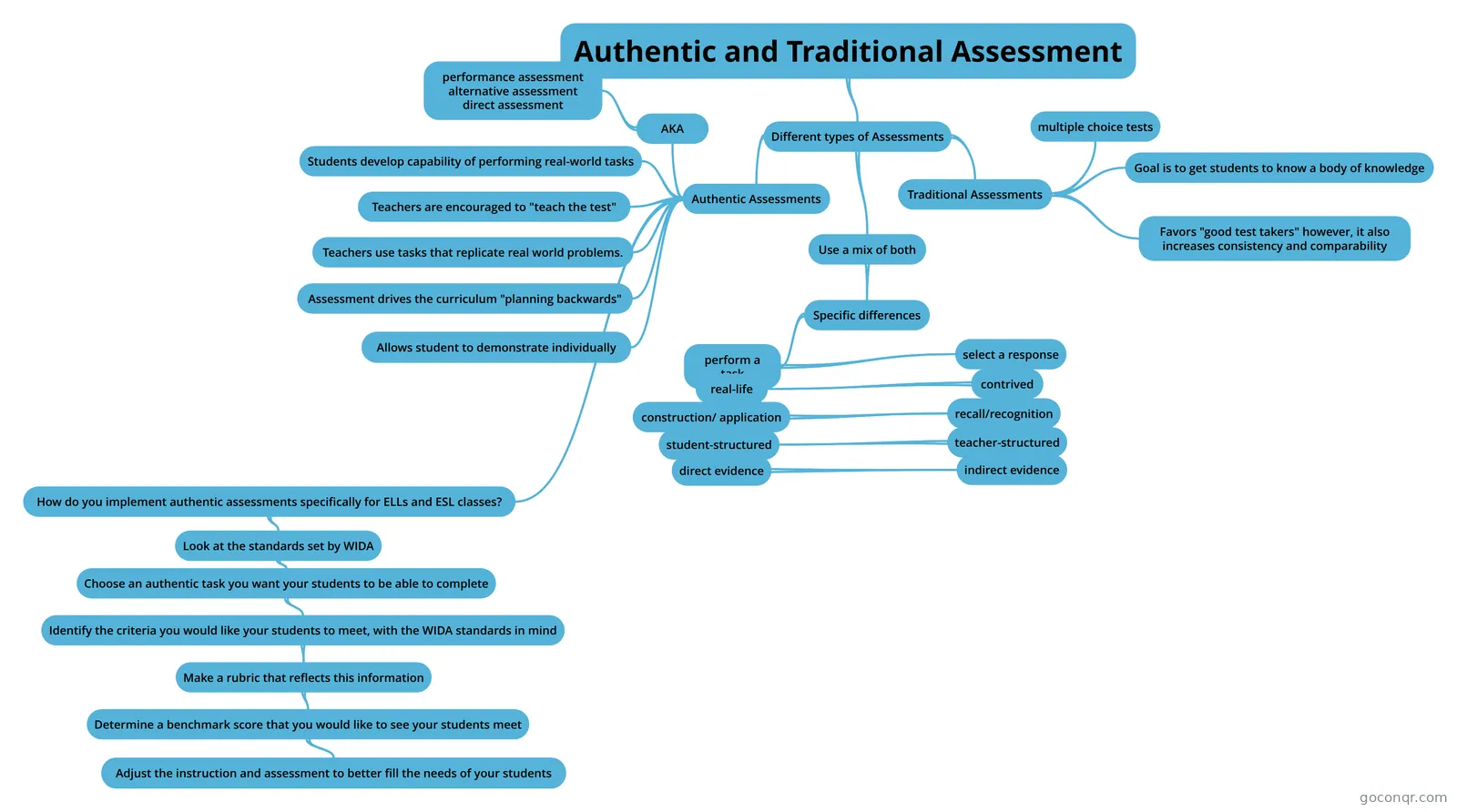 Authentic and Traditional Assessment This mind map highlights the differences between authentic and traditional assessment.
-
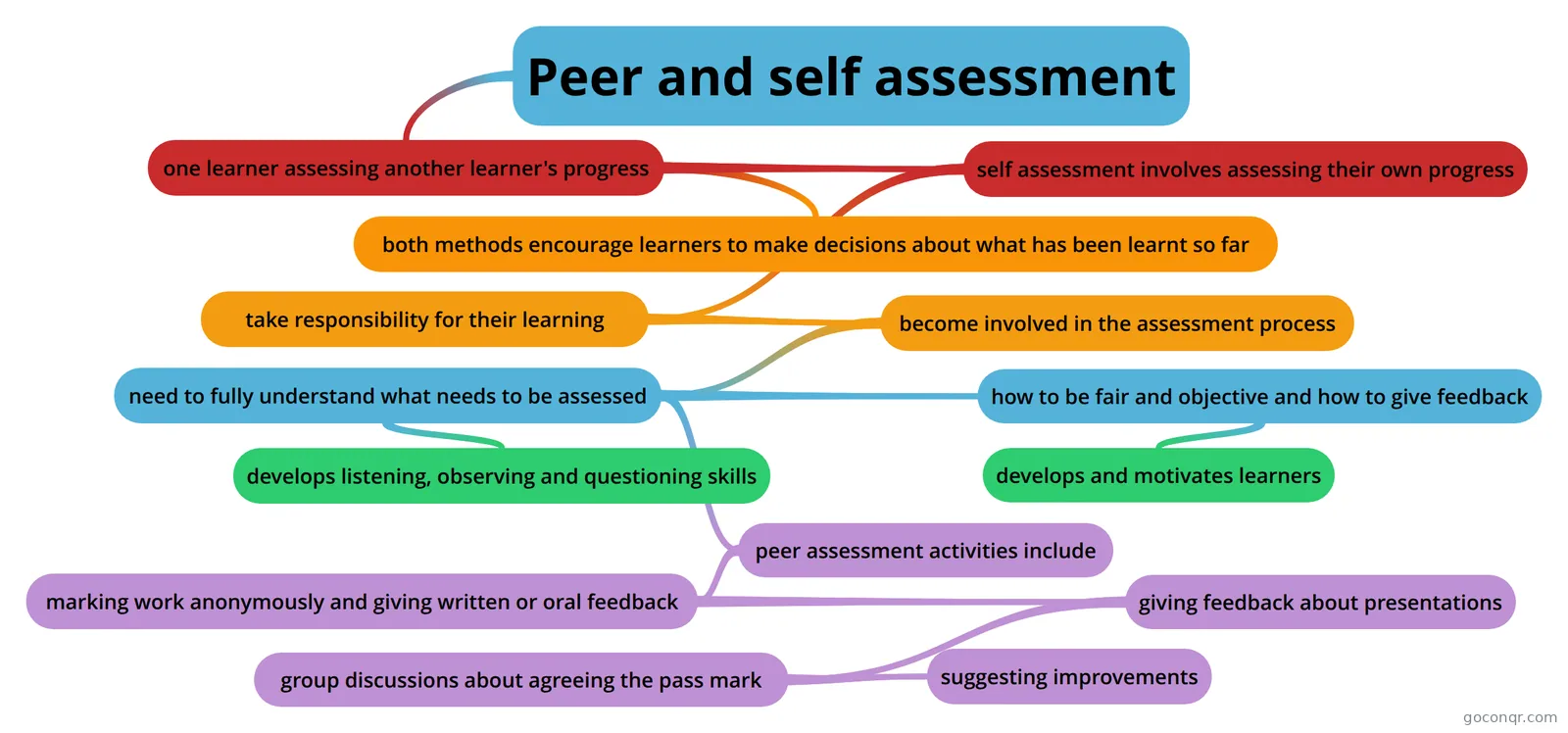 Peer and self assessment peer and self assessment process
-
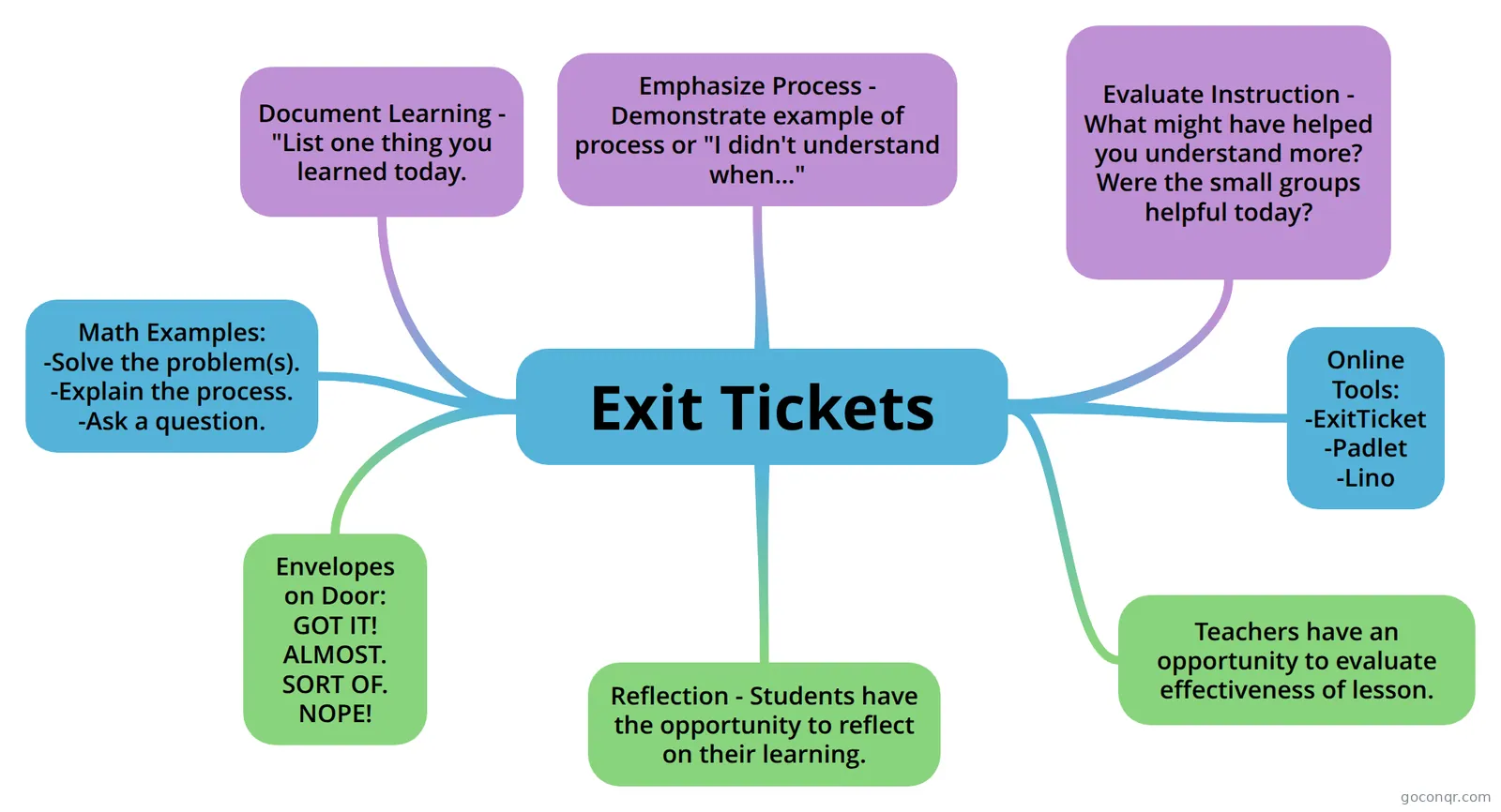 Exit Tickets I've been struggling to incorporate exit tickets into my classroom since I made the switch from teaching EL...
-
Types of evaluation tipos de evaluación
-
What are assessments and what do they measure? This map shows 6 assessments along with a break down of what you might see on the individual assessment.
-
5 Big Ideas masters class
-
MEANINGFUL ASSESSMENT 1
-
Meaningful Assessment in Education
-
Assessments
-
Different Types ofAssessments
-
Students Assessments
-
CHAPTER 1 AND 2: CHANGING THE MINDSET: MAKING MEANINGFUL ASSESSMENT MIND MAP Entry-Portfolio
-
Student Self Assessment
-
CUR/530 Concept Map of Strategies
-
1. LR
-
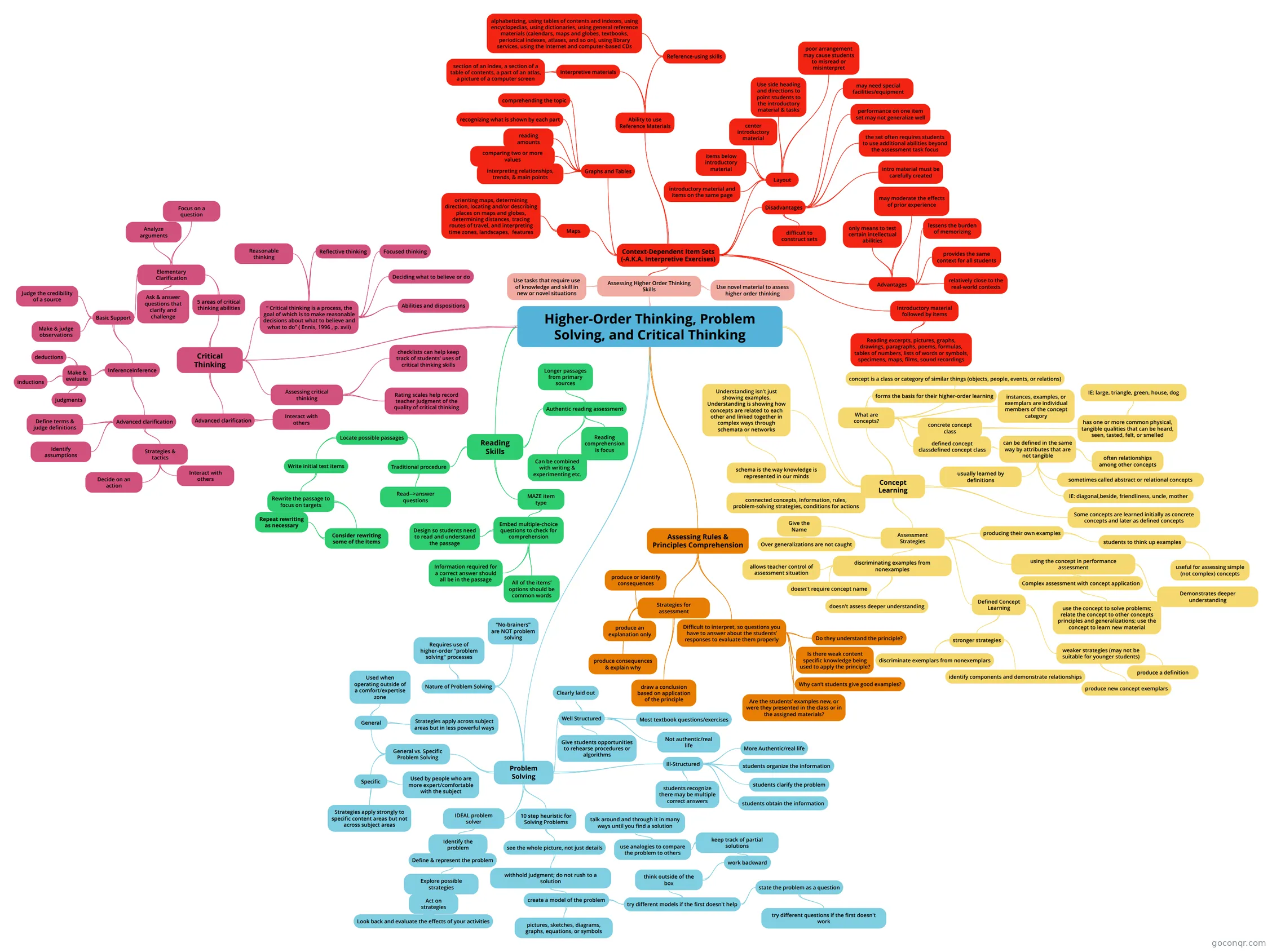 Higher-Order Thinking, Problem Solving, and Critical Thinking Mindmap of Chapter 12 Brookhart, Susan M.; Nitko, Anthony J. (2014-01-27). Educational Assessment of Studen...
-
for learning
-
Be Authentic! Authentic Assessments
-
Be Authentic! Authentic Assessments
-
Assessments
-
Student Assessments
-
Authentic Assessment - The Ins and Outs
-
Teacher Made Tests
-
Evaluating and Grading Student Achievement
-
Evaluation
-
TYPES OF ASSESSMENT
-
Assessment termonology
-
Lesson 11
-
Assessing EL/EB Students
-
Assessment
-
Are tests good?
-
Assessment of EBs
-
Direct & Indirect Measures
-
Authentic Assessment
-
What, Why, How, and When Authentic Assessments
More Assessment and Evaluation resources
About assessment and evaluation mind maps
GoConqr OriginalUsing assessment and evaluation mind maps
Mind maps on this page connect assessment ideas with examples and approaches. Types of evaluation covers formative and summative assessment, while Exit Tickets includes ways learners can reflect on and document their learning.
For a practical starting point, open Exit Tickets and follow the branches from reflection to examples. Then look at Types of evaluation to see how it presents different approaches. The map Authentic Assessment offers another angle, with attributes and examples including oral reports and portfolios.
Move between formats
As you read a map, pause at each branch and explain its connection to the central idea. Return to any branch that is hard to recall. When you want to check your understanding in a different way, switch to a quiz on the unit page; flashcards can help you revisit terminology.
Choose a map and follow the ideas that are most useful to you.
Frequently asked questions
Which mind map is a good place to start?
Start with Exit Tickets if you want a map with practical examples. It covers reflection and documenting learning, including a prompt to list something learned. For a broader comparison of approaches, Types of evaluation covers formative and summative assessment.
What topics do these mind maps cover?
The maps cover peer and self assessment, authentic and traditional assessment, formative assessment and types of evaluation. There are also maps on exit tickets and assessment for learning. You can use their branches to follow connections between an assessment idea and the examples or approaches included.
Are the mind maps free to use?
Yes. Every resource listed on this page is free to open and study without an account. The maps were made by GoConqr users, so you can explore their different ways of organising assessment and evaluation topics. A free account also lets you make your own resources.