
Connective Tissue mind maps
57 mind maps by 45 users · Page 1 of 2
This GoConqr page gathers over 50 connective tissue mind maps, covering cells, fibres, the extracellular matrix and tissue types. Made by users for university-level study, they help university students revise these topics and give teachers material for teaching them. Pick a map to start exploring.
Mind maps
-
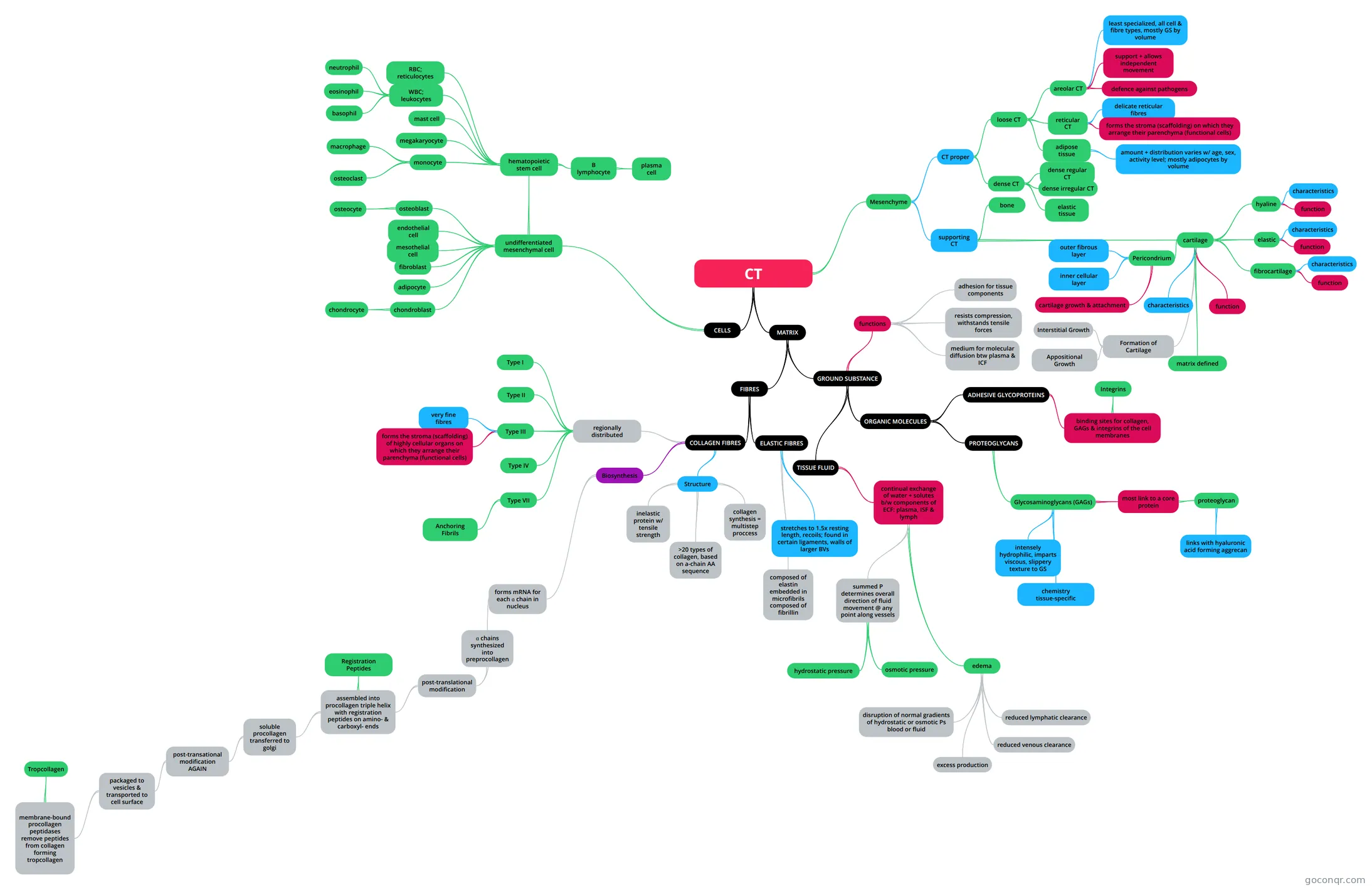 CT Flow Chart for CT Lectures
-
Connective tissue
-
ECM
-
Connective Tissue
-
Week 2
-
Extracellular Matrix
-
Connective Tissue
-
Adipose tissue
-
Fibrous, bone, and cartilage
-
Dense Connective Tissue
-
Cartilage
-
Fibroblast
-
Mesenchyme (E)
-
Connective Tissue
-
Connective Tissue
-
mesenchymal tissue
-
Extracellular Matrix
-
Dense Connective Tissue
-
Bone
-
Connective Tissue
-
CONNECTIVE TISSUE
-
Are cells connected together?
-
Connective Tissue Mapa Conceptual
-
WAT
-
Mast cells
-
ADIPOSE TISSUE
-
Connective tissue
-
Extracellular Matrix Molecules
-
Dense Connective Tissue
-
Connective Tissue
-
Extracellular Matrix
-
Functions of Adipose Tissue
-
Types of collagen
-
Fluid Connective Tissue
-
Bone tissue
-
Connective tissue blood Usar
-
types of connective and supportive tissue
-
Adipose Tissue
-
connective tissue
-
Enter text here
More Connective Tissue resources
About connective tissue mind maps
GoConqr OriginalUsing connective tissue mind maps
These maps let you follow a topic through connected branches. For a broad starting point, choose Connective Tissue, the map that groups connective tissue proper, cartilage, bone and blood. Its branches offer a way to see the categories before looking at individual tissues.
For a closer look at the material around cells, Extracellular Matrix includes fibrous proteins, proteoglycans and adhesive glycoproteins. The Adipose tissue map brings together cell types, functions and white and brown adipose tissue.
Move between formats
As you study a map, follow one branch at a time and try to recall its connections before looking again. Compare an overview with a more focused map when you want to revisit a particular tissue or component. When you are ready to check your recall in a different way, switch to a quiz on the Connective Tissue unit page. Choose a branch and give it a try.
Frequently asked questions
Which mind map is a good place to start?
Start with the overview called Connective Tissue that groups connective tissue proper, cartilage, bone and blood. It gives you categories to follow before you move to a more focused map. There are several maps with similar titles, so look for those branches when choosing it.
Which maps cover the extracellular matrix?
The page lists maps called Extracellular Matrix and ECM. Among them, one Extracellular Matrix map covers glycosaminoglycans, proteoglycans, adhesive glycoproteins and fibrous proteins. The ECM map includes functions such as providing a substrate for cell adhesion and acting as a reservoir for growth factors.
Are these mind maps free to use?
Yes. Every resource listed on this page is free to open and study without an account. The maps were made by GoConqr users, not by GoConqr. A free account also lets you make your own mind maps, flashcards, notes and quizzes, and save your quiz scores.