
English Legal System
389 resources created by 296 users
This English Legal System page on GoConqr gathers community-made mind maps, flashcards, quizzes, notes and flowcharts, from sources of law and judicial precedent to statutory interpretation, the courts, juries and legal personnel. It's built for school students, university students and professional candidates revising a topic, plus teachers after ready-made material. There are over 380 resources here, including more than 10 quizzes and over 230 mind maps, with A-level Law, GCSE Law, ACCA and SQE all mentioned. Pick a topic, try a quiz to spot your gaps, then make your own maps.
Select topic
- Nature and Classification of Law14
- Sources of Law22
- Common Law and Equity15
- Parliamentary and Delegated Legislation20
- Judicial Precedent56
- Statutory Interpretation53
- Law Reform8
- Court Hierarchy and Appeals24
- Civil Courts and Dispute Resolution40
- Criminal Courts and Criminal Justice29
- Judges and Legal Personnel23
- Lay Magistrates and Lay People21
- Juries11
Top English Legal System resources
-
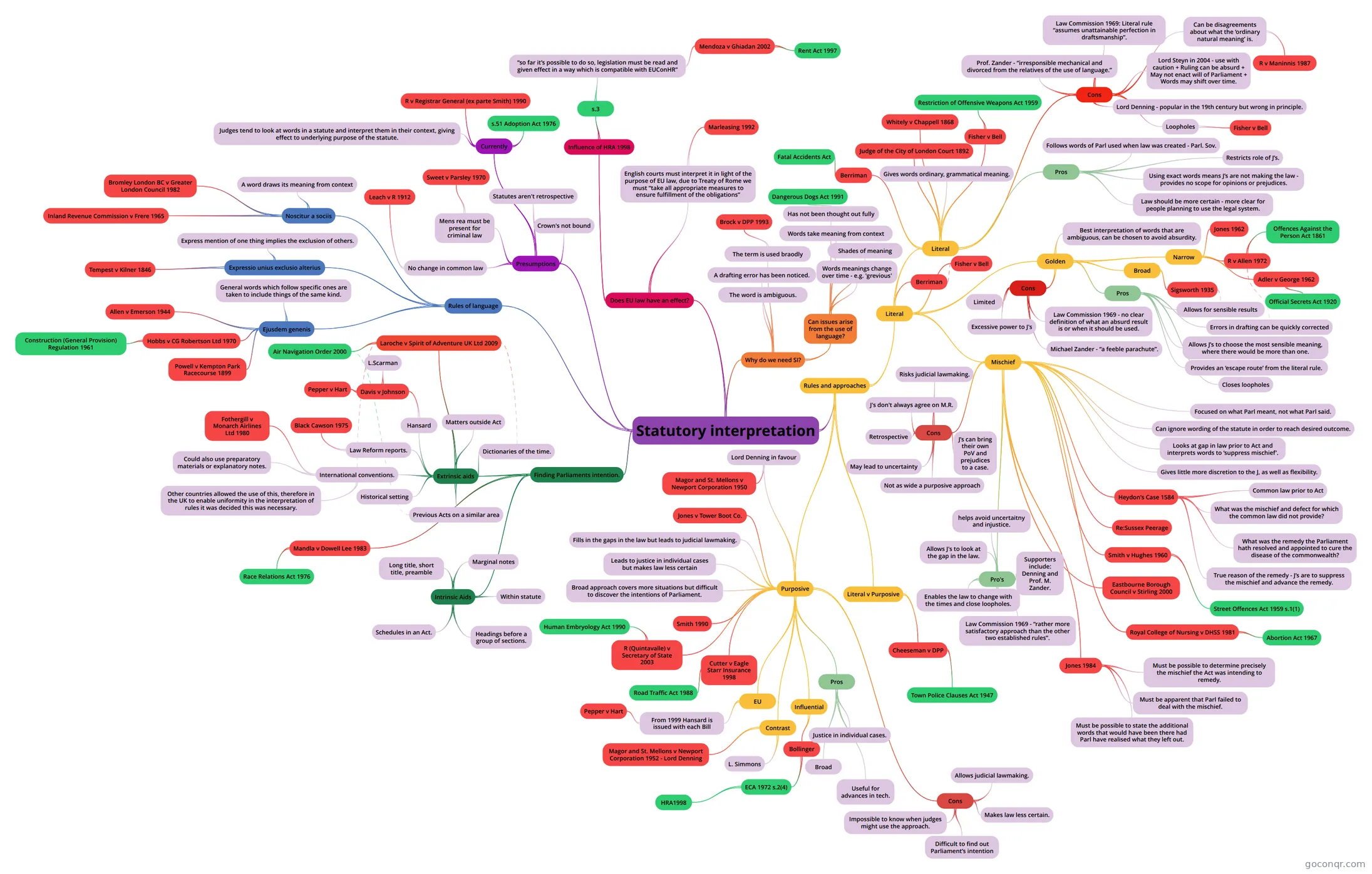 Mind map Statutory interpretation
-
 Mind map Law Making and the English Legal System
-
 Mind map Legal Personnel
-
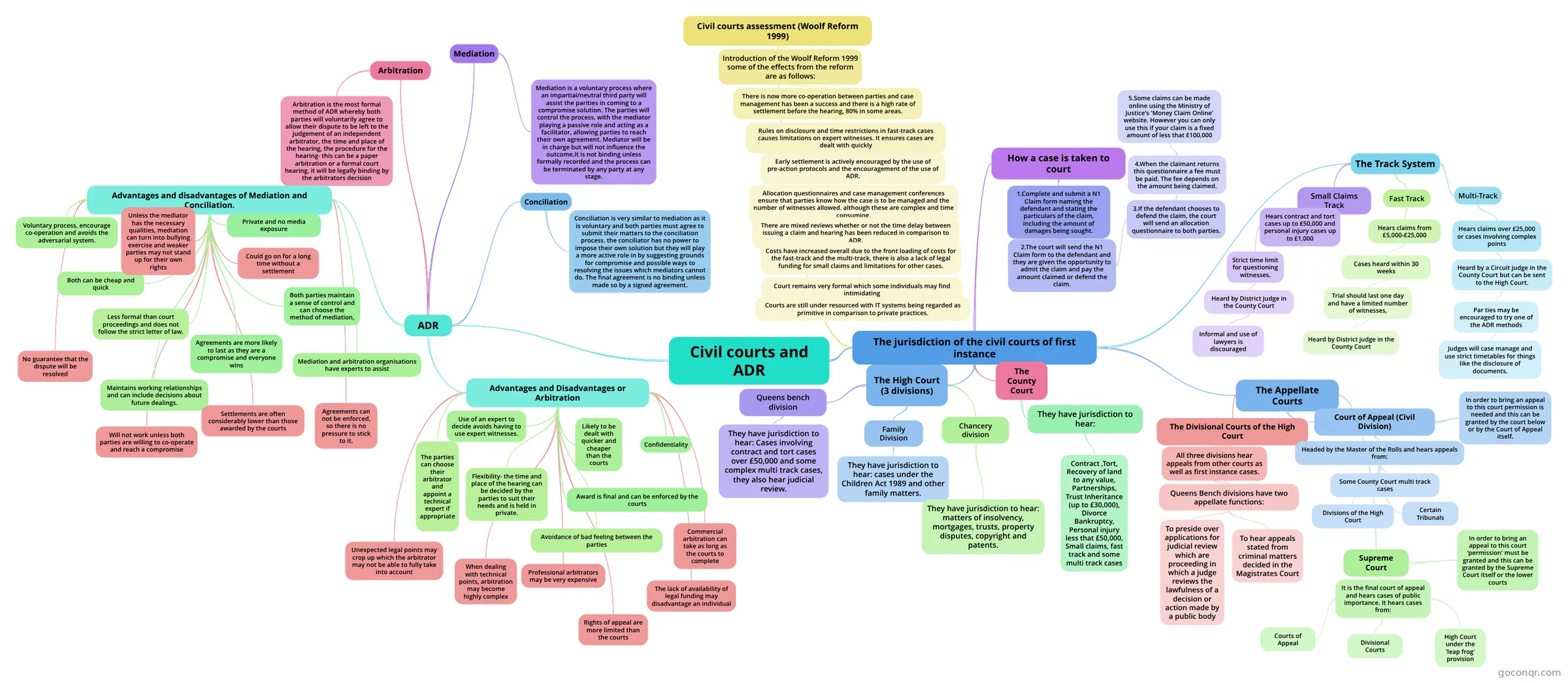 Mind map Civil courts and ADR
-
32 cardsLegal System 2: Lay People (Magistrates), Juries, Legal Personnel Lay People Lat Magistrates What is a lay magistrate?
-
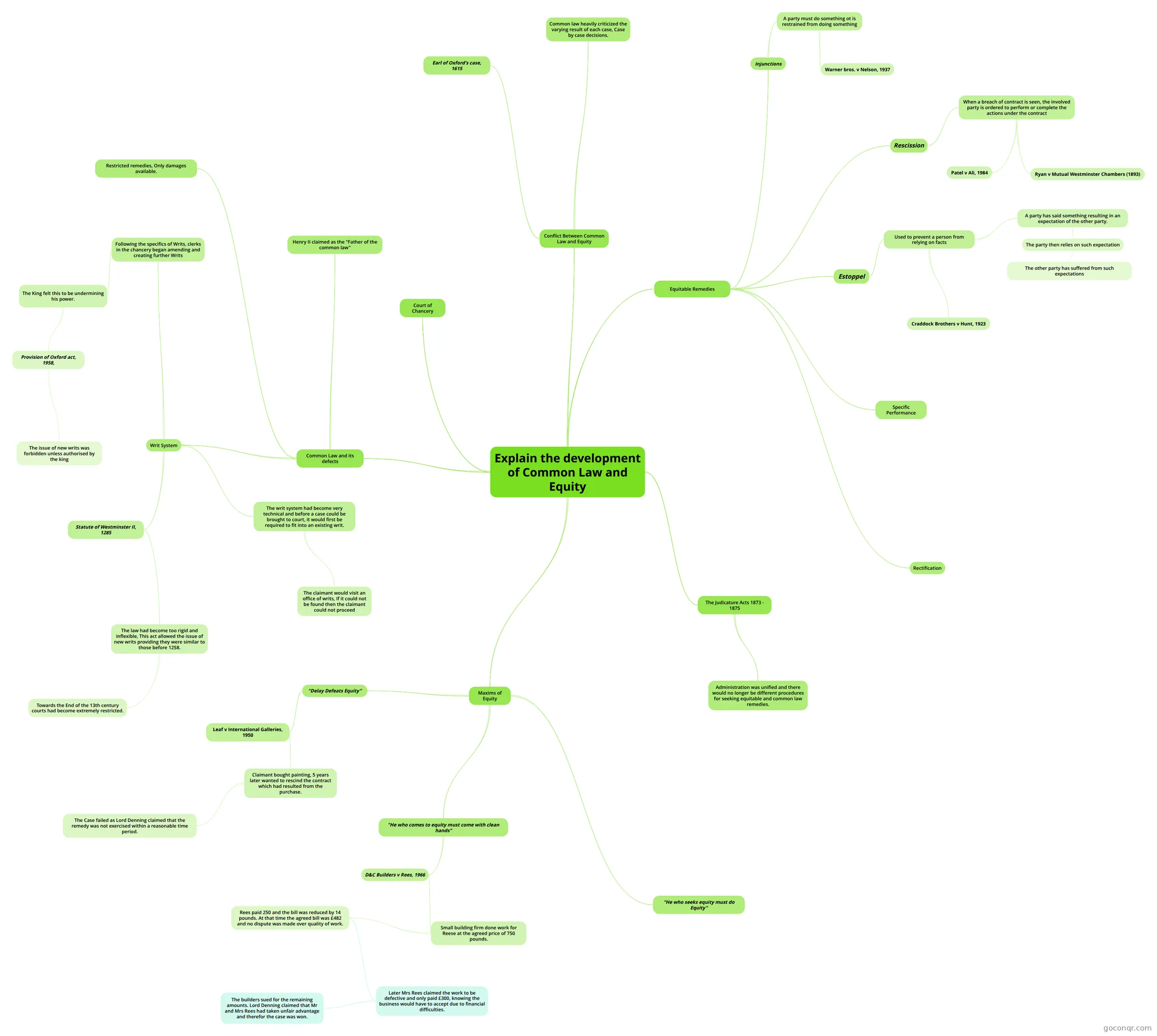 Mind map Explain the development of Common Law and Equity
-
 Mind map Chapter 10: The legal profession
-
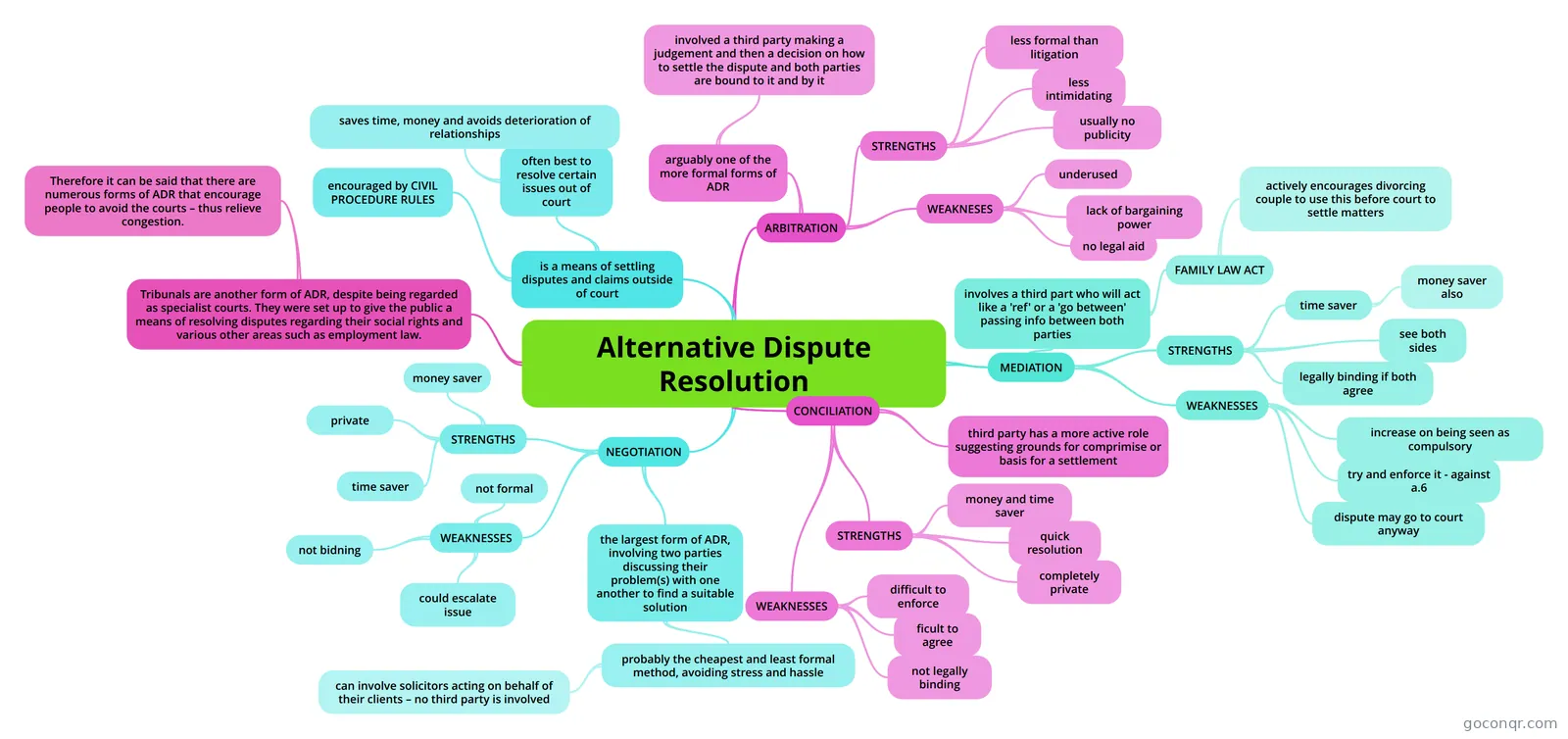 Mind map Alternative Dispute Resolution
Mind maps
See all 240 mind maps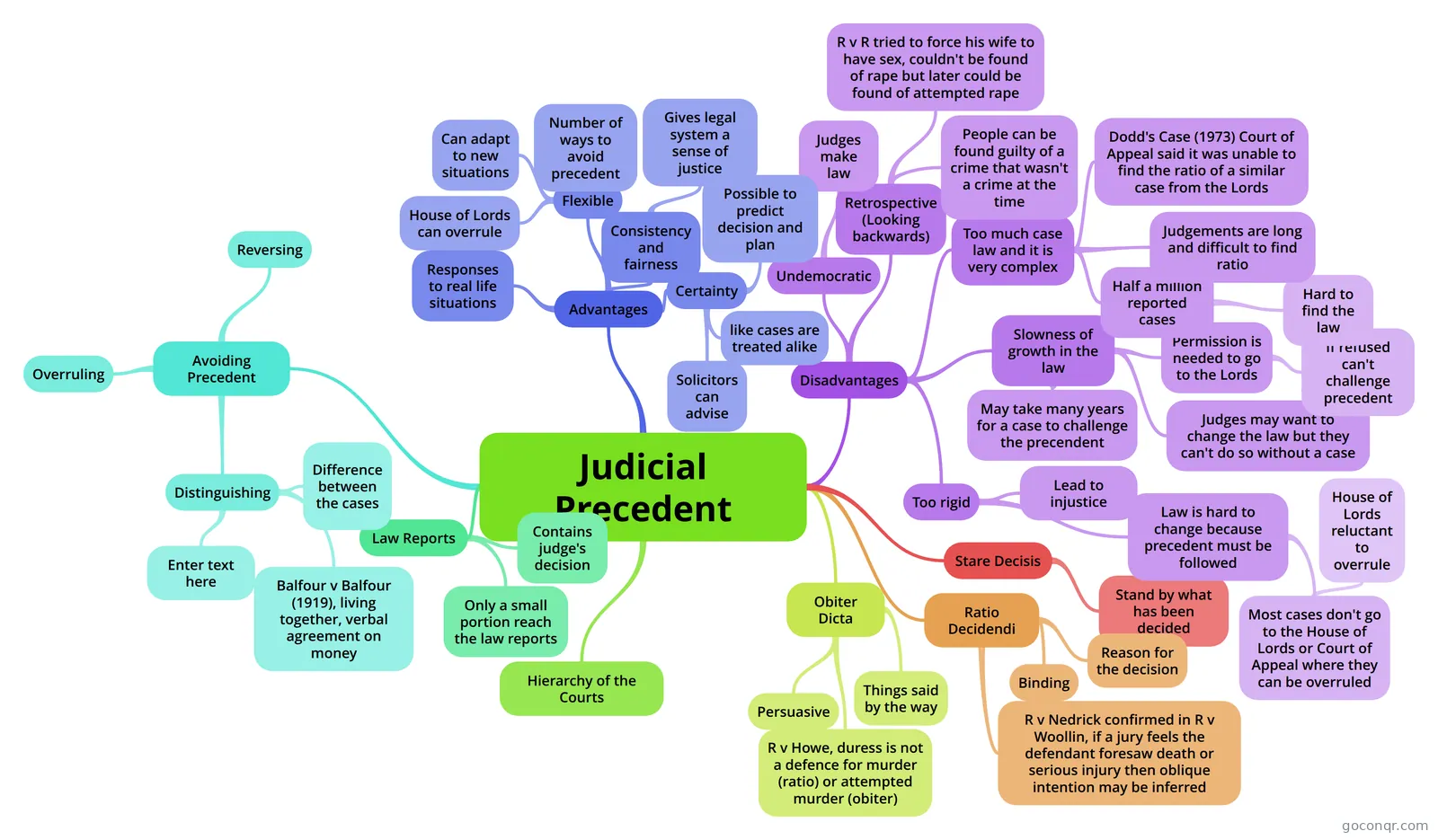
Flashcards
See all 97 flashcards-
32 cardsLegal System 2: Lay People (Magistrates), Juries, Legal Personnel Lay People Lat Magistrates What is a lay magistrate?
-
47 cardsIntroduction to English Law (Unit 1) In a complex democratic society, law is vital for achieving social order. Who does it benefit?
-
37 cardsThe Nature of Law What Is Law?
-
29 cardsSTATUTORY INTERPRETATION WHY DO WE NEED STATUTORY INTERPRETATION?
-
13 cardsLay People Key Cases Bushell's Case 1670
-
33 cardsLaw Flashcards
-
35 cardsThe Justice System
-
12 cardslaw reform why do we need to reform the law ?
Flowcharts
Notes
See all 19 notes-
RATIO DECIDENDI AND OBITER DICTUM Ratio Decideni and Obiter DictuM Carlill v Carbonic Smoke Ball Co. [1983] 1 QB 256
-
Legal Personnel - English Legal System Legal PersonnelThe judiciary:Appointed by the Judicial Appointments Commission are responsible for appointing/recommending judges for appointment.Usually judges started as barristers and started off with part time jud...
Slides
Topics in English Legal System
More Law (general and introduction) topics
About English Legal System
GoConqr OriginalWhat this unit covers
The resources follow the main building blocks of the English legal system. The Sources of Law mind map sets out statute law, common law and the law of equity. The mind map on the development of Common Law and Equity looks at the Court of Chancery, the maxims of equity and the Judicature Acts.
Other maps cover Judicial Precedent, with stare decisis and ratio decidendi, and Statutory interpretation, which asks why interpretation is needed and looks at ambiguity and drafting errors, including Brock v DPP 1993.
Courts and dispute resolution
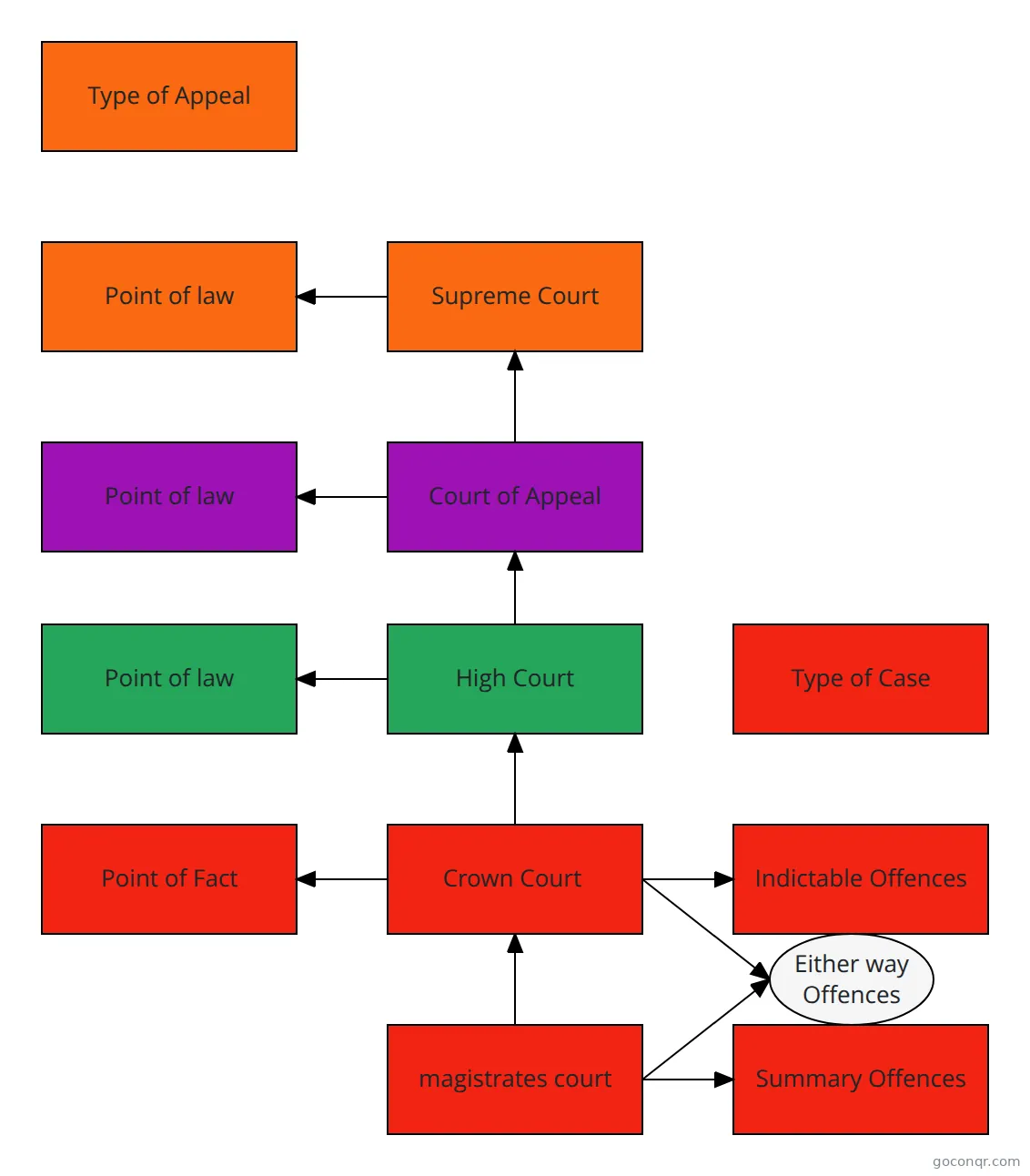
The Civil courts and ADR mind map explains the County Court and the three divisions of the High Court. The Alternative Dispute Resolution map looks at settling disputes outside court. Flowcharts such as Civil Court Structure and Criminal Court Struture give you the hierarchy at a glance.
People in the system
The Legal Personnel mind map covers barristers, solicitors, the four Inns of Court, rights of audience and the cab rank rule. The chapter on the legal profession looks at how solicitors train. The flashcard deck on lay magistrates, juries and legal personnel is a good way to test the same ground.
A sensible order
- Start with the mind map called The English Legal System for an overview.
- Move to Sources of Law, then Judicial Precedent.
- Add Statutory interpretation and the courts.
- Finish with legal personnel, magistrates and juries.
Using maps and quizzes together
Read a map first, then take a quiz on the same topic, such as the Statutory Interpretation quiz or the quiz on legal personnel. Note what you missed, go back to the map, then check yourself with the matching flashcards. This unit sits in the Legal Systems and Institutions strand of Law (general and introduction).
Choose one topic today and see how much you can recall.
Frequently asked questions
Where should I start on this page?
Begin with the mind map called The English Legal System for an overview. Then move to Sources of Law and Judicial Precedent, which many other topics build on. After that, try the quiz called English Legal System to see which areas need more work.
What do the mind maps cover?
They cover sources of law, common law and equity, judicial precedent, statutory interpretation, civil and criminal courts, ADR, magistrates, juries and legal personnel. The Legal Personnel map, for example, deals with barristers, solicitors, the Inns of Court and the cab rank rule.
Are the resources free to use?
Yes. Every resource on this page is free to open, study and take, with no account needed. They were made by GoConqr users rather than by GoConqr itself, so it helps to check them against your own course materials.
Which exams do these resources suit?
The listed resources mention A-level Law, GCSE Law, ACCA and SQE. Most are at school level, with a good share aimed at university students and a small number at professional candidates. Check the content against your own specification before relying on it.
Are there flashcards for statutory interpretation and precedent?
Yes. There are flashcard decks called Statutory interpretation and Judicial precedent, along with others on the doctrine of judicial precedent and delegated legislation. Use them after reading the matching mind maps to test what you remember.
What if I cannot find the topic I need?
Try a nearby topic first, since courts, personnel and law-making resources often overlap. A free account also lets you save quiz scores and build your own quizzes, mind maps, flashcards and notes to fill any gap.