
Courts and the Judiciary
230 resources created by 187 users
This Courts and the Judiciary page on GoConqr gathers community-made mind maps, flashcards, quizzes, flowcharts and notes, from criminal courts and lay magistrates to civil courts, court hierarchy and judicial independence. It's built for university students and professional candidates, school students, and teachers after ready-made material, all practising how courts work and how judges are chosen. There are over 220 resources here, including more than 15 quizzes and over 120 mind maps, pitched at university and secondary level. Pick a mind map, test yourself with a quiz, then build your own.
Top Courts and the Judiciary resources
-
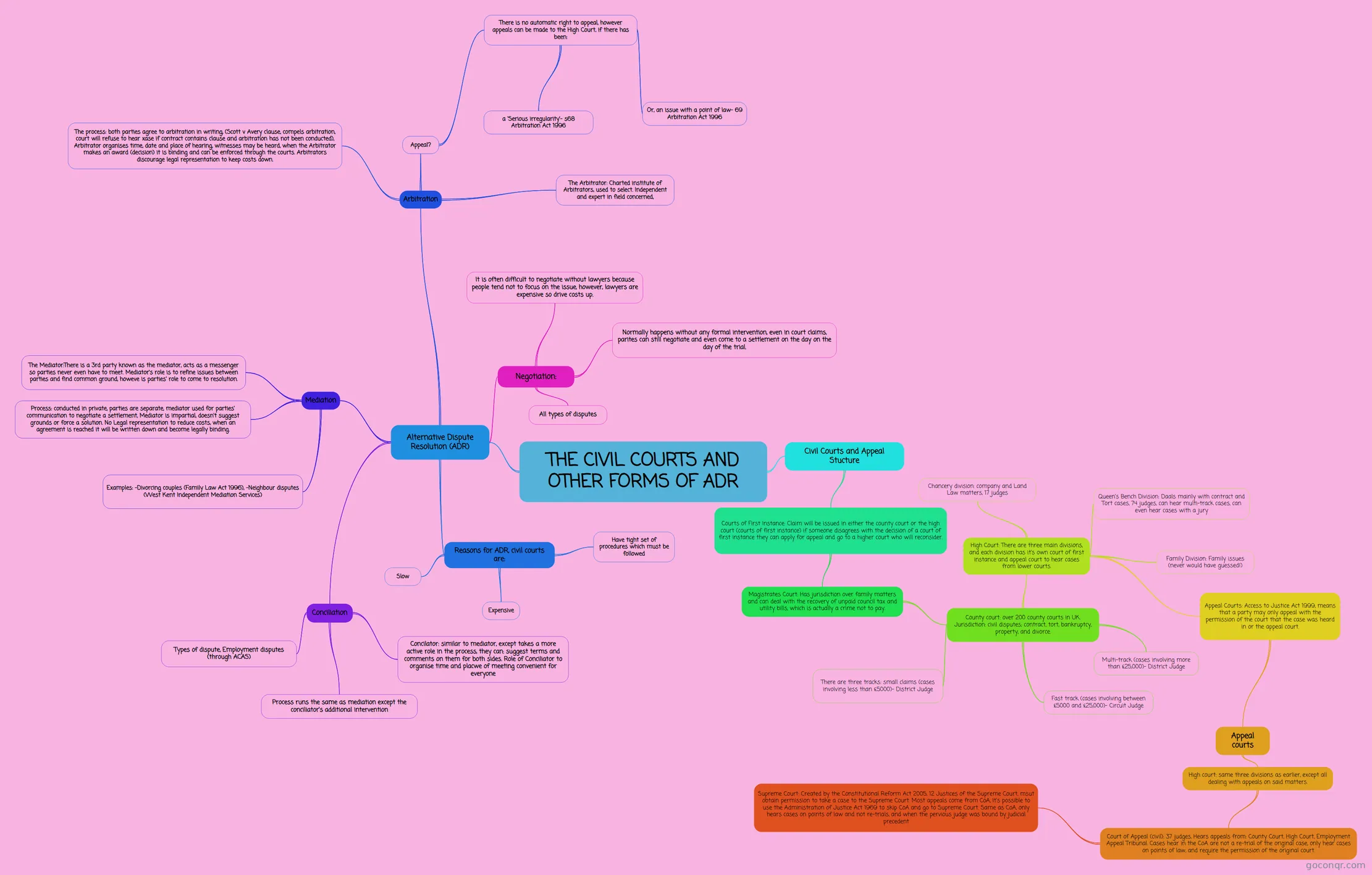 Mind map THE CIVIL COURTS AND OTHER FORMS OF ADR A-level in depth description and Evaluation
-
34 cardsCIVIL CASES FOR CASES WHERE THE CLAIM IS £25,000 OR LESS, THEY MUST BE STARTED IN WHICH COURT?
-
 Mind map Criminal Courts and Lay People
-
 Mind map Criminal Courts & Lay People
-
10 cardsPre Trial Procedures Indictable offences are how serious of an offence and are tried in what court?
-
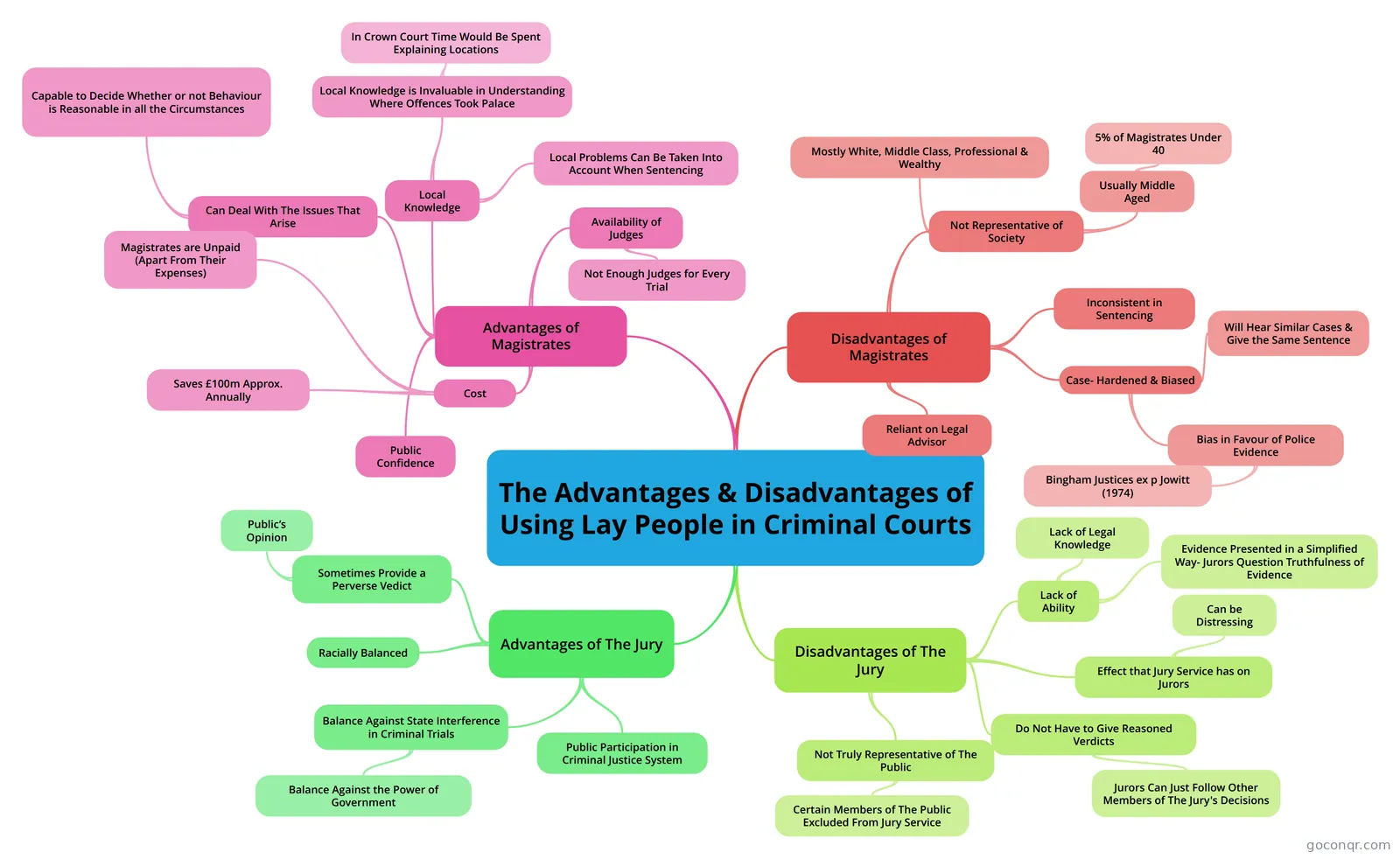 Mind map The Advantages & Disadvantages of Using Lay People in Criminal Courts
-
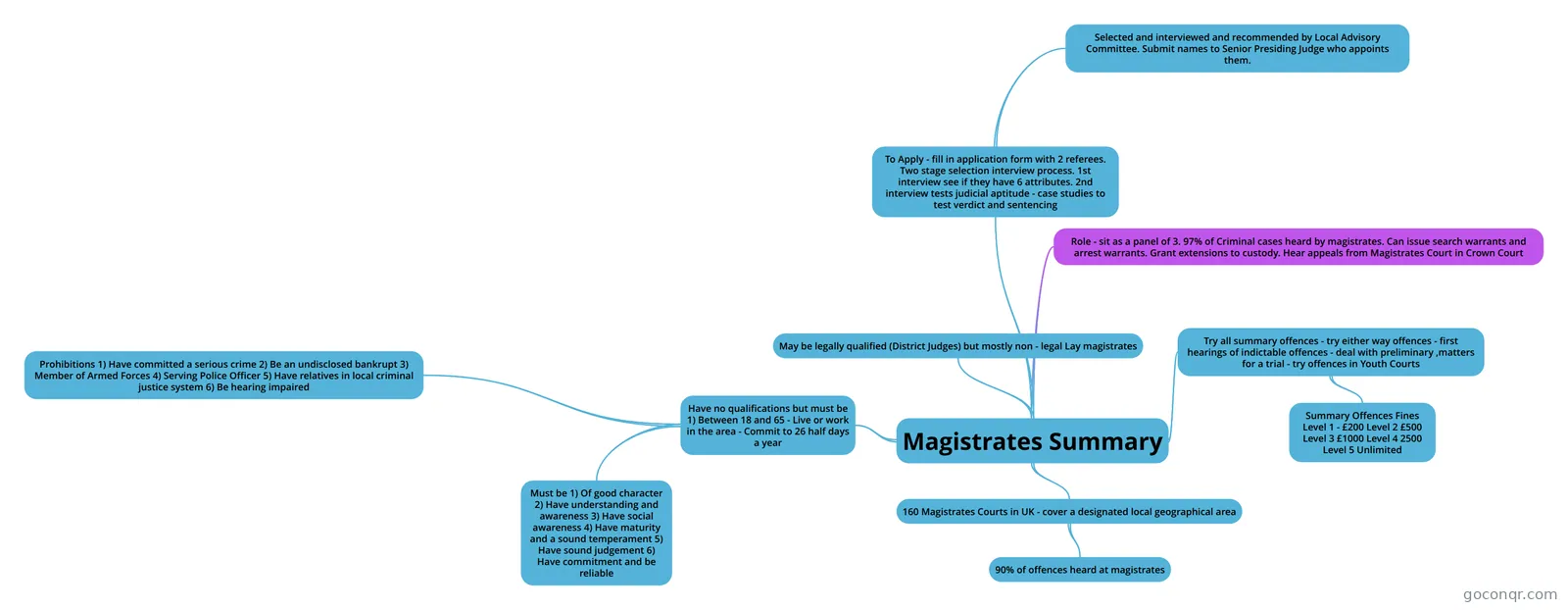 Mind map Magistrates Summary Summary of content for Magistrates Role.
-
 Mind map CIVIL JURISDICTION OF SESSIONS COURT (S.59(1) SCA 1948) Civil Jurisdiction of Sessions Court in Malaysia
Quizzes
See all 17 quizzesMind maps
See all 126 mind maps-
THE CIVIL COURTS AND OTHER FORMS OF ADR A-level in depth description and Evaluation
-
Criminal Courts and Lay People
-
Criminal Courts & Lay People
-
The Advantages & Disadvantages of Using Lay People in Criminal Courts
-
Magistrates Summary Summary of content for Magistrates Role.
-
CIVIL JURISDICTION OF SESSIONS COURT (S.59(1) SCA 1948) Civil Jurisdiction of Sessions Court in Malaysia
-
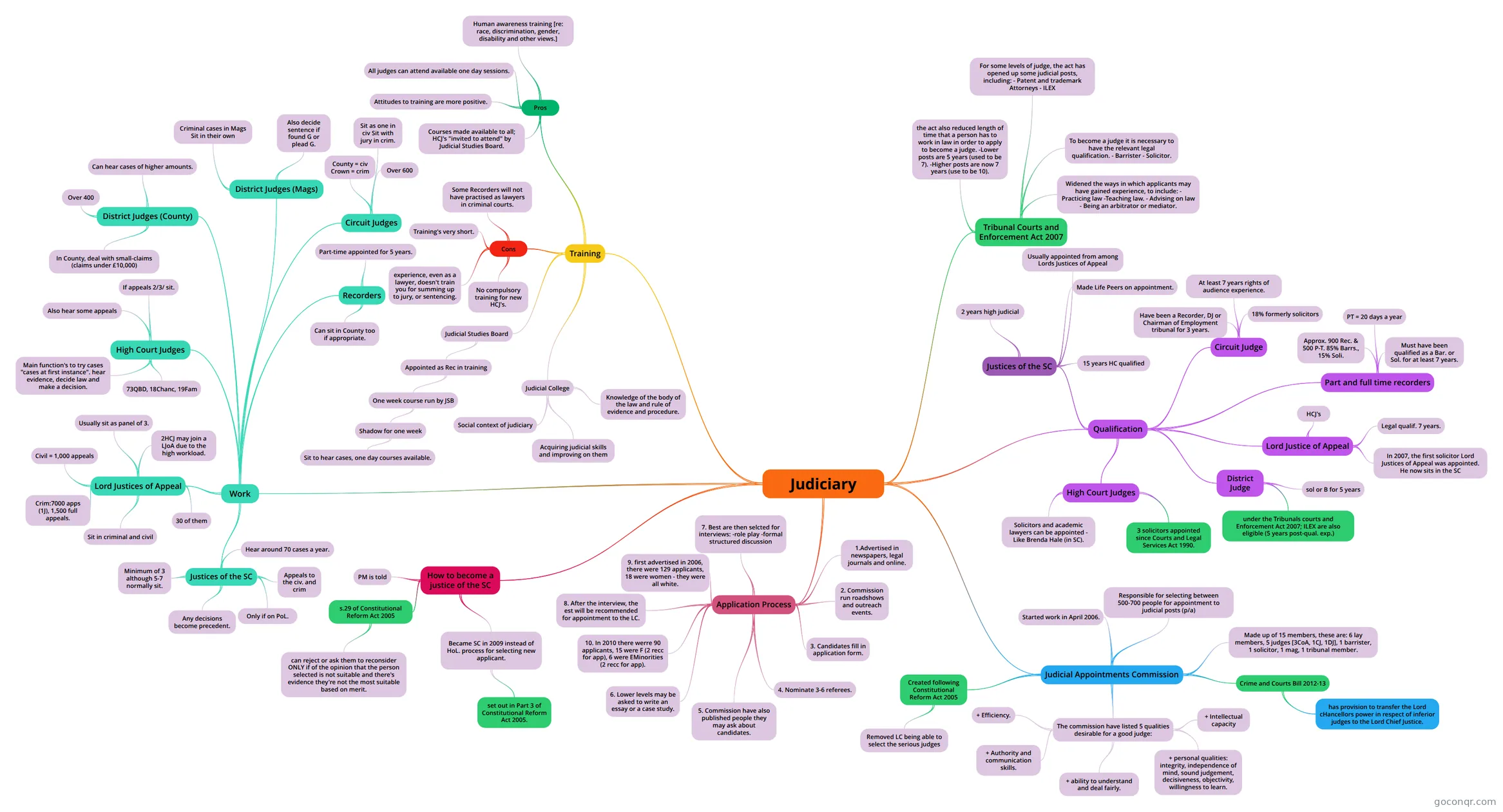 Judiciary
-
 Criminal Courts and Lay People
Flashcards
See all 58 flashcards-
34 cardsCIVIL CASES FOR CASES WHERE THE CLAIM IS £25,000 OR LESS, THEY MUST BE STARTED IN WHICH COURT?
-
10 cardsPre Trial Procedures Indictable offences are how serious of an offence and are tried in what court?
-
57 cardsBLAW Ch. 2 The Court System and Dispute Resolution
-
47 cardsTHE JUDICIARY WHAT ARE THE JUDGES WHO SIT IN THE SUPREME COURT CALLED?
-
7 cardsBasic Knowledge
-
8 cardsCourt Glossary Term 3
-
7 cardsjurisdiction of the civil courts the county court
-
4 cardsCh. 2: The Court System (Pg 28) Judiciary Branch and Judicial Review
Flowcharts
See all 16 flowchartsMore Law (general and introduction) topics
About Courts and the Judiciary
GoConqr OriginalWhat this unit covers
The unit follows the courts from the bottom up and then looks at the people who sit in them. Many resources are mind maps, and they cover both criminal and civil routes through the system.
- Criminal courts and lay people: juries, eligibility rules, magistrates, and the types of offence (summary, either way and indictable).
- Civil courts: first instance courts, appeal routes, and other forms of dispute resolution.
- The judiciary: qualifications, selection and training, tenure, and judicial independence.
Where to start
Begin with the mind map Criminal Courts and Lay People. It sets out the offence types and what magistrates do. Then read The Advantages & Disadvantages of Using Lay People in Criminal Courts, which is useful when an essay asks you to evaluate.
For civil work, open THE CIVIL COURTS AND OTHER FORMS OF ADR, then try the flashcard deck CIVIL CASES. It asks which court a claim of a given size must start in.
Using quizzes and maps together
Read a map first, then close it and take a quiz. The Mode of Trial quiz fits well after the criminal court maps. Mode of Trial also exists as a mind map, so you can check your answers against it. The flashcard deck Pre Trial Procedures asks why a defendant might choose a magistrates court, which is good practice for short answers.
Exam-minded readers will find material that mentions A-level Law, A-level Politics and GCSE Law. Some resources look at other systems too, such as the Massachusetts court system and the Wisconsin Court System, so check the jurisdiction before you rely on a set of notes.
Judges and independence
Once the courts feel clear, move on to The qualifications, selection and training of judges. It refers to the Courts and Legal Services Act 1990 and lists requirements for Supreme Court judges. Then read the maps on judicial independence and the question Are judges neutral?
Where it sits
This unit belongs to the Legal Systems and Institutions strand of Law (general and introduction). Choose one resource today, work through it, and then make a map or flashcard set of your own to fill any gaps.
Frequently asked questions
Which resource should I open first?
Start with the mind map Criminal Courts and Lay People. It covers juries, magistrates and the types of offence in one place. Then try the Mode of Trial quiz to check what stuck. If your course is mainly civil, begin with THE CIVIL COURTS AND OTHER FORMS OF ADR instead.
What do the mind maps on this page cover?
They cover criminal courts and lay people, the pros and cons of using magistrates, civil courts and appeal structure, court hierarchy, and judges. The judges maps look at qualifications, selection, training, tenure and independence. A few look at courts in other places, so check which system you need.
Are the resources free to use?
Yes. Every resource listed here is free to open, study and take, with no account needed. They were made by GoConqr users, not by GoConqr itself, so it is worth comparing a few on the same topic. A free account saves your quiz scores and lets you make your own.
Which levels and exams do these resources suit?
The resources are split fairly evenly between university and secondary level, with a small share for professional candidates. Some mention A-level Law, A-level Politics and GCSE Law. Teachers can use the maps, flashcards and quizzes as ready-made material for lessons or revision.
Are there quizzes as well as maps and flashcards?
Yes, there are more than 15 quizzes alongside the maps and flashcards. Examples include Mode of Trial, Tribunals, Courtrooms and Judge Sittings. There are also quizzes on magistrates courts compared with Crown Courts. Use them after reading a map to see what you remember.
What if the topic I need is missing?
Try a different wording in the search, since similar topics often sit under other titles, such as magistrates, lay people or judiciary. If you still cannot find it, you can make your own mind map, flashcards, quiz or notes and use them for your own revision.