
Introduction to Law
548 resources created by 466 users
This Introduction to Law page on GoConqr gathers community-made quizzes, mind maps, flashcards and notes, from what law is and how it differs from morality to criminal versus civil law and public versus private law. It's built for university students and professional candidates, school students, and teachers after ready-made material. There are over 500 resources here, including more than 60 quizzes, over 200 mind maps and over 200 flashcard decks, with A-level Law and GCSE Law among the exams mentioned. Pick a starting point, try a quiz, then build your own.
Top Introduction to Law resources
-
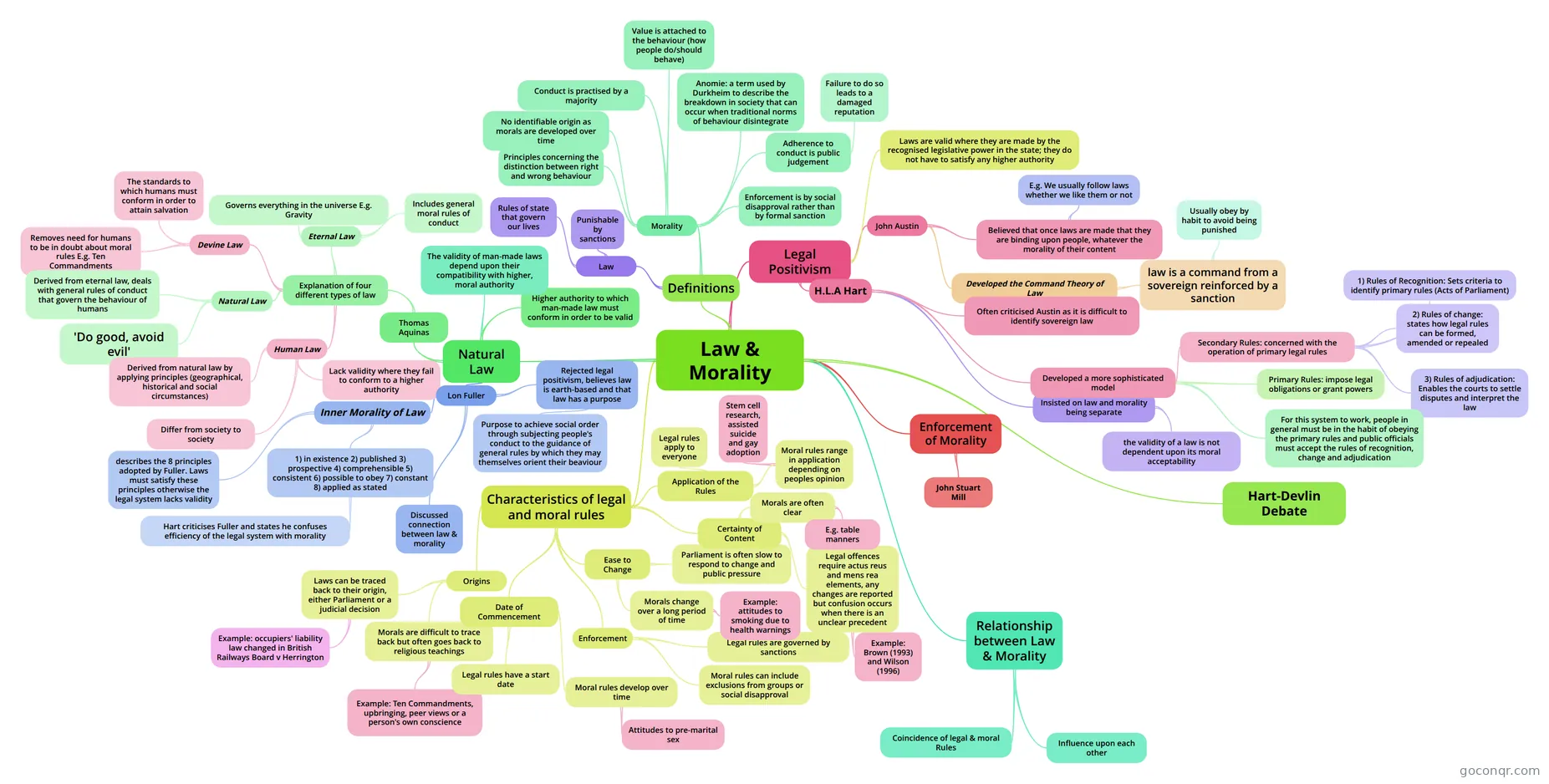 Mind map Law & Morality
-
40 questionsIntroduction To Law A law is a set of rules intended to regulate society.
-
12 cardsLaw subdivision cards cetys LNIG 2020 - U3
-
11 cardsCommerce: Criminal and Civil law
-
58 cardsHow the Law Works Penn Foster Program
-
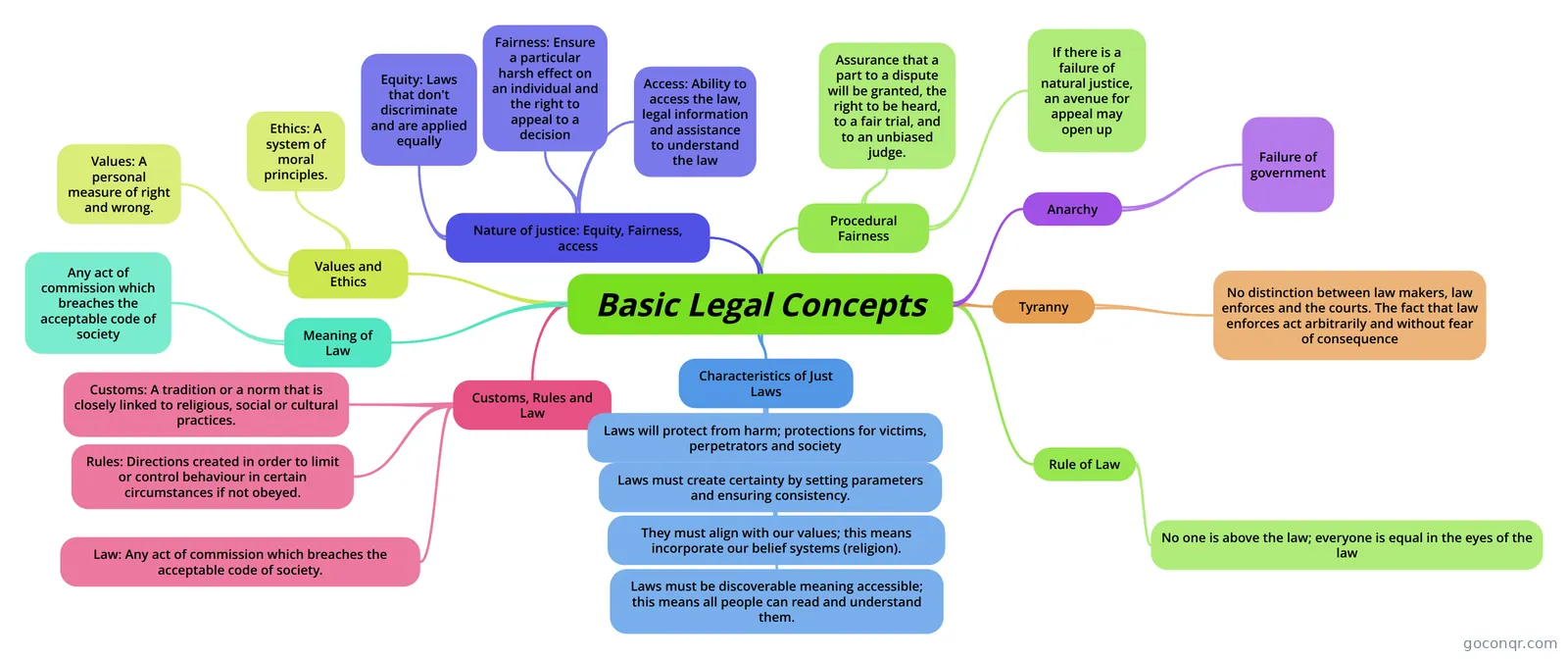 Mind map Basic Legal Concepts
-
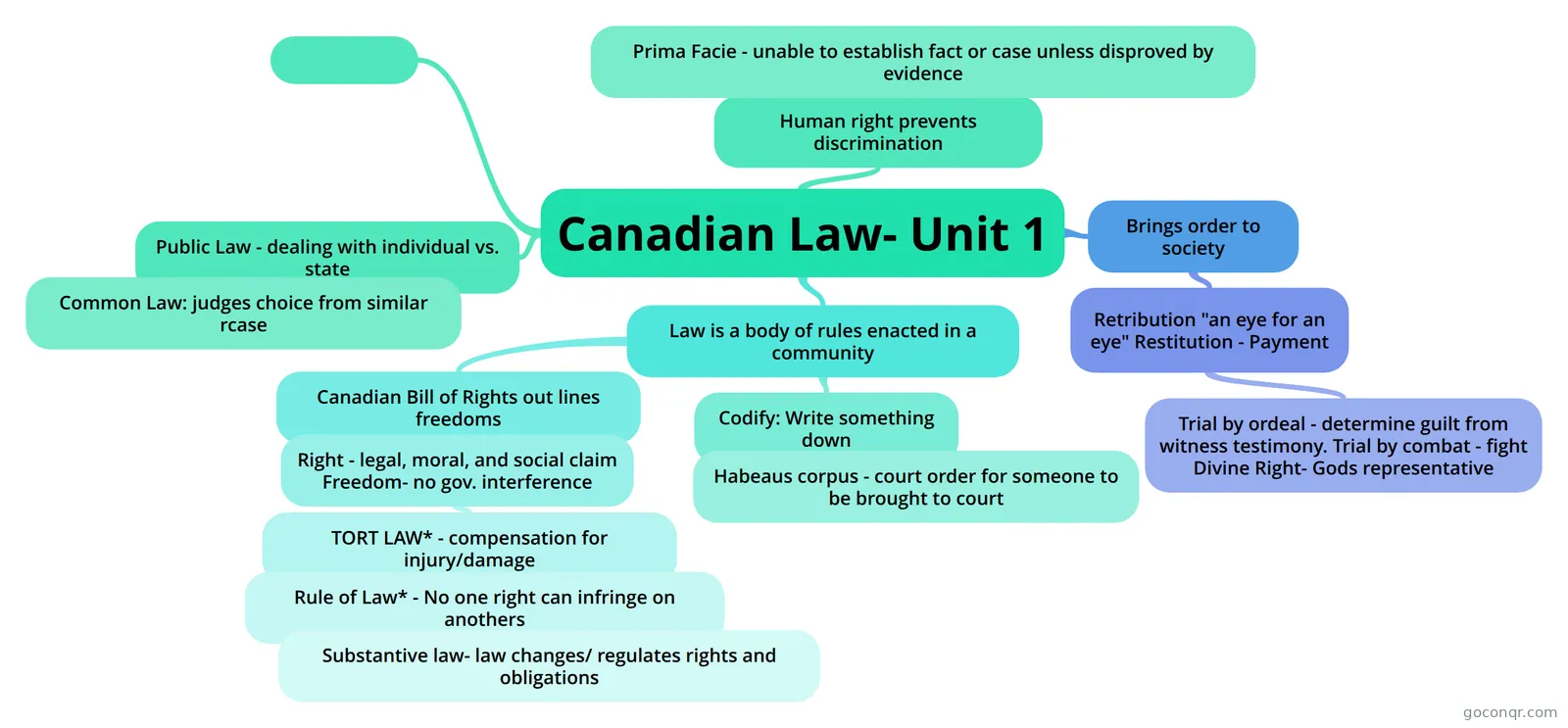 Mind map Canadian Law- Unit 1
-
 Mind map Legal Theories
Quizzes
See all 71 quizzes-
40 questionsIntroduction To Law A law is a set of rules intended to regulate society.
-
19 questionsLS100: Chapter 1 Practice Quiz The law consists of a set of rules and procedures usually intended to regulate some aspect of society.
-
21 questionsTopic 1 Legal Studies What is a law?
-
26 questionsCriminal vs Civil Law What are the 4 purposes of criminal law?
-
9 questionsChapter 1 Review The Illinois state legislature passes a law raising the speed limit on certain state roads. This law become...
-
20 questionsAspects of Private Law Private law is positive law.
-
50 questionsBUSL - Exam #1 A court may depart from a precedent if the court finds the precedent should no longer be followed.
-
9 questions2.1 What is a law?
Mind maps
See all 213 mind maps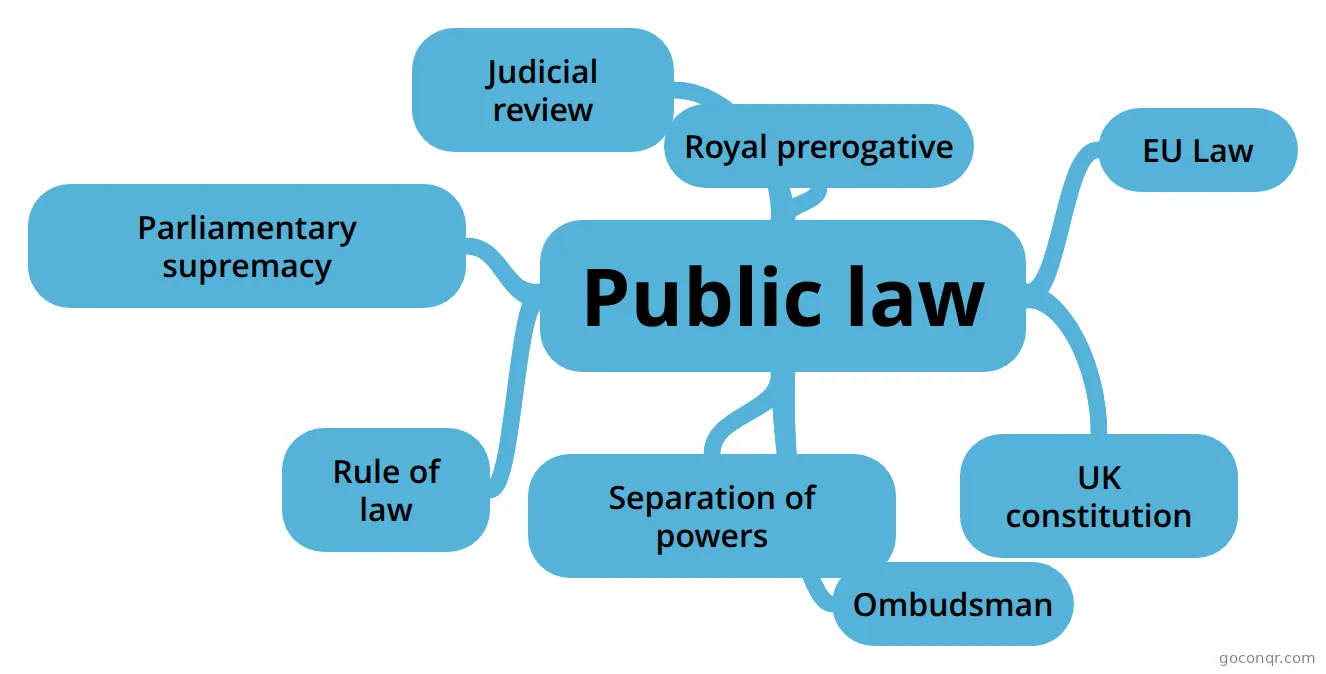

Flashcards
See all 215 flashcards-
12 cardsLaw subdivision cards cetys LNIG 2020 - U3
-
11 cardsCommerce: Criminal and Civil law
-
58 cardsHow the Law Works Penn Foster Program
-
51 cardsLegal Environment of Social Work branches of government
-
84 cardsCommerce Yearlys 2020 Yr 10 - Law in Action What is Legal Capacity?
-
45 cardsLegal Unit 1 Exam Defences to Crimes
-
102 cardsPRELIMINARY LEGAL STUDIES: Syllabus Notes What is a value??
-
54 cardsLegal Assisting midterm 3 Branches of Govt.
Notes
See all 41 notes-
CAIB 3: Chapter 1 notes Section 1 - The Law - An introductionTwo types of law: Criminal Law and Civil LawCriminal Law: A wrong that is considered to be harmful to the stateCivil Law: The body of law concerned with civil or private rights and...
-
Concepts of Law - A summary Liability depending on fault;Actus Reus: The act must be a voluntary one; As shown in Hill v BaxterIn Criminal law: The fault element is often considered as the Mens Rea of a crime D won't be liable if causation canno...
-
CLASSIFICATION OF LAWS CLASSIFICATION OF LAWS . 1. CIVIL AND CRIMINAL LAWDEFINITIONS OF CIVIL : deals with people rights and obligations which arise between individuals , companies or corporations. FUNCTION OF CIVIL : to uphold the right of...
More Law (general and introduction) topics
About Introduction to Law
GoConqr OriginalWhat this unit covers
The resources here deal with the basic questions of law: what a law is, where laws come from, and how they are sorted. The mind map Law & Morality sets out definitions of law and morality and then moves to legal positivism. Legal Theories lists natural law, legal realism, critical legal studies and feminist legal theories side by side.
Where to start
Begin with a map to see the overall shape. Basic Legal Concepts covers the meaning of law, customs and rules. Civil and Criminal Law looks at the sources of law, including the Code of Hammurabi, Roman law and English law. Then read the notes in CAIB 3: Chapter 1 notes, which explain the two types of law: criminal law, a wrong harmful to the state, and civil law.
Vocabulary and classification
Flashcards help with the terms that come up again and again. Law subdivision cards runs through public law, constitutional law, administrative law, tax law, private law and more. How the Law Works covers terms such as common law, case law and concurrent jurisdiction. The deck Commerce: Criminal and Civil law covers courts and the parties in criminal and civil cases, such as the accused, prosecution, plaintiff and defendant.
Using quizzes and maps together
- Read a mind map and cover the branches, then try to rebuild them from memory.
- Take the quiz Introduction To Law to see which ideas are shaky.
- Go back to the map or notes for those gaps.
- Retry a different quiz, such as Difference Between Criminal and Civil Law.
Where it sits
This unit belongs to the Foundations of Law strand in Law (general and introduction). Some resources mention A-level Law and GCSE Law, while many others come from university courses. Choose what matches your course, then make your own maps and flashcards to fill any gaps.
Frequently asked questions
Which resource should I open first?
Try the mind map Law & Morality or Basic Legal Concepts for an overview of definitions and ideas. Then take the quiz Introduction To Law to see what you already know. If you prefer reading, the notes in CAIB 3: Chapter 1 notes explain criminal and civil law clearly.
What do the mind maps cover?
They cover the meaning of law, the link between law and morality, legal theories such as natural law and legal positivism, sources of law, and the split between public and private law. Some also look at civil and criminal law and the courts as law makers.
Are the resources free to use?
Yes. Every resource listed here is free to open, study and take, with no account needed. They were made by GoConqr users, not by GoConqr itself, so it is worth checking them against your own course materials.
Which levels and exams do these suit?
The mix is roughly half university and half secondary, with a small share for professional candidates. Some resources mention A-level Law and GCSE Law. Others follow university or professional course chapters, so check the title and content before you rely on one.
How can I test myself on criminal and civil law?
Take the quizzes Difference Between Criminal and Civil Law, Torts vs Criminal Law or Criminal vs Civil Law. Then use the flashcard deck Commerce: Criminal and Civil law to practise the courts and the parties involved in each kind of case.
What if my topic is missing?
Look through the notes, quizzes and decks for a nearby title first, since many cover several topics at once. If nothing fits, a free account lets you make your own quizzes, mind maps, flashcards and notes for the gap.