
History of Economic Thought and Economic History
240 resources created by 207 users
This GoConqr page gathers over 220 community-made resources on History of Economic Thought and Economic History: quizzes, mind maps, flashcards and notes to revise and practise with.
Top History of Economic Thought and Economic History resources
-
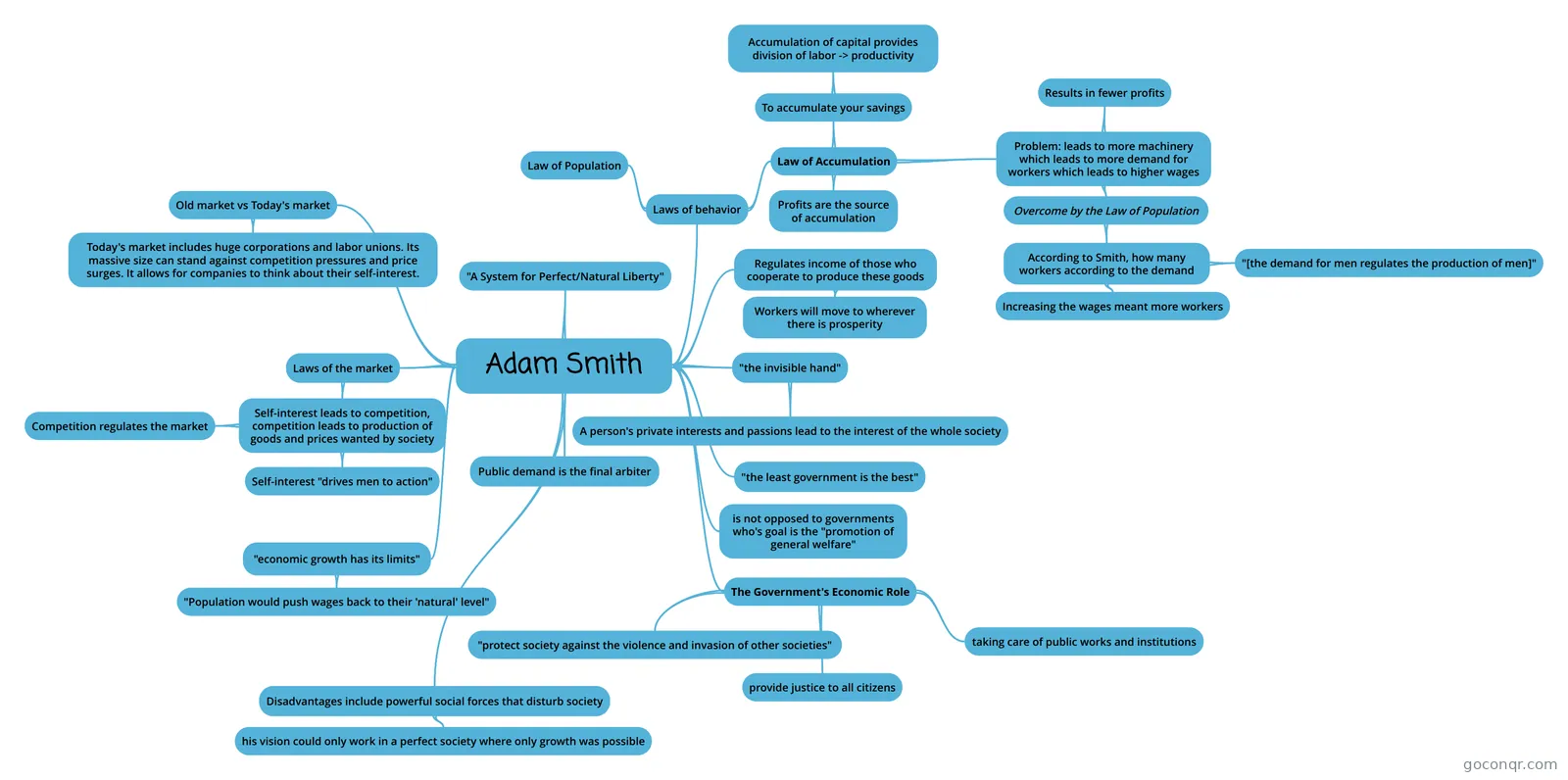
Mind map ADAM SMITH (the classical school) This mind map is created for academic purpose. Adam Smith is an economist and first founder of classical sc...
-
 Mind map Adam Smith Quiz 2 Revisions
-
 Mind map Neoliberalism
-
Mind map Schools of economic Thought i
-
110 cardsEuropean Economics (Lectures) Revision of key ideas for European economics
-
16 questionsHistory of economics 2021 In the view of Adam Smith, individual freedom:
-
8 cardsTheories of Surplus: Mercantilism, Smith & Marx What is capitalism?
-
10 questionsHistory Extra Credit Which of the following is NOT the major tenets of Marginalist School?
Quizzes
See all 16 quizzesMind maps
See all 188 mind maps-
ADAM SMITH (the classical school) This mind map is created for academic purpose. Adam Smith is an economist and first founder of classical sc...
-
Adam Smith Quiz 2 Revisions
-
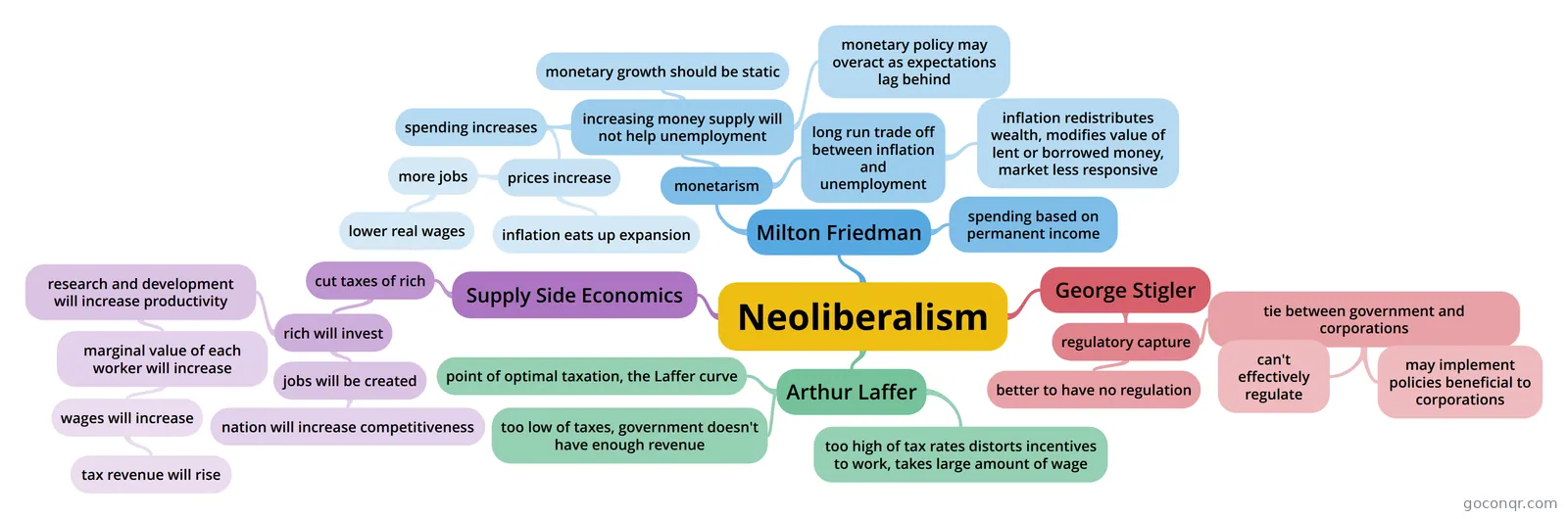
Neoliberalism
-
Schools of economic Thought i
-
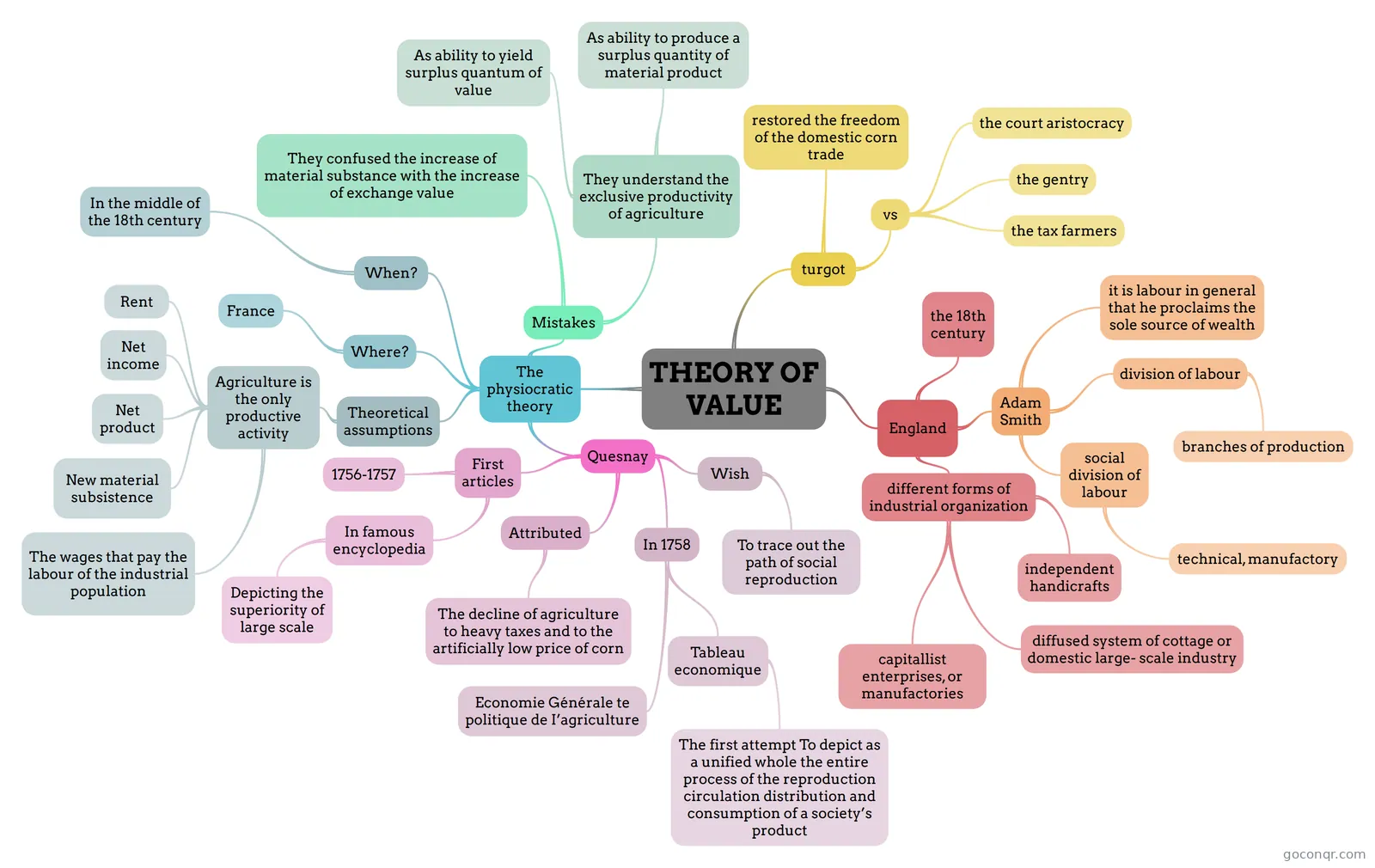 THEORY OF VALUE Mapa Mental en THEORY OF VALUE, creado por ANA NAVA en 21/08/2018.
-
Mercantilist this is an example on how you can use mind map to summarize a topic
-
schools of thought economic oihiouhyiuh
-
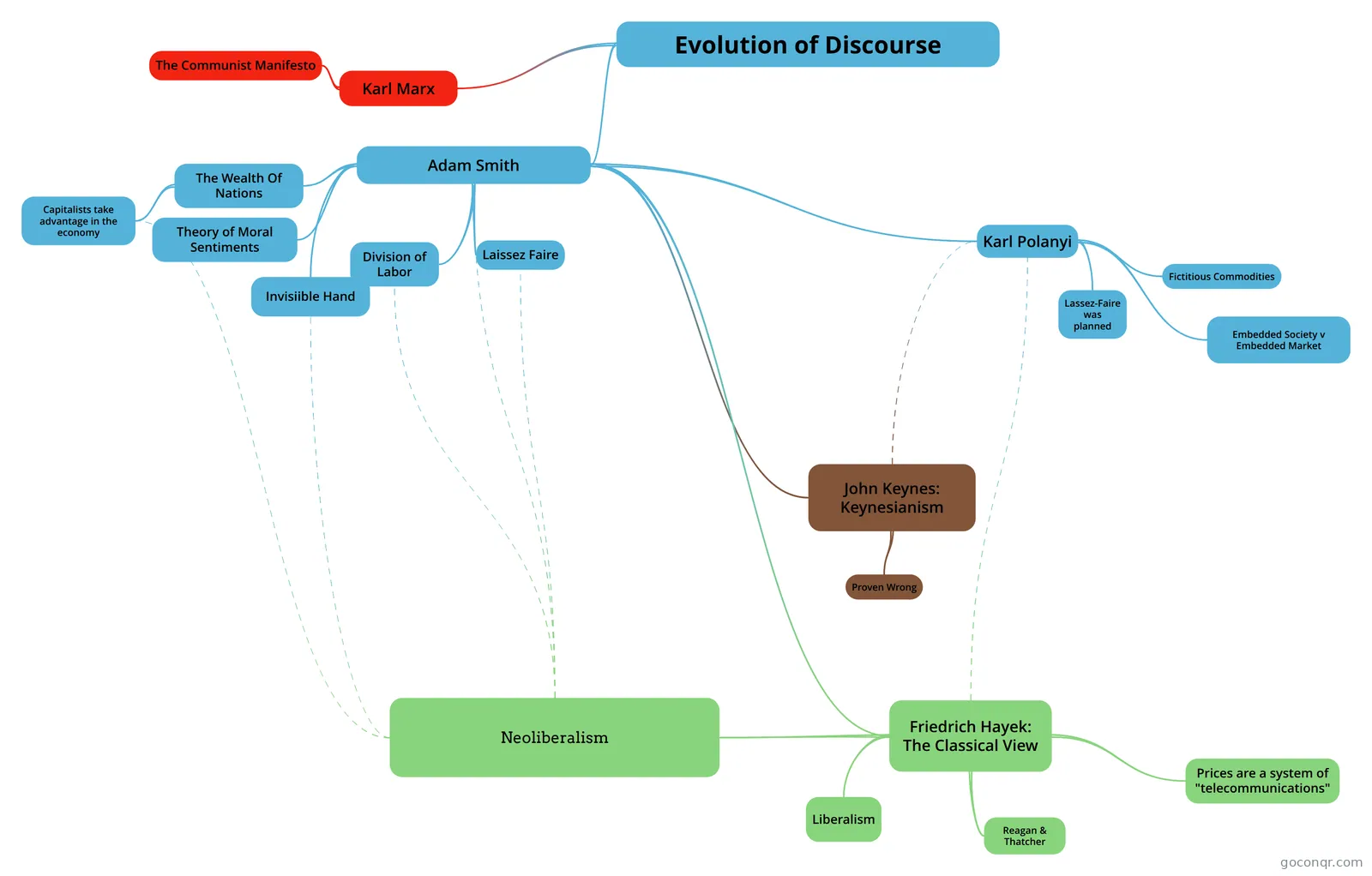 Evolution of Discourse
Flashcards
See all 24 flashcardsNotes
More Economics topics
About History of Economic Thought and Economic History
GoConqr OriginalWhat the page covers
The unit follows two threads: how economic ideas developed, and how economies changed over time. On the ideas side, the mind maps cover Mercantilist thinking, Physiocracy, the classical school, Neoclassical Economics, Liberalism and Neoliberalism. Adam Smith appears again and again, with notes on his life, his "invisible hand" and his system of natural liberty.
On the history side, you will find The Great Divergence, which compares Europe and Asia up to 1800, and The great depression, with the gold standard, the Federal Reserve and the 1929 stock market crash. A map on knowledge, tech transfer and convergence looks at the British Industrial Revolution.
Where to start
- Begin with Schools of economic Thought for the big picture, from mercantilism and the physiocrats onwards.
- Move to a Smith map, such as Adam Smith, to see how the classical school began.
- Read the map on Robert Owen, Karl Marx and socialist economic thought to meet the critics of capitalism.
- Finish with Neoliberalism, which covers Milton Friedman, monetarism and supply-side economics.
Using maps, flashcards and quizzes together
Read a map first and try to explain each branch in your own words. Then run through a flashcard deck such as Key Economists or Theories of Surplus: Mercantilism, Smith & Marx to fix names and terms. Finally, take a quiz like History of economic theory to see what has stuck. Go back to the map for anything you missed.
Where this unit sits
This unit belongs to the Foundations of Economics strand in the Economics subject. Some resources are in other languages, including Spanish flowcharts on Marxism and liberalism and a French quiz, which helps if you study in more than one language.
Teachers can use the maps as ready-made class material. Whatever your role, choose one resource that fits what you are studying this week and open it now.
Frequently asked questions
Which resource should I open first?
Start with the mind map Schools of economic Thought. It lays out mercantilism, the physiocrats and the later schools, so you can see how they connect. After that, pick one of the Adam Smith maps and follow the story forward into Marx and neoliberalism.
What do the mind maps cover?
They cover thinkers and schools, such as Adam Smith, Physiocracy, Neoclassical Economics and Neoliberalism. They also cover economic history, including The Great Divergence, the great depression, industrial revolutions and technology transfer. Some focus on Latin American crises and political economy.
Are the resources free to use?
Yes. Every resource listed here is free to open, study and take, with no account needed. They were made by GoConqr users rather than by GoConqr itself, so it is worth comparing a couple of maps on the same topic.
Which levels are these resources for?
Most are pitched at university level, around four in five, with a smaller share suited to school students. University students will find the most depth, while school students can use the simpler quizzes and flashcard decks to build a first picture.
Can I save my quiz scores or make my own material?
A free account saves your quiz scores and lets you make your own quizzes, mind maps, flashcards and notes. That is handy if you want to turn a listed map, such as the one on Marx, into a deck of your own.
What if I cannot find the topic I need?
Try a related resource first. Smith, Marx and the schools of thought are covered in several formats, including flashcards and flowcharts. If a topic is still missing, build your own map or flashcard deck and use the listed ones as a model.