
Overview of Basic Tissue Types mind maps
129 mind maps by 119 users · Page 1 of 4
This GoConqr page gathers over 120 mind maps on basic tissue types, from epithelial and connective tissue to muscle and nervous tissue. They give university students material for revising tissue types and teachers material to use in teaching. Almost all the resources are at university level. Choose a map to begin.
Mind maps
-
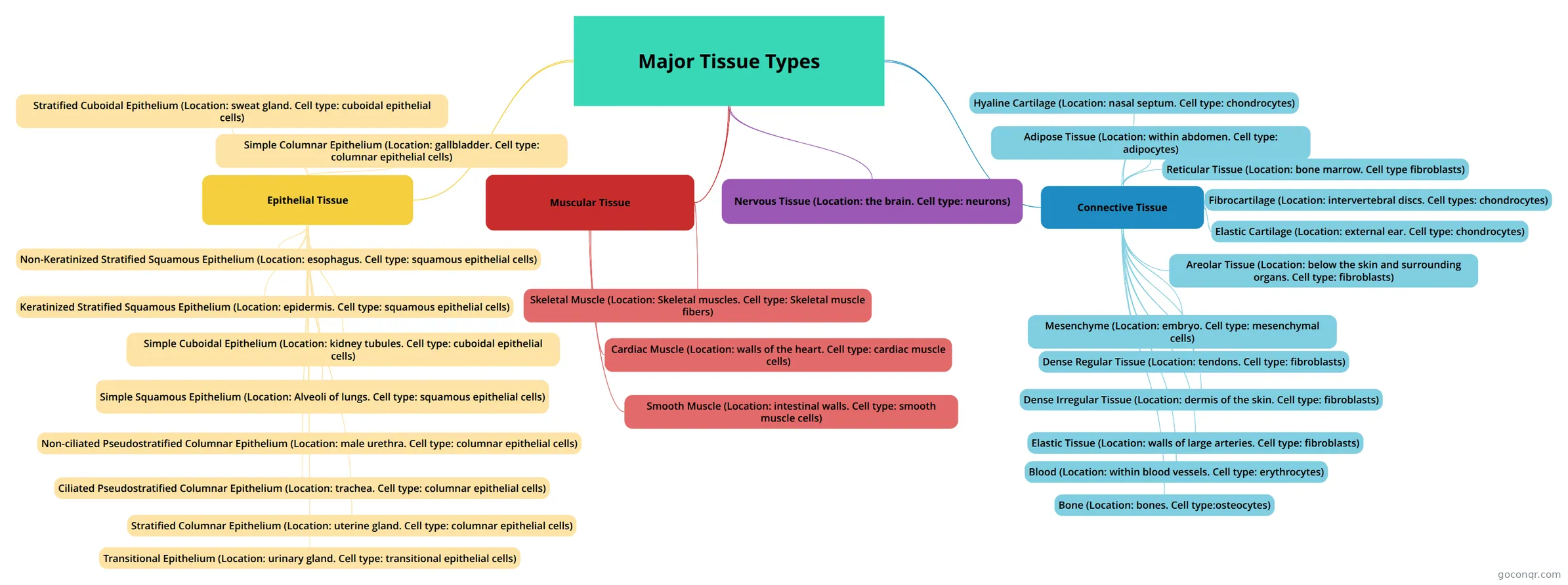 Major Tissue Types A concept map of the major types of tissues.
-
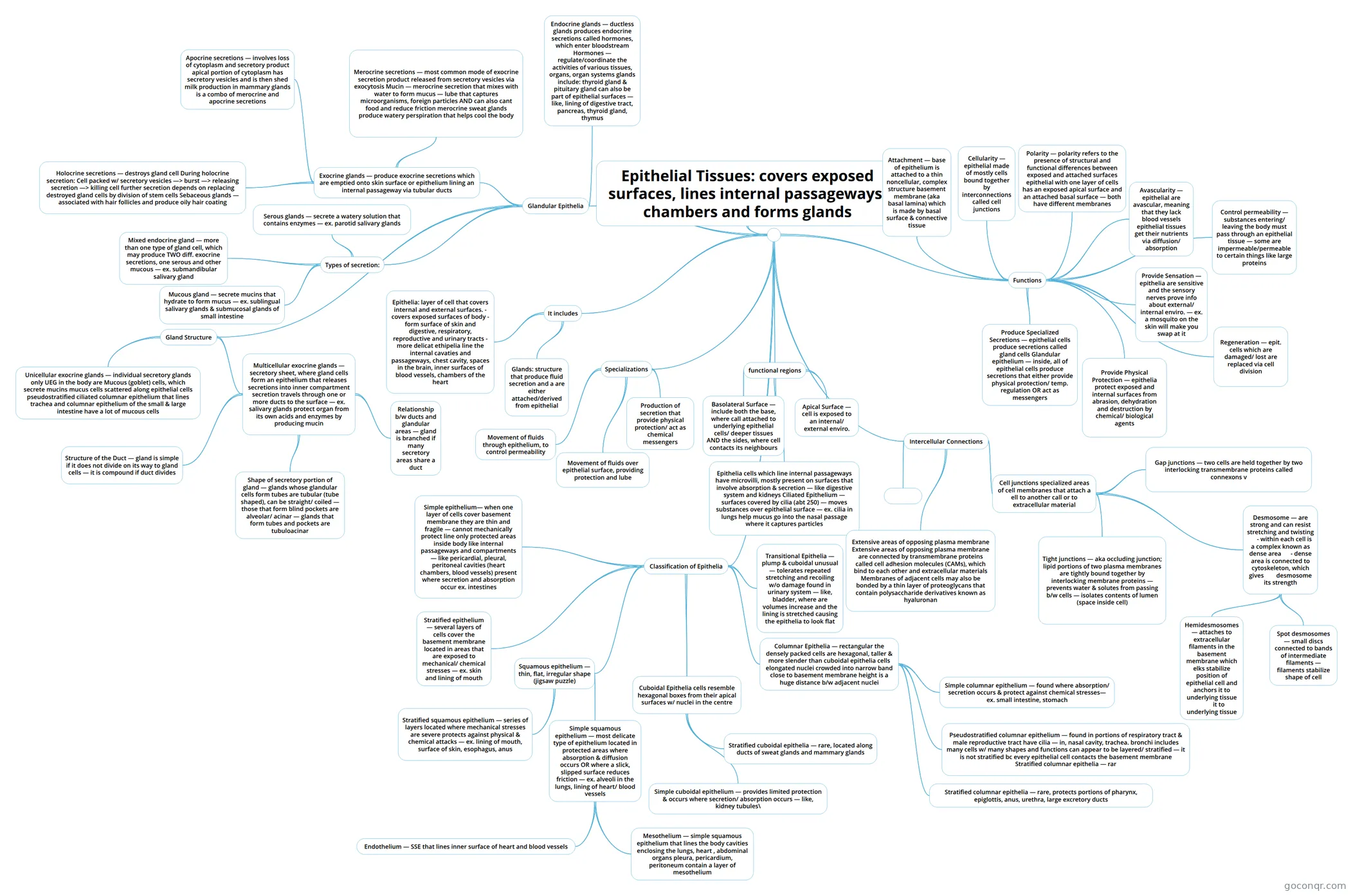 Epithelial Tissues: covers exposed surfaces, lines internal passageways, chambers and forms glands part 5 of 7 i know this one is hectic, imagine studying all this as just one part!!! please print to be abl...
-
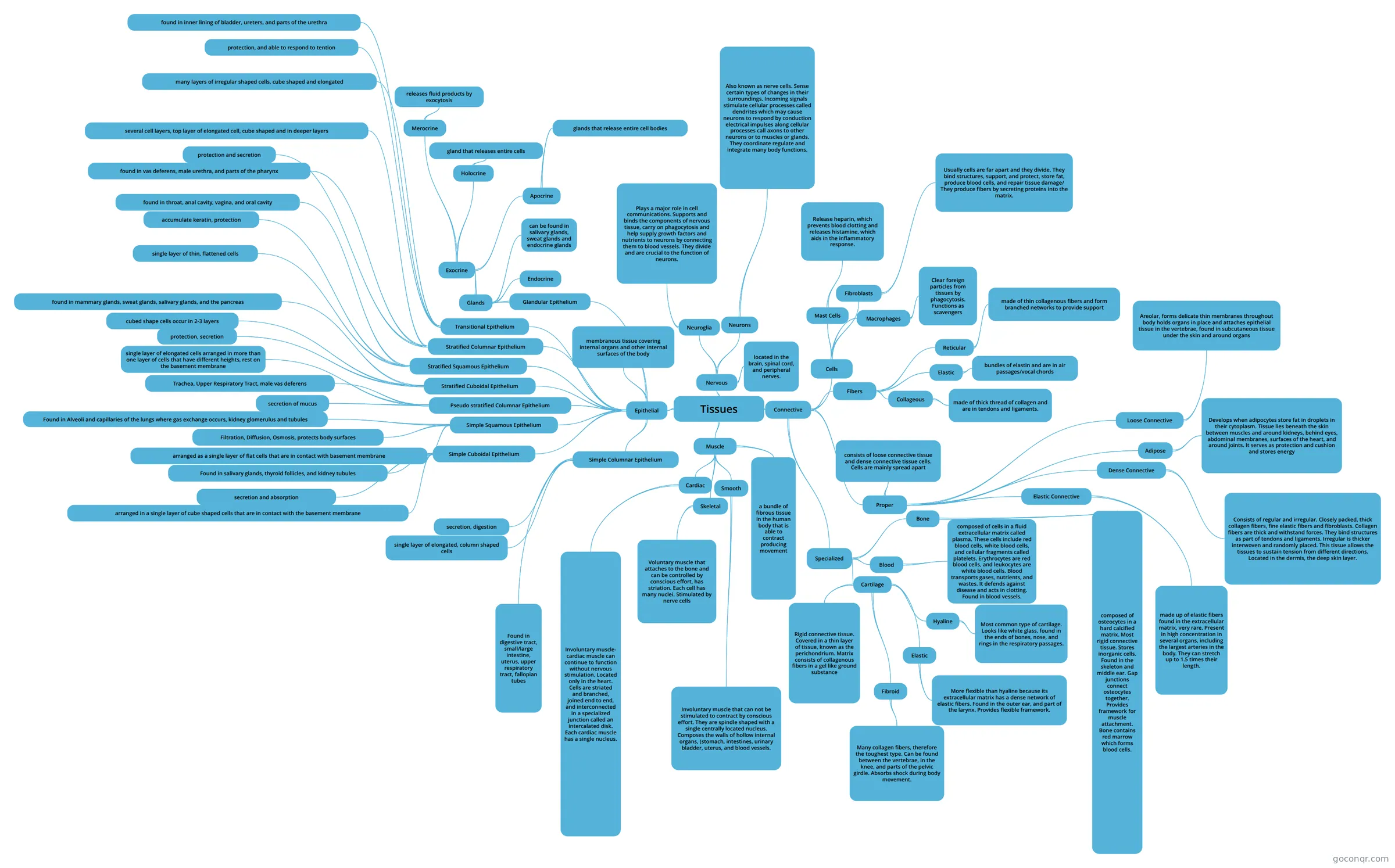 Tissues
-
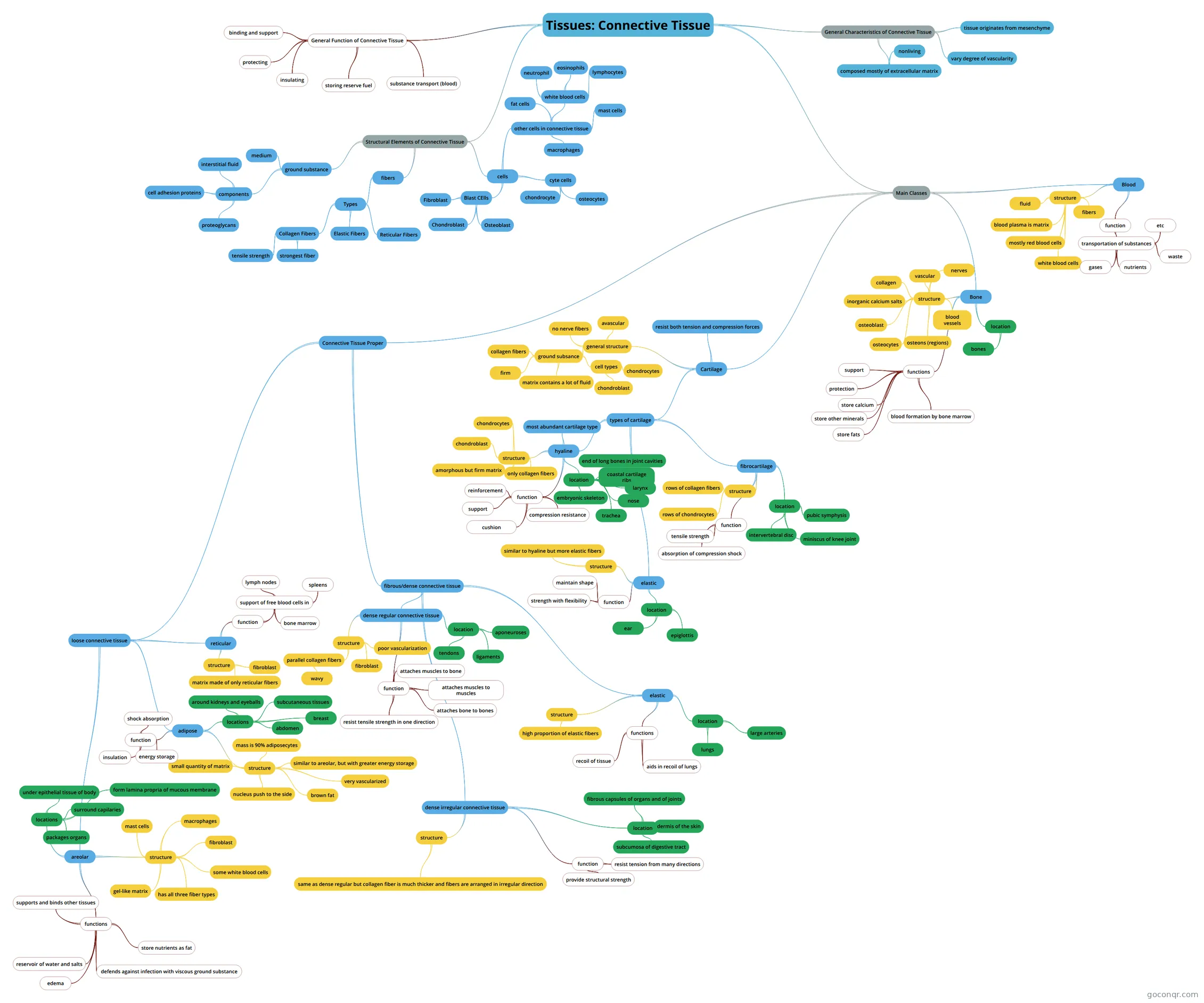 Tissues: Connective Tissue
-
Tissue Types In The Body
-
The Epithelial Tissue
-
Connective Tissue
-
Epithelia
-
Epithelial tissue
-
Epithelial Tissue
-
Body Tissues
-
Tissues
-
Human Tissues
-
Tissues
-
Human Tissues
-
Tissues; epithelial and some parts ofconnective tissue(loose and dense) For Anat 3001
-
Connective Tissue
-
CONNECTIVE TISSUE
-
human tissues 1
-
Major Tissue Types A concept map of the major types of tissues.
-
Epithelial Tissues
-
The Mind Map Human Tissues
-
Connective Tissue
-
Module 2 - Tissues
-
Tissues
-
Epithelial Tissue
-
human tissues
-
Epithelial tissues
-
Connective Tissues
-
TISSUE TYPES
-
epithelial tissues
-
epithelial tissues
-
-CONNECTIVE TISSUE-
-
TISSUE TYPES
-
Histology
-
Histology: Human Tissues
-
Tissue
-
BODY TISSUES
-
Tissues
-
Type of tissues
More Overview of Basic Tissue Types resources
About overview of basic tissue types mind maps
GoConqr OriginalOverview of Basic Tissue Types mind maps
These user-made maps organise tissue topics into branches. Some bring several tissue types together; others focus on a single group. For a connective tissue focus, start with Tissues: Connective Tissue. Its branches cover functions and classes, including cartilage, bone and blood.
For epithelial tissue, Epithelia sets out types of simple epithelia. Epithelial Specializations includes a branch on tight junctions. Comparing these maps can help you move between classification and a more focused topic.
Revise with the branches
Read one map, then cover its branches and try to recall the terms and connections. Reopen it to check what you missed. If you want to practise with questions or review terms in a different format, the unit page also has quizzes and flashcards.
Pick a tissue and explore its branches.
Frequently asked questions
Which mind map is a useful starting point?
For a broad view, try Tissue Types In The Body. It includes branches for epithelial, connective, muscle and nervous tissue. If you want to focus on connective tissue instead, Tissues: Connective Tissue covers its functions and classes, including cartilage, bone and blood.
What do the epithelial tissue maps cover?
The listed maps offer several starting points. Epithelia includes types of simple epithelia, while Epithelial tissue covers characteristics such as cellularity and polarity. Epithelial Specializations includes tight junctions. You can compare their branches when reviewing how the topics are organised.
Are the mind maps free to use?
Yes. Every resource listed here is free to open and study without an account. A free account also lets you save quiz scores and make your own quizzes, mind maps, flashcards and notes. The listed resources were made by GoConqr users.