
Research Ethics mind maps
94 mind maps by 90 users · Page 1 of 3
Explore research ethics mind maps on GoConqr, covering topics from informed consent to research misconduct. The collection supports university students and professional candidates practising ethical reasoning, and teachers looking for study material, with some maps for school students. There are over 80 mind maps from more than 80 users. Pick a map to explore.
Select topic
Mind maps
-
Research Ethics
-
Ethics
-
research methods
-
Belmont Research
-
ETHICS AND SOCIAL RESEARCH
-
Ethics in research and diverse populations
-
Knowledge, Attitudes, and Substance Use Practices Among Street Children in Western Kenya
-
Research Methods S2 W2
-
The Importance of Research Ethics
-
RM ch 4 + 11
-
Guidlines for working with animals
-
Research Ethics
-
Ethical Considerations in Educational Research
-
Ethical issues in Research
-
Ethical issues and how to deal with them
-
Untitled
-
General ethical guidelines
-
3 Ethics in Research and Diverse Populations
-
Introduce el texto aquí
-
The importance of ethics in research
-
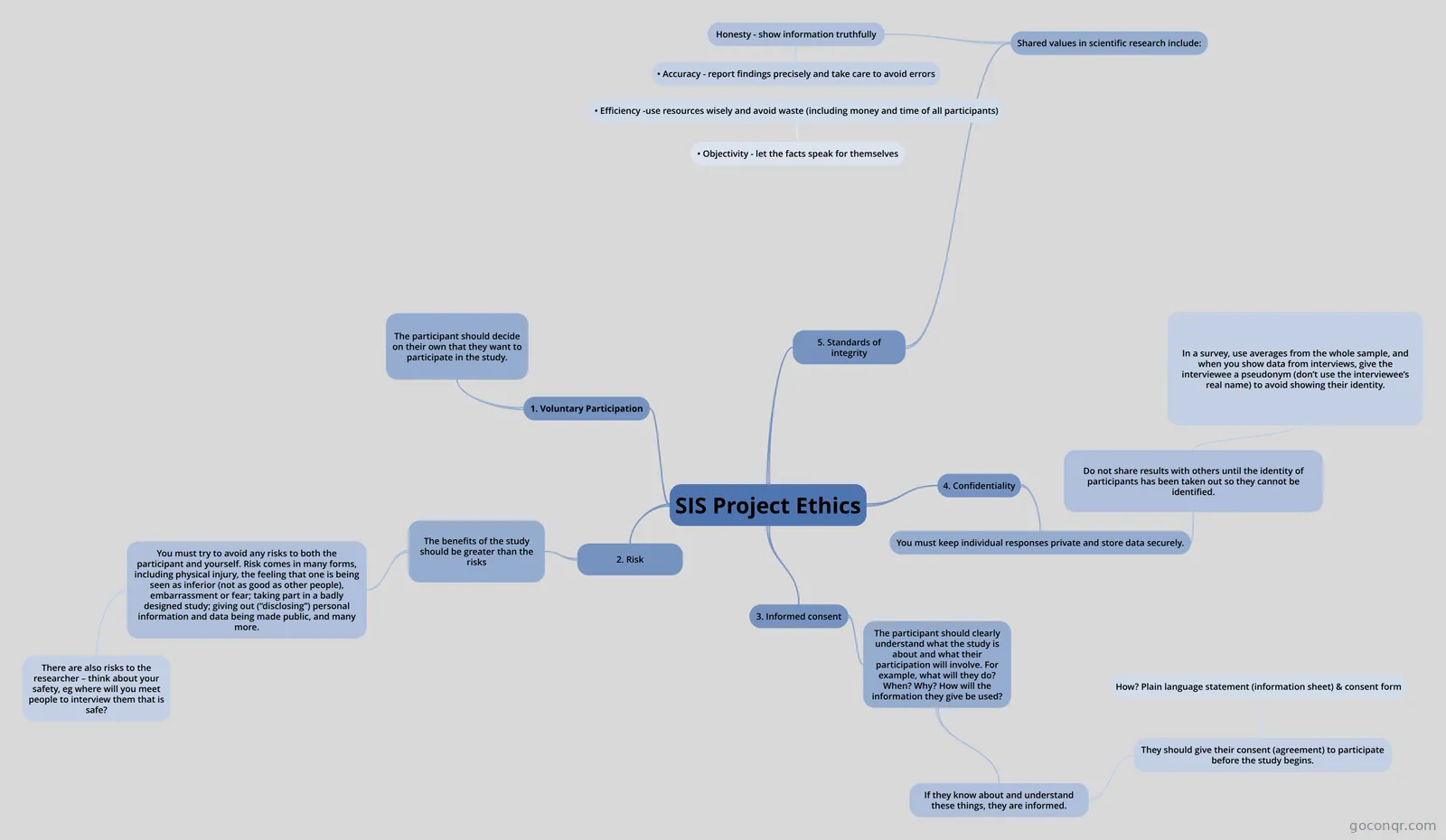 SIS Project Ethics SIS Week 5 preparation Adapted from material by Dr. Kara A. Makara, School of Education, University of Glas...
-
Social and Behavioral Research
-
Ethics
-
Research Ethics
-
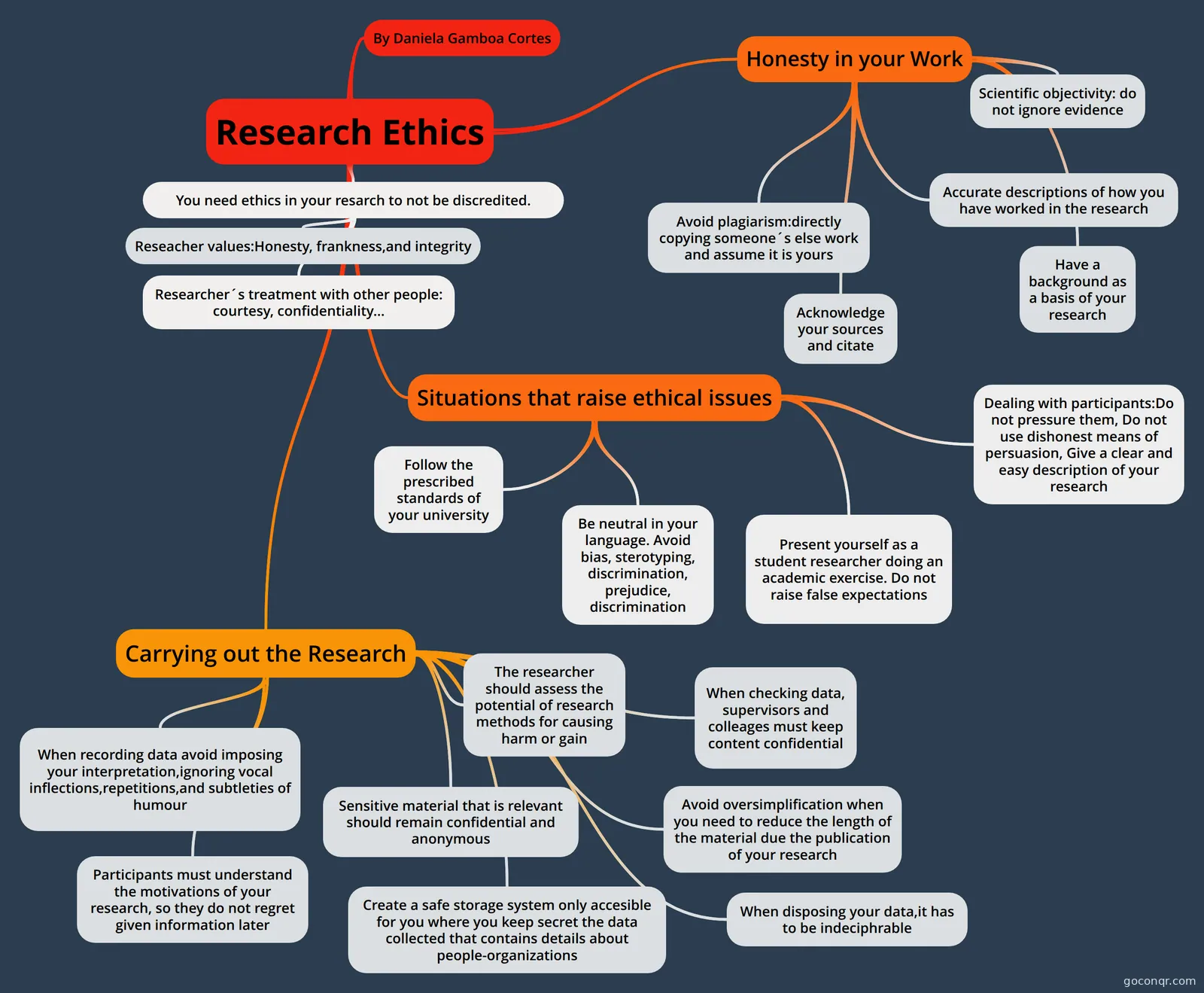 Research Ethics If you do not have ethics in your research, itcan be discredited.
-
Ethical issues when conducting ethnographic research_1
-
Ethical Guidelines for Journal Publication
-
WAR
-
Ethical Issues in Research
-
Ethical Guidelines
-
EBP Ch.5
-
Ethics in Research
-
ethical implications
-
Objective Methods
-
Repositioning ethical commitments: participatory action research as a relational praxis of social change
-
ETHICAL CONSIDERATIONS
-
Critically discuss the issue of' participation' in conducting research with children and young people.
-
Research methods and ethics
-
Anonymising contributors
-
Ethical controversies
More Research Ethics resources
About research ethics mind maps
GoConqr OriginalExplore research ethics mind maps
This collection brings together user-made maps on ethical decisions in research. The Ethics map covers privacy, harm, sensitive subjects and responsibilities after research. Social and Behavioral Research includes branches on plagiarism, fabrication, falsification and data management.
For a broader view, start with General ethical guidelines. Its branches include the social value of research and duties to participants and colleagues. Follow it with Ethical issues to look at protection, consent, the right to withdraw and deception.
Revise with the maps
Use the branches to organise your notes, then cover them and recall the issues under each heading. Compare maps on related topics to see how their authors group ideas. When you want to check what you remember or revisit individual terms, switch to a quiz or flashcards on the unit page.
Choose a map and follow a branch that interests you.
Frequently asked questions
Which mind map is a useful place to start?
Start with General ethical guidelines for an overview of principles and duties in research. Its branches cover the social value of research and responsibilities to participants and colleagues. You can then use Ethical issues to focus on protection, consent, withdrawal and deception.
What topics do these mind maps cover?
The maps cover consent, privacy, harm, deception and research misconduct. Some look at particular settings or groups, including educational research, children and young people, and research with animals. Others address publication guidelines, data management and the objectivity of social research.
Are the mind maps free to use?
Yes. Every resource listed on this page is free to open and study without an account. The maps were made by GoConqr users. A free account also lets you create your own mind maps, quizzes, flashcards and notes, and save quiz scores.
Who are these mind maps for?
Most of the collection is at university level, so university students and professional candidates can use it to practise identifying ethical issues. Teachers can find material to support discussion. A smaller portion is suited to school students, including resources that mention A-level Psychology and the SACE Research Project.