
Research Ethics
156 resources created by 141 users
This Research Ethics page on GoConqr gathers community-made mind maps, flashcards, quizzes, notes and slides, from the Belmont Report and informed consent to privacy law, ethnography and research with children. It's built for university students and professional candidates, and for teachers after ready-made material. There are over 150 resources here, including more than 10 quizzes and over 90 mind maps, made by over 130 contributors. Pick a topic, try a quiz to find your gaps, then make your own maps.
Select topic
Top Research Ethics resources
-
18 cardsChapter 2 - Research Methods Chapter 2
-
11 cardsChapter 3 EPPS - The Basis of Research
-
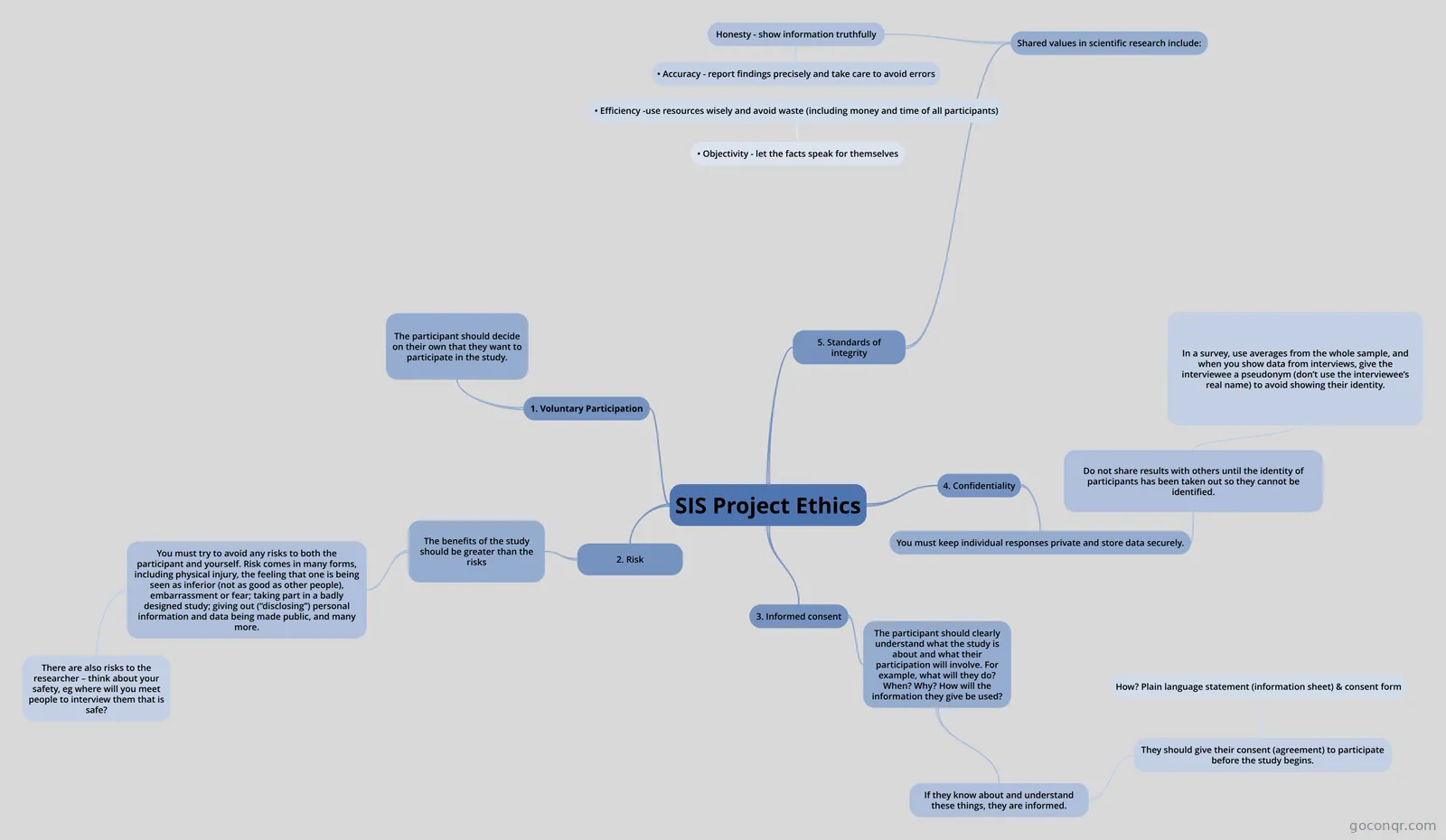 Mind map SIS Project Ethics SIS Week 5 preparation Adapted from material by Dr. Kara A. Makara, School of Education, University of Glas...
-
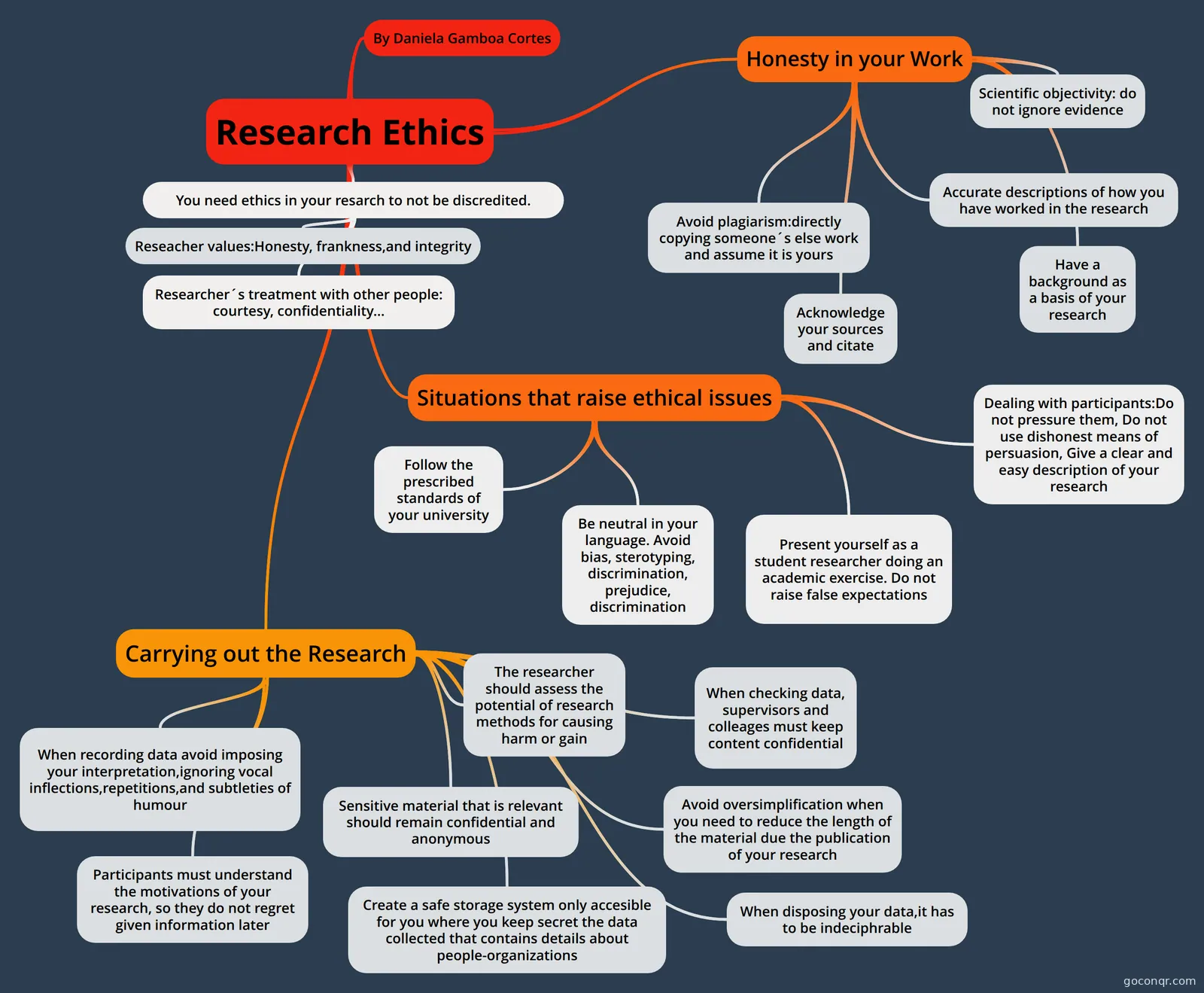 Mind map Research Ethics If you do not have ethics in your research, itcan be discredited.
-
10 cardsEthics and Social Research Ethical principles in research
-
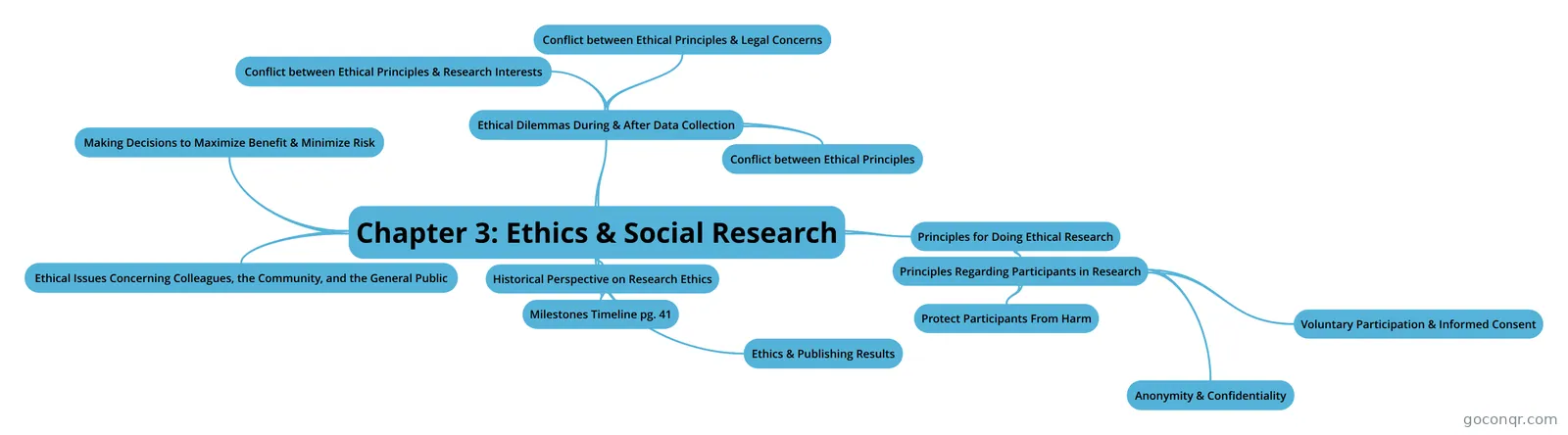 Mind map Chapter 3: Ethics & Social Research
-
 Mind map Tairawhiti Research Committee Here is a summary of discussion points for meeting at EIT July 2nd, 2015
-
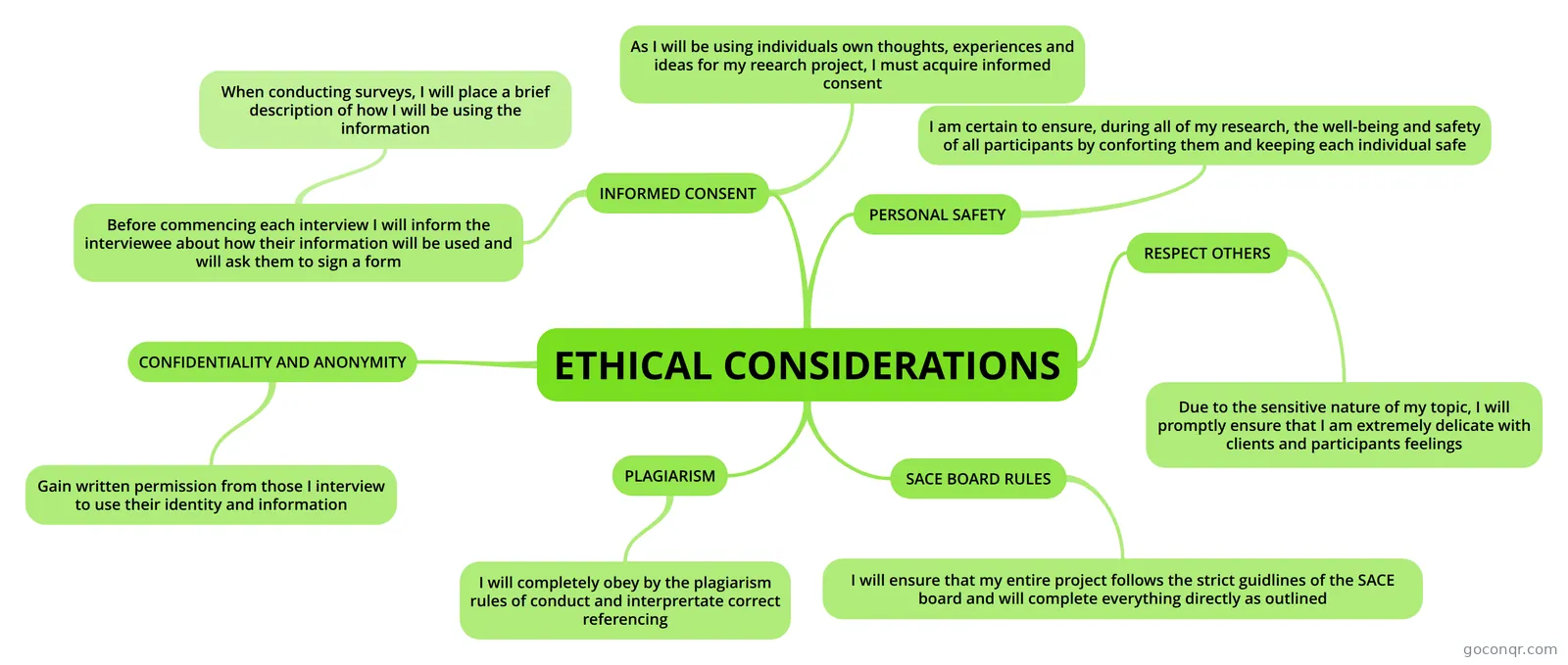 Mind map ETHICAL CONSIDERATIONS
Mind maps
See all 94 mind maps-
SIS Project Ethics SIS Week 5 preparation Adapted from material by Dr. Kara A. Makara, School of Education, University of Glas...
-
Research Ethics If you do not have ethics in your research, itcan be discredited.
-
Chapter 3: Ethics & Social Research
-
Tairawhiti Research Committee Here is a summary of discussion points for meeting at EIT July 2nd, 2015
-
ETHICAL CONSIDERATIONS
Flashcards
See all 27 flashcardsSlides
Topics in Research Ethics
More Research methods and academic skills topics
About Research Ethics
GoConqr OriginalWhat this page covers
The resources here deal with the ethics of carrying out research, mostly at university level. The notes on the Belmont Report (1979) set out respect for persons, justice and beneficence, and link them to the main points of the APA ethics code. Several mind maps work through informed consent, confidentiality, anonymity, harm to subjects and researchers, and deceit.
Where to start
Begin with the mind map called Research Ethics. It asks why ethics matters and then covers ethical approval, avoiding harm, consent and confidentiality. Next, read the Informed Consent mind map, which lists what a participant should be told and why consent must be freely given. Then open the Belmont Report notes to see where these ideas come from.
Going deeper
- Ethnography: the mind map on ethical issues when conducting ethnographic research looks at consent forms, contracts and explaining every aspect of the study.
- Privacy and health data: the flashcard deck on research and the implications for information access and privacy covers REB, TCPS and several Canadian health information acts.
- Research integrity: the flashcard decks on scientific fraud and the replication crisis, plus the guidelines for journal publication map.
- Particular groups: maps on children and young people, diverse populations, and working with animals.
Using quizzes and maps together
- Read a mind map and try to say each branch aloud.
- Take a quiz such as Research ethics or Ethics in Research at MQ 1.
- Note which answers you missed, then return to the matching branch.
- Use flashcards for terms and codes you keep forgetting.
Some resources mention the SACE Research Project, so school students on that course may find a few useful items, though most material is aimed at university study.
Where it sits
This unit belongs to the strand Ethics and Academic Integrity, within Research methods and academic skills. Choose one resource today and see how far a short quiz takes you.
Frequently asked questions
Which resource should I open first?
Start with the mind map called Research Ethics. It sets out why ethics matters, then ethical approval, avoiding harm, consent and confidentiality. After that, the Informed Consent mind map and the Belmont Report notes add detail on the principles behind those ideas.
What do the mind maps cover?
They cover informed consent, confidentiality, anonymity and privacy, harm to subjects and researchers, deceit and sensitive subjects. Others look at ethnographic research, plagiarism, journal publication guidelines, research with children, diverse populations and working with animals.
Are the resources free to use?
Yes. Every resource listed here is free to open, study and take, with no account needed. They were made by GoConqr users, not by GoConqr itself, so you will see a range of styles and course backgrounds across the notes, maps and decks.
Which levels and exams do these suit?
Most of the material is written for university students and professional candidates, and teachers can use it as ready-made support. A small share suits school students, and some resources mention the SACE Research Project.
Can I check my understanding with quizzes?
Yes. There are over 10 quizzes, including Research ethics, Ethics in Research at MQ 1 and 2, International Ethic Codes, and one on research ethics and patient and public involvement. Take one after reading a map, then revisit any branch you found hard.
What if the topic I need is missing?
Look through the related maps and flashcard decks first, as ethics ideas often appear under other titles. If you still cannot find it, a free account lets you make your own quizzes, mind maps, flashcards and notes to fill the gap.