
Teaching Reading mind maps
566 mind maps by 465 users · Page 1 of 15
This Teaching Reading page gathers over 500 mind maps by more than 450 GoConqr users, covering reading strategies, assessment and teaching approaches. The resources are mainly at university and professional level, for university students and professional candidates reviewing reading instruction, and teachers looking for ideas. Choose a map to explore.
Select topic
- Reading Skills and Components29
- The Reading Process and Models of Reading13
- Reading Development21
- Phonemic Awareness, Phonics and Decoding21
- Reading Fluency8
- Vocabulary Development10
- Reading Instruction Approaches32
- Guided, Shared and Collaborative Reading19
- Reading Texts and Extensive Reading14
- Reading Comprehension Strategies156
- Active, Close and Critical Reading12
- Second Language Reading15
- Reading Assessment16
Mind maps
-
TEACHING READING MIND MAP ABOUT CHAPTER 07: TEACHING READING, BY LINO ANDRÉS DUQUE MOYA.
-
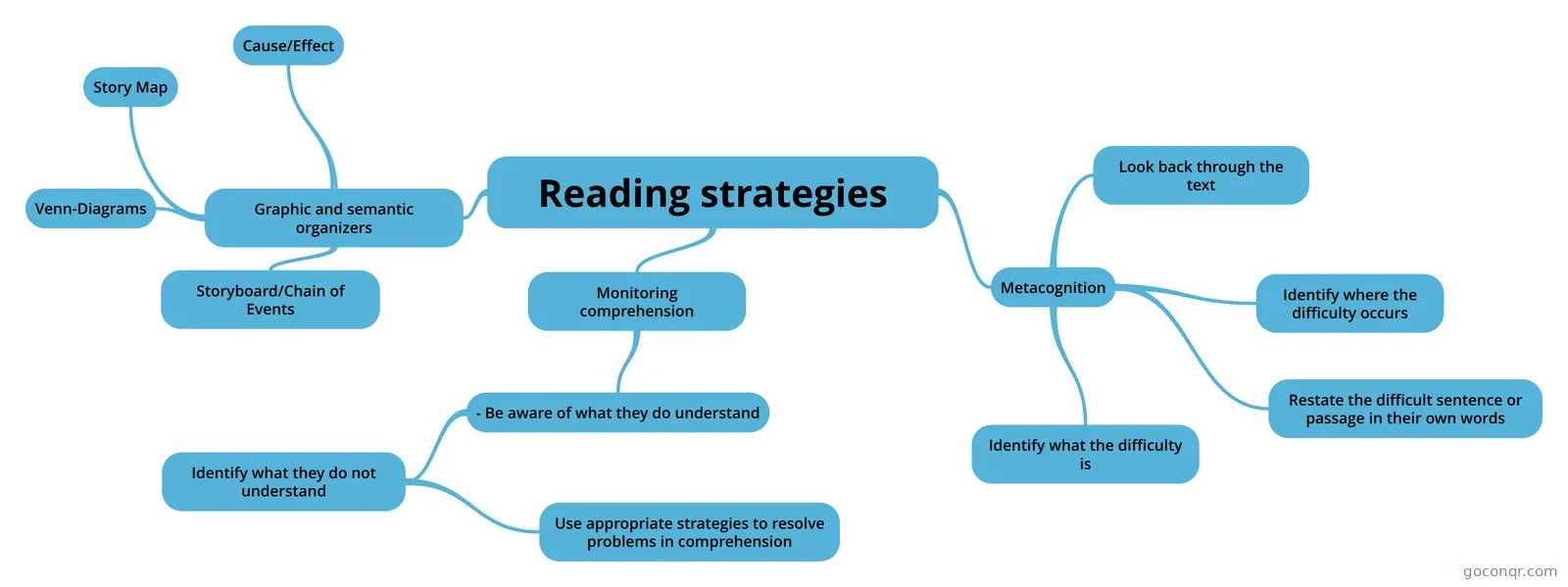 Reading strategies reading
-
Recognizing an Author's Purpose DL5013 - Engaging Diverse Learners In Diverse Environments
-
Beginning Reading
-
How to teach reading?
-
Balanced Reading Program
-
How to teach Reading
-
Vocabulary - What are research-based and evidence-based instructional strategies that early primary teachers can use in Tier 1 instruction?
-
SOAPStone
-
English assignment - Reading a Quality Children's Text in the classroom: a case study
-
domain 2 word Analysis
-
Balanced Reading Program by GK
-
Balanced Reading Program
-
EDTE251 Week 11
-
READING SKILL DEVELOPMENT
-
TEN PROVEN PRINCIPLES OF TEACHING READING
-
Learning to read
-
Reading comprehension
-
Foundations of Reading Instruction and Assessment
-
Reading instruction: Early reading
-
Reading Assessment
-
Reading_1_1
-
Balanced Reading
-
Reading Comprehension
-
Placing Students and Monitoring Progress Gunning Chapter 4
-
READING
-
Factors Influencing L2 Reading Development, Performance, and Comprehension
-
Mental Map Mental map for CTRD 3013
-
Mental Map Mental map for CTRD 3013
-
Reading
-
Teaching Reading
-
Reading and Viewing
-
Teaching Reading in Second Language
-
READING
-
Approaches to teaching reading
-
Learning to read in ESL
-
READING SKILL
-
Reading Assessment and How it Links to Instruction
-
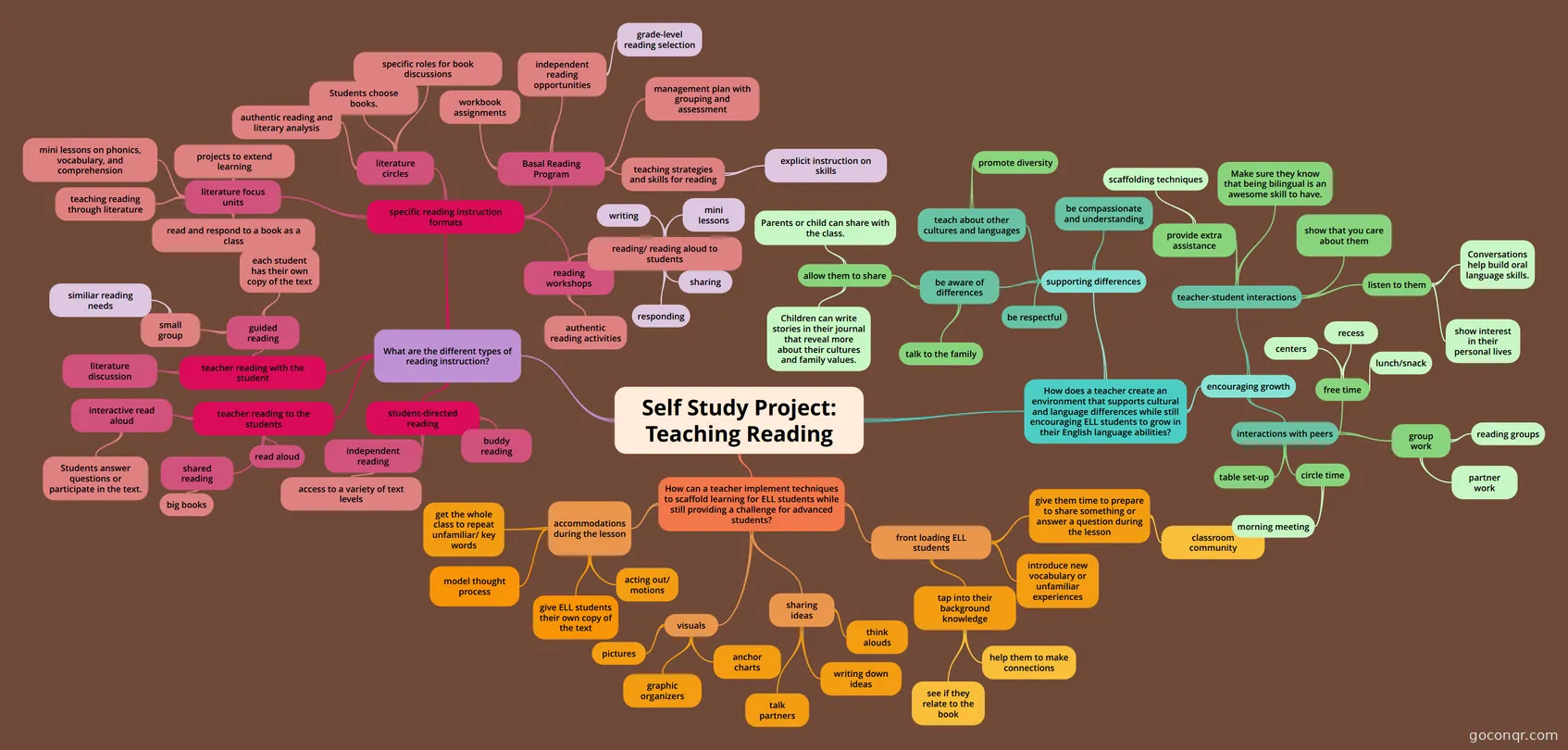 Self Study Project: Teaching Reading Key questions about reading instruction this semester.
-
Chapter 8: Developing Vocabulary and Concepts
More Teaching Reading resources
About teaching reading mind maps
GoConqr OriginalTeaching Reading mind maps
These user-made maps connect ideas about reading instruction in different ways. The Interactive Reading Process Model includes decoding, vocabulary and comprehension, while Reading Instruction Evolved traces changes in reading instruction. The map on reading assessment and its links to instruction considers feedback, planning and differentiated instruction.
Using the maps to revise
For a focused starting point, try Making Inferences When Reading. It asks how and why to teach inference-making, and when students can use the skill. Use those questions to organise your own review, then compare your notes with the map.
To explore a different approach, look at Balanced Reading Program, which includes independent, read-aloud, shared and guided reading. Follow the branches and explain the connections in your own words. When you want to check recall or read ideas in a linear format, switch to a quiz or notes on the Teaching Reading unit page. Pick a topic and see where its branches lead.
Frequently asked questions
Which mind map is a good place to start?
For a focused topic, start with “Making Inferences When Reading”. It brings together questions about how and why to teach inference-making and when students can use the skill. Those questions give you a useful way to organise your review as you follow the map.
Are these mind maps free to use?
Yes. Every resource listed here is free to open and study without an account. A free account also lets you make your own mind maps, quizzes, flashcards and notes, and save your quiz scores. The listed resources were made by GoConqr users.
Who are these mind maps for?
They are mainly at university and professional level. University students and professional candidates can use them to review approaches to reading instruction, while teachers can explore ideas for their practice. Topics include reading strategies, assessment, shared reading and the reading process.