
The Brontës: Jane Eyre and Wuthering Heights
80 resources created by 54 users
This page on GoConqr gathers community-made mind maps, flashcards, quizzes and notes on The Brontës: Jane Eyre and Wuthering Heights, from Jane Eyre themes and critic quotes to Wuthering Heights settings, chapters and family tree. It's built for school students revising for GCSE English Literature or A-level English Literature, and for teachers after ready-made material. There are over 300 resources here, including more than 10 quizzes and over 250 mind maps. Pick a resource, try a quiz to find your gaps, then make your own.
Top The Brontës: Jane Eyre and Wuthering Heights resources
-
Mind map Jane Eyre Themes
-
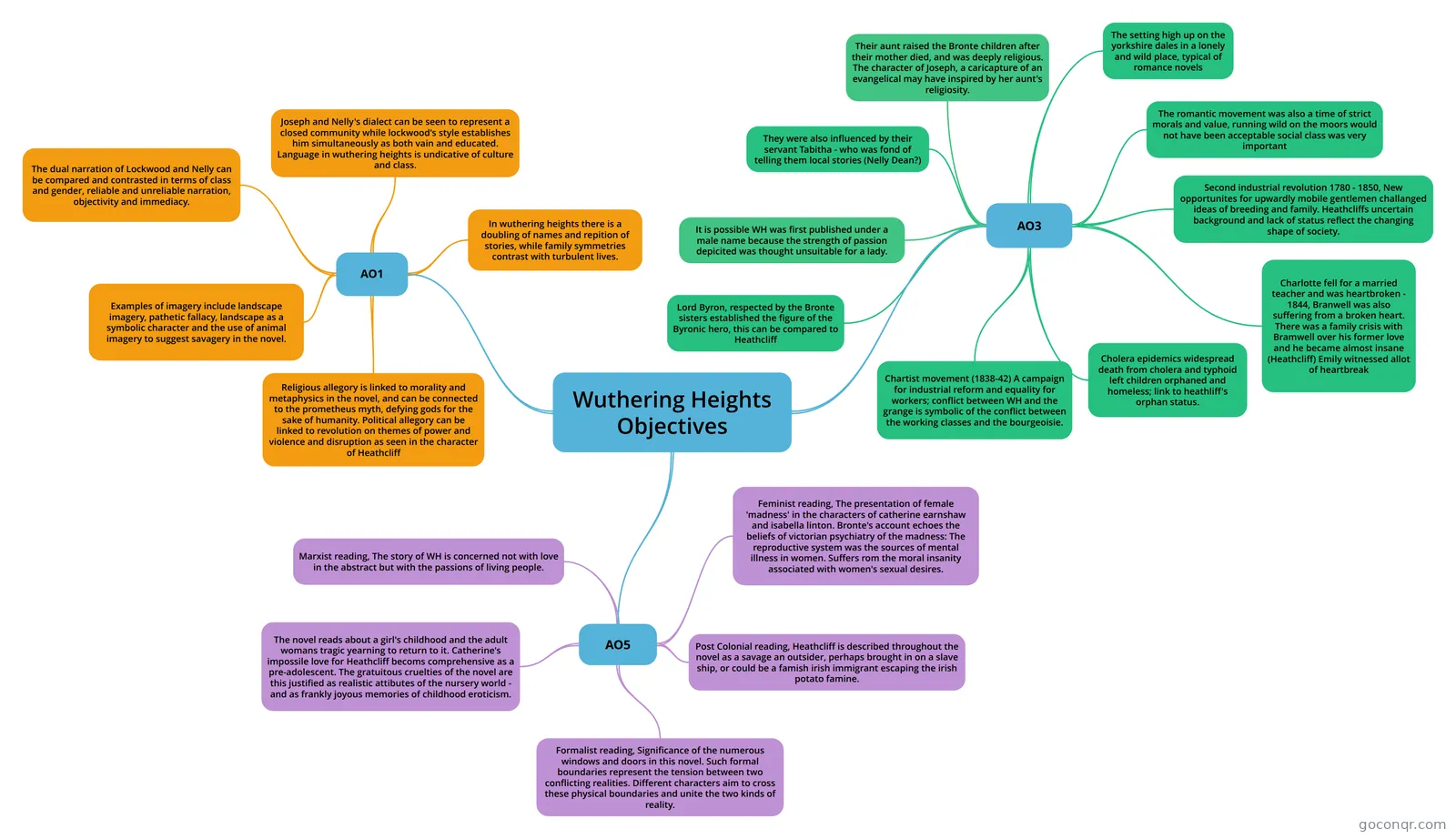 Mind map Wuthering Heights Objectives Mindmap for the links with the current objectives for English literature AQA to the novel Wuthering Heights.
-
84 cardsWuthering Heights A dark-skinned gypsy in aspect, in dress and manners a gentleman.
-
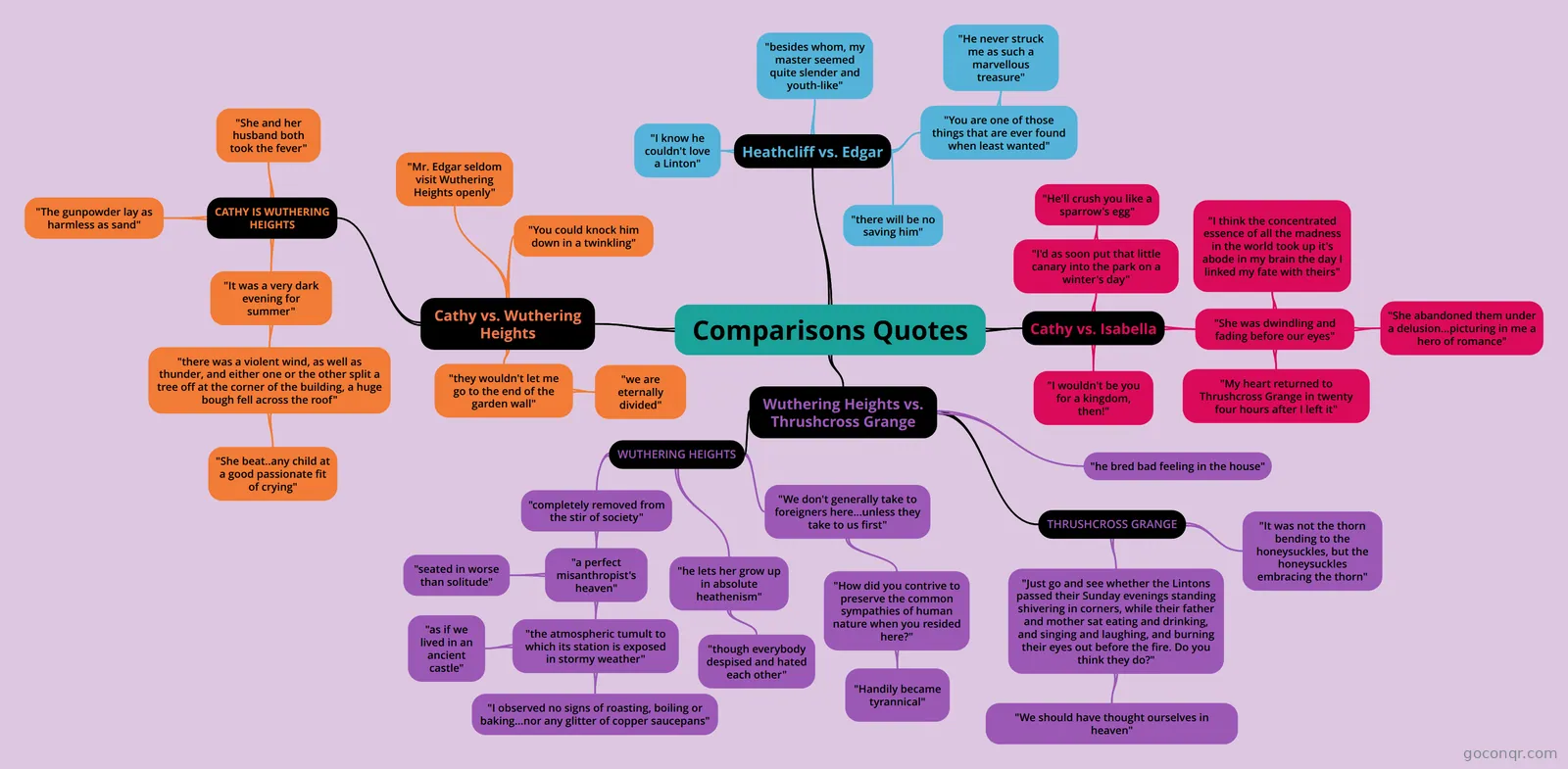 Mind map Comparisons Quotes
-
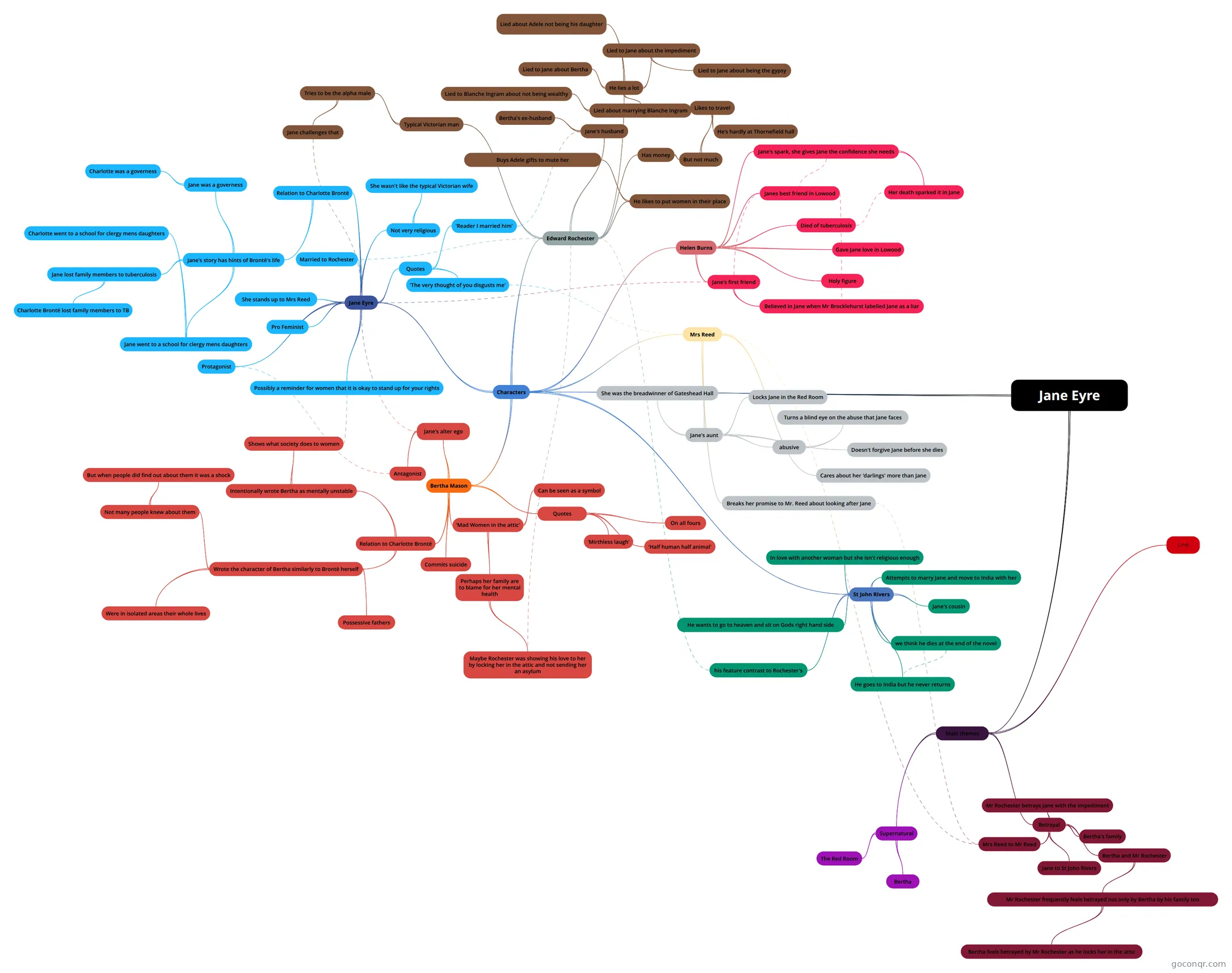 Mind map Jane Eyre mindmap that will show everything from themes to characters to quotes
-
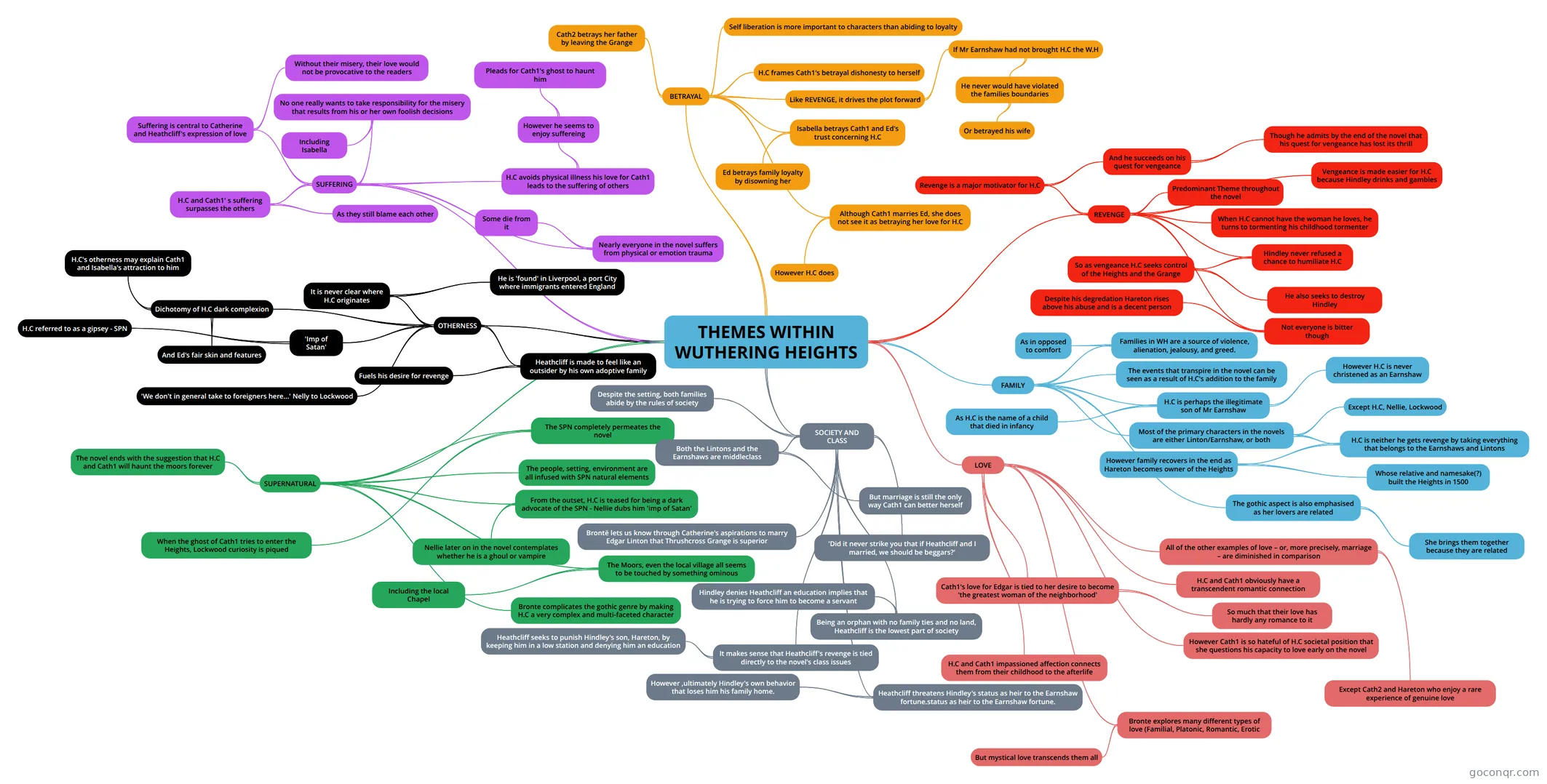 Mind map THEMES WITHIN WUTHERING HEIGHTS
-
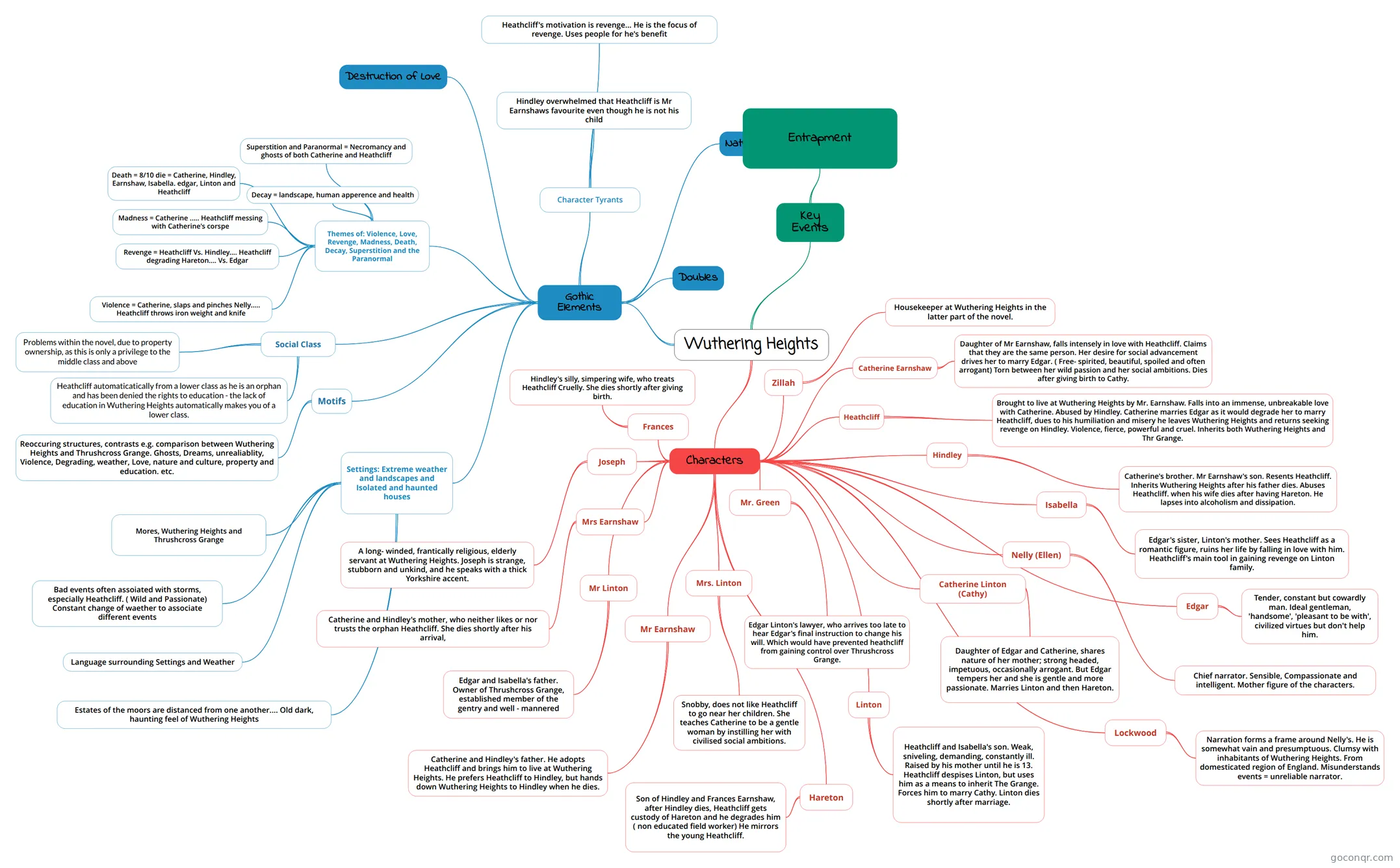 Mind map Wuthering Heights
-
9 cardsSymbolism of Names-Wuthering Heights
Quizzes
Mind maps
See all 57 mind maps-
Jane Eyre Themes
-
Wuthering Heights Objectives Mindmap for the links with the current objectives for English literature AQA to the novel Wuthering Heights.
-
Comparisons Quotes
-
Jane Eyre mindmap that will show everything from themes to characters to quotes
-
THEMES WITHIN WUTHERING HEIGHTS
-
Wuthering Heights
-
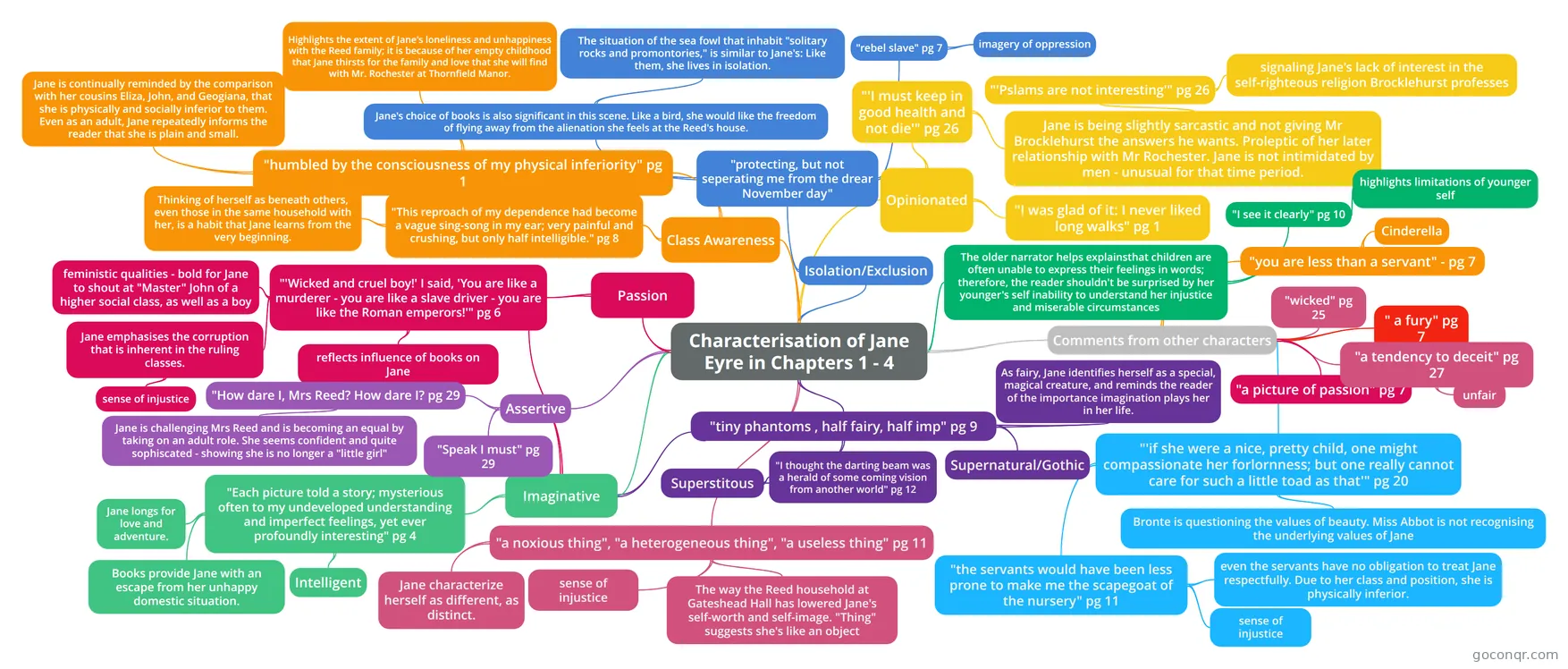 Characterisation of Jane Eyre in Chapters 1 - 4 Characterisation of Jane Eyre in Chapters 1 - 4
-
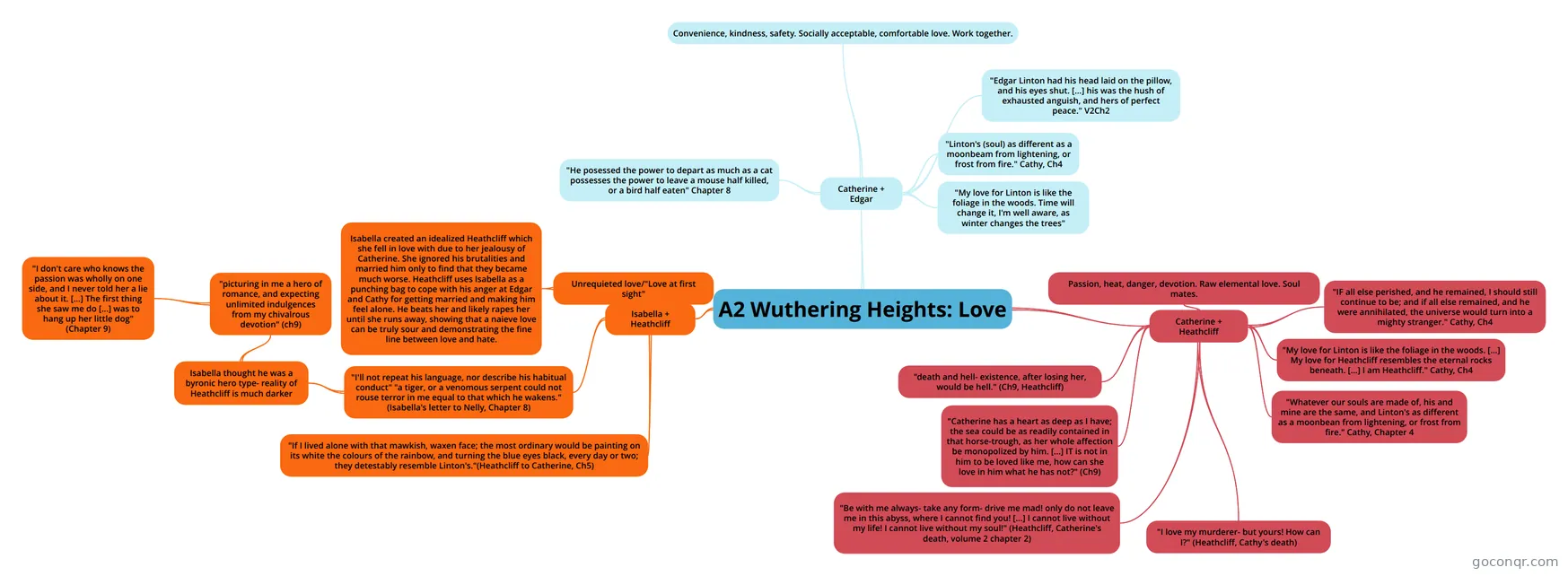 A2 Wuthering Heights: Love Mind map/question plan about how love is presented
Flashcards
-
84 cardsWuthering Heights A dark-skinned gypsy in aspect, in dress and manners a gentleman.
-
9 cardsSymbolism of Names-Wuthering Heights
-
14 cardsWuthering Heights Quotes 'Wuthering Heights' - Catherine Earnshaw's declaration
-
6 cardsJane Eyre - Critic's Quotes Richard Moore calls Jane Eyre a 'love story' (Jane Eyre: Love and the Symbolism of Art)
-
39 cardsWuthering Heights CIE A Level Social and Economic Context of Wuthering Heights
-
9 cardsEnglish Literature- Wuthering Heights Key Quotations [Describing Wuthering Heights] LOCKWOOD 'Pure bracing ventaliation'
-
12 cardsWuthering Heights setting "I shall never be there but once more when I die, and I shall remain there for ever."
-
16 cardsWuthering Heights Quotes ‘provoked a long, guttural snarl’...’growled Mr Heathcliff'
Notes
-
VCE English - Wuthering Heights Heathcliff Mr. Earnshaw brings the orphan Heathcliff to live at Wuthering Heights from Liverpool He falls into a deep and intensive love with Mr. Earnshaw's daughter, Catherine Mr. Earnshaw's resentful son Hindley abu...
-
Jane Eyre Critic Quotes Jane & Rochester: “To twenty-first-century eyes, it shows a woman who fights for, yet abdicates to, love. To nineteenth-century eyes, it showed a woman who should abdicate to, yet fights for, love.” — Erin Blakemore “...
-
Elements of Gothic Setting: Nature- the moors (in which C+H play, C goes exploring, and Lockwood gets trapped after walking through), nature linked to character, wildness, and passion (something outside the suppressed Victorian nature)&...
-
Characterisation in Jane Eyre INDIVIDUAL “I am no bird; and no net ensnares me: I am a free human being with an independent will.”/ "I can live alone, if self-respect, and circumstances require me so to do. " 'Do you think, because I am poor,...
-
Jane Eyre Chapter One Sets the mood:When Jane is suddenly disturbed in her quiet pleasure of reading by the undelicate shouting of John Reed, we are in the same way by the change in tone, and in disposition on the page. (from poetic descri...
-
Jane Eyre - created from Mind Map “I am no bird; and no net ensnares me: I am a free human being with an independent will; which I now exert to leave you.” “Do you think I am an automaton? — a machine without feelings?" "Do you think, because I am poo...
-
JANE EYRE JANE EYRE Exercise 7: How might Jane have replied to Miss Temple´s letter? Write her reply, using these prompts to help you. Grateful of advice / value your opinions. respect and admire him / no love between us. colle...
-
Symbolism in Jane Eyre 'a fervent, a solemn passion is conceived in my heart; it leans to you, draws you to my centre and spring of life, wrap my existence about you–and, kindling in pure, powerful flame, fuses you and me in one.' "it is ma...
Slides
More Literature topics
About The Brontës: Jane Eyre and Wuthering Heights
GoConqr OriginalWhat the resources cover
The unit splits fairly evenly between the two novels. For Jane Eyre, the Jane Eyre Themes mind map looks at the Gothic and the Red Room, while Jane Eyre Critic Quotes sets twenty-first-century and nineteenth-century readings side by side. The Mr Rochester mind map explores his character, and Jane Eyre Character Map is a flowchart of the main figures.
For Wuthering Heights, Wuthering Heights Objectives covers AO1 and imagery such as landscape and animal imagery. THEMES WITHIN WUTHERING HEIGHTS covers revenge, love, family, the supernatural, class and betrayal. Wuthering Heights Context looks at Emily Brontë publishing as Ellis Bell.
Where to start
- Begin with an overview mind map: Jane Eyre or Wuthering Heights, whichever text you are studying.
- Move to themes and characters, such as Jane Eyre Themes or Wuthering Heights Plot Timeline to fix the order of events.
- Add context and critics, then quotations.
Using quizzes and maps together
Read a mind map, close it, then try a quiz on the same material. The Wuthering Heights Quiz and the chapter-by-chapter quote quizzes help you see which quotations you know. Go back to the relevant map for any you miss. Flashcard decks such as Symbolism of Names-Wuthering Heights are handy for short bursts of recall.
Teachers can use the chapter maps and flowcharts as ready-made starting points for lessons or revision sessions.
Where this unit sits
This unit belongs to the Nineteenth-Century Prose strand in Literature. It places two novels side by side, and Comparisons Quotes shows how contrasts such as Wuthering Heights and Thrushcross Grange can be handled.
Choose a map that matches your next lesson, test yourself with a quiz, then try building a set of notes or flashcards of your own.
Frequently asked questions
Which resource should I open first?
Start with the overview mind map for your text: Jane Eyre or Wuthering Heights. Each gives you characters and key ideas in one view. Then move on to a themes map, such as Jane Eyre Themes or THEMES WITHIN WUTHERING HEIGHTS, before you turn to quotations.
What do the Wuthering Heights mind maps cover?
They cover themes such as violence, love, revenge, madness and the supernatural. They also look at Gothic elements, imagery, setting, context and characters such as Heathcliff and Catherine Earnshaw Linton. Some follow the chapters, for example Chapters 1-3 and Chapters 4-7.
Are there quizzes on quotations?
Yes. There are quotation quizzes for both novels, including chapter-based Wuthering Heights quote quizzes and a Jane Eyre quotations quiz. They work well after you have read the matching mind map or flashcards, because you can see which quotes need more practice.
Which exams do these resources suit?
The listed resources mention GCSE English Literature and A-level English Literature, and almost all of the material is school level. Check that a resource matches your own exam board and set text before relying on it.
Are the resources free, and who made them?
Every resource listed here is free to open, study and take, with no account needed. They were made by GoConqr users, not by GoConqr. A free account also saves your quiz scores and lets you make your own quizzes, mind maps, flashcards and notes.
What if I can't find what I need?
Look for a nearby resource, such as a chapter map, a character map or a quotes deck, which may cover the same ground. You can also build your own mind map, notes or flashcards for the missing topic.