
The Tempest
46 resources created by 33 users
This Literature page on GoConqr gathers community-made mind maps, flashcards, notes, quizzes and flowcharts on The Tempest, from key themes and quotations to context, characters and critical interpretations. It's built for school students revising the play and for teachers after ready-made material. There are over 230 resources here, including 3 quizzes, more than 150 mind maps and over 50 flashcard decks, almost all at secondary level. Pick a mind map to get your bearings, then test yourself on the quotations.
Top The Tempest resources
-
Mind map The Tempest Mind map of the core components of the play.
-
99 cardsThe Tempest Key Quotations PROSPERO: "Dost thou forget From what a torment I did free thee?"
-
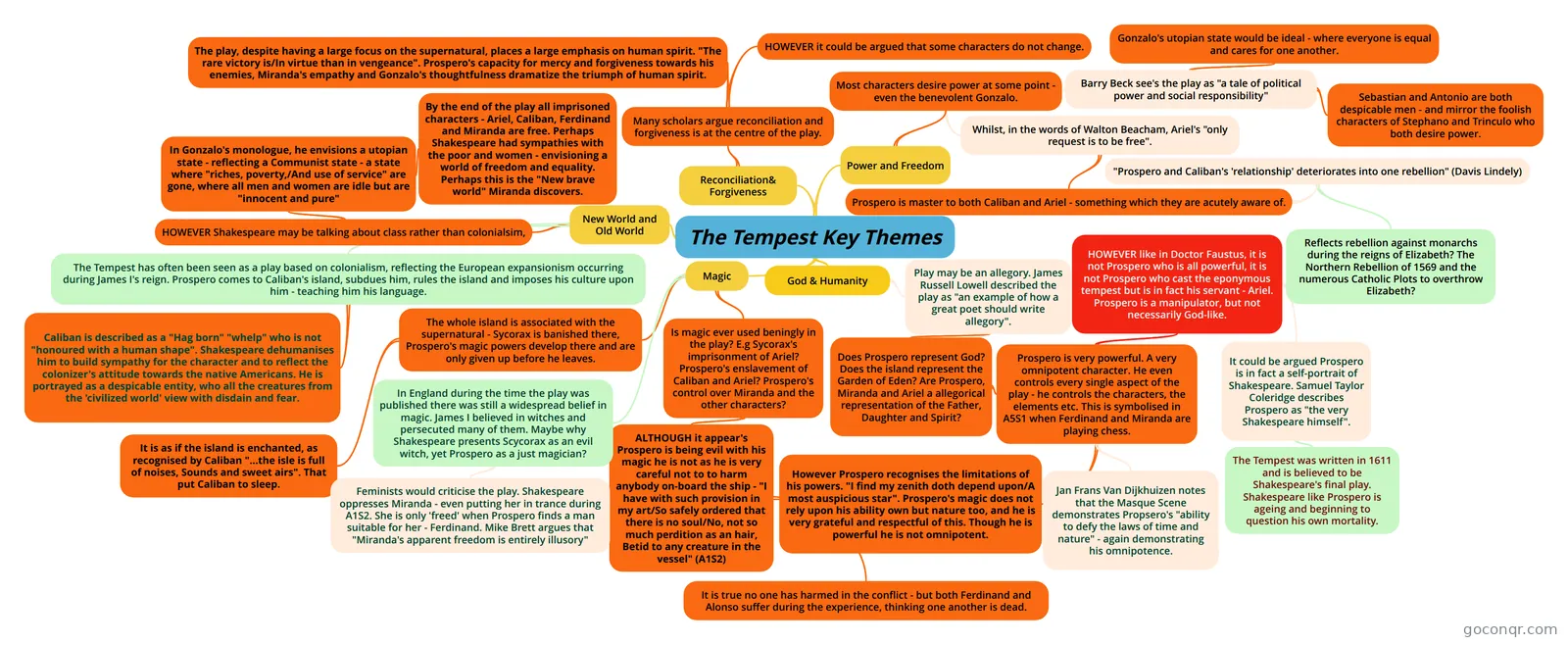 Mind map The Tempest Key Themes A mind-map exploring 5 of the key themes of William Shakespeare's The Tempest - God & Humanity, Magic, New ...
-
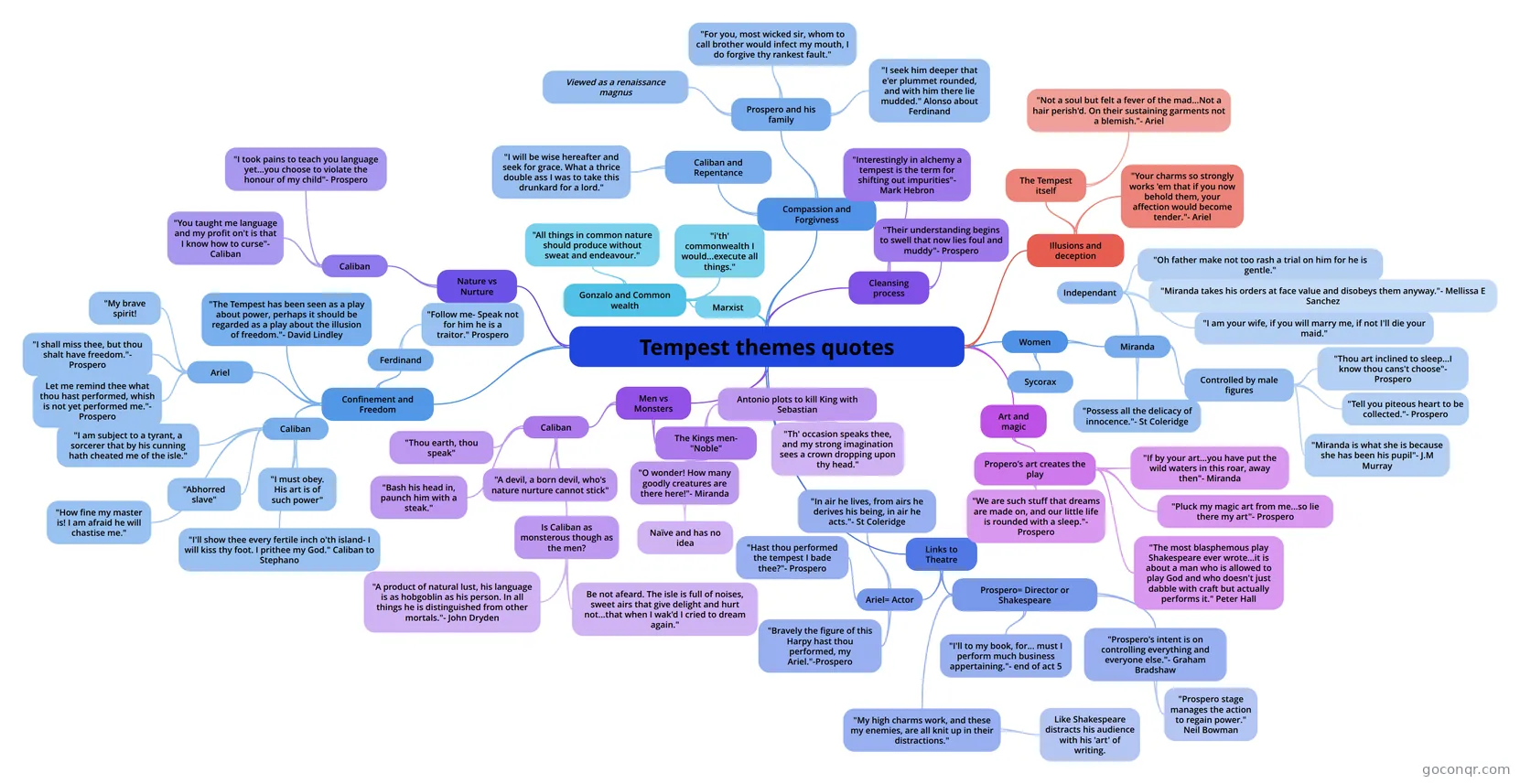 Mind map Tempest themes quotes Mind map for quotes and themes for my A2 eng lit exam 2014
-
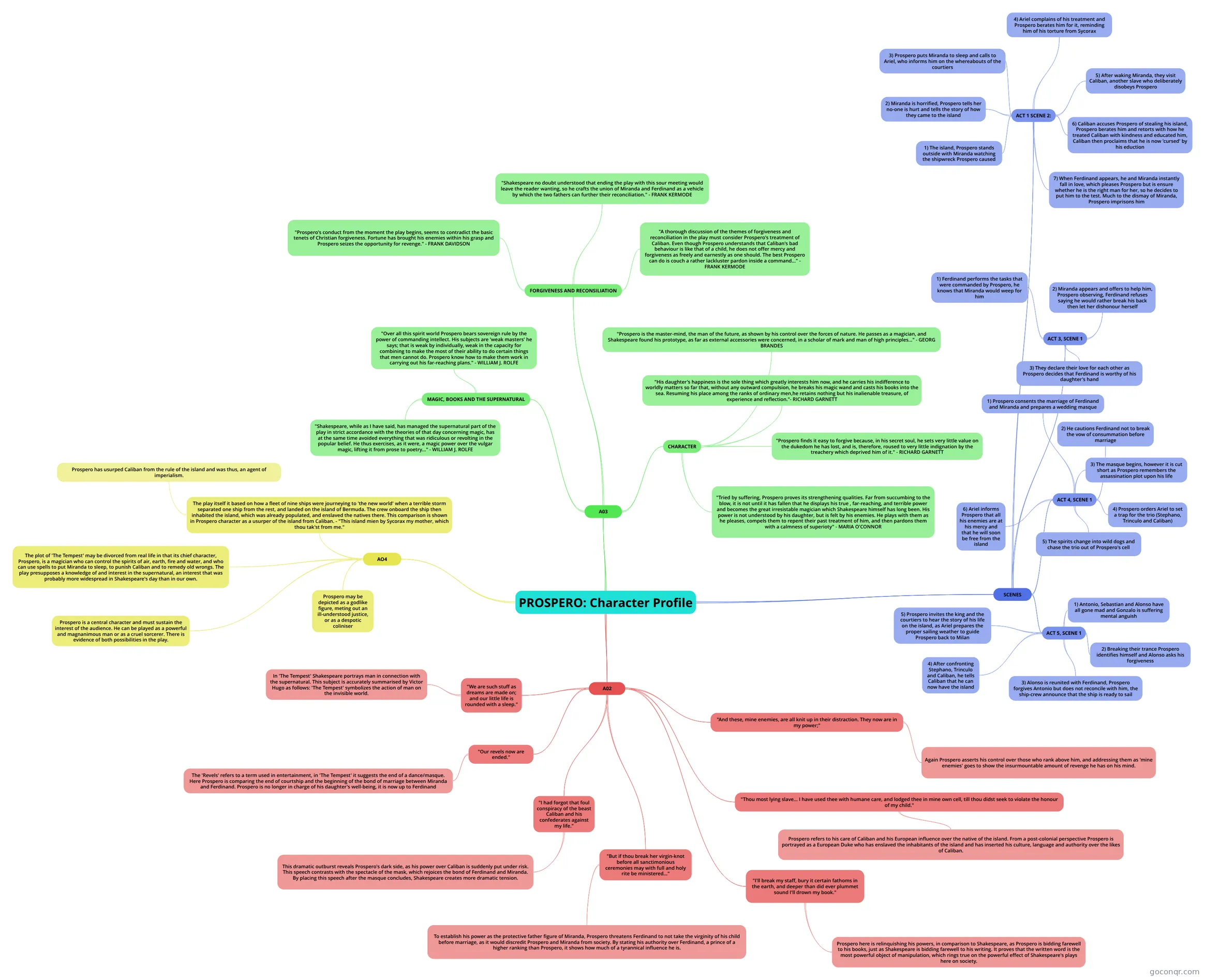 Mind map PROSPERO: Character Profile Detailed character profile for Prospero. Includes all summaries of his scenes, AO2 (writer's use of languag...
-
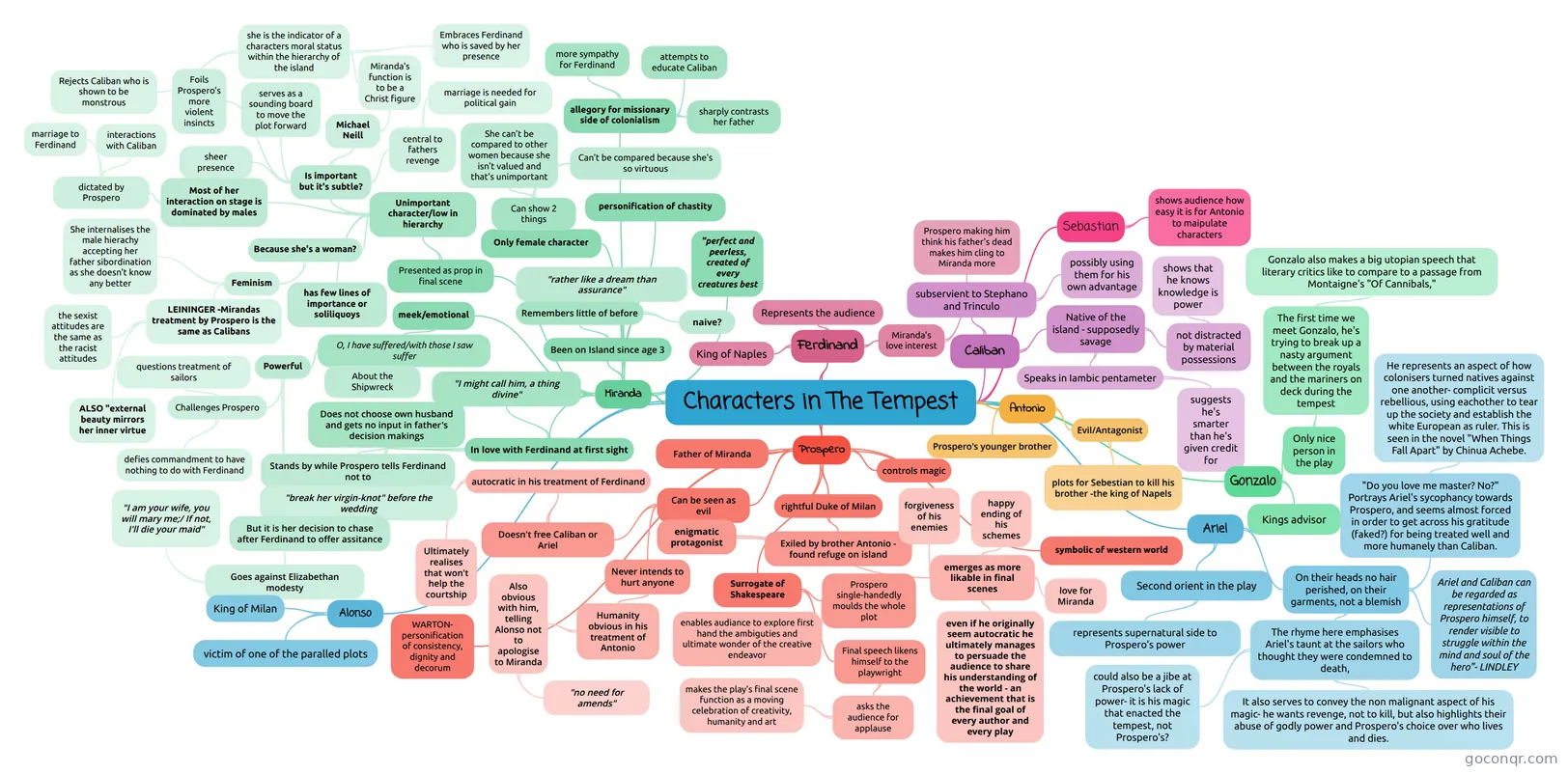 Mind map Characters in The Tempest
-
22 cardsTempest A05 'Prospero's magic powers allow him to impose his will in situations he could not control otherwise.'
-
27 cardsA03 for The Tempest Maria O'Connor Prospero's power "is not fully understood by ...
Quizzes
Mind maps
See all 27 mind maps-
The Tempest Mind map of the core components of the play.
-
The Tempest Key Themes A mind-map exploring 5 of the key themes of William Shakespeare's The Tempest - God & Humanity, Magic, New ...
-
Tempest themes quotes Mind map for quotes and themes for my A2 eng lit exam 2014
-
PROSPERO: Character Profile Detailed character profile for Prospero. Includes all summaries of his scenes, AO2 (writer's use of languag...
-
Characters in The Tempest
-
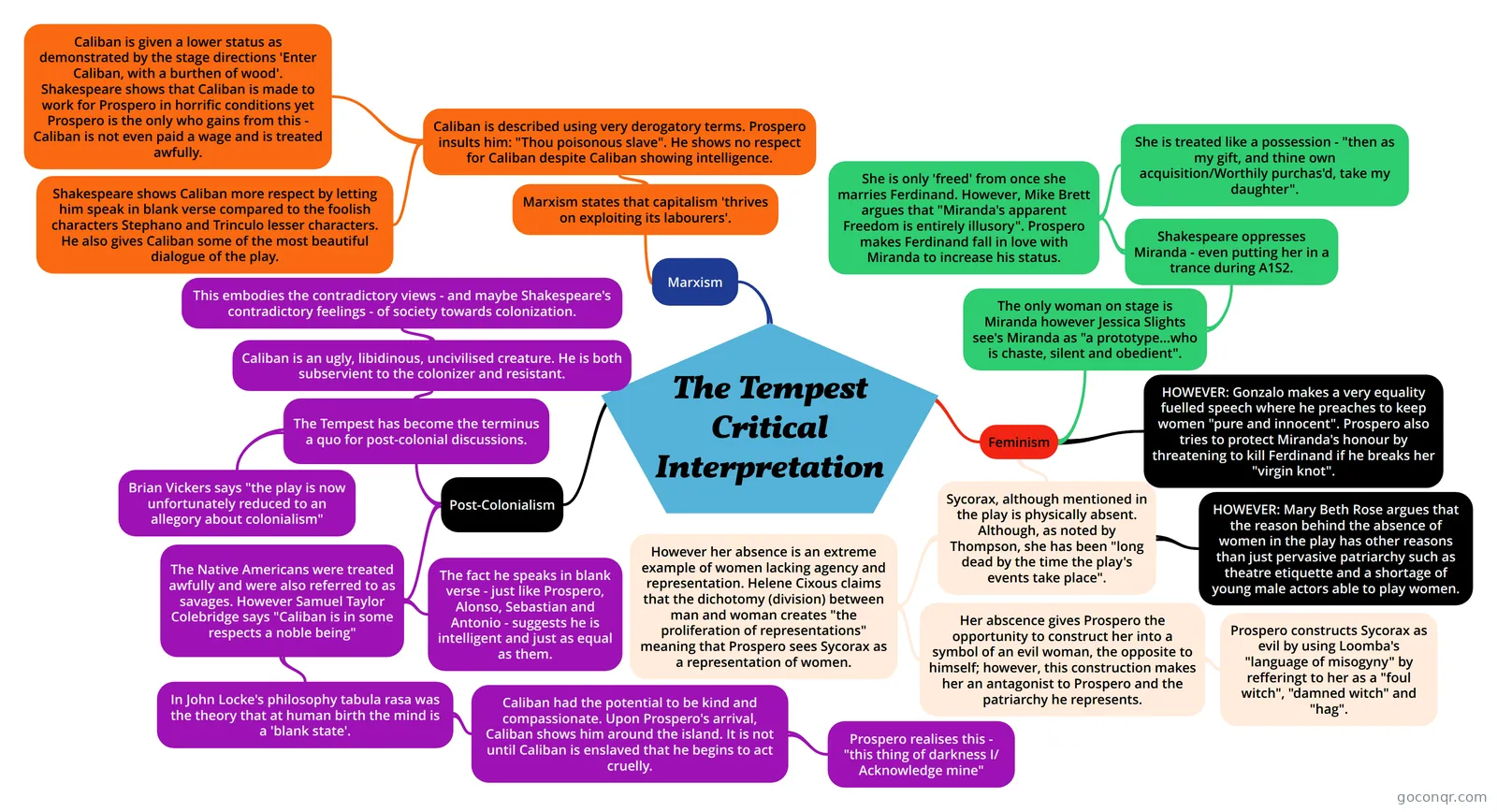 The Tempest Critical Interpretation Just different interpretations of the play.
-
The Tempest: Act 1 Scene 1
-
Tempest Key Quotations
Flashcards
See all 11 flashcards-
99 cardsThe Tempest Key Quotations PROSPERO: "Dost thou forget From what a torment I did free thee?"
-
22 cardsTempest A05 'Prospero's magic powers allow him to impose his will in situations he could not control otherwise.'
-
27 cardsA03 for The Tempest Maria O'Connor Prospero's power "is not fully understood by ...
-
19 cardsThe Tempest Quotes Miranda encounters men for the first time Act I scene 2
-
21 cardsThe Tempest - Past Productions The island is presented as an Arctic wilderness, opening with a shipping forecast and a radio. Caliban is a...
-
25 cardsTHE TEMPEST CRITICS What does the Folio version say about Caliban?
-
10 cardsThe tempest flashcards Who is Alonso?
-
33 cardsThe Tempest-Learning quotes Control Relationship between Prospero and Miranda. Love
Notes
-
The Tempest - Plot Act 1 Act 1 Scene 1 A small ship in the Mediterranean is caught in a terrible storm. Apart from the Boatswain and other sailors aboard the ship, there are also a group of noblemen on their way back from a weddi...
-
Tempest themes quotes - created from Mind Map_1 Illusions and deception The Tempest itself "Your charms so strongly works 'em that if you now behold them, your affection would become tender."- Ariel "Not a soul but felt a fever of the mad...Not a hair perish'd. On ...
-
Act 1: Scene 1 (PCCQ)
-
Shakespeare and the Tempest 'Discuss ways in which Shakespeare alludes to his own life in 'The Tempest''Examples: TITLE: The Tempest itself (i.e the storm caused by Prospero) could be considered to reference a ship crash in the Bermudas that sep...
-
Act 1: Scene 1 (TMSLO) From Spark Notes:Illusion of Justice From Bookmark: Power and Control Master and Servant Nature of Theater Order and Disorder From Bookmark: The tempest Water and the sea
-
Act 1: Scene 2 (PCCQ)
-
Key Quotes in The Tempest "The red plague rid youFor learning me your language!"Caliban to Prospero "The mistress which I serve quickens what's deadAnd makes my labours pleasures."Ferdinand to Miranda "I am your wife, if you will marry me.If n...
More Literature topics
About The Tempest
GoConqr OriginalWhat you will find
This unit sits in the Shakespeare strand of Literature. It brings together work from over 140 contributors, and the resources cover the play from several angles: plot, characters, themes, context and criticism. Exams mentioned across the resources include GCSE English Literature, A-level English Literature and HSC English.
Where to start
Begin with the mind map The Tempest for context. It covers the Age of Discovery, the world of James I, the Renaissance and humanism. Then open Characters in The Tempest to see who is who: Prospero, exiled Duke of Milan, his daughter Miranda and the rest. For the opening of the play, try The Tempest: Act 1 Scene 1, which looks at how the storm creates disorder and spectacle.
Themes and ideas
- The Tempest Key Themes asks whether the play is an allegory and whether Prospero stands for God.
- Tempest themes quotes groups quotations under illusion and deception, nature versus nurture, confinement and freedom, and compassion and forgiveness.
- PROSPERO: Character Profile looks closely at his speech about dreams and sleep.
- The Tempest Critical Interpretation includes a feminist reading of Miranda and Sycorax.
Quotations and criticism
The flashcard decks are good for learning lines. The Tempest Key Quotations pairs lines from Prospero and Ariel, while THE TEMPEST CRITICS tests you on critics' views of Caliban, Miranda and Sycorax. Tempest A05 has statements about Prospero's power and legitimacy that you can use when planning essay points.
Using maps and quizzes together
Read a mind map first, then close it and try the quiz called Tempest Key Quotes to see what stuck. Go back to the map for anything you missed. Teachers can pick a map or deck to set as a starting point for a lesson or homework. Choose one resource today and see where it takes you.
Frequently asked questions
Which resource should I open first?
Start with the mind map The Tempest, which sets out the context: the Age of Discovery, the world of James I and Renaissance ideas. After that, Characters in The Tempest gives a quick overview of who is who, and The Tempest Key Themes helps you see the big questions.
What do the flashcard decks cover?
They cover key quotations, critics, themes and individual characters. The Tempest Key Quotations pairs lines from Prospero and Ariel. THE TEMPEST CRITICS asks about views on Caliban, Miranda and Sycorax. There are also decks on power, colonisation, the supernatural and compassion and forgiveness.
Are there quizzes on this page?
Yes, there are 3 quizzes. Tempest Key Quotes is the one to try for the play's lines, and there are also two general practice quizzes. Use them after reading a mind map, so you can spot which characters or themes need another look.
Which exams do these resources suit?
The resources mention GCSE English Literature, A-level English Literature and HSC English. Nearly all of them are at secondary level. Check each map or deck against what your own course asks for, since the resources were made by GoConqr users and vary in focus.
Are the resources free, and who made them?
Every resource listed here is free to open and study, with no account needed. They were made by GoConqr users, not by GoConqr itself. A free account also saves your quiz scores and lets you make your own quizzes, mind maps, flashcards and notes.
What if I cannot find what I need?
Look through related mind maps, such as the ones on context, characters or Act 1, as they often cover the same ground in a different way. If a topic is still missing, you can make your own map or deck and shape it around your course.