
Mapa mental
3: WHAT DO WE SHOW?

Contenido del mapa
3: WHAT DO WE SHOW?
Non- verbal behaviour and communication
- History:18th -19th century: "natural languages" > symbolic communication. Importance of immeadiate situaitonal facotrs: proximal/ situational influences & distal/ historical influences
- Style:
- Personal idiom
- Instrumental aspects of action
- Expressive aspects of action: personalized (e.g. voice or signature)
- Skill
- (Complex, coordinated motor acts) acquired from environment by practicing
- Personal idiom
- Study of NVB
- Knapp: 7 dimensions of NVB:
- 1. Kinesics (body language)
- 2. Paralanguage (content free vocalization)
- 3. Physical contact (touching)
- 4. Proxemics
- 5. Physical characteristics of people
- 6. Artefacts (cloths, perfume, jewelry)
- 7. Environmental factors (setting)
- Context is important!
- Social climate: stressful/ relaxed situations
- Formal (less NVB) / Informal setting (more NVB)
- Physical/ social envirnoment
- Ekman & Friesen: 3 categories
- USAGE: all circumstances (setting, emotinal tone, relationship)
- ORIGIN: root/ location of NVB ( nervous system, culture)
- CODING: meaning of the NVB
- Extrinsic: are something else than what they represent (e.g. thumbs-up)
- Intrinsic: same as representation (eg. playful form of aggression = aggr.)
- + 5 categories of behavioural acts
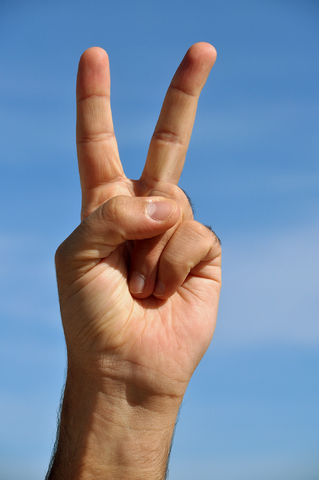
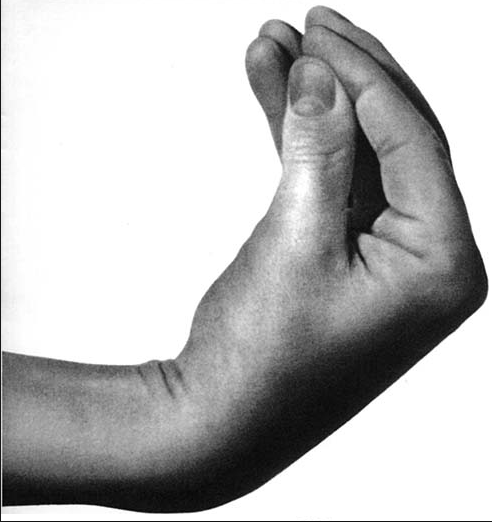
- Emblems (culturally specific)
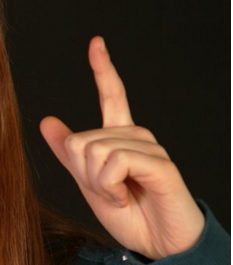
- Illustrator: "it was this wide.."
- Regulator: head nods, eye contact etc that regulate conversation flow. CULTURE SPECIFIC!
- Adapters: object or self- manipulation (behavioural habits like scratching the head, folidng arms, pencil- tapping on table)
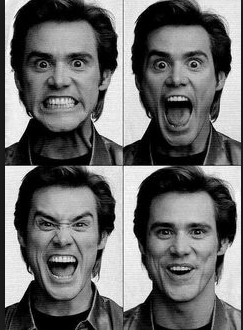
- Affect displays: facial expressions
- 7 universal emorions we are born with!
- Encoder (talker) /vs. decoder (listener)
- INFORMATIVE ACT
- unintentional signal > interpretation
- form impressions
- unintentional signal > interpretation
- COMMUNICATIVE ACT
- Intentional: the message content
- Encoder can send GOAL DIRECTED or NON-GOAL-DIRECTED SIGNALS
- Decoder may interpret them differently
- INFORMATIVE ACT
- Patterson: 7 basic funtions of NVB:
- 1. Providing information
- 2. Regulating interactions
- 3. Expressing intimacy
- 4. Expressing social control
- 5. Presentation function
- 6. Affect management
- 7. Facilitating service tasks/goals
- 6. Affect management
- 5. Presentation function
- 4. Expressing social control
- 3. Expressing intimacy
- 2. Regulating interactions
- Exchange of expressions in interaction
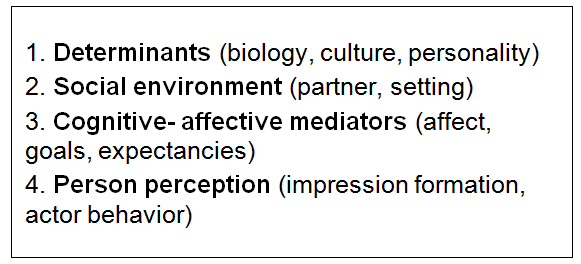
- 4 classes of factors:
- 1. Providing information
- Actor and observer bias: Actors overemphasize situational factors in explaining own behavior, observers overemphasize dispositional factors
- Knapp: 7 dimensions of NVB:
- Dittmann: 4 channels
- Language
- Facial expressions
- Vocalizations
- Body movements
- Vocalizations
- Facial expressions
- Based on communicative channel capacity
- Defined by how much information each of the channels can transmit at any moment
- Channels go from Communicative/discrete to Expressive/continuous
- Defined by how much information each of the channels can transmit at any moment
- Language
- Mehrabian:
- POSITIVENESS evaluation: > approach or avoid
- POTENCY: status/ social control (cues of posture)
- RESPONSIVENESS: activity cues
Voluntary & Involuntary Behaviour // Detecting Decpetion
- LIE: a deliberate intention to mislead.
- Darwin: some emotions have universal facial impression > facial muscles can reveal our true emotions involuntarily (we canot control these muscles) > it's hard to hide true emotions
- Reliable facial muscles: Facial actions that aren´t easily controlled by most people
- Leakage of felt emotions: When parts of an expression occur (rapidly), betraying how a person feels even if that person is attempting to conceal their feelings
- Lie continuum:
- Darwin: some emotions have universal facial impression > facial muscles can reveal our true emotions involuntarily (we canot control these muscles) > it's hard to hide true emotions
- Differences between expressed emotions and truly felt emotions
- Morphology
- the facial expression looks different when emotion is truly felt than when it is faked (different muscle movements)
- Fake smile: movements associated with fear, sadness or disgust
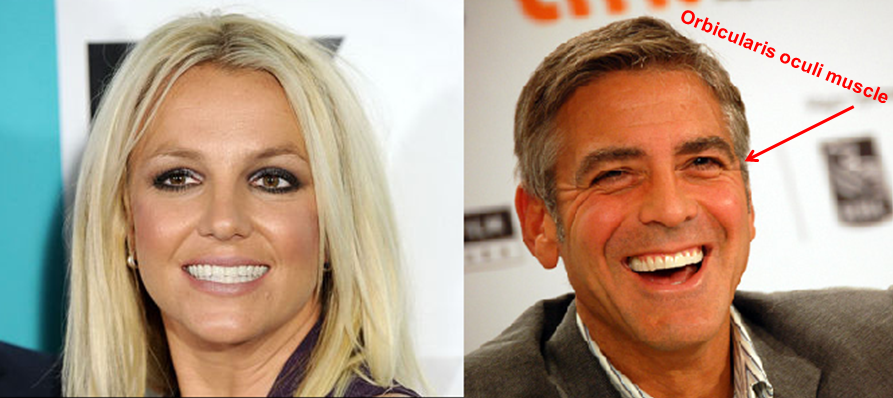
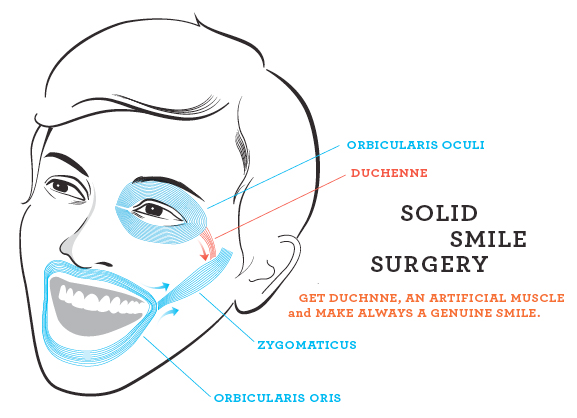
- Duchenne smile: sincere smile, Orbicularis Oculi muscles are activated (laughing eyes) + Zygomatic major. Left frontal EEG activation (positive affect)
- the facial expression looks different when emotion is truly felt than when it is faked (different muscle movements)
- Timing
- Duration and speed of onset, abruptness
- Micro facial expressions
- Fake emotions start and end abruptly and last too long
- True emotions last ~0.7 to 4 sec.
- Duration and speed of onset, abruptness
- Symmetry
- Emotions are more intensely expressed on the left side of the face! > Sincere emotions are asymmetrical! (Except happiness)
- True smiles are more symmetrical
- Emotions are more intensely expressed on the left side of the face! > Sincere emotions are asymmetrical! (Except happiness)
- Cohesion
- Facial expression will be consistent with the content of speech
- The context, usual manner, internal consistency
- Lying cues: hesitation, changes in emphasis, speech errors and distancing language
- Changes in the frequency or tempo of gestures
- Facial expression will be consistent with the content of speech
- Morphology
- Experiment: Weaknesses: Based on high-stakes lies in laboratory setting with little preparation -> In real world people are more practiced in lies
- LIE: a deliberate intention to mislead.
Hand gestures
- Speech- gesture realtionship: Aid comprehension for the listener
- Categories:
- Illustrators / Ideational gestures
- improve the listener´s attention, recognition, understanding and memory about the content > clarify the content
- iconic &metaphoric gestures, related to the semantic content / concurrent speech
- Conversational gestures (without relation to semantic content)
- rhytmic & cohersive gestures linked to speech structure
- Adaptors:
- Self-addressed (touch own body)
- Object- addressed (contact with objects)
- Person -addressed
- associated with anxiety, soemtimes with deception
- Illustrators / Ideational gestures
- Experiment
- AIM: how gestures affect the perception of th espeaker and message and persuasion
- DVs: coomunicative effectiveness, composure, comptenece, warmth of speaker and persuasiveness of message
- Results:
- Hand gesture type affected some factors of speaker evaluation, interpersonal perception and judgement
- Ideational gestures are more effective than adaptors (object-addressed and self-addressed)
- speaker seems more competent, has more effective communicaiton style and sending a more persuasive message
- Generally, linked-to-speech gestures (ideational & conversational) influence the message evaluation and judgements about the speaker more than non-linked-to-speech (adaptor) gestures. > Namely, they improve perceived speaker composure
- Weaknesses: (1) using a positive messgae in the manipulatiom, (2) relations among DVs, (3) cross- cultural comparisnon is needed
- can also provide information about the speaker
- e.g. social abilites
- 2 dimensions underlying judgment:
- Warmth, friendliness, sociability
- Agency, competence, efficacy
- Communication style is a way to affect perceptions of speaker´s features
- Nonverbal characteristics inluence the perceptions of credibility, persuasiveness, competency or effectiveness of the speaker
- NV styles also influence likeablesness, competence, powerfulness, anxiety...
- NVB: hihg speech volume and speech rate, high eye contact > liking > persuasiveness
- NV styles also influence likeablesness, competence, powerfulness, anxiety...
- Nonverbal characteristics inluence the perceptions of credibility, persuasiveness, competency or effectiveness of the speaker
Imágenes y archivos del mapa

Información
- Descripción
- Lecture week 3 readings
- Creado por
- Johanna Pyykkö
- Visitas
- 189
- Etiquetas
- Valoración