
Mapa mental
Memory models
Contenido del mapa
Memory models
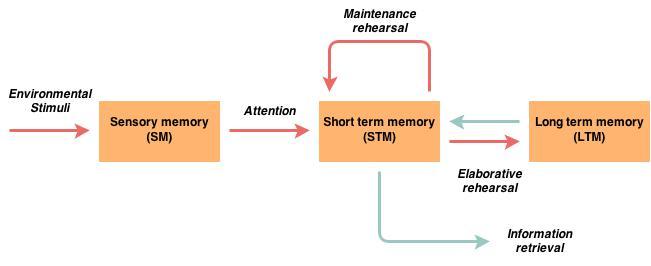
The Multi-store model
- Evidence to support 3 separate memory stores
- The sensory store
- The serial position effect
- Areas of the brain associated with STM and LTM
- Strengths
- Strong evidence of seperate stores
- Provides an account of memory in terms or structure and process
- Has clear predictions for memory
- Weaknesses
- STM and LTM are not unitary stores
- Rehearsal Vs Processing
- STM actually relies on LTM
- Evidence to support 3 separate memory stores
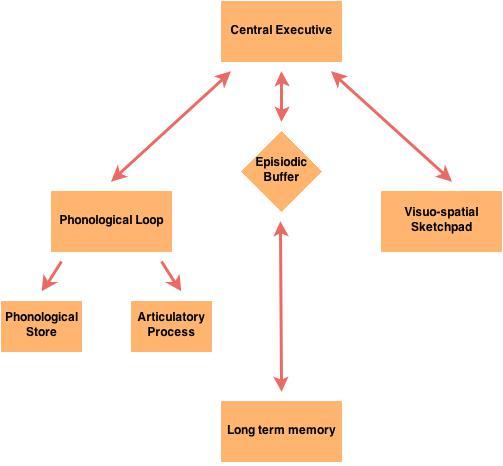
The Working Memory model
- Evidence supporting this model
- Evidence for the four components
- Doing two tasks using the same or different components
- Evidence from brain damaged patients
- Components
- Central Executive
- Direct attention to particular tasks
- Determines how 'resources' are allocated to tasks
- Data arrives from LTM or SM
- Limited capacity
- Phonological Loop
- Deals with auditory information and preserves the order
- Phonological Store
- Holds words we hear
- Articulatory Process
- Used for words heard or seen
- Limited capacity
- Visuo-spatial Sketchpad
- Used when you have to plan a spatial task
- Visual information is temporarily stored here
- Episiodic Buffer
- Extra storage system
- Integrates memory from other stores
- Limited capacity
- Central Executive
- Strengths
- Explains observations made by psychologists
- Lots of evidence to support this
- Different kinds of memory
- Weaknesses
- Central executive too vague
- Some of the key evidence is not comparible before and after
- Evidence supporting this model
Imágenes y archivos del mapa
Información
- Descripción
- A Levels (Memory) Psychology Mapa Mental sobre Memory models, creado por kati.lombardi el 07/05/2014.
- Creado por
- kati.lombardi
- Visitas
- 21
- Valoración