
Mapa mental
Biology: Lung Disease
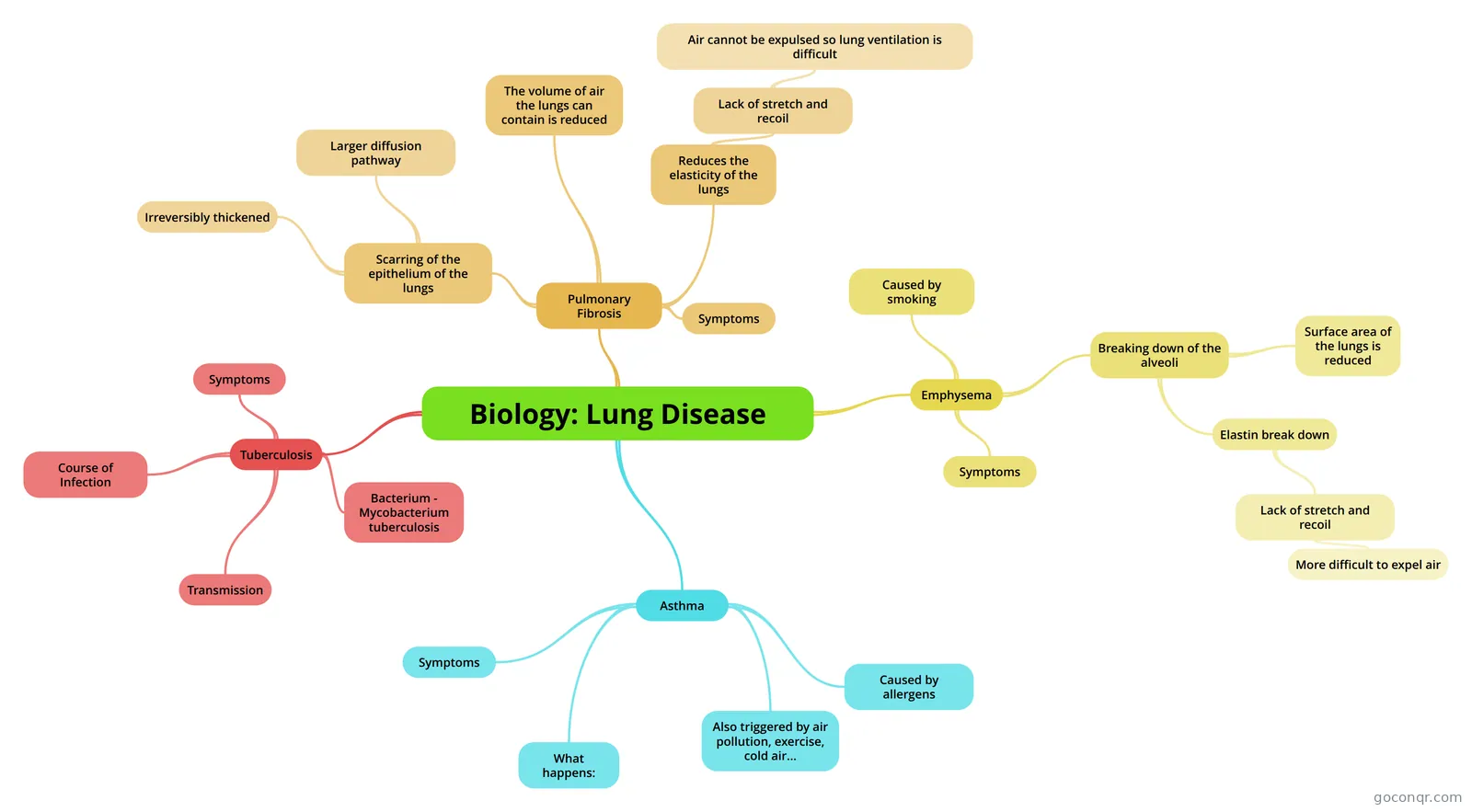
Mind map: Biology lung disease
Contenido del mapa
Biology: Lung Disease
Tuberculosis
- Transmission
- Spread by droplets of water/mucous Inhaled into another person's respiratory system
- Bacterium - Mycobacterium tuberculosis
- Course of Infection
- The bacteria can grow and divide in the upper regions of the lungs. Phagocytes can engulf and digest the bacteria. They can become encased in a tubercule. The bacteria can destroy the alveoli, causing fibrosis and scar tissue. The damage leads to less diffusion of gases, due to less surface area and larger diffusion pathway.
- Symptoms
- Persistant cough Tiredness Loss of apetite Fever Coughing up blood
- Transmission
Pulmonary Fibrosis
- Scarring of the epithelium of the lungs
- Irreversibly thickened
- Larger diffusion pathway
- The volume of air the lungs can contain is reduced
- Reduces the elasticity of the lungs
- Lack of stretch and recoil
- Air cannot be expulsed so lung ventilation is difficult
- Lack of stretch and recoil
- Symptoms
- Shortness of breath Fatigue Chest pain Chronic cough
- Scarring of the epithelium of the lungs
Emphysema
- Symptoms
- Shortness of breath Chronic cough Fatigue
- Breaking down of the alveoli
- Surface area of the lungs is reduced
- Elastin break down
- Lack of stretch and recoil
- More difficult to expel air
- Lack of stretch and recoil
- Caused by smoking
- Symptoms
Asthma
- Caused by allergens
- Also triggered by air pollution, exercise, cold air...
- What happens:
- Allergens cause WBCs to move to site of infection. Release histamine Lining of airways inflammed. Cells produce more mucus. Bronchioles contract, constricting the airways. Airways in turn become blocked
- Symptoms
- Difficulty breathing Tight chest pain Wheezing Coughing
Información
- Descripción
- AQA Biology Unit 1 Chapter 4
- Creado por
- Sarah H-V
- Visitas
- 433
- Etiquetas
- Valoración