
Fichas
Introduction of Adaptive Immune Response
Fichas del conjunto (15)
- 1Adaptive Immune Response- Specific
- Fully activated only after infections
- Response magnitude higher in the second infections
- Memory stored - 2Development of LymphocytesT cells
B cells - 3Antigen-independent maturation sitesT cells in thymus
B cells in bone marrow - 4Function of surface markers or receptorsi. Bind to receptors on other cells
ii. Bind to antigen
iii. Transmit and receive messages - 5Common receptor moleculesi. Major histocompability complex (MHC)
ii. Cluster of differentiation (CD)
iii. Antigen-specific receptors - 6Three class of MHCi. Class I - expressed on all nucleated cells
ii. Class II - on APCs ; dendritic cell, macrophages, B cell
iii. Class III - on protein associated with complement system - 7CD molecules sites of binding
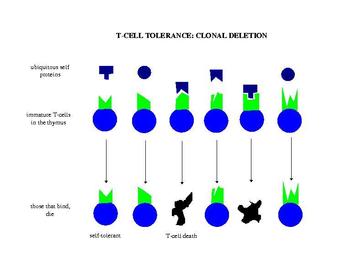
- 8Antigen-specific receptors & Clonal deletion
- 9Presentation of antigenAntigenicity based on:
i. Size
ii. Complexity
iii. Foreignness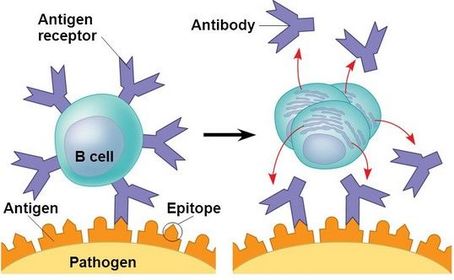
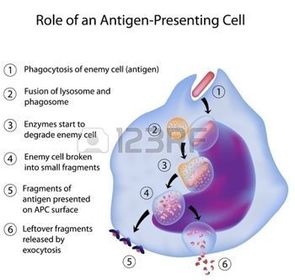
- 10Role of antigen-presenting cell
- 11Receptors on T cell and B cellT cell receptor (TCR) - supported by co-receptor such as CD4 CD8
B cell - immunoglobulins or antibody
Class - IgG IgA IgM IgE IgD - 12T cell activation
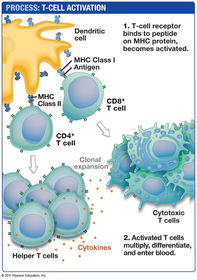
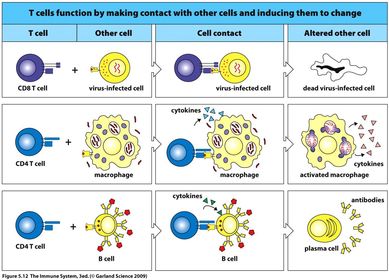
- 13Function of T cell differentiationsT helper cell - stimulate or activate other cells, including macrophages, B cell, cytotoxic cell
Memory T cell - store immunological memory
Regulatory T cell - regulate other cells to prevent excessive inflammation & autoimmune
Cytotoxic cell - infected host cell, cancerous host cell, foreign cells. involve secretion of granzyme & perforins - 14B cell activation
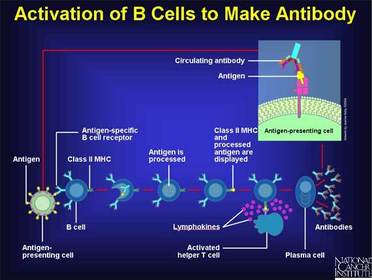
- 15Role of B cell differentiationMemory cell - store immunological memory
Regulatory B cell - regulate to prevent excessive inflammation & autoimmune
Plasma B cell - launch antibodies (opsonisation, neutralisation, agglutination, )
Información
- Descripción
- Brief explanation about adaptive immune response
- Creado por
- Anuarruddin Azmilumur
- Visitas
- 35
- Etiquetas
- Valoración