Mind map
ADAPTIVE IMMUNE RESPONSE
Map content
ADAPTIVE IMMUNE RESPONSE
specific
immune components are fully activated only after infection start
immunological memory is stored
response magnitude is higher in the second and subsequent encounters compared to the first
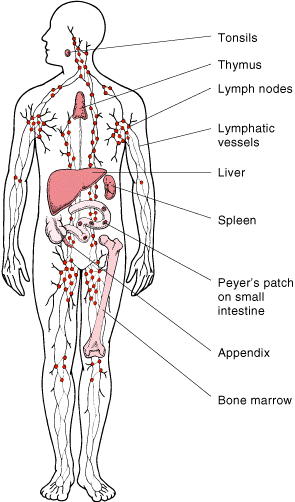
organ of lymphatic system
development of T and B cells
- diverges of lymphocyte development
- T cells
- B cells
- antigen-independent mutation
- T cells in thymus
- B cells in bone marrow
- have surface markers / receptors
- bind to receptors on other cells
- bind to antigens
- transmit and receive messages
- common receptor molecules
- antigen-specific receptors
- cluster of dIfferentiation (CD)
- CD8 binds to MCH class1
- CD4 binds to MHC class 2
- over 300 CD molecules have been identified
- major histocompatibility complex (MHC)
- class 1, expressed on all nucleated cells
- class 2, on antigen-presenting cells, such as macrophages, dendritic cells and B cells
- class 3, on proteins associated with the complement system
- mature T and B cells antigen-specific receptors
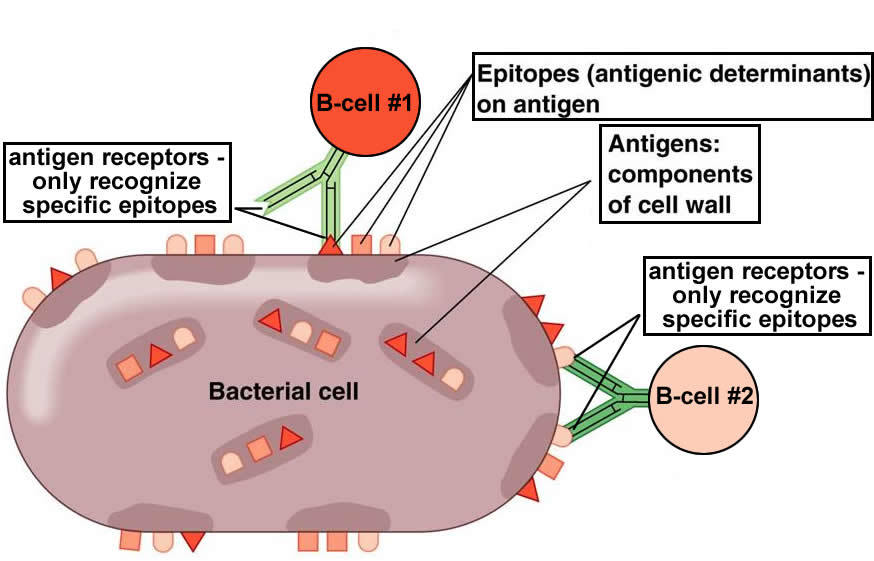
- recognise one type of unique antigens
- each group of T or B cells carrying one specific type of receptors are called clones
- our immune system has the diverse receptor "key shapes" allowing them to recognize different "lock shapes" of antigen
- diverges of lymphocyte development
presentation of antigens
- Antigens (Ag) are substances that can provoke immune response
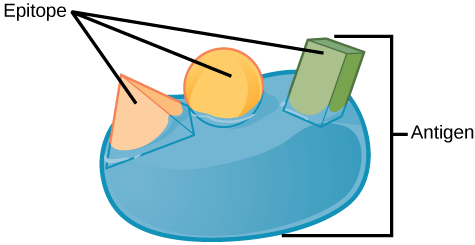
- one antigen may have multiple epitopes
- antigenicity factors
- size
- complexity
- Foeignness
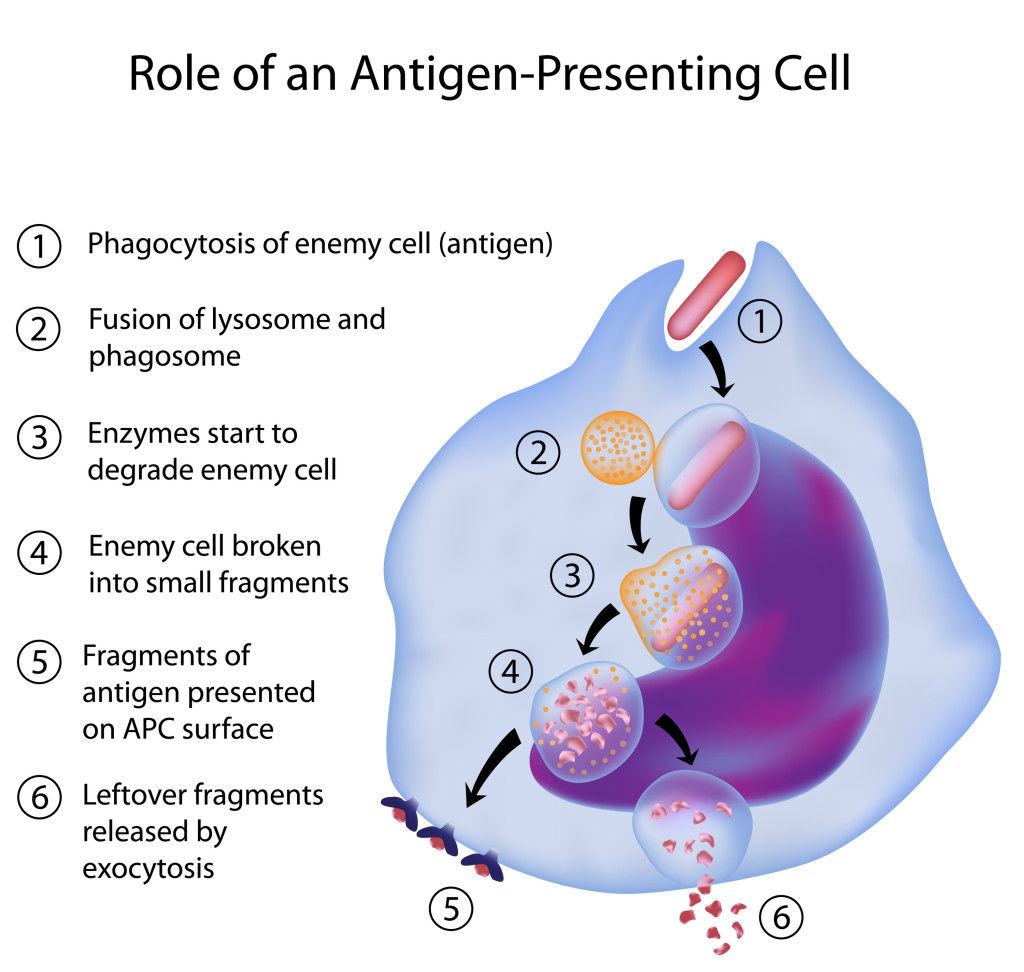
- professional antigen-presenting cells (APCs)
- macrophages
- Dendritic cells
- B cells
- T cells receptors
- support by co-receptors : CD4 or CD8
- B cells : immunoglobulins (Ig) or antibodies
- IgG
- IgA
- IgM
- IgE
- IgD
- Antigens (Ag) are substances that can provoke immune response
T cell response
- antigens presented on APCs will activate T and B cells
- activation stimulation
- subtypes of T helper cells (Th)
- memory T cells
- regulatory T cells (Treg)
- cytotoxic T cells (Tc)
- T helper cells stimulate or activate other cells, including macrophages, B cells, Tc cells
- Cytotoxic T cells attack
- cancerous host cells
- infected host cells
- foreign cells from other humans or animals
- memory T cells store immunological memory
- regulatory T cells regulate other cells to prevent excessive inflammation and autoimmunity
- T cells attack involves secretions of granzymes and perforins
- leads to : perforation, apoptosis in target cells
B cells response
- can be activated without helper T cells (referred as T-independent activation)
- B cells require activation by T helper cells
- following activation, B cells differentiate
- memory B cells
- regulatory B cells
- plasma cells
- memory B cells store immunological memory
- regulatory B cells regulate other cells to prevent excessive inflammation and autoimmunity
- Plasma cells launch billions of antibodies to attack the invaders
- antibodies disable the targets through
- neutralisation
- block the receptor on a surface or the targets, neutralising them
- opsonisation
- coat the targets, helping phagocytes to recognize them
- antitoxin action
- bind to toxins produced by the targets, rendering them harmless
- agglutination
- link the targets with one another into large clumps, immobilizing them and enhancing their phagocytosis
- neutralisation