
Mind map
Innovation Management
Map content
Innovation Management
Planning
- Market & Technology Dynamics
- Innovation => Competitive Advantage
- Idea + Comercialisation = $$$
- Innovation is the successful commercial exploitation of new ideas
- High technology industries grew x2.5 times faster then manufacturing industry in 1980-2003
- Trade of high-technology products doubled in the OECD countries in 1994-2003
- Innovative countries & regions have higher productivity
- Technological innovation is a key factor in the economic transformation of the East Asian economies
- New products account for 50% of profits of top performing firms in the US
- Technology licensing and royalty payments increased from $7 billion to $120+ billion in 1976-2004
- "Business has only two functions - marketing and innovation." Peter Drucker
- Joseph Schumpeter - "Creative Destruction"
- "a process of industrial mutation tht incessantly revolutionalises the economic structure from within, incessantly destroying the old one, incessantly creating a new one."
- a company must continuously innovate in order to remain competitve, and stay alive
- Idea + Comercialisation = $$$
- Current Trends in Customer Experience
- Consumerisation
- New business models
- Hyper-personalisation
- 'Uber'-isation/ Shared ecomony
- Servitisation
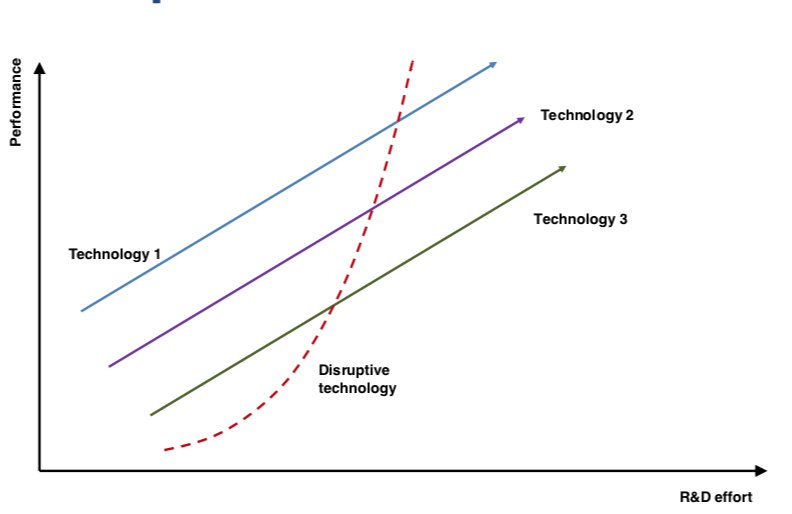
- Disruptive Innovation
- Disruptive (Exponential) Technologies
- Networks & Computer Systems
- Artificial Intelligence
- Robotics
- 3D Printing/Digital Fabrication
- Biotech & Synthetic Genomics
- Energy & Environmental Systems
- Digital Medicine
- Neuroscience/ Brain-machine Interface
- Nano-technology & Nano-materials
- "a process by which a product or service takes root initially in simple applications at the bottom of a market and then relentlessly moves up the market, eventually displacing established competitiors."
- Typically the disruptor offers lower performance and less functionality at a much lower price.
- Innovator's Dilemna
- Sustaining (Incremental) vs. Disruptive tecnologies
- Disruptive technologies vs. rational investments
- Trajectories of market needs vs. technology improvement
- Sustaining (Incremental) vs. Disruptive tecnologies
- vs. Discontinuous Innovation
- "Disruptive technologies generate discontinuous innovation that require users/adopters to significantly change their behaviour in order to use the innovation." Walsh and Kirchhoff (2000)
- "Disruptive technologies are discontinuous, but discontinuous technologies are not necessarily disruptive." Linton and Walsh (2002)
- "Disruptive technologies generate discontinuous innovation that require users/adopters to significantly change their behaviour in order to use the innovation." Walsh and Kirchhoff (2000)
- Disruptive (Exponential) Technologies
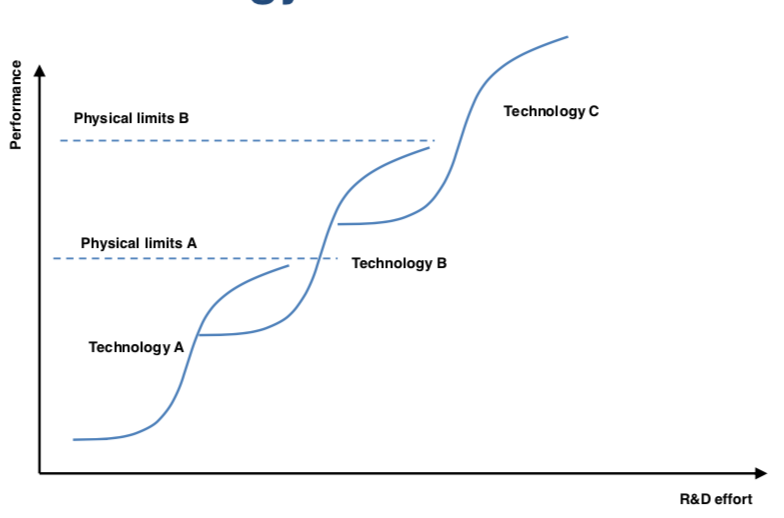
- Technology S-Curve
- Introduction
- Growth
- Maturity
- Decline
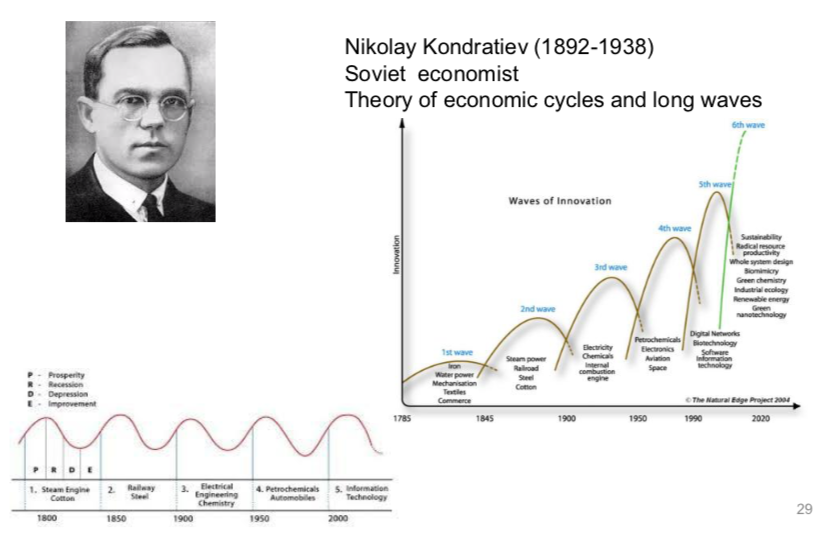
- Kondratieff's Waves
- Industrial Revolution
- Infrastructure: Trains/(Rail)roads etc.
- Electricity/Chemical
- Petrochemicals: Automotive, Aviation
- Digital: Technology/IT
- Full System: AI, Robotics, Biomimicry, Nano-tech (current)
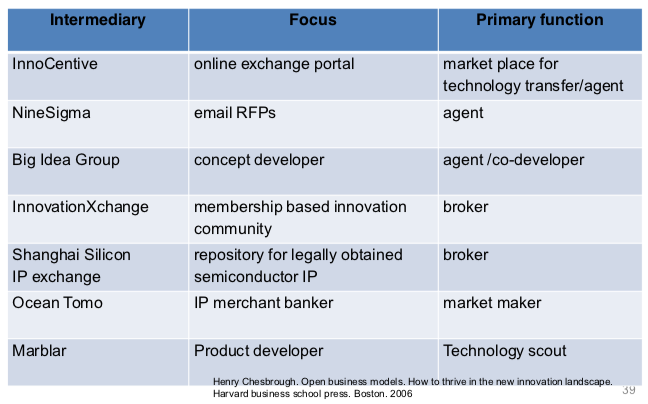
- Innovation Intermediaries
- Innovation intermediaries
- Innovation Intermediaries
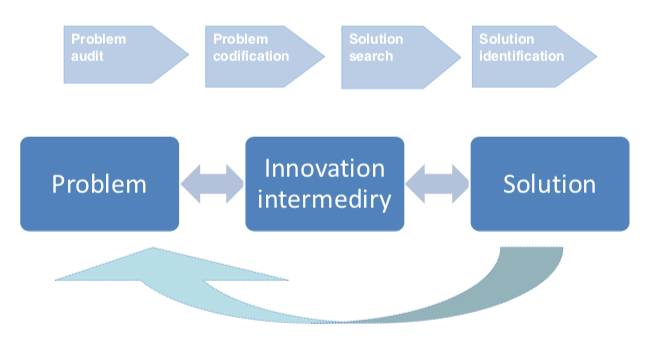
- Innovation intermediaries are organisations or people that bridge the gap between firms that seek solutions and innovators that can provide such solutions
- Innovation intermediaries are firms, agencies or individuals that facilitate innovation by providing bridging, brokering, knowledge trasfer services between organisations to help accelerate their innovation
- Innovation => Competitive Advantage
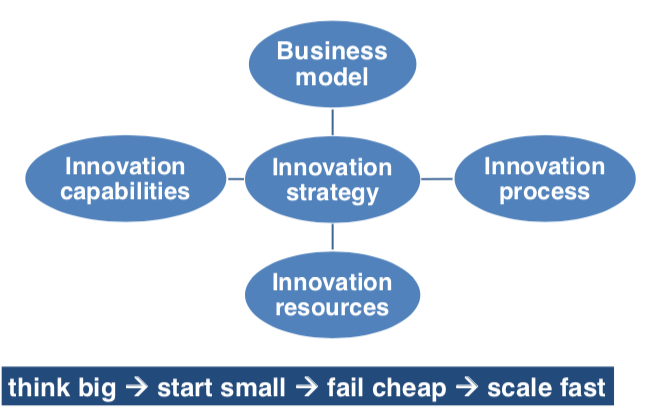
- Strategy
- Innovation Management trends
- 70s: Program Evaluation and Review Technique (PERT)
- 80s: Total Quality Management (TQM) / Six Sigma
- 90s: Globalisation of Supply Chains
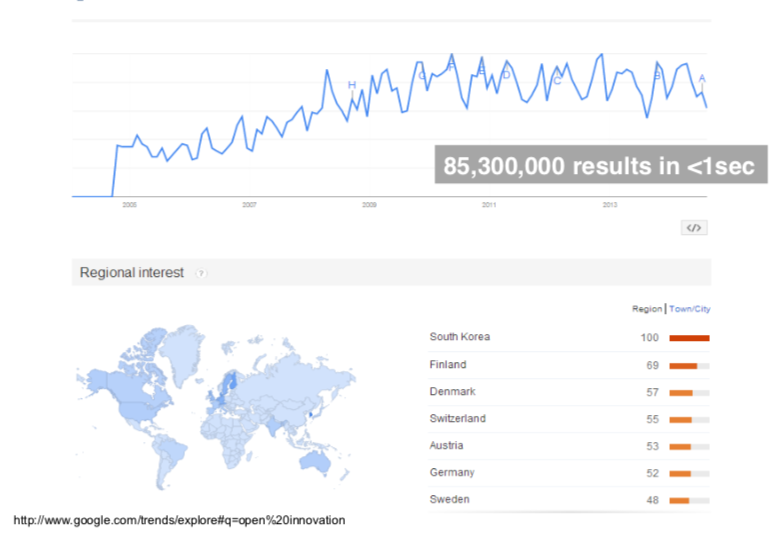
- 00s: Open Innovation
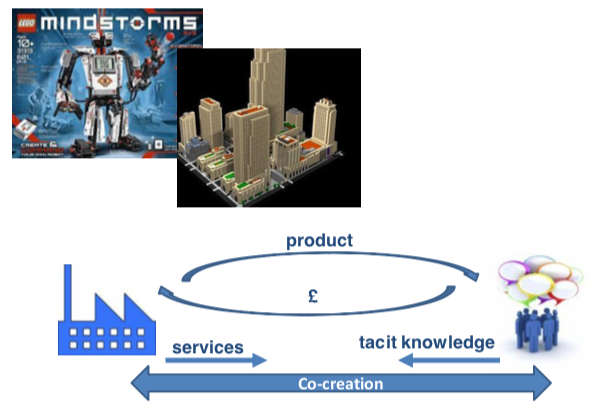
- Networked innovation/ partnership/ co-creation
- Value innovation
- Service innovation
- Innovation Value Chain
- Business Model Innovation
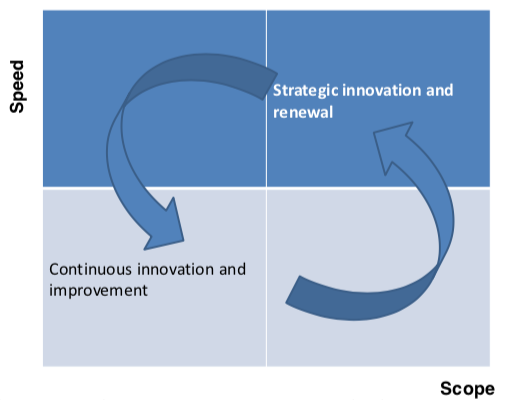
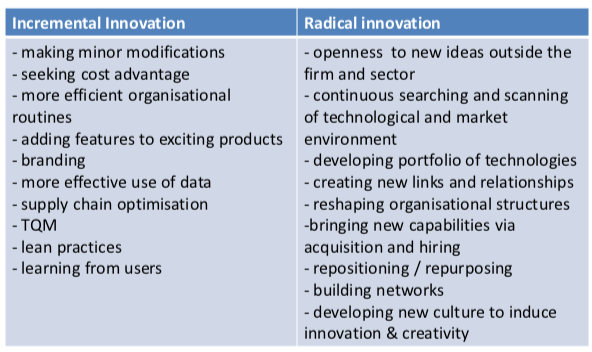
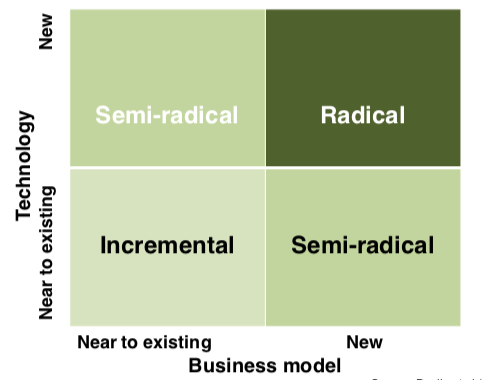
- Continuous (Incremental) vs. Strategic Innovation
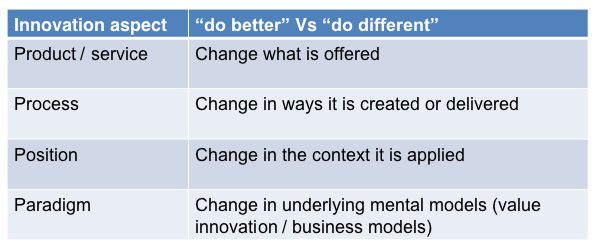
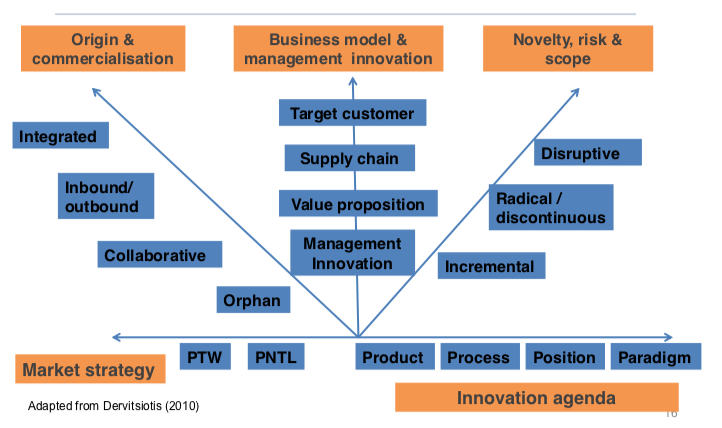
- Modes of Innovation
- Innovation Agenda
- Product/ Service Innovation
- e.g. Lego
- Positioning Innovation
- e.g. Nike
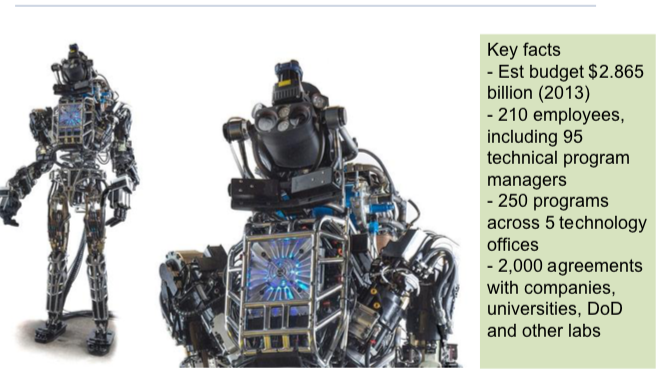
- Paradigm Innovation
- e.g. DARPA
- DARPA employs 210 people, most of which are (technical) programme managers, and instead complete work through agreements with external companies, universities, agencies, etc. There is an ever-evolving workforce on DARPA tasks which means there's always new ideas/concepts coming through the door, and the organisation is exposed to a variety of techniques/mindsets.
- Lessons:
- Listen: maintain internal and external networks
- Stay open: ideas can come from any source
- Collaborate: with stakeholders, partners, suppliers, clients, etc.
- Go Flat
- Mission Statement: "DARPA must continue to drive technological surprise and superiority so U.S. security capabilities remain second to none in a repidly changing world."
- e.g. DARPA
- Product/ Service Innovation
- Classifications of Innovation
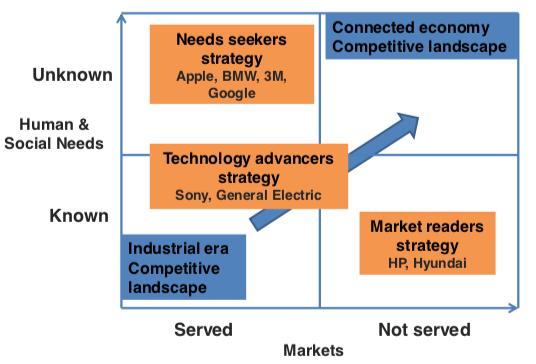
- Market Strategy
- Play-to-Win
- Innovation is key
- Innovation is the key differentiator
- High risk/ high reward
- e.g. Google, Amazon, Tech start-ups
- e.g. Nintendo
- Rather than compete with the established platforms for serious, high-end gaming, Nintendo adopted a business model that targetted the nostalgic, arcade-loving gamer.
- e.g. Nintendo
- Play-not-to-Lose
- Long Game - Incremental Innovation
- Market conditions are critical
- Can be vulnerable
- In danger of strategic drift
- e.g. Product improvement, Manufacturing
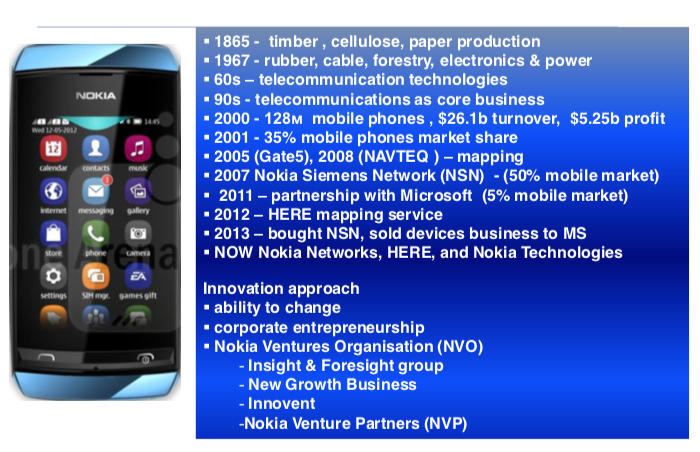
- e.g. Nokia
- Play-to-Win
- Value Innovation
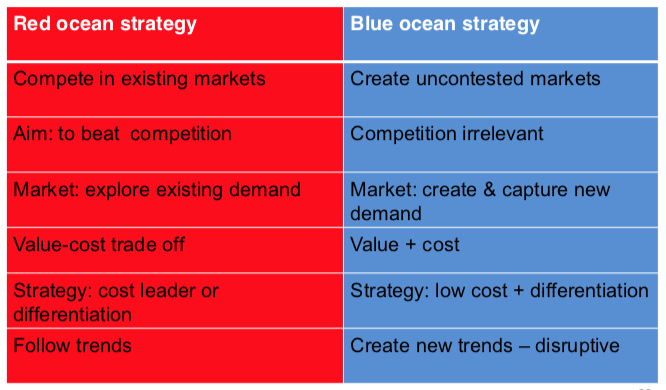
- Red Ocean Strategy
- Blue Ocean Strategy
- The terms 'Red' and 'Blue Ocean' strategies were coined with reference to the number of competitors in the 'water' (ecosystem).
- Innovation Management trends
- Market & Technology Dynamics
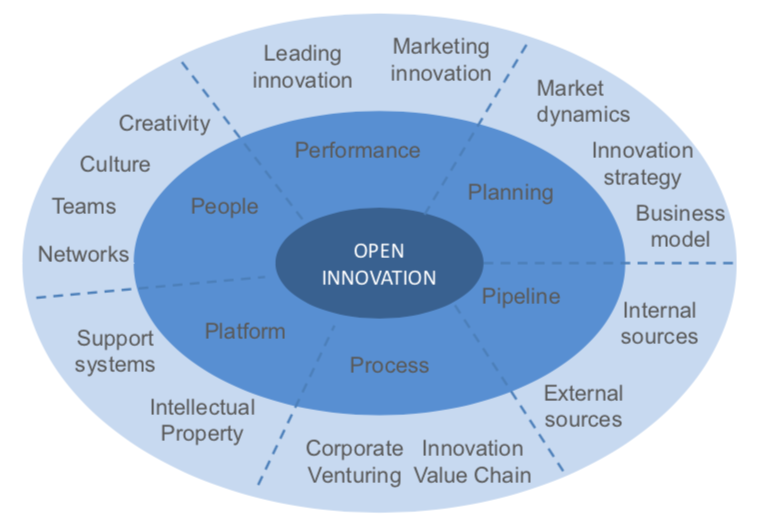
Open Innovation
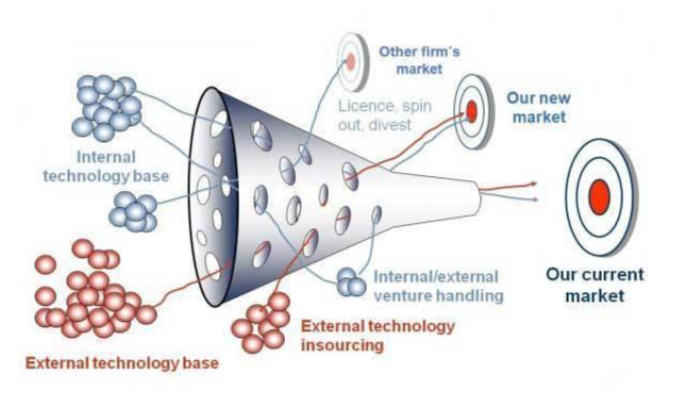
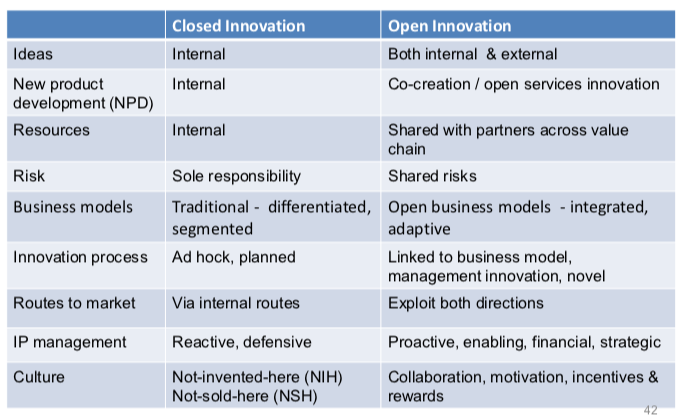
- "Open innovation is a paradigm that assumes that firms can and should use external ideas as well as internal ideas, and internal and external paths to market, as the firms look to advance their technology." H. Chesbrough
- Much more 'on-trend'
- Drivers
- Good ideas are widely distributed. No knowledge monopoly.
- External pool of talents
- Availability and mobility of skilled workers
- External capabilities - ecosystem/networks: suppliers, users, customers
- IP management: need to access external IP to fuel business & profit from own IP
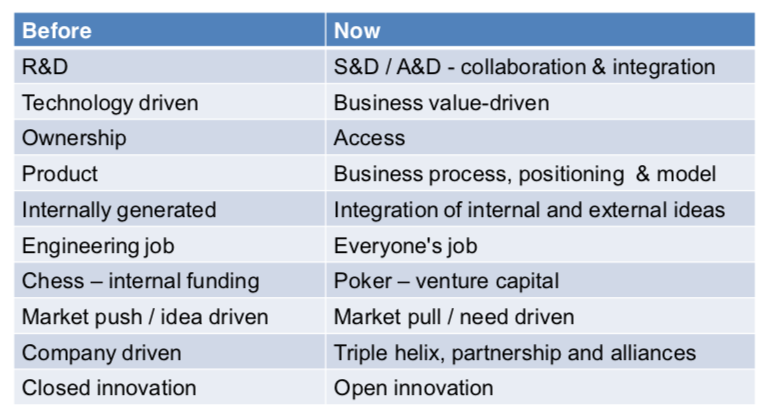
- Growth of Venture Capital market: Chess vs. Poker
- Drivers
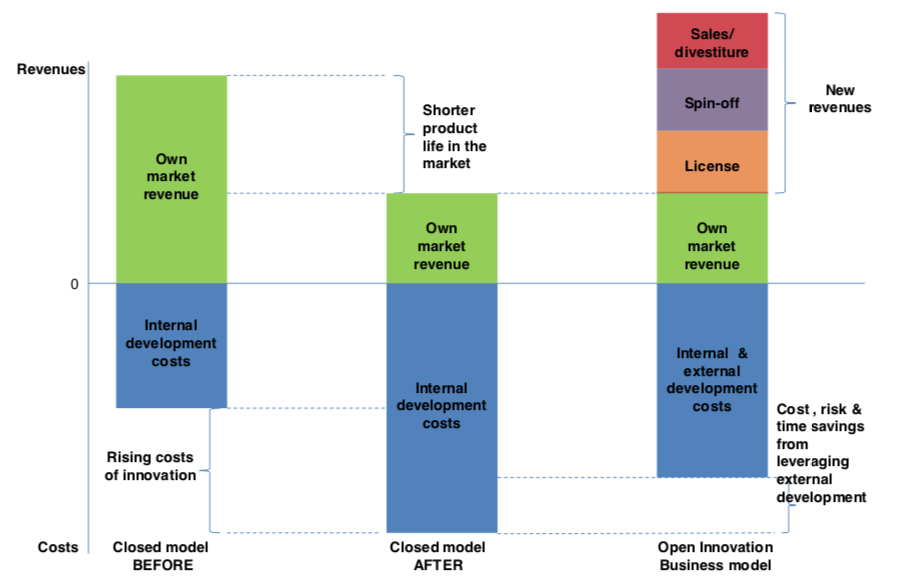
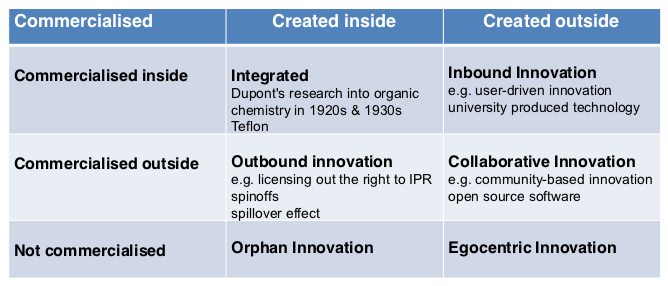
- Open Innovation is the way an organisation generates, obtains, acquires, uses, or exploits knowledge in order to develop new products, services, or business models
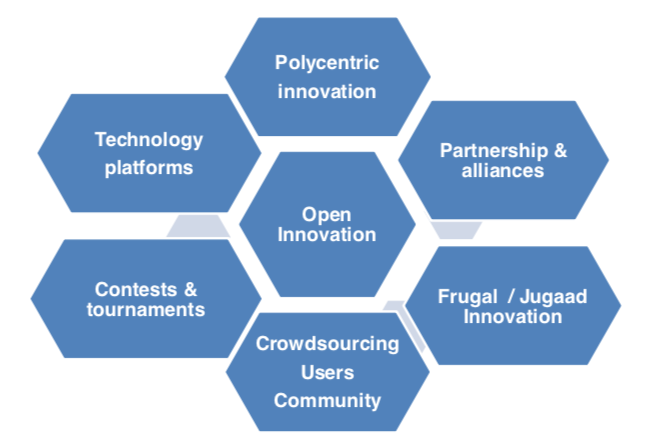
- Types of Open Innovation
- Polycentric Innovation
- "Polycentric innovation is an emerging business practice that consists of networking international talent, capital and ideas to meet global demand for new producs and services."
- "Polycentric innovation model is a model in which R&D capabilities are distributed globally to swifly seize regional opportunities and yet are integrated into a loosely-coupled global innovation network to drive creative synergies on an international scale."
- e.g. Cisco, Living-Labs
- "Polycentric innovation is an emerging business practice that consists of networking international talent, capital and ideas to meet global demand for new producs and services."
- Partnership & Alliances
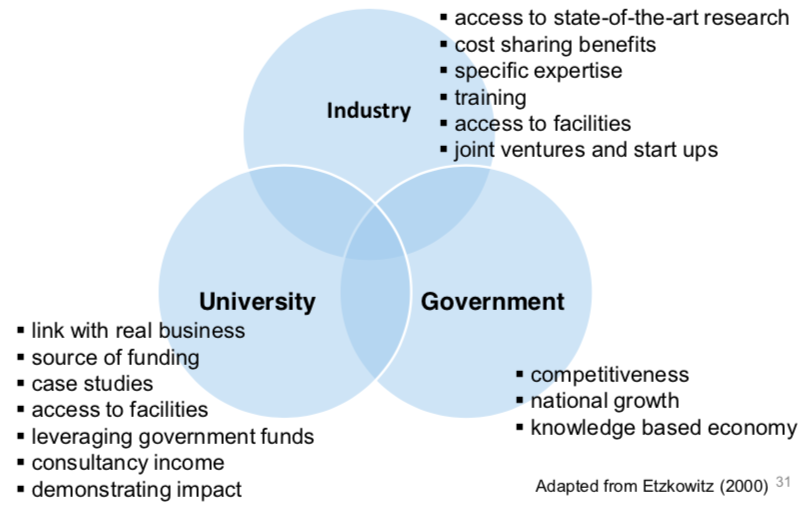
- Companies may decide to partner with other companies in the industry, academics in universities or government programes in order to tap into innovation potential of analogue fields or working practices.
- UK ranked 4th globally for University-Industry R&D collaboration.
- Companies may decide to partner with other companies in the industry, academics in universities or government programes in order to tap into innovation potential of analogue fields or working practices.
- Frugal/ Jugaad Innovation
- "Frugal innovation - the provision of better solution, for more people, using fewer resources, by doing things completely differently" C. Leadbeater (2014)
- e.g. Narayana Health (Hospital)
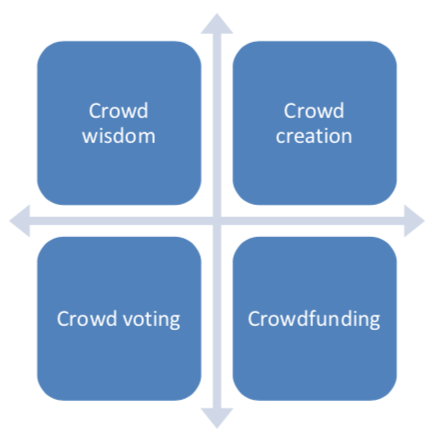
- Crowdsourcing (Users/Community)
- An innovation paradigm in which an organisation solicits solutions from a wider community. Require less engagment and involvement. Typically the organisation will set a challenge for the public and ask for solutions, opinions, insights from the crowd - not genuine ontribution or collaboration.
- e.g. IBM Jams, FIA Innovation Award
- An innovation paradigm in which an organisation solicits solutions from a wider community. Require less engagment and involvement. Typically the organisation will set a challenge for the public and ask for solutions, opinions, insights from the crowd - not genuine ontribution or collaboration.
- Contests/Tournaments
- Specific form of crowdsourcing in the form of competition.
- Technology Platforms
- "An industry platform is a foundation technology or service that is essential for a broader, interdependent ecosystem or businesses." Gower (2008)
- "A dominant design is a standard that defines what a product is and what it's core features are. It's a platform from which come a wide range of variants that are distinguishable from one another without being fundamentally different." Harvard Management Update (2008) (Markides and Geroski)
- e.g. Amazon
- "An industry platform is a foundation technology or service that is essential for a broader, interdependent ecosystem or businesses." Gower (2008)
- Polycentric Innovation
- Knowledge is widely distributed beyond any one firm - mindset in the firm is "not all good people work for us".
- Business model is used as a source of value creation and value capture
- Innovation must be aligned with the business model - not just technological innovation
- Firms should embrace both internal and external sources of innovation
- R&D spillovers are purposive mechanisms for tapping into external knowledge and exploiting internal knowledge
- Implications
- Knowledge co-creation vs. knowledge transfer/exchange
- Use inspired research & development
- Open business models
- Crowdsourcing/crowdfunding: community/user engagement
- IP management: open source (easy access) vs. protection
- People: boundary-spanners/ T-shape
- Value networks/ecosystem
- Open education: MOOCS, SPOCS
- Social Media: Twitter, LinkedIn, Facebook, YouTube
- vs. Closed Innovation
- Implications
- Knowledge co-creation vs Knowledge transfer & exchange
- Use-inspired research & development
- Open business models
- Crowdsourcing/crowdfunding: community/user engagement
- IP management: open source (easy access) vs. protection
- People: boundary-spanners / T-shape
- Value networks / ecosystem
- Open education, e.g. MOOCs, SPOCs
- Social media: Twitter, LinkedIn, Facebook, YouTube
Then & Now: Innovation
Business Model
Images and files in the map

Information
- Description
- Engineering Mind Map on Innovation Management, created by Kieran Downie on 29/12/2018.
- Created by
- Kieran Downie
- Views
- 4
- Rating