
Mind map
Headache
Map content
Headache
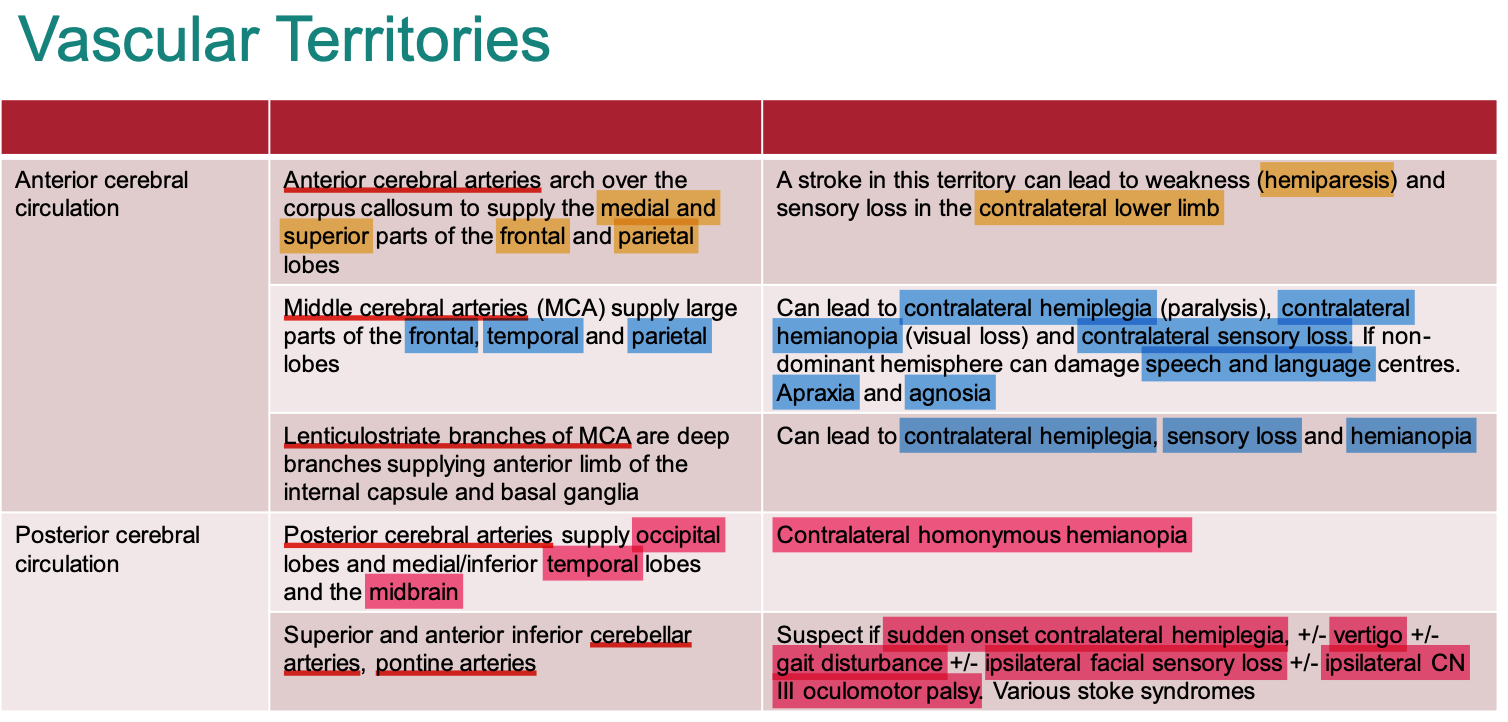
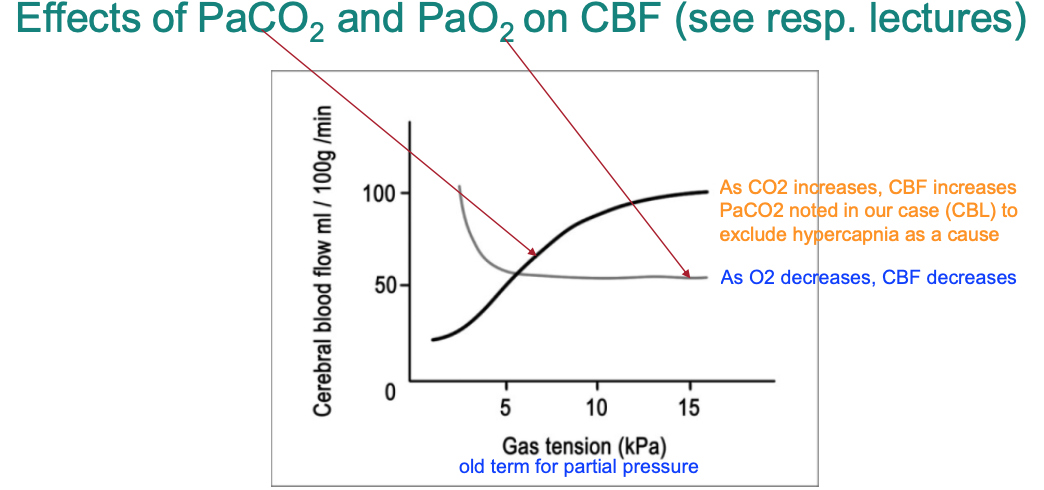
Cerebral circulation
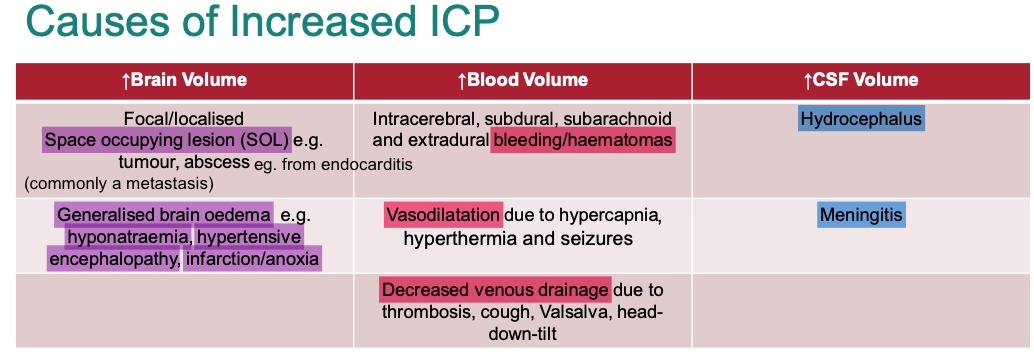
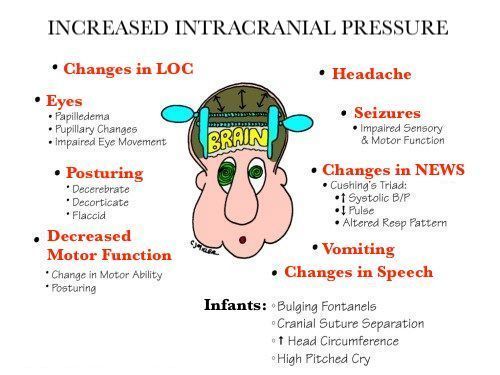
- Intracranial pressure
- IDIOPATHIC INTRACRANIAL HTN
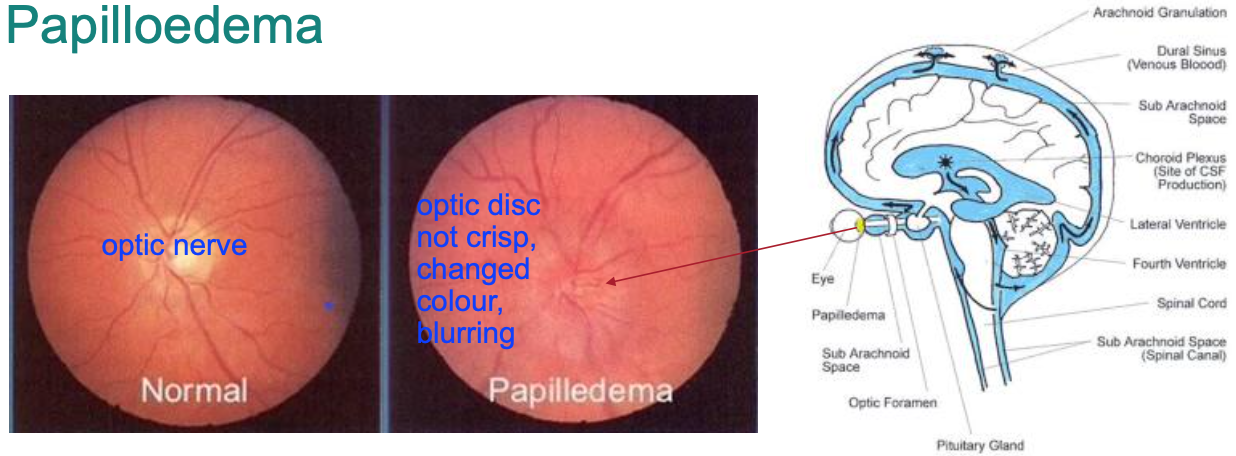
- Headaches worse on coughing and sneezing. Examination usually normal (apart from papilloedema). Refer to neurologist. Requires CT/MRI to exclude other causes of ↑ICP. Lumbar puncture to measure the opening pressure
- HYDROCEPHALUS ("water on the brain") = Accumulation of CSF resulting in ↑ICP
- Non-communicating = between foramen of monro <> foramen of luschka/magendie Communicating = after cisterna magna ie. failure to drain subarachnoid granulations
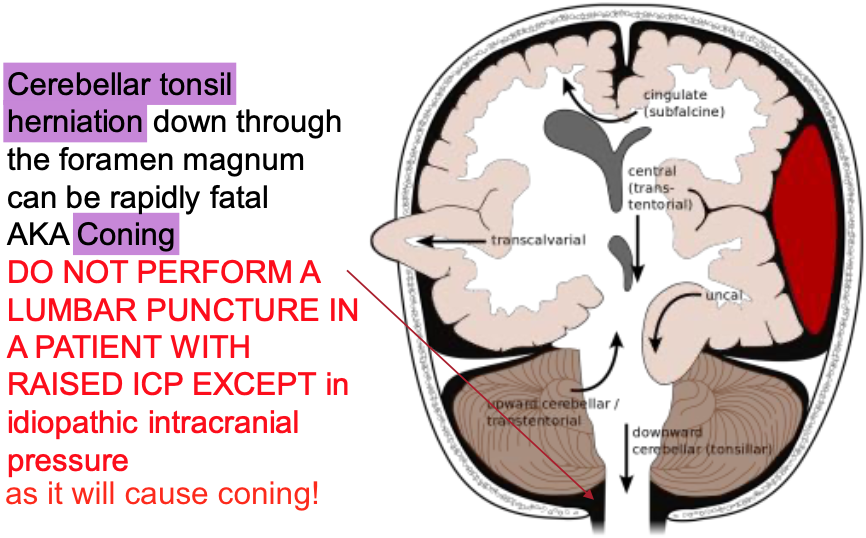
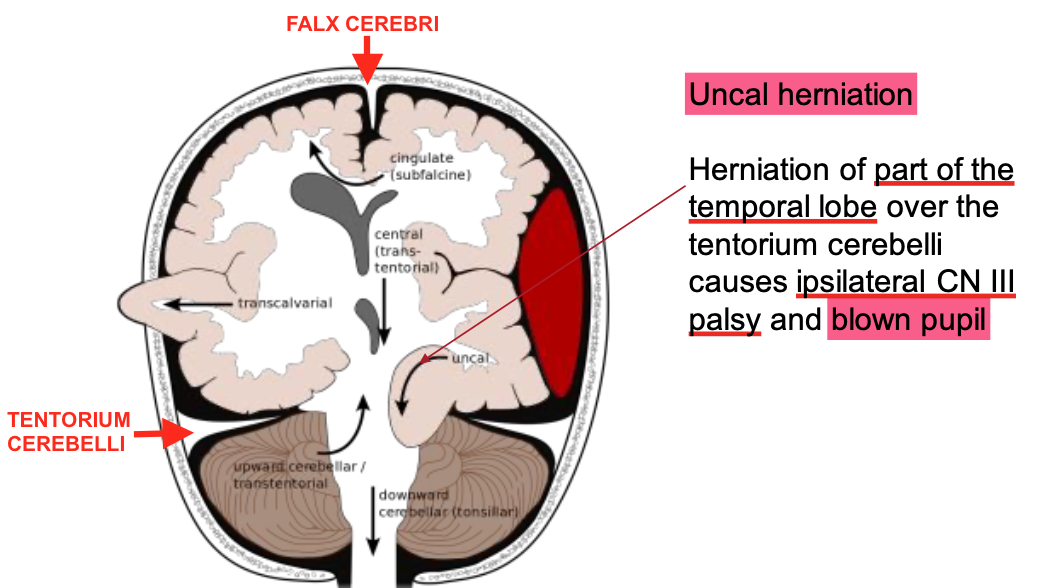
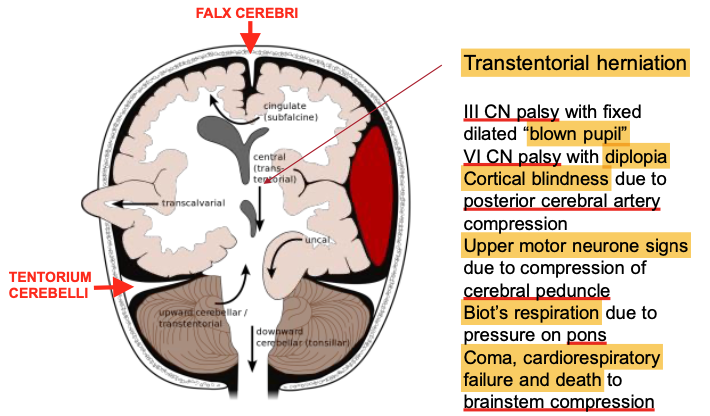
- SITES OF HERNIATION
- Cerebral peduncle connects midbrain to brainstem and carries descending motor tracts
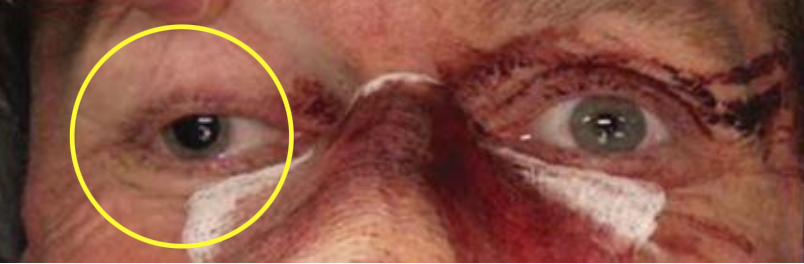
- Blown pupil = Fixed (no response to light), dilated, down and outwards position. EMERGENCY.
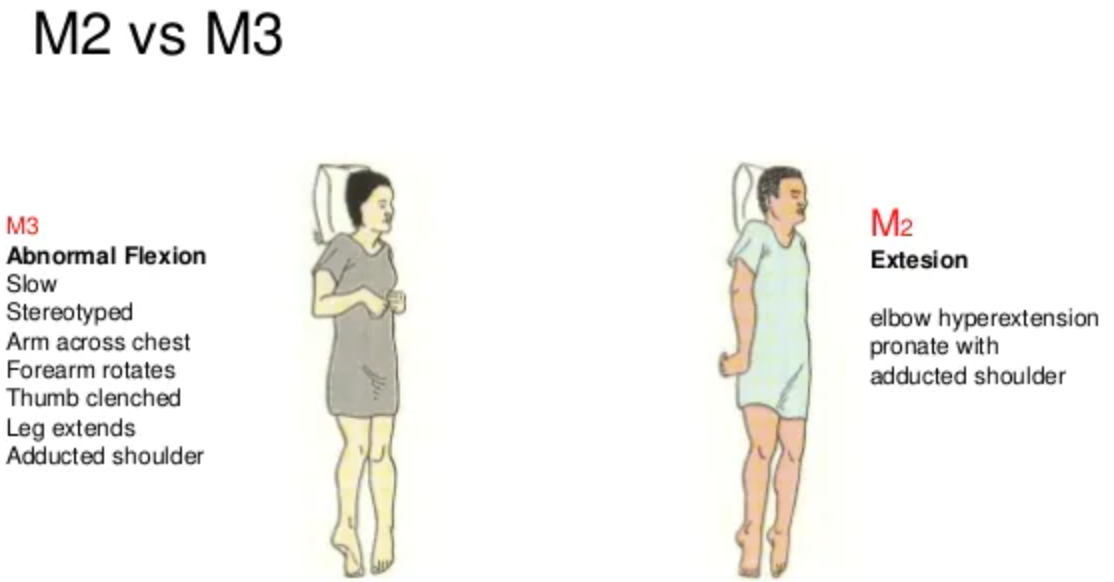
- DECORTICATE posturing = flexors. Due to damage to UPPER MIDBRAIN. M3 on GCS
- Determining GCS https://www.bing.com/videos/search?q=assessing+glasgow+coma+score&&view=detail&mid=8A407A43C1C7A47DAE618A407A43C1C7A47DAE61&&FORM=VRDGAR&ru=%2Fvideos%2Fsearch%3Fq%3Dassessing%2Bglasgow%2Bcoma%2Bscore%26FORM%3DHDRSC3
- Decerebrate = extensors. Due to damage to UPPER PONS. M2 on CGS
- CUSHING RESPONSE
- 2) Body attempts to raise MAP (to increase CPP and CBF) by sympathetic activation to ^TPR, MAP & systolic BP
- 3) Baroreceptor reflex responds to ↑MAP > causes bradycardia by ^vagal parasympathetic tone
- 4) "CUSHING's TRIAD" = ↓Heart rate + ↑Systolic BP + Disordered breathing pattern (alternating apnoea and sighing)
- EMERGENCY! Get immediate senior help from anaesthetist, intensivist and neurosurgeon to reduce ICP
- 4) "CUSHING's TRIAD" = ↓Heart rate + ↑Systolic BP + Disordered breathing pattern (alternating apnoea and sighing)
- 3) Baroreceptor reflex responds to ↑MAP > causes bradycardia by ^vagal parasympathetic tone
- 1) Trigger = brainstem ischaemia due to ↑ICP
- 2) Body attempts to raise MAP (to increase CPP and CBF) by sympathetic activation to ^TPR, MAP & systolic BP
- Cerebral peduncle connects midbrain to brainstem and carries descending motor tracts
- IDIOPATHIC INTRACRANIAL HTN
- Bleeding
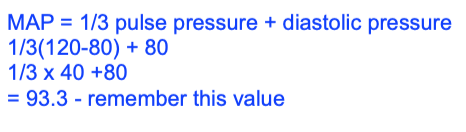
- MAP = 1/3 pulse pressure + diastolic pressure
- MAP - CVP (pressure gradient that drives the flow of blood around the body) = CO x TPR
- Starling’s law of the heart: CVP <> SV relationship (greater stretch heart in diastole > greater SV in systole)
- Cerebral Perfusion Pressure CPP = MAP – ICP
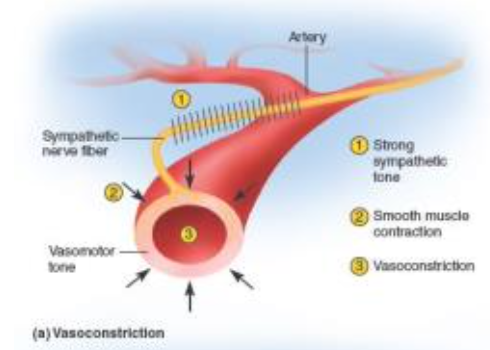
- Cerebral blood flow is controlled by SYMPATHETIC innervation, NOT baroreceptor reflex. Causes cerebral vasoconstriction in response a sudden increase in MAP - Protects smaller downstream vessels
- "Outline the role of perivascular nociceptive C‐fibres, parasympathetic fibres and sympathetic fibres in vascular headaches"...
- Previously thought that 5HT release from sympathetic fibres activated nociceptors on C fibres > vasoconstriction > migraines. Now thought that primary event is decreasing neuronal activity in cerebral cortex.
- "Functional hyperaemia" - eg. Clenching your left fist involves an increase in neuronal activity in your right motor cortex > increase in local blood flow
- "Outline the role of perivascular nociceptive C‐fibres, parasympathetic fibres and sympathetic fibres in vascular headaches"...
- Cerebral blood flow is controlled by SYMPATHETIC innervation, NOT baroreceptor reflex. Causes cerebral vasoconstriction in response a sudden increase in MAP - Protects smaller downstream vessels
- ICP is intracranial pressure (~7-13 mmHg). Found by inserting pressure transducer into brain parenchyma/catheter into the lateral ventricle
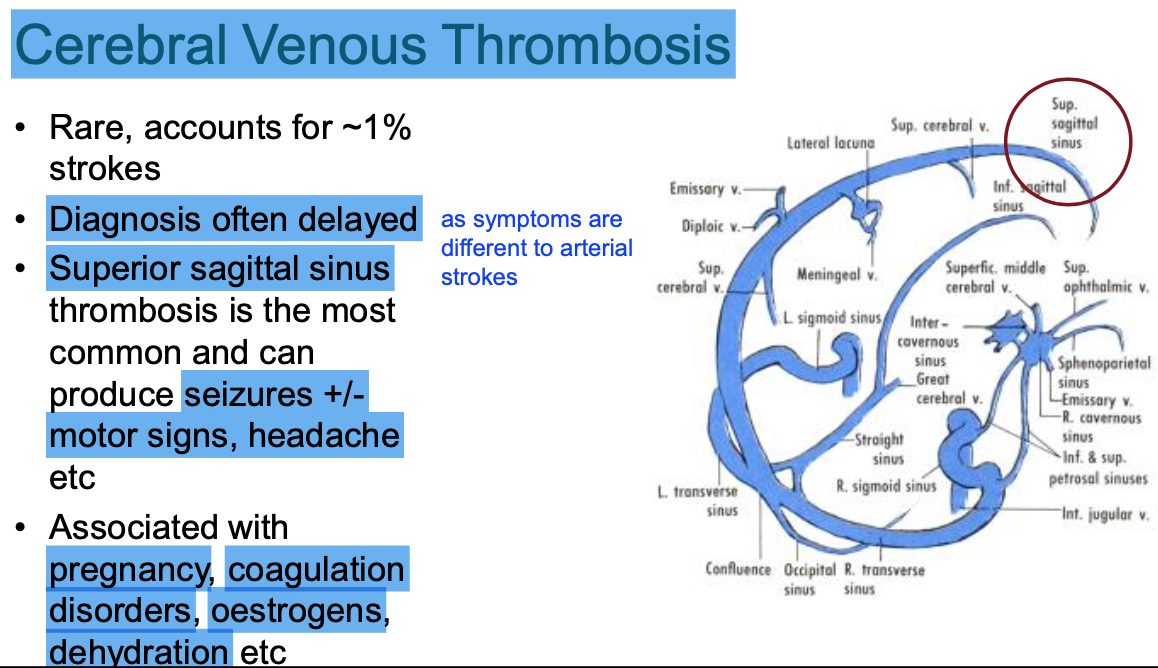
- Venous Drainage
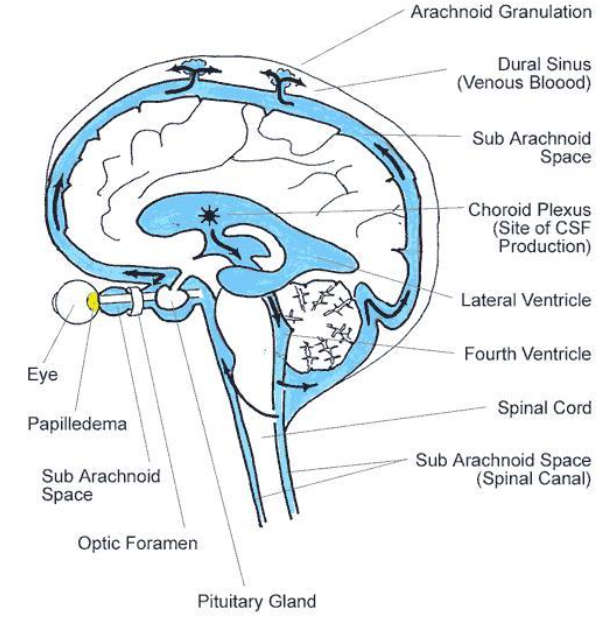
- Blood from veins > venous sinuses > internal jugular veins. Made of rigid layers of dura mater lined with endothelium. No valves. Don’t collapse if ↑ICP. Also drain CSF from the subarachnoid space via arachnoid granulations
- BBB - see Year 1
- Areas that don't have BBB = These areas are more permeable and involving hormone signalling (eg release of melatonin from PINEAL body, OSMORECEPTORS and CHEMORECEPTORS involved in the vomiting reflex)
- ICP and HEMIANOPIA
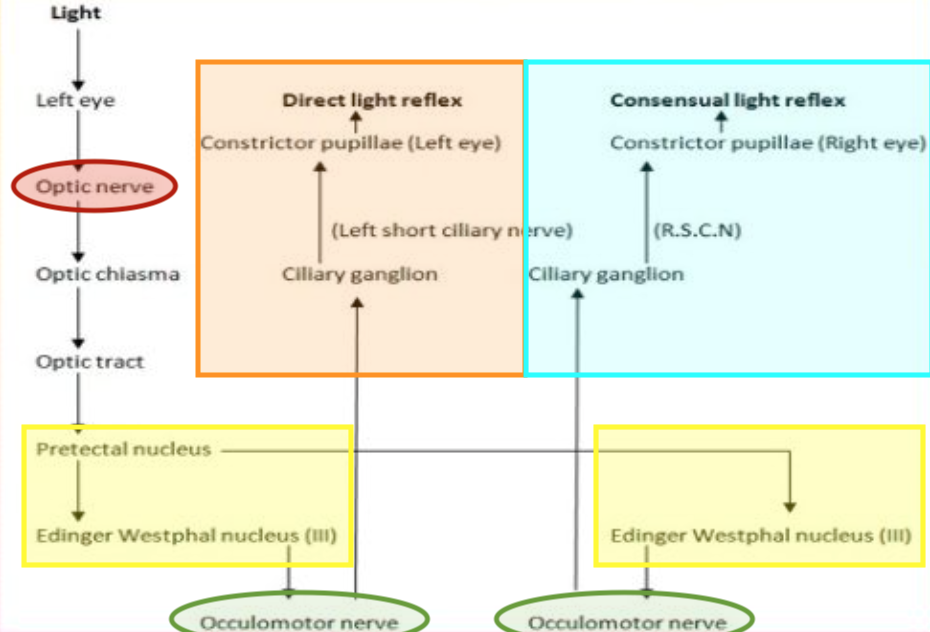
- Shining a light into an eye causes constriction of the ipsilateral pupil (DIRECT reflex) and of the contralateral pupil (CONSENSUAL reflex)
- https://www.youtube.com/watch?v=IsoHFoY5q7o
- See LLAMA powerpoint for lesion location!
- Shining a light into an eye causes constriction of the ipsilateral pupil (DIRECT reflex) and of the contralateral pupil (CONSENSUAL reflex)
- CSF
- 500ml/day produced by choroid plexus mainly in the lateral ventricles of the brain
- Choroid plexus in Lateral ventricles > foramen of monroe > 3rd ventrivle > foramen of slyvius > 4th ventricle > Foramen of Luscha/Magendie > Cisterna Magna
- Maintain constant environment for brain cells. Drains unwanted metabolites into venous blood. Transports hormones across brain hemispheres. Cushions brain and allows it to float. ?Lymphatic role
- 500ml/day produced by choroid plexus mainly in the lateral ventricles of the brain
- Intracranial pressure
Intracranial / Extracranial infections
Brain Tumours
Lumbar Puncture
Images and files in the map

Information
- Description
- Year 2 (Headache) Mind Map on Headache, created by Ella Breese on 02/08/2021.
- Created by
- Ella Breese
- Views
- 1
- Rating