
Mind map
The Demands of Performance
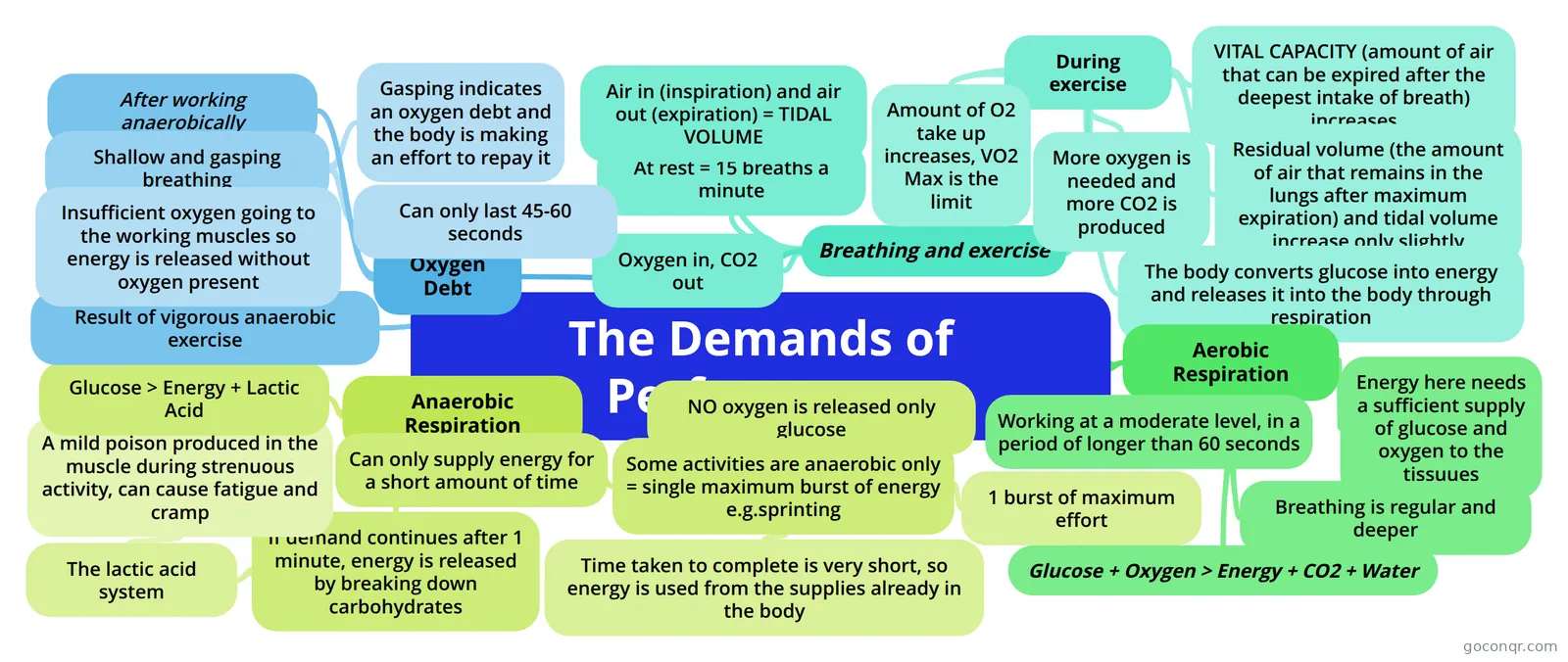
Mind map: the demands of performance
Map content
The Demands of Performance
Breathing and exercise
- Oxygen in, CO2 out
- At rest = 15 breaths a minute
- Air in (inspiration) and air out (expiration) = TIDAL VOLUME
- During exercise
- More oxygen is needed and more CO2 is produced
- Amount of O2 take up increases, VO2 Max is the limit
- VITAL CAPACITY (amount of air that can be expired after the deepest intake of breath) increases
- Residual volume (the amount of air that remains in the lungs after maximum expiration) and tidal volume increase only slightly
- The body converts glucose into energy and releases it into the body through respiration
Aerobic Respiration
- Energy here needs a sufficient supply of glucose and oxygen to the tissuues
- Working at a moderate level, in a period of longer than 60 seconds
- Breathing is regular and deeper
- Glucose + Oxygen > Energy + CO2 + Water
Anaerobic Respiration
- NO oxygen is released only glucose
- Some activities are anaerobic only = single maximum burst of energy e.g.sprinting
- Time taken to complete is very short, so energy is used from the supplies already in the body
- 1 burst of maximum effort
- Can only supply energy for a short amount of time
- If demand continues after 1 minute, energy is released by breaking down carbohydrates
- The lactic acid system
- A mild poison produced in the muscle during strenuous activity, can cause fatigue and cramp
- The lactic acid system
- Glucose > Energy + Lactic Acid
Oxygen Debt
- Result of vigorous anaerobic exercise
- After working anaerobically
- Shallow and gasping breathing
- Insufficient oxygen going to the working muscles so energy is released without oxygen present
- Gasping indicates an oxygen debt and the body is making an effort to repay it
- Can only last 45-60 seconds
- Shallow and gasping breathing
Information
- Description
- GCSE PE Mind Map on The Demands of Performance, created by katieperry on 20/03/2014.
- Created by
- katieperry
- Views
- 9
- Tags
- Rating