
Notes
The Bolshevik Revolution
Content of the notes (1)
Page 1
The Bolshevik Revolution 1. Tsarist Russia
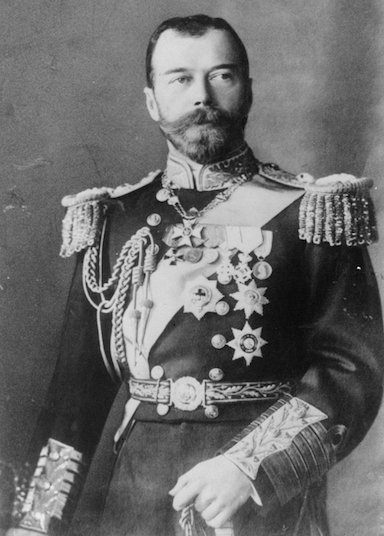
Before the revolution and before WWI Russia was governed by an absolutist monarchy.
The tsar held a repressive hierarchy to his people.
The hierarchy was rigid, as orders were passed down from superiors to lower ranks and it took long periods of time to get things done.
Russification meant it was forbidden to teach Polish children the Polish language, Russians held important jobs in the government and state-sponsored industry. Generally the Russian minorities saw russification as a fundamental attack on their way of life and a monstrously unfair policy that discriminated against them.
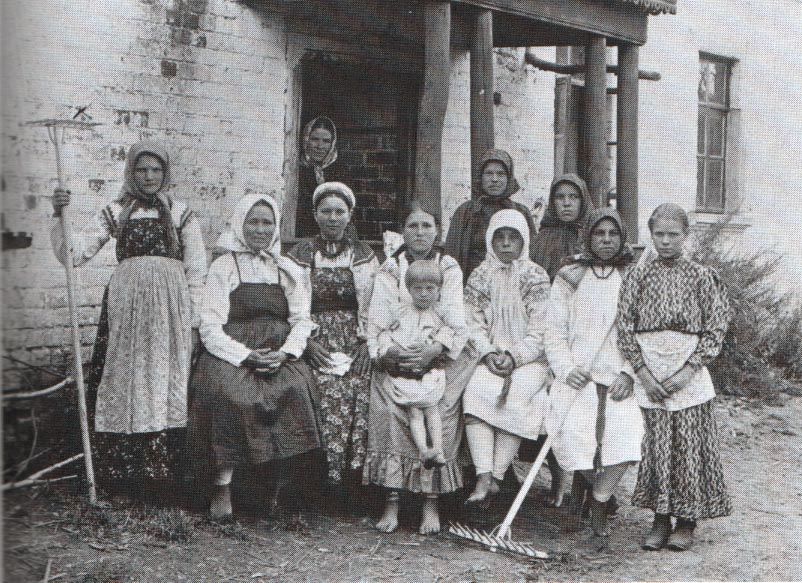
77% of the population consisted of peasants where as a small percent belonged to the middle/industrial class, which benefitted most from the tsarist government.
Modernisation was a key to any post-industrial nation of the period, as the world market was under the power of industry.
The second wave of Industrialisation created a class gap between the middle class and the working class. Hence there was a reluctance to increase this gap in Russia.
Furthermore it would be difficult to maintain the constitution of the autocracy, the nation's power would shift to big business and the worker's, limiting the power of the monarch.
The need for more educated workforce would also possibly lead to a mass challenge in the government.
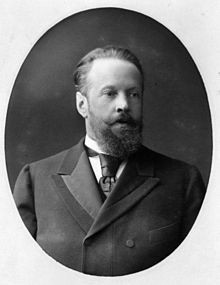
In order to curb the potentially stressful effects of industrialisation while still building up the Russian economy, the tsar put Witte's policy to use.
The policy was to squeeze resources out of the peasants to pay for industrialisation. Witte hoped that industrial growth would lead to more wealth for everyone before the squeeze hurt. The government's only response to this was to use force to suppress the disturbances.
2. First Revolution
In 1905 there was an initial revolution in the midst of an economic depression.
The tsar was at war with his own people with endless strikes, demonstrations and barricades. In order to divert attention he went to war with the Japanese over territory in the eastern areas of Russia.
After a devastating loss the population felt further desperate, after having the military squeeze its force out of Russia, only to have it defeated, tension built up.
After this the people demanded a representative government and democratic elections as well as civil rights for minorities.
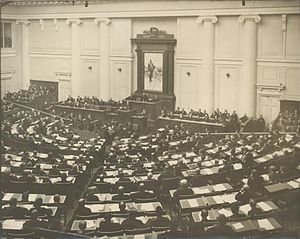
After this the DUMA was set up as a parliament that would be elected by the people.
This resulted in small changes. Although the tsar agreed to the DUMA he curtailed most of its power drastically.
In order to repair economic holes in agriculture and land production, the tsar allowed for Kulaks, rich peasants, to buy up larger portions of land from poorer peasants with less efficient farming methods (due to poverty).
There was little to no change in the working wages.
3. February Revolution
1917 a push came from pent-up frustration exploding in workers after the hard, cold winter of 1916. On the 23rd of February (International Women's Day), women had persuaded men from the highly politicised Putilov engineering works and other factories to join them in their bread-march, which turned into a political march. The demands for bread were accompanied by demands for an end to the war and an end to the Tsar. The difference between this revolution and the 1905 revolution was that soldiers had joined in the demonstrations and were going against the government. The Tsar had put out orders for the army to oppress the demonstrators, which ended in mutiny and a confusion between who was and was not for the revolution.
Within 4 days the revolution in Petrograd had reached extents too far for the Tsar to contain it or for him to be involved in any governing decisions. The Russian Army High Guard agreed to giving full constitutional power to the DUMA.
4. Provisional Government
The Provisional Government was set up in replace of the monarchy, by the DUMA. At the same time the Petrograd Soviet emerged. In other areas of Russia Committees of Public Organisations were set up.
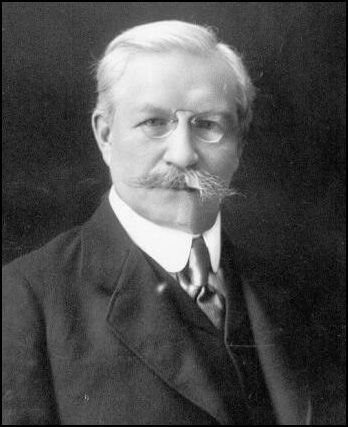
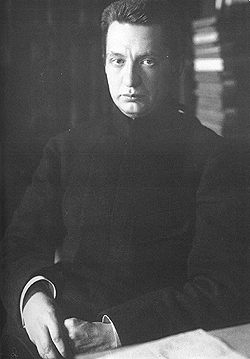
Milyukov was the foreign minister of the PG and Alexander Kerensky became minister of justice.
The Soviet consisted of delegates elected from factories to attend meetings, after which an executive committee was created. After soldiers sought representation for their interests, it was decided each regiment would elect committees to send representatives to the Soviet, changing its name to the Soviet of Workers' and Soldiers' Deputies'.
The first Order of the Soviet stated that soldiers would only obey the orders of the Provisional Government if the Soviet agreed. Hence dual power was created. Although the Provisional Government was the officially accepted power of the nation, it could do nothing without the agreement of the Soviet.
The Soviet was following the marxist line and believed that there had to be a long period in which capitalism developed more fully. Furthermore to avoid a civil war and counter-revolution they needed to keep the middle classes and the army commanders on their side, hence cooperation was key for success.
Tsarist ministers and officials were arrested and imprisoned, the secret police were disbanded. The first decree of the provisional government granted an amnesty for political and religious prisoners as well as freedom of press and freedom of speech. The death penalty was abolished and discrimination on social, religious or national grounds was made illegal. Lastly the PG would arrange for elections for a constituent assembly, allowing for democratic parliamentarism to decide the fate of the government.
Milyukov sought to defend Russia from Germany but also hoped to make territorial gains after the defeat. However due to the unpopular opinion within the PG he was forced to resign. After this the PG was in crisis and went through a reformation in which there was a merging of members of the Petrograd Soviet and the Provisional Government to make a Coalition Government.
Once the revolution kicked in there was unrest in the countryside, the collapse of central authority meant there was no one to stop the peasants from taking land. Once the Provisional Government was set up they were not willing simply to hand over the land to the peasants. There was also a risk that peasant soldiers would flee the army in order to compete for their land, causing a disintegration of the military (which was what linked the provisional government and the Soviet together). Due to both the Soviet and PG leaning to letting the constituent assembly decide for how the land would be dealt with, this however caused a problem for the agricultural gain and in turn the economy.
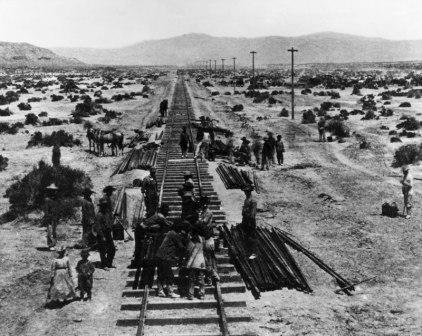
The railway system was already badly dislocated after the war, it showed further signs of breaking down.
568 factories in Petrograd closed which resulted in the loss of 100,000 jobs.
The harvest was poor in 1917 causing food shortages and resulting in the Provisional Government sending brigades to requisition grain, which resulted in the peasants becoming more hostile.
While the war was still going on the resources would all be steered towards war efforts, this caused growing antagonism between workers and employers.
The Provisional Government consisted of:
Liberals such as The Kadets.
- Committed to continuing the war for national pride.
- Wanted land redistribution to be sorted out by the constituent assembly.
- They did not agree to self-determinism and independence for minorities as it might end up dividing the nation.
- They also sought to delay the elections for the assembly as there was little likelihood for them to gain vote.
The Petrograd Soviet consisted of:
Socialists such as the Socialist Revolutionaries, the Mensheviks and Bolsheviks.
- Were willing to cooperate with the PG to ensure the people's demands were met.
- Wanted to continue fighting to defeat the Germans in order to not lose territory.
- Wanted to leave the land redistribution to the constituent assembly.
- Wanted to grant self-government and more control on a local level to minorities.
5. Lenin's involvement
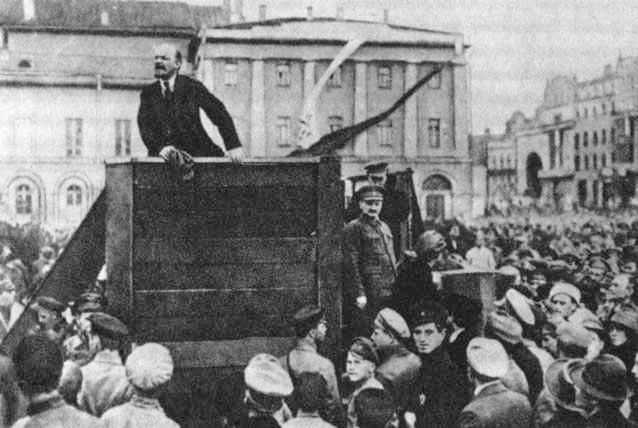
Once Lenin arrived in Petrograd in 1917 he presented the April Theses. He enforced the idea of "Bread, Peace and Land" and "All Power to the Soviets".
He believed that the bourgeoisie were too weak in Russia to carry through the democratic revolution and that it was necessary to skip towards a socialist state run by a leadership.
6. Kerensky's Reputation
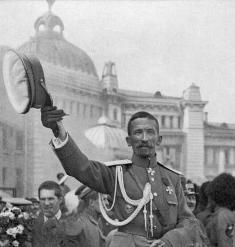
Kerensky needed troops he could rely on to carry out the Provisional Government's orders. The middle-class hoped for salvation as an opportunity to crush the radical socialists, Kornilov's troops fulfilled the hopes.
Kornilov misunderstood Kerensky's agreement to bring in trustworthy troops into Petrograd as a call for counter-revolution. Once Kerensky understood this, he called on the Soviet to help defend Petrograd. The defence was organised by the Bolsheviks, the Red Guard were the only army large and committed enough to fight for the revolution.
Kerensky's reputation was shattered by this affair and he left the Provisional Government.
People completely distrusted the Kadets and other liberals after the panic Kornilov had caused.
The soldiers murdered hundreds of officers after feeling betrayed.
The Bolsheviks gained popular support.
7. October
A power vacuum existed after the Kornilov affair, Lenin was urging the Bolshevik Central Committee to take action. They rejected his initial demands. It was after he secretly talked them into it in Petrograd that the majority agreed to it. Zinoviev and Kamenev remained on the side-lines, continuing to disagree with the idea as it was too risky (publishing their opinions).
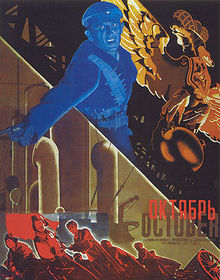
Once the Bolsheviks agreed to take power, the Red Guard, sailors and garrison soldiers were sent out to seize key points in the city. Any troops on duty just faded away as the Red Guard appeared. The Bolsheviks moved in on the Provisional Government in the Winter Palace and overtook it swiftly.
The Socialists outside the Bolshevik party denounced the acts of the October Revolution. They believed the Bolsheviks had triggered something that would cause backlash for socialism. The next morning the main socialist parties stormed from the hall, giving the Bolsheviks a majority in congress. Lenin announced it as the formation of a Bolshevik government and took immediate action to address land reforms and an end to the war, in order to please the masses.
During the November elections the Bolsheviks were not popular and got less than a quarter of the seats in the Constituent Assembly. Most peasants would have voted for the left wing of the Socialist Revolutionaries, collaborating closely with the Bolsheviks.
Most voters for the bolsheviks were workers who had given up hope of receiving help from the PG and were tired of the Mensheviks who tried to mediate between them and employers. Only the Bolsheviks offered the chance of real change.
There were uproars in the countryside as the peasants would no longer wait for the constituent assembly to be elected. They willingly accepted the Bolsheviks as legitimate.
Information
- Description
- High school (IB Program) History (Communist Russia) Note on The Bolshevik Revolution, created by Sonja Lundin on 15/04/2015.
- Created by
- Sonja Lundin
- Views
- 12
- Rating