
Mapa mental
Transporting Materials
Conteúdo do mapa
Transporting Materials
The Circulatory System
- Definition: The network of veins, capillaries and arteries that transports blood around the body.
- The Heart
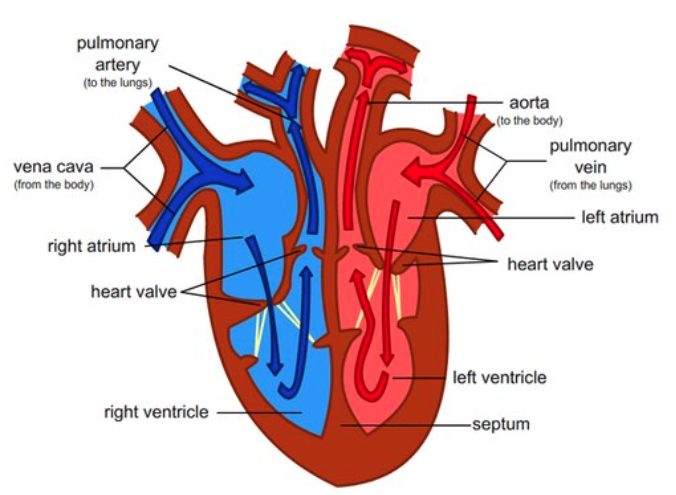
- The heart operates a double circulation in which one goes to and from the lungs and the other goes to and from the rest of the body.
- Pumps the blood around the body and is mostly made up of muscle tissues.
- Arteries
- Arteries have thick walls containing muscle and elastic fibres.
- If they begin to narrow, stents are used to keep them open.
- Veins
- Have thin walls and often have valves to prevent blood going backwards.
- Capillaries
- Capillaries are thin-walled and allow diffusion of materials into and out of the blood into the surround organs.
- Arteries
- 1. Blood enters the heart at the atria, which contracts and forces the blood into the ventricles.
- 2. The ventricles contract forcing the blood out of the heart.
- Valves in the heart ensure that no blood flows the wrong way
- Blood from the heart goes into arteries and comes back in veins.
Artificial Parts
- Artificial Blood
- Advantages
- Increased shelf life compared to normal blood.
- Does not need refrigeration.
- More efficient at carrying oxygen.
- No need for blood match.
- Disadvantages
- Short lasting for use.
- It is very expensive.
- Advantages
- Artificial Heart
- Advantages
- No chance of it being rejected.
- Keeps the patient alive whilst waiting for a donor.
- Disadvantages
- Requires a power supply.
- Surgery can lead to bleeding and infection.
- Blood does not flow as well so blood thinners may be needed to prevent clotting.
- Parts can wear out or stop over time.
- Advantages
- Artificial Heart Valves
- Advantages
- Success rate is high.
- Prolong life expectancy.
- Can last up to 20 years.
- Disadvantages
- May need blood thinners to prevent clotting.
- Surgery can lead to serious injury and complications.
- Advantages
- Stents
- Advantages
- Success rate is high.
- Lowers the risk of heart problems/attacks.
- Have a long lifetime.
- Disadvantages
- Complications can occur.
- Arteries can sometimes re-close.
- Drugs needed to stop blood from clotting.
- Advantages
- Artificial Blood
Blood
- Definition: A tissue consisting of plasma, red and white blood cells and platelets.
- It transports...
- CO2 from the organs to the lungs.
- Soluble products of digestion from the small intestines to other organs.
- Urea from the liver to the kidneys.
- Red blood cells transport oxygen to the organs. They have no nucleus and are packed with a red pigment called haemoglobin. It is this substance that bonds with oxygen to form oxyhaemoglobin in the lungs.
- White blood cells have a nucleus and are part of the immune system.
- Platelets are fragments with no nucleus and help to clot at a wound by producing protein threads.
Plants
- Xylem transport water and mineral ions from the roots to the stem and leaves.
- The movement of water from the roots to the rest of the plant is called the transpiration stream.
- Phloem tissue carry dissolved sugars from the leaves to the rest of the plant, including where it is growing and the storage organs.
Imagens e arquivos do mapa
Informações
- Descrição
- Mindmap for AQA GCSE Biology B3.2 - Transporting Materials
- Criado por
- Alfonzzzo R
- Visualizações
- 69
- Tags
- Avaliação