
Notas
Biology AQA 3.1.5 The Biological basis of Heart Disease
Conteúdo das notas (1)
Página 1
Atheroma
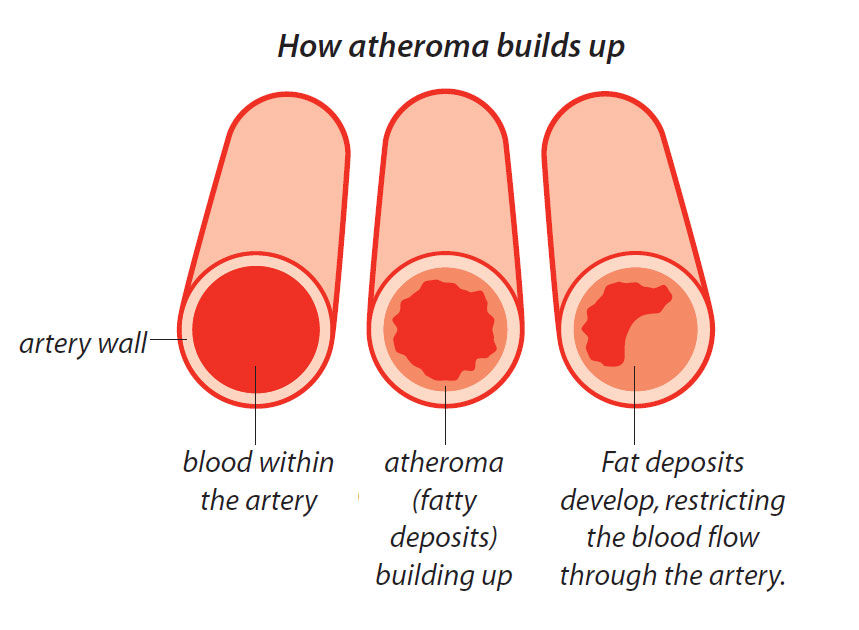
1. Cholesterol and other lipids collect on the inside of the coronary artery. This deposit is called an atheroma and it narrows the lumen restricting the blood flow.
2. The atheroma is then able to collect minerals and harden to form a plague
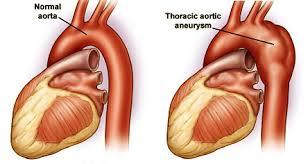
3. The plaque causes the wall of the artery to weaken, so blood pressure causes swelling (something called an aneurism), the aneurism could burst and cause blood loss and possible death
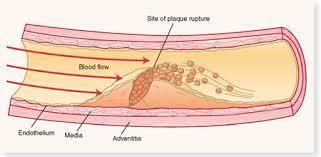
4. The plague can also cause a blood clot (thrombosis) and this blocks the blood stream and can cause lack of oxygen to the heart.
5. Due to lack of oxygen the heart (which is a muscle) cells are unable to respire and this leads to the cause of myocardial infraction (also known as a heart attack)
---------------------------------------------------------------------------------------------------------------------------------------------
Aneurysm
Coronary Thrombosis
------------------------------------------------------------------------------------------------------------------------------------
RISK FACTORS ASSOCIATED WITH HEART DISEASE
Diet
Blood pressure
cholesterol
cigarette smoking
blood
New Page
Informações
- Descrição
- Unit 1 Biology, AQA exam board revision, specification point 3.1.5 the biological basis of heart disease
- Criado por
- evie.daines · abr 2014
- Atualizado
- 17 jan 2017
- Visualizações
- 2.304
- Tags
- Avaliação