
Quiz
MO28 Introduction to Drug Metabolism
This quiz has question types that open in the usual player.
Questions in this quiz (10)
1Metabolism is the [blank_start]modification[blank_end] of the chemical structure of compounds by [blank_start]enzymes[blank_end] present in the body. This is done by drug metabolising enzymes (DMEs)
Roles of DMEs:
1. [blank_start]Biosynthesis[blank_end] and subsequent breakdown of molecules required by the body
– [blank_start]endogenous[blank_end] compounds like insulin, adrenalin, cholesterol
2. [blank_start]Biotransformation[blank_end] of foreign (toxic) compounds known as xenobiotics to [blank_start]deactivate[blank_end] and facilitate [blank_start]secretion[blank_end]
– Therapeutic drugs
– Recreational drugs
– Occupational hazards
3. [blank_start]Prodrug[blank_end] activation- Amodification
- Benzymes
- CBiosynthesis
- Dendogenous
- EBiotransformation
- Fdeactivate
- Gsecretion
- HProdrug
2Metabolism occurs mainly in which two sub-cellular organelles?
- Athe endoplasmic reticulum and cytosol
- Bthe endoplasmic reticulum and golgi complex
- Cthe golgi complex and nucleus
- Dthe golgi complex and cytosol
3Phase 1 enzymes & UGT are almost exclusively in the cytoplasm, while Phase 2 enzymes (except UGT) are almost exclusively on the ER.
- ATrue
- BFalse
4Metabolism in vitro is divided into:
1. Microsomal metabolism:
• Includes [blank_start]membrane-bound[blank_end] enzymes in the [blank_start]smooth[blank_end] ER of cells.
• Microsomal enzymes bring about most [blank_start]oxidations, reductions,[blank_end]
[blank_start]glucuronide[blank_end] conjugations, acetylations.
2. Non-microsomal metabolism
• Occurs in the [blank_start]mitochondria and cytosol[blank_end]
• Includes:
– [blank_start]alcohol and aldehyde[blank_end] oxidation,
– [blank_start]aldehyde and nitro[blank_end] reduction,
– Hydrolysis
– phase 2 [blank_start]conjugations[blank_end] other than glucuronidation- Amembrane-bound
- Bsmooth
- Crough
- Doxidations, reductions,
- Eglucuronide
- Fmitochondria and cytosol
- Galcohol and aldehyde
- Haldehyde and nitro
- Iconjugations
5Lipophilic compounds are metabolised to more hydrophobic compounds to facilitate their excretion.
- ATrue
- BFalse
6It is important to identify ALL drug metabolites before marketing a drug because:
- ADrug metabolites can lead to hepatotoxicity and acute liver failure
- BDrug metabolites can lead to acidification or alkalation of blood and kidney failure
- CDrug metabolites can lead to multidrug resistance and cancer
7Select all the Phase 2 reactions.
- AOxidation
- BReduction
- CHydrolysis
- DGlucurondiation
- ESulfation
- FAcetylation
- GMethylation
- HAmino acid conjugation
- IGlutathione conjugation
8Choose the incorrect statement about microsomal oxidation.
- AIt involves the oxidative enzymes on the ER, mainly cytochrome P450 monooxygenases
- BIt requires molecular oxygen and the coenzyme FADH2
- CIt incorporates one atom of oxygen into an organic substrate molecule (RH, the drug) and reduces the other to water
9Label the parts of CYP nomenclature.
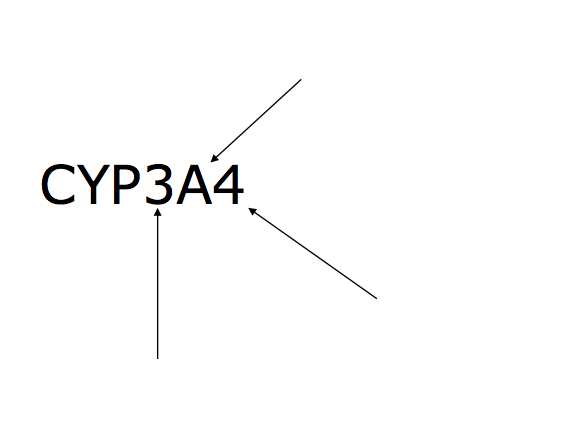
- AFamily
- BSubfamily
- CIsoform
10Grapefruit juice can significantly decrease the bioavailability of CYP3A4 substrates by inhibiting the enzyme.
- ATrue
- BFalse
Information
- Description
- PHCY211 (Molecules) Quiz on MO28 Introduction to Drug Metabolism, created by Mer Scott on 15/04/2018.
- Author
- Mer Scott
- Language
- English
- Views
- 9
- Tags
- Rating
- No ratings yet Rate this quiz