
Enzymes
Slides in this set (8)
-
Enzymes - biological catalysts
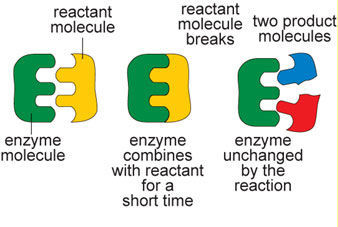
- In an enzyme, the long chains of amino acids are folded to produce a molecule with a specific shape. This special shape allows other molecules (substrates) to fit into the enzyme protein, this is called the active site
- Enzymes are involved in:
- building large molecules from lots of smaller ones
- changing one molecule into another
- breaking down large molecules into smaller ones
- Enzymes make a reaction happen faster. In your body you need to build large molecules from smaller ones, e.g. making glycogen from glucose or proteins from amino acids. You need to change certain molecules into different ones, e.g. one sugar into another, such as glucose to fructose and break down large molecules into smaller ones, e.g. breaking down insoluble food molecules into small soluble molecules, such as glucose.
- Caption: The substrate of the reaction fits into the active site of the enzyme. Once it is in place the enzyme and the substrate bind together. The reaction then takes place rapidly and the products are released from the surface of the enzyme.
-
Factors affecting enzyme action
- The effect of temperature on enzyme action
- The rate of enzyme- controlled reactions increases as the temperature increases.
- After 40°C the structure of the structure of the protein is affected, the amino acid chains will begin to unravel. As a result the shape of the active site changes, we say the enzyme has been denatured and can no longer act as a catalyst so the rate of reaction drops.
- Most human enzymes work best at 37°C
- The effect of pH on enzyme action
- The shape of the active site of an enzyme comes from forces between from forces between the different parts of the protein molecule. These forces hold the folded chains in place.
- A change in the pH affects these forces, that's why it changes the shape of the molecule. As a result, the active site is lost, so the enzyme no longer acts as a catalyst.
- Without enzymes, none of the reactions in your body would happen fast enough to keep you alive. This is why it is so dangerous if your temperature goes too high when you are ill.
-
- Large insoluble molecules in the body need to be digested to form smaller, soluble molecules, these can then be absorbed and used by your cells. This chemical breakdown is controlled by your digestive enzymes.
- Most of your enzymes work inside the cells of your body, controlling the rate of the chemical reactions. Your digestive enzymes work OUTSIDE your cells. These are produced by specialized cells in glands (like your salivary glands and your pancreas) and in the lining of your gut.
- The enzymes then pass out of these cells into the gut itself. Your gut is a hollow, muscular tube that squeezes your food. It helps to break up your food into small pieces with a large surface area for your enzymes to work on. It mixes your food with your digestive juices so that the enzymes come into contact with as much of the food as possible. The muscles of the gut move your food along from one area to the next.
-
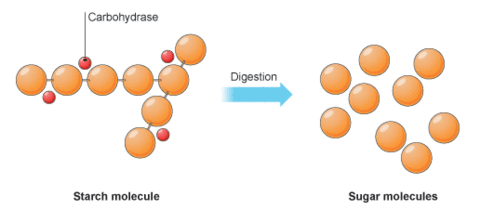
- Enzymes that break down carbohydrates are called carbohydrases. Starch is one of the most common carbohydrates that you eat. It is broken down into sugars in your mouth and small intestine. This reaction is catalyzed by an enzyme called amalyse.
- Amalyse is produced in your salivary glands. So the digestion of starch starts in your mouth. Amalyse is also made in your pancreas and your small intestine. NO DIGESTION TAKES PLACE INSIDE THE PANCREAS. All the enzymes made there flow into your small intestine, where most of the starch you eat is digested.
-
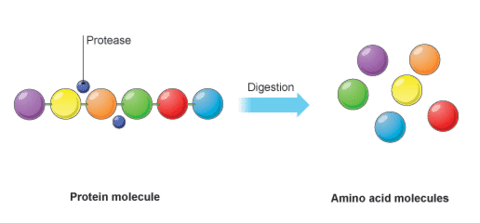
- The breakdown of protein food like meat, fish and cheese in amino acids is catalyzed by protease enzymes. Proteases are produced by your stomach, your pancreas and your small intestine. The breakdown of proteins into amino acids takes place in your stomach and small intestine
-
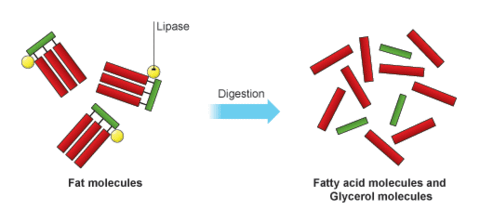
- The lipids (fats and oils) that you eat are broken into fatty acids and glycerol in your small intestine. The reaction is catalyzed by lipase enzymes. These are made in your pancreas and your small intestine. The enzymes made in the pancreas are passed into the small intestine.
- Once your food molecules have been completely digested into soluble glucose, amino acids, fatty acids and glycerol, they leave your small intestine. They pass into your bloodstream to be carried around the body to the cells that need them
-
- Changing pH in the gut
- You have around 35 million glands in the lining of your stomach. These secrete protease enzymes to digest the protein you eat. The enzymes work best in acid pH. So your stomach also produces a concentrated solution of hydrochloric acid from the same glands. The stomach produces around 3 litres of acid a day, this acid allows your stomach protease enzymes to work very effectively. It also kills most of the bacteria that you take in with your food.
- The stomach produces a thick layer of mucus. This coats your stomach walls and protects them from being digested by the acid and the enzymes.
-
- Your digestive system produces many enzymes that speed up the breakdown of the food you eat. As your body is kept at a fairly steady 37 degrees, your enzymes have an ideal temperature that allows them to work as fast as possible.
- Keeping the pH in your gut at ideal levels isn't easy because different enzymes work best at different pH levels. For example, the protease enzyme found in your stomach work best in acidic conditions. The proteases made in your pancreas need alkaline conditions to work at their best
Information
- Description
- Slide Set on Enzymes, created by aliza chaudhry on 01/02/2017.
- Created by
- aliza chaudhry
- Views
- 0
- Rating