
Mindmap
k101 - transitions - changing places
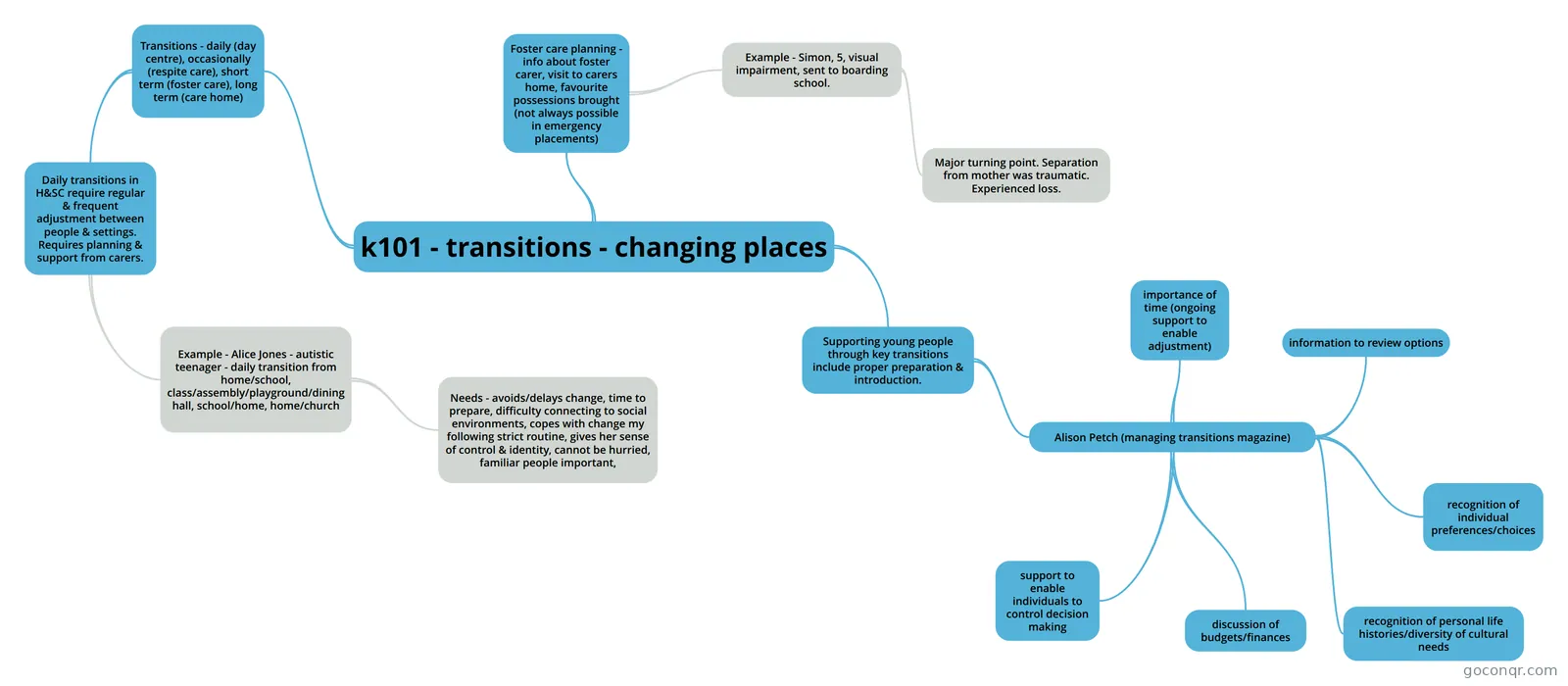
Mind map: K101 transitions changing places
Inhalt der Mindmap
k101 - transitions - changing places
Transitions - daily (day centre), occasionally (respite care), short term (foster care), long term (care home)
- Daily transitions in H&SC require regular & frequent adjustment between people & settings. Requires planning & support from carers.
- Example - Alice Jones - autistic teenager - daily transition from home/school, class/assembly/playground/dining hall, school/home, home/church
- Needs - avoids/delays change, time to prepare, difficulty connecting to social environments, copes with change my following strict routine, gives her sense of control & identity, cannot be hurried, familiar people important,
- Example - Alice Jones - autistic teenager - daily transition from home/school, class/assembly/playground/dining hall, school/home, home/church
- Daily transitions in H&SC require regular & frequent adjustment between people & settings. Requires planning & support from carers.
Foster care planning - info about foster carer, visit to carers home, favourite possessions brought (not always possible in emergency placements)
- Example - Simon, 5, visual impairment, sent to boarding school.
- Major turning point. Separation from mother was traumatic. Experienced loss.
- Example - Simon, 5, visual impairment, sent to boarding school.
Supporting young people through key transitions include proper preparation & introduction.
- Alison Petch (managing transitions magazine)
- importance of time (ongoing support to enable adjustment)
- information to review options
- support to enable individuals to control decision making
- discussion of budgets/finances
- recognition of individual preferences/choices
- recognition of personal life histories/diversity of cultural needs
- Alison Petch (managing transitions magazine)