
Flashcards
cognitive psychology AQA A
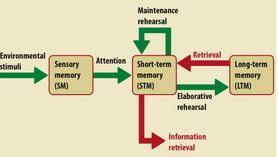
Cards in this deck (42)
- 1MSMSTM: D-18-30s
E-acoustic
C-7+/-2
LTM: D-mins tolife
E-semantic
C-unlimited - 2STM-Duration-studypeterson&peterson-
nonsense trigrams counting back in 3s for:
3,6,9,12,15/18 seconds
90% at 3s 2% at 18s
Memory fades at 18s - 3STM- CapacityJacobs-
Serial digit span starting at 3 digits increase until can't recall correct order
found average remember 5-9
supports millers number - 4STM- EncodingConrad-
b,c,f,m,n,p,s,t,v,x
each letter 0.75s recall 6 of them
found mix up similar sounding
encoded acoustically - 5LTM- DurationBahrik- tested people of different ages on yearbook photos found after 48 years still 70% right
- 6LTM- CapacityLinton- kept diary of 5,500 events for 6 years-tested each month on dates
good recall
Waagner- 2,400 events 6 years tested events each month - 7LTM- EncodingBaddely- given 1 of 4 lists acoustically/semanticly similar/disimilar 20 minutes to learn
found they mix up semantic- suggests encoded that way - 8KEYWORDS: Memory, Storage, RetrievalMemory: Cognitive function of processing and maintaining sensory info over time
Storage: Where&how info is stored to be recalled from when needed
Retrieval: cognitive function of recalling information - 9WMM
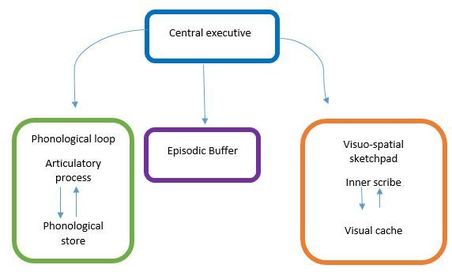
- 10Central executiveModality free attentional control system, limited capacity, processes sensory information to the two slave systems.
Monitors& corrects mistakes-decision making - 11Phonological loopstores audio information
articulatory process: Sub vocal repetition started by CE. Time based capacity
Phonological store: Remembers heard words and how they sound - 12Visuo-spatial sketchpadStores visual information
Inner scribe: spatial relationships
Visual cache: colour, size and shapes - 13Episodic bufferAdded by Baddely in 2000
general store integrates information from CE, PL, VSS, LTM - 14Baddely et al: Phonological loopMonosyllabic/polysyllabic word list
remembered short words easier- time based articulatory process
Added articulatory supression task:repeating the the the
forget both- can't rehearse - 15Baddely et al- VSSUsed dual task technique- Tracked white light with finger and either:
Marked angles of F or recite alphabet
visual task harder because it's the same slave system so competes for attention - 16Bugne et al- CEfMRI scan showed same brain areas active during 2 tasks using both slave systems:
shows processed through one component
More activity in dual task: increased attentional demands - 17Separate slave systems: dual task technique2 tasks CE-T/F reasoning task and:
articulatory process repeat the the
CE&AP- say random numbers/ no task
Found AP and no task same speed
CE&AP slower- uses the same component- competes for attention - 18STRENGTHS OF WMM+More comprehensive than MSM of the different stores and encoding of STM
+supporting evidence for stores and functions of them - 19Limitations of WMM-No detail of how processed into or stored in LTM- not fully comprehensive
-CE not fully explained smaller parts of it which do different tasks: reasoning/decision making - 20Factors affecting EWTAge, Misleading information& anxiety/psychological arousal
- 21Misleading information LOFTUS AND PALMER45 psychology students shown car crash asked to guess speed car goes when it hit/bumped/collided/smashed/contacted the car:
hit: 34.0 smashed: 40.8 - 22Misleading information: LOFTUS&ZANNINew participants, shown 1 minute car crash- asked if they saw any broken glass
when hit/smashed/no verb
YES: S-16 H-7 --6
NO: S-34 H-43 --44 - 23Misleading information- LOFTUSShown slides of a car overtaking another parked at a stop/yield sign asked questions with either same/different sign in then chose from slides which sign
if same: 75% right sign
if different: 41% right sign - 24AGE- Pozzulo&LindsayMeta-analysis-
<5 less accurate than older
5< as accurate as adults
<13 more likely to choose if not there-more affected by social pressure - 25Own age biasAnastasi&Rhodes
shown 24 photos from 3 age groups
18-25, 35-45, 55-78
filler activity then select from more
younger generally more accurate but all as accurate for own age - 26Brewer et al60 to 80 year olds more likely to choose in a line up
- 27Bruck& MerlykChildren cognitively incompetent
children believe own distortions after misleading information
kids made false memories after warned-more suggestible
30% improved accuracy if draw before - 28Meta-analysis evaluation+strong evidence-overall patterns-more valid
+More generalisable- more p'pants
-Publication bias, only studies suit own hypothesis-less valid/representitive
-Not given all data from studies so not fully comprehensive/ reliable - 29Anxiety-Unpleasant emotional state fearing something bad will happen often stressful situations- psychological arousal
- 30Anxiety- DeffenbacherMeta-analysis- reviewed21 studies used 18
see effects of high levels of anxiety/PA
HIGH STRESS LOW RECALL - 31Anxiety- Christianson& HubinetteStudied 58 real witnesses of real bank robberies. If threatened had better recall than witnesses who would be less emotionally aroused
still more accurate after 18 months - 32weapon focus effectLoftus-
P'pants heard discussion in another room
condition 1: calm, pen&ink
condition 2: heated. paperknife, blood
F.1: 49% accurate
33% accurate from 50 photos - 33Cognitive interview- 4 principlesReport Everything- tiny details act as retrieval cues
Reinstate Context-recreate environment
Reverse Order- may have forgotten bits
Change perspective- asked how it may appear to other witnesses - 34Fisher et alreal interviews by detectives in florida over 4 months. Found brief, closed q's, out of sync with witness's order not talk freely-broke concentration remembered less
- 35STRENGTHSGeiselman- average no. correct statements 41.1 CI 29.4 SI
Kohnken- meta-analysis 53 studies 34% more accurate in correct info- college,lab
Milne&Bull- tested effectiveness of principles- all similar alone CR&RE higher recall than others - 36WeaknessKebbell&Wagstaff- CI problematic often more time to conduct than available. police try to limit to minimum info
Memon- police need quality training for it to be effective- expensive - 37Standard vs cognitiveClosed brief,lack detail/ open-detailed
Out of sequence/witness talks freely
Interruptions/no distraction concentrate
ALSO
use imagery, no judgmental comments, adapt language to individual - 38Verbal mnemonicsAcronyms- 1st letters create word
Acrostic- 1st letter sentance
Rhymes- rhythm with words
Make them more memorable - 39Visual mnemonicsLoci- link words and images picture in familiar places
Keyword method- remember words picture an image linking both
Mind maps- Each topic more unique than mind maps visual cues - 40how mnemonics workOrganisation- establish links helps recall
association in the brain
Elaborative rehearsal- elaborate on information, more enduring memory - 41Supporting evidenceVERBAL-Gruneberg- 30% psych students for final exams
Gidden- effective in kids w/ learning difficul
VISUAL-o'hara- found loci has long-term memory benefits for adults - 42LimitationMixed results in classrooms-
useful for teaching vocab no evidence of helping students actually speak the language
LAB EXPERIMENTS
Information
- Description
- psychology Flashcards on cognitive psychology AQA A, created by jessbailey24 on 01/04/2015.
- Created by
- jessbailey24
- Views
- 66
- Tags
- Rating