
Mind map
Fleas
Map content
Fleas
Key Species
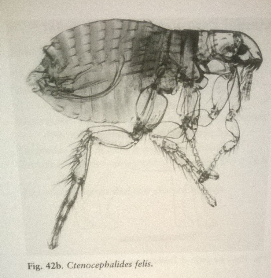
- Ctenocephalides felis
- This is REALLY COMMON! Found on dogs, humans etc.
- Cat Flea
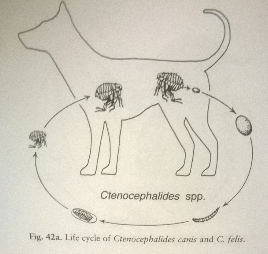
- Life Cycle
- More details on life cycle in book.
- Adult
- Egg
- Larvae
- Cocoon
- Sticky silken cocoon that debris sticks to 0.5cm long
- Adult
- This stage can last between 1 & several weeks.
- Yellowish
- 2-5mm
- Maggot like
- Bristley
- Chitinous mouthparts
- Anal struts
- Used with the bristles for vigorous motility.
- Negatively phototropic so hide in carpets / under furniture
- They feed on flea dirt Grow to 5mm - 2 moults In 1-7 weeks - temperature dependent. Susceptible to dessication.
- Yellowish
- Cocoon
- Starts laying after 1-2 days
- Eggs drop to the ground within a few hours as they're not sticky
- What does pelage mean?
- Fur / feathers
- Larvae
- Egg
- Uses changes in light intensity, warmth & CO2 to locate hosts
- Almost permanent!
- Transfer: mostly adult unfed fleas from the environment
- Som transfer due to close contact with another host animal
- Life span = 7-10 days dependant on grooming habits
- Ctenocephalides canis
- Relatively uncommon
- Dog Flea
- Ceratophyllus gallinae
- Common on poultry but can also be found on wild birds, pets & humans.
- Poultry Flea
- Pulex irritans
- Uncommon / rare
- Human Flea
- Spilopsyllus
- Wildlife flea but especially on rabbits. Also found on pets.
- Rabbit flea
- Ctenocephalides felis
General features
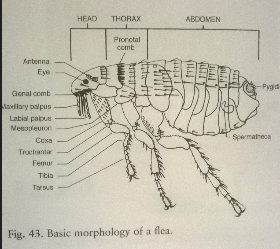
- Wingless insects
- Laterally flattened
- WHY? So that they can fit between hairs!
- ADULTS: Blood sucking ectoparasites
- Why are they a problem?
- Normally a problem when there are large numbers of them!
- Pruritis
- Anaemia
- Annoying!
- Allergies to flea saliva
- Just a few bites can trigger a reaction
- Intermediate hosts for tapeworm
- Dipylidium
- Flea dirt = faeces
Identification
- Notes in book are better!
- Aided by rows of chitinous spines
- COMBS / CTENIDIA
- Chin combs
- Genal
- Back of head combs
- Pronotal
- Chin combs
- COMBS / CTENIDIA
- General appearanace -->
- 2-4 mm Small Dark brown Long hind legs Laterally compressed
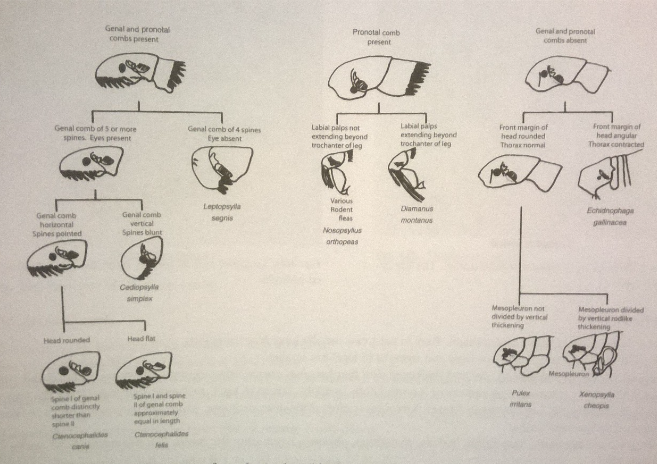
- Key differences between cat & dog fleas
- C. canis
- Streamlined head
- 1st two genal spines are different sizes
- C. felis
- Streamlined head
- 1st 2 genal spines = same size
- C. canis
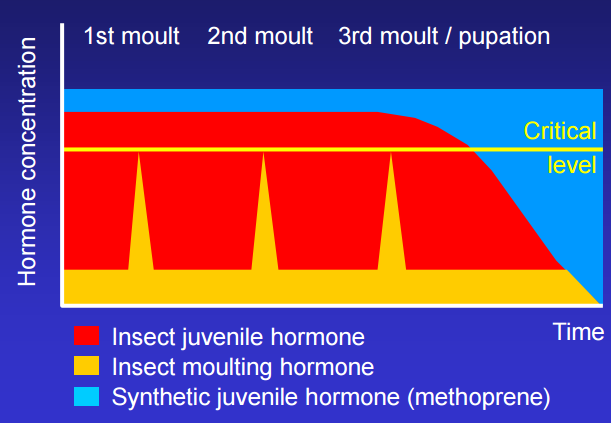
Hormonal control of egg & larval development
- Insect juvenile hormone
- Controls embyonic development & maintains juvenile characters.
- Moulting hormone (ecdysone)
- Initiates moulting & pupation
- Insect growth regulators (IGRs)
- Chemicals that disrupt insect development
- Insect juvenile hormone
Images and files in the map
Information
- Description
- Undergraduate Veterinary Medicine (Parasitology) Mind Map on Fleas, created by elenifraser on 19/02/2016.
- Created by
- elenifraser
- Views
- 24
- Rating