
Mind map
Protein function (and structure)
Map content
Protein function (and structure)
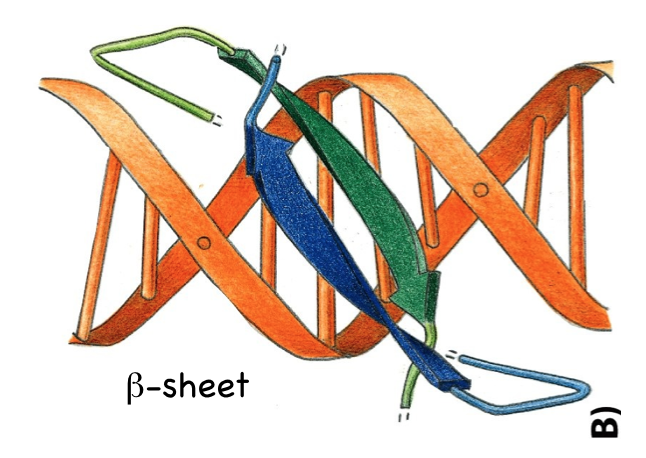
DNA binding protein domains
- many and varied
- overall basic charge to mediate the interaction with the acidic DNA strand
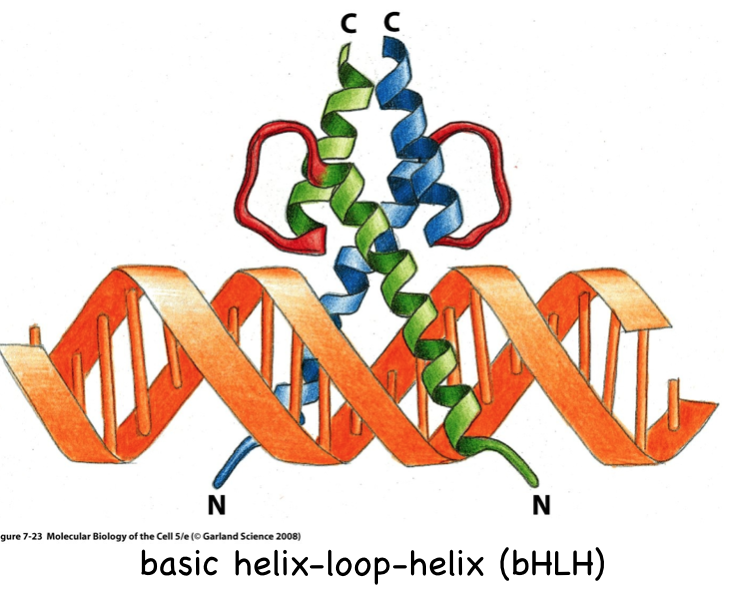
- mostly through interactions with the major groove
- Several classes of DNA binding proteins containing:
- zinc fingers
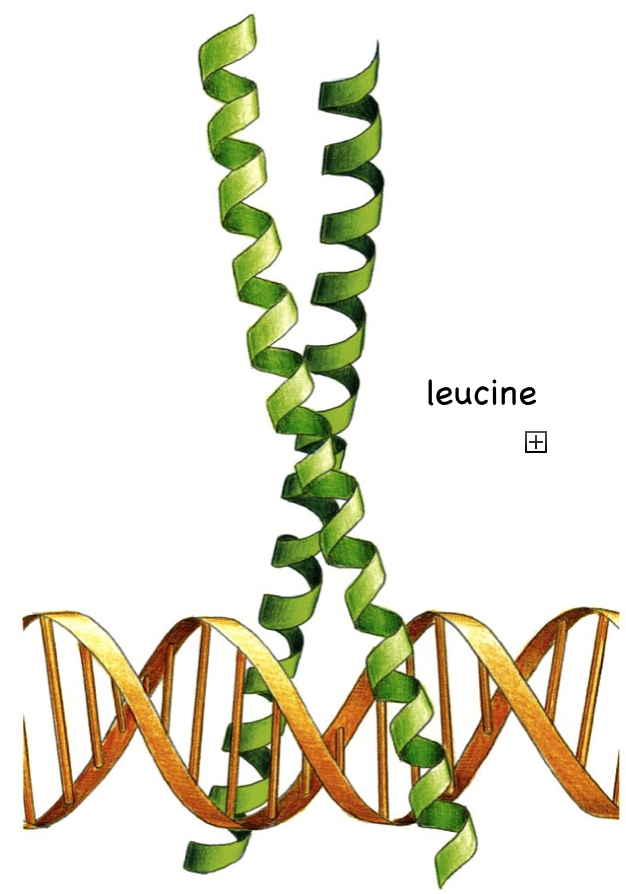
- leucine zipper motifs
- dimers of short coiled-coil sequence (the leucine zipper)
- As dimers, often form homo- or hetero-dimers increasing the repertoire of available DNA binding proteins.
- and a specific DNA recognition helix
- Bind DNA like a ‘clothes peg’ on a washing line
- dimers of short coiled-coil sequence (the leucine zipper)
- basic helix-loop-helix (bHLH)
- β-sheet
- Some proteins have several motifs in tandem for increased affinity
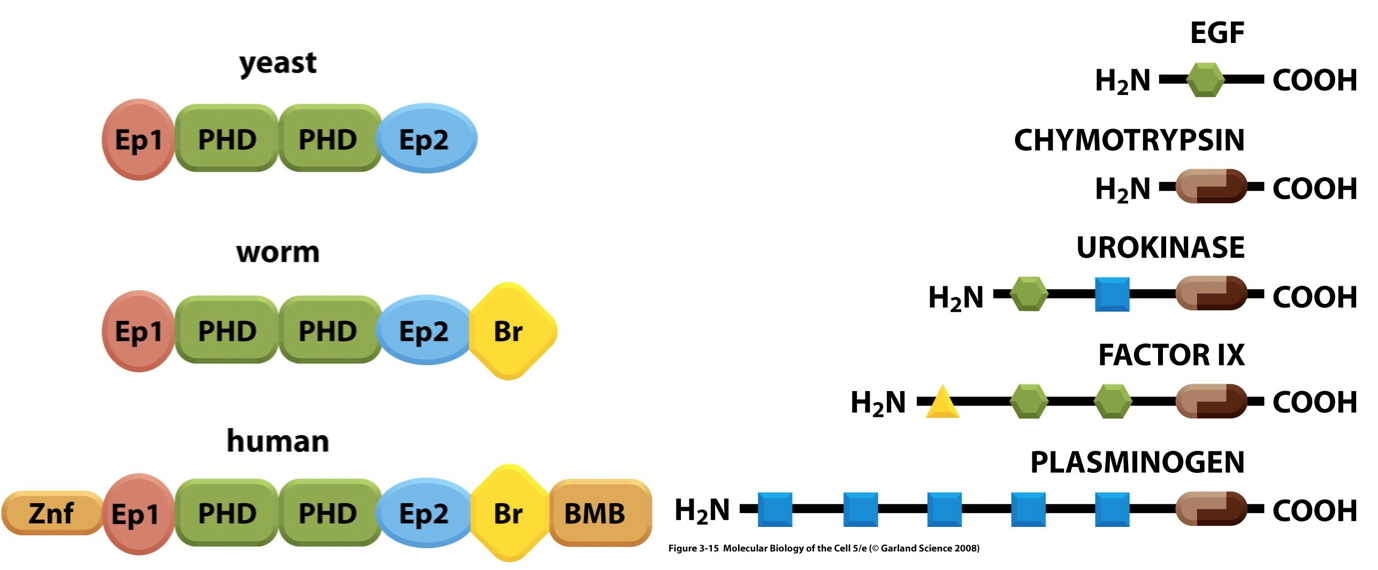
Modular proteins
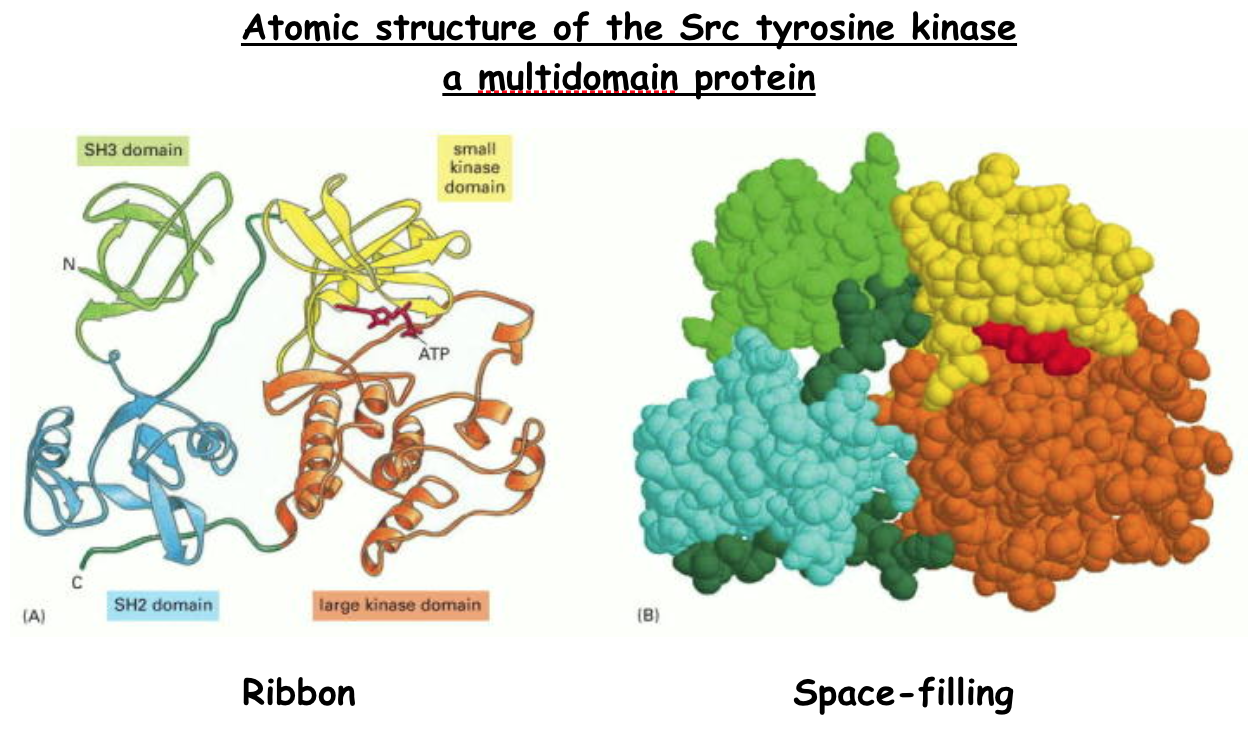
- Made up of several different functional domains
Functional domains
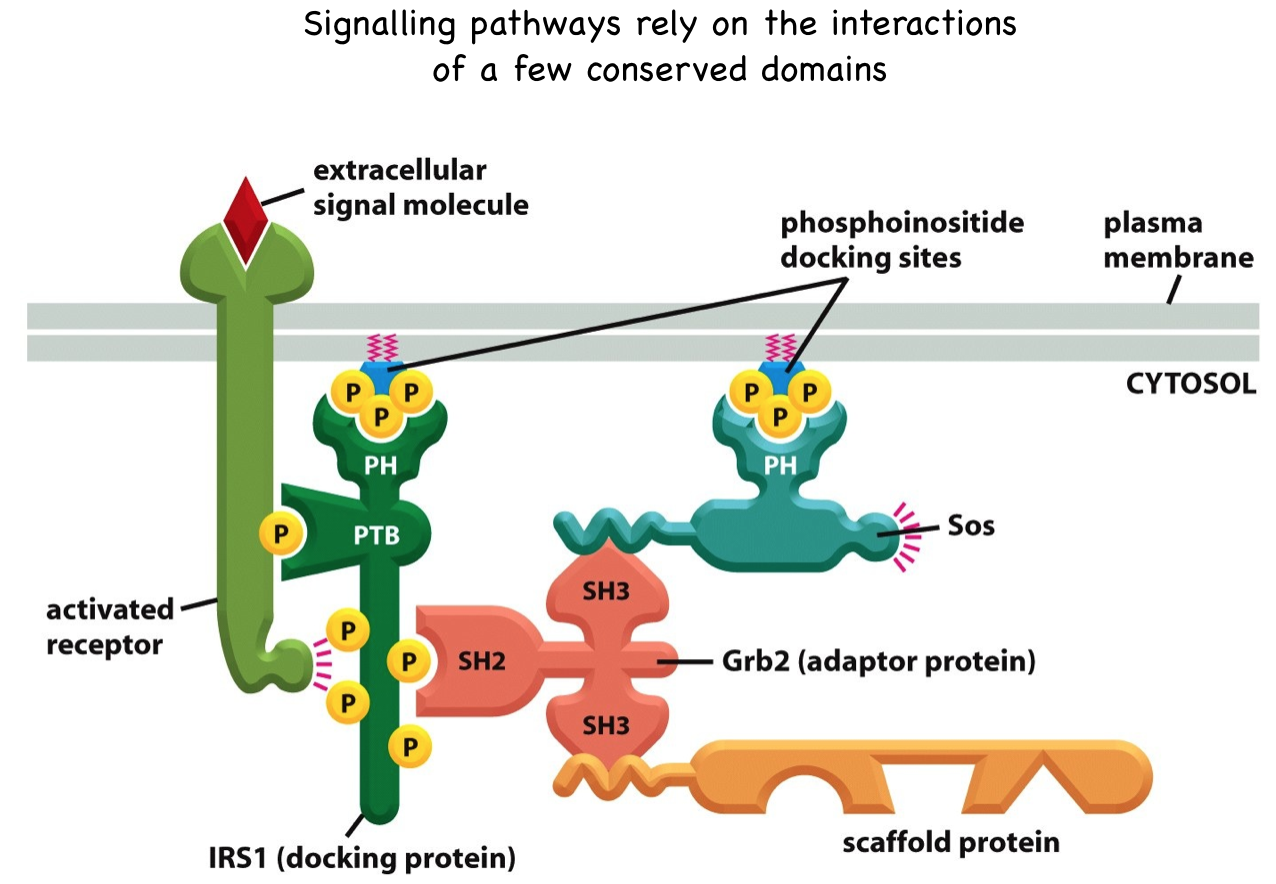
SH2
- Src Homology 2 domain
- important phospho-tyrosine binding domain
- Binds phosphorylated tyrosine
- Often involved in signalling mechanisms
- Binding of SH2 domains to their phospho-tyrosine ligands are involved in the formation of signalling complexes
- Specific for phospho-tyrosine, but one SH2 domain may interact with p-Tyr in different contexts
- Specificity is between the phosphate of the p-Tyr
- some hydrogen bonding also contributes
- mainly ionic interactions between -ve phosphate group and +ve aa’s,
- Specificity is between the phosphate of the p-Tyr
- Often involved in signalling mechanisms
- Binds phosphorylated tyrosine
- Prototypical SH2 domain is from the protein tyrosine kinase Src
- Also found in many other signalling and adaptor proteins
SH3
- Involved in linking structural components
- Structural roles in maintaining multi-protein complexes
- Src Homology 3 domain
- poly-proline binding domain acting as an adaptor to link proteins
- Binds proline rich motifs
- The minimum consensus sequence for SH3 binding is P-x-x-P,
- SH3 domain contains several aromatic residues, these interdigitate between the prolines of the PxxP motif which is stabilised by aromatic stacking
- The minimum consensus sequence for SH3 binding is P-x-x-P,
- Binds proline rich motifs
- Prototypical SH3 domain is from the protein tyrosine kinase Src, but also found in many other signalling and adaptor proteins
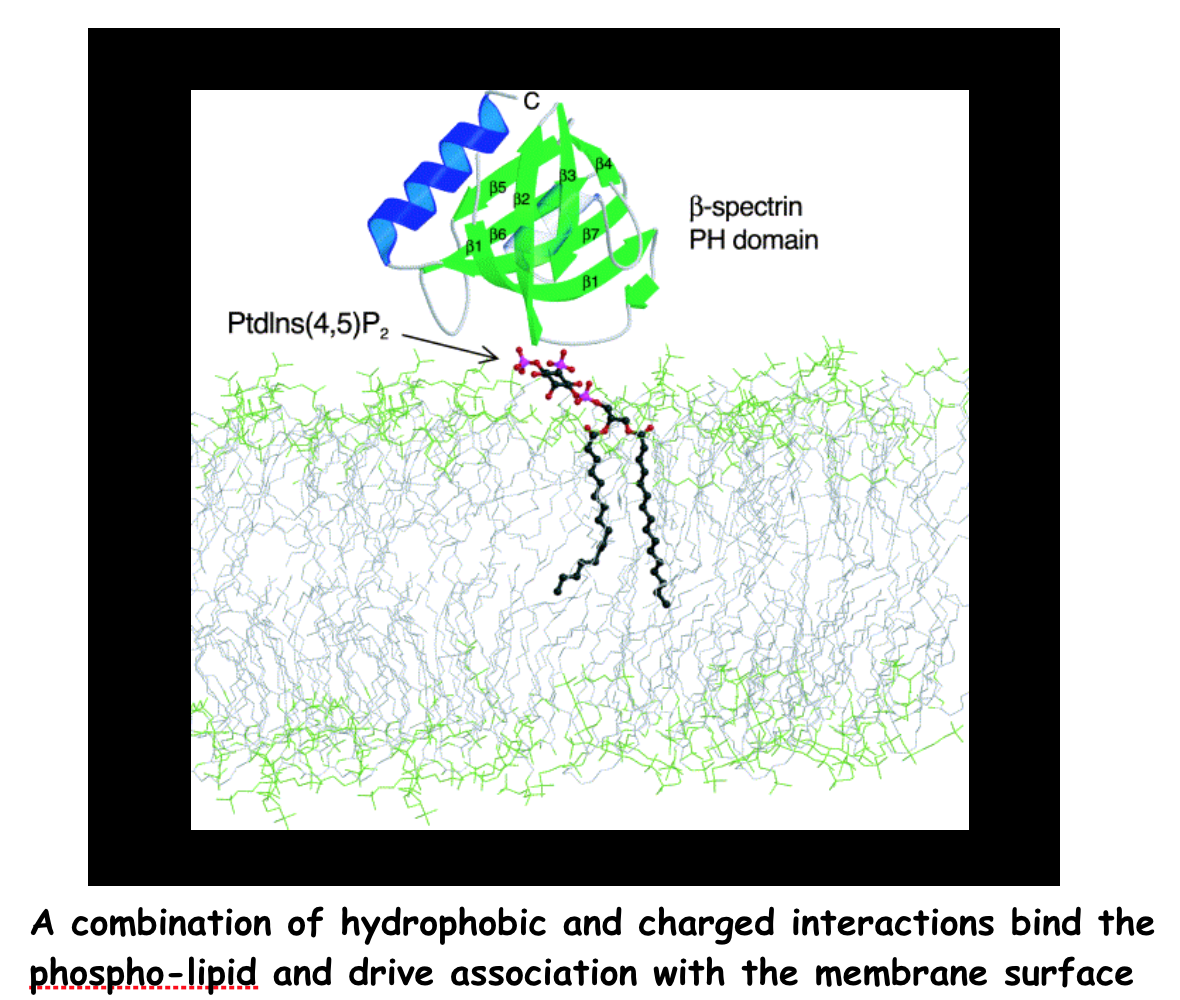
PH Domain
- Binds phospholipids
- Phospholipases
- Phospholipases have a direct role in lipid signalling
- interact with ionic head groups of phospho-lipids anchoring the protein to membrane
- Phospholipases
- Role in lipid signalling
- and lipid binding
- And anchoring proteins to membranes
- Spectrin
- Structural role in maintaining membrane integrity
- PH Pleckstrin Homology domain
- Binds phospholipids
EF Hand
- octadentate, coordinating through 7 oxygen containing side chains
- Invariant glycine residue to accommodate the tight turn
- Binding
- Ca2+/Mg2+ has a structural function
- binding Ca2+ has a regulatory function
- Calcium binding to EF-hands induces structural change e.g. calcium binding to calmodulin
- back to ppt for diagram
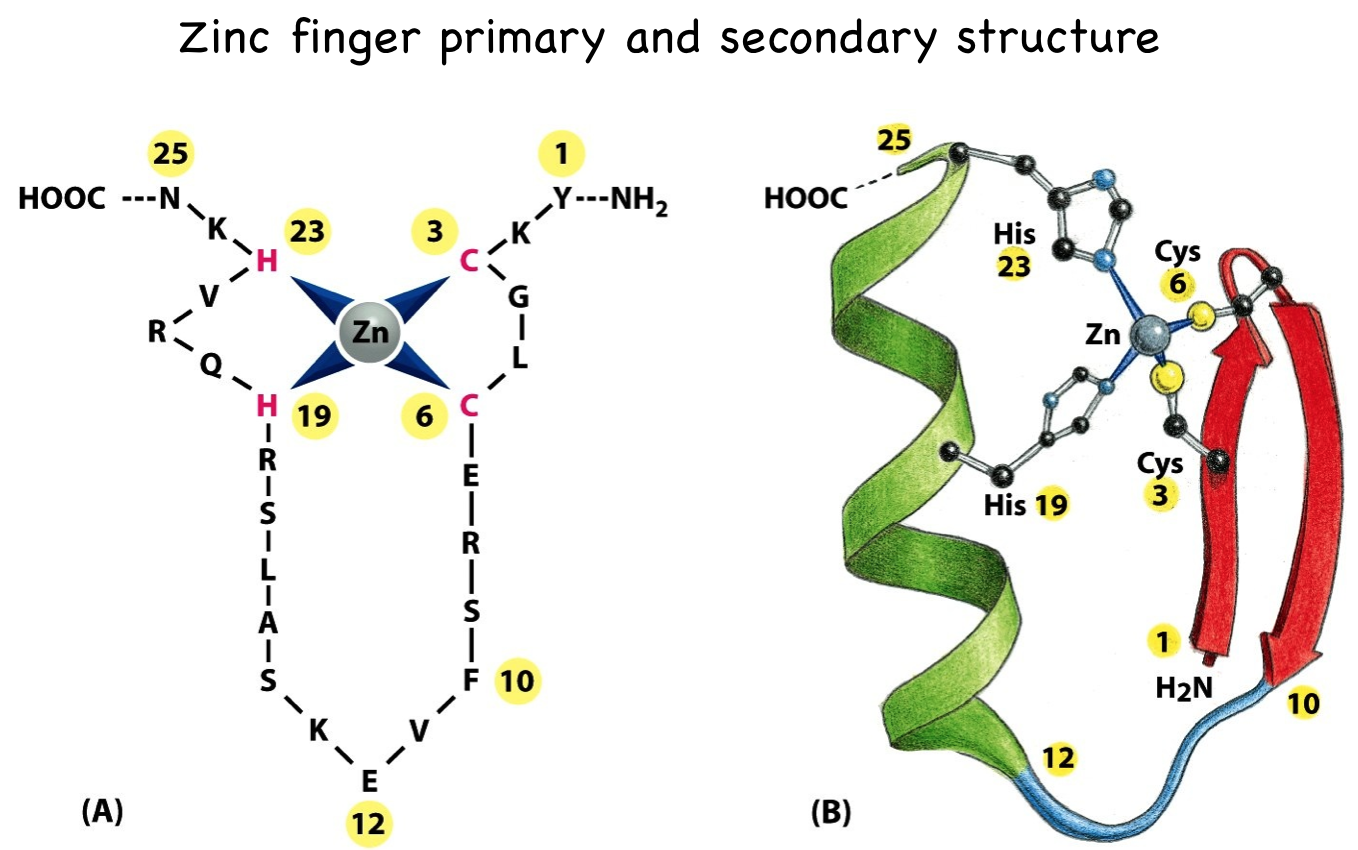
Zinc finger
- Binds zinc in a structural mode
- usually structural function in protein-DNA or protein-protein interactions
- Zn is coordinated tetrahedrally
- usually by cysteine or histidine residues
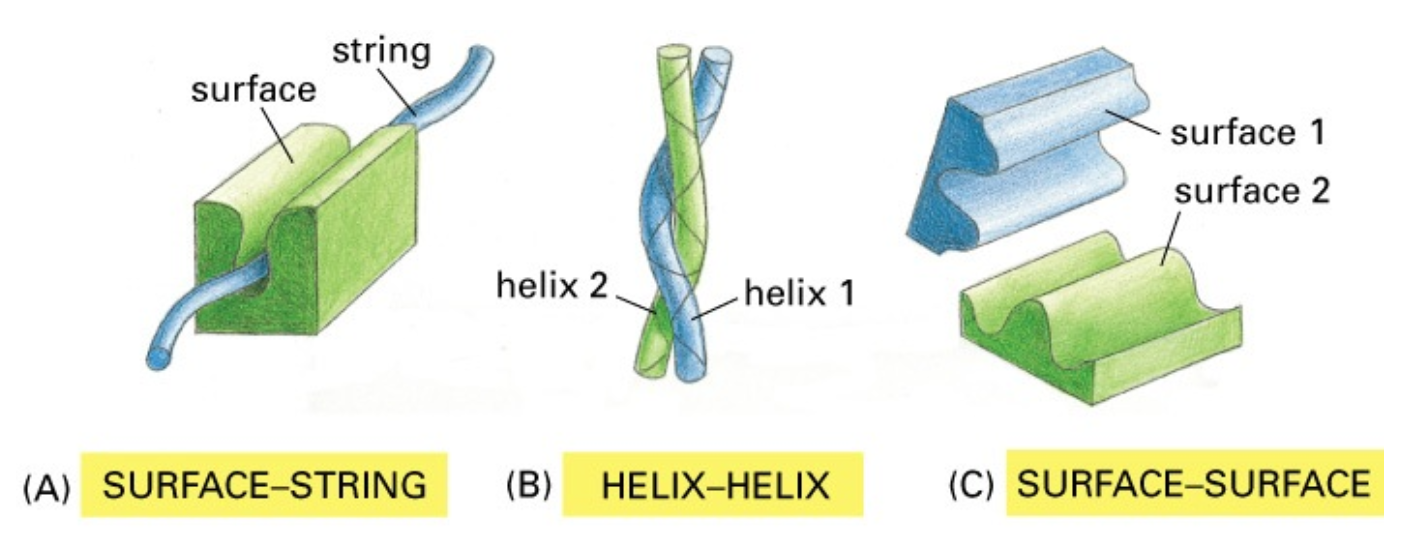
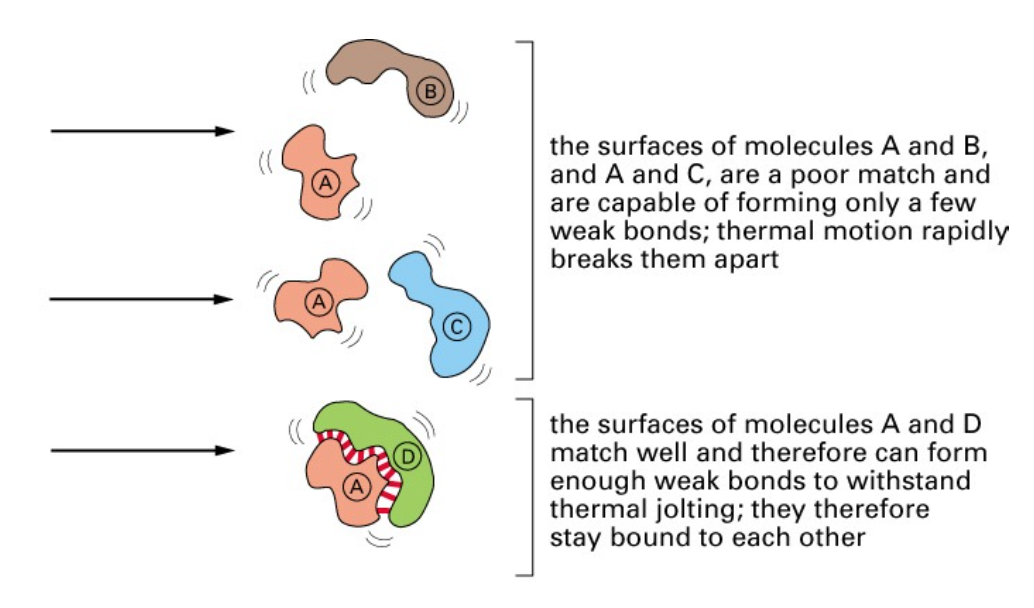
Protein-Protein interactions
- Require complementary surfaces
- Bonds may be a combination of
- Ionic
- Hydrophobic
- Electrostatic
Images and files in the map
Information
- Description
- Undergraduate BMS238 Cell and molecular biology (Proteins) Mind Map on Protein function (and structure), created by Kristi Brogden on 30/07/2014.
- Created by
- Kristi Brogden
- Views
- 26
- Rating