
Mind map
enzymes
Map content
enzymes
BIOLOGICAL CATALYSTS THAT LOWER ACTIVATION ENERGY ( the minimum amount of energy needed to activate reaction)
- allow reactions to take place at lower temperature than normal
structure
- globular 3D protein
- active site = specific functional region
- molecule enzyme acts on = substrate
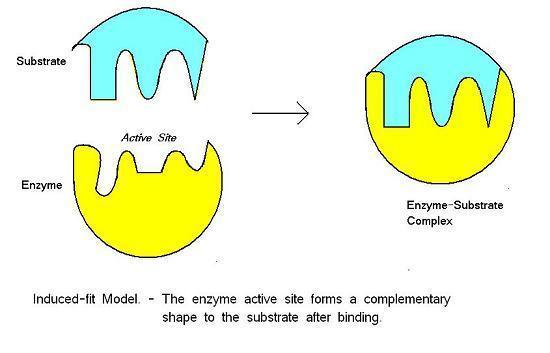
- substrate fits neatly into active site = enzyme-substrate complex
induced fit model
- active site forms as enzyme and substrate interact.
- enzyme is flexible and moulds itself around the shape of substrate
- enzyme has general shape, but alters in presence of substrate
- as it changes shape, it put strain on substrate
- strain distorts particular bonds, lowers activation energy needed to break bond
- enzyme is flexible and moulds itself around the shape of substrate
- any change in enzymes environement = likely to chnage its shape
- COLLIDING with substrate = change in environement so its shape changed - induced fit
- active site forms as enzyme and substrate interact.
lock and key model
- substrate will only fit in the active site of a particular enzyme
- specific shape, fits exactly into active site
- substrate will only fit in the active site of a particular enzyme
factors affecting enzyme action
- to work enzymes must 1) come into physical contact with substrate 2) have active site that fits substrate
- factors that influence rate enzyme works will affect one or both of above
- as reaction goes on theres less substrate and more product. becomes more difficult for substrate molecules 2 come into contact with enzyme. begins to takes longer for substrate to be broken, and formation of product slows - graphs tail off. graphs flatterns coz all substrate is used up.
- factors that influence rate enzyme works will affect one or both of above
- measuring rate
- formation of products ie volume produced
- disappearance of substrate ie reduction in conc of starch
- change in rate of reaction. gradient y/x. draw triangle
- TEMPERATURE
- INCREASE kinetic energy
- molecules more more quickly, collide more frequent
- more sucessful enzyme + substrate collisons
- more enzyme substrate complexes formed
- rate of reaction increases
- more enzyme substrate complexes formed
- more sucessful enzyme + substrate collisons
- molecules more more quickly, collide more frequent
- higher temp than optimum = break H bonds/ other bonds
- changes shape of active site = enzyme less likely to fit
- even higher temp, enzyme so disrupted, stops working altogether - DENATURED.
- falling curve on graph
- even higher temp, enzyme so disrupted, stops working altogether - DENATURED.
- changes shape of active site = enzyme less likely to fit
- INCREASE kinetic energy
- pH
- change in pH alters charges on amino acids that make up active site
- substrate cant attach (by bonds) to active site
- no enzyme substrate complex formed
- if pH altered a lot, changes tertiary structure ( breaks bonds ) - therefore changes shape of active site
- H bonds and ionic bond between NH2 and COOH
- change in H+ ions (pH) affects these bonds
- H bonds and ionic bond between NH2 and COOH
- if pH altered a lot, changes tertiary structure ( breaks bonds ) - therefore changes shape of active site
- no enzyme substrate complex formed
- substrate cant attach (by bonds) to active site
- change in pH alters charges on amino acids that make up active site
- enzyme concentration
- increasing enzyme conc- some of EXCESS substrate can be acted upon.
- increases rate of reaction
- if there is no EXCESS substrate (empty active sites), then increasing the enzyme conc will have no impact
- increasing enzyme conc- some of EXCESS substrate can be acted upon.
- SUBSTRATE CONCENTRATION
- if substrate conc is increased, active site gradually become more filled. more molecules to collide with
- until all of them are working as fast as they can
- rate of reaction is at its maximum - (V max)
- addition of more substrate after this = no effect. excess substrate = graph levels off
- rate of reaction is at its maximum - (V max)
- until all of them are working as fast as they can
- if substrate conc is increased, active site gradually become more filled. more molecules to collide with
- to work enzymes must 1) come into physical contact with substrate 2) have active site that fits substrate
enzyme inhibitors
- substance that indirectly or directly interferes with functioning of active site of an enzyme - reduce its activity
- competitive inhibitors
- molecular shape similar to substrates
- allows them to occupy active site and compete with substrate for available active sites
- if substrate conc is increased .. effect of inhibitor reduced
- eventually all substrate molecules will occupy active sites, higher conc of inhibitor will make this take longer
- if substrate conc is increased .. effect of inhibitor reduced
- allows them to occupy active site and compete with substrate for available active sites
- molecular shape similar to substrates
- non- competitor inhibitors
- attach to enzyme at binding site that isnt active site
- alters shape of enzyme and therefore active site
- substrate molecules can no longer occupy active site - enzyme cant function
- substrate and inhibitor not competing for active site- an increase in substrate doesnt reduce effect of inhibitor
- substrate molecules can no longer occupy active site - enzyme cant function
- alters shape of enzyme and therefore active site
- end product inhibition - keeps a steady conc of a partiular chemical in cell. same chemical often acts as inhibitor of an enzyme at the start of the reaction
- metabollic pathways - series of reactions, each step is catalysed by an enzyme
- attach to enzyme at binding site that isnt active site
Images and files in the map
Information
- Description
- Mind Map on enzymes, created by Sonia Djan on 02/04/2018.
- Created by
- Sonia Djan
- Views
- 2
- Rating