
Mind map
Lungs and Lung Disease
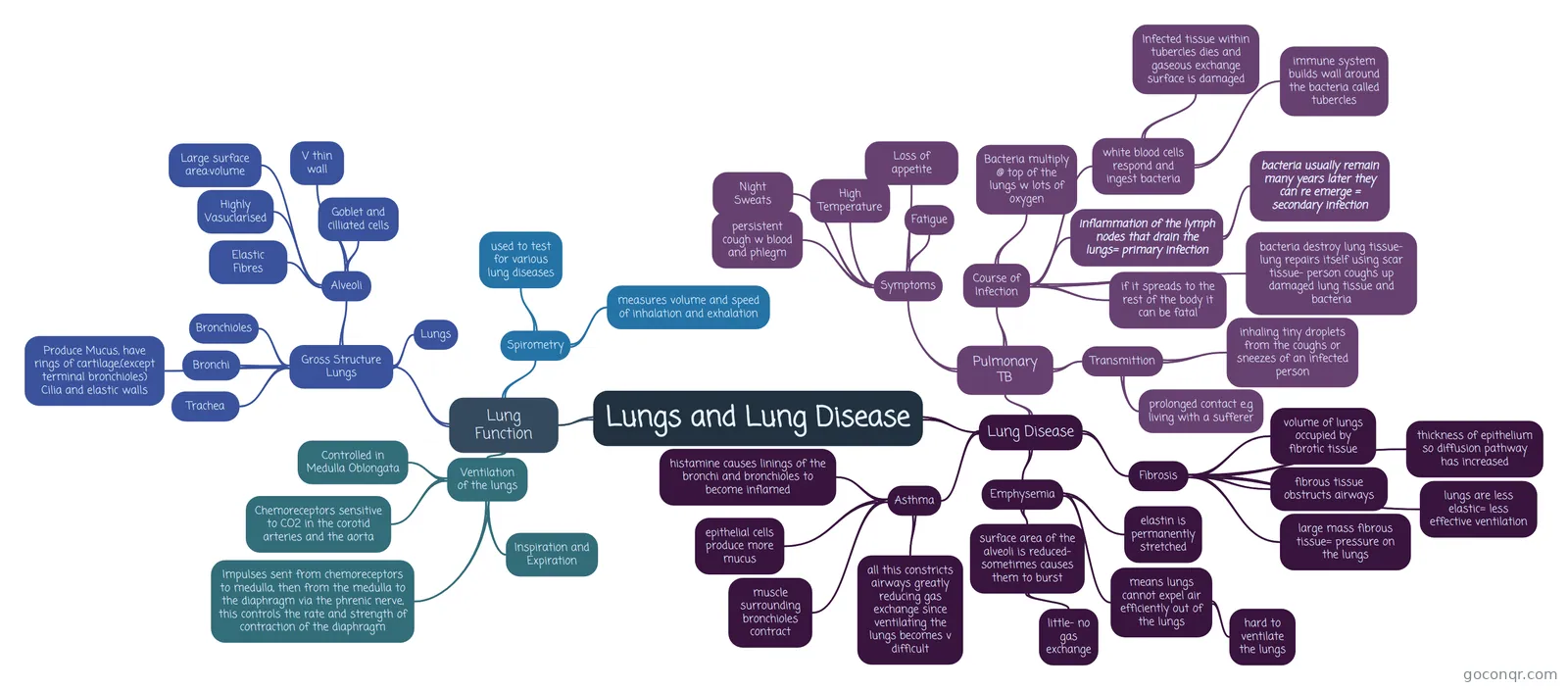
Mind map: Lungs and lung disease
Map content
Lungs and Lung Disease
Lung Function
- Gross Structure Lungs
- Bronchioles
- Bronchi
- Trachea
- Lungs
- Alveoli
- Elastic Fibres
- Highly Vasuclarised
- Large surface area:volume
- V thin wall
- Goblet and cilliated cells
- Produce Mucus, have rings of cartilage,(except terminal bronchioles) Cilia and elastic walls
- Ventilation of the lungs
- Controlled in Medulla Oblongata
- Chemoreceptors sensitive to CO2 in the corotid arteries and the aorta
- Impulses sent from chemoreceptors to medulla, then from the medulla to the diaphragm via the phrenic nerve, this controls the rate and strength of contraction of the diaphragm
- Inspiration and Expiration
- Spirometry
- measures volume and speed of inhalation and exhalation
- used to test for various lung diseases
- Gross Structure Lungs
Lung Disease
- for Asthma Emphysemia and fibrosis you only need to know how it impacts lung function
- Pulmonary TB
- Symptoms
- persistent cough w blood and phlegm
- Night Sweats
- High Temperature
- Fatigue
- Loss of appetite
- Course of Infection
- -EXAM MARK SCHEME- -spread via droplet transmission -bacteria are ingested via phagocytosis in the lungs -encased in a wall by immune system cells which is called a tubercle -bacteria remain dormant within tubercles -if the person is immuno-supressed the bacteria can become activated -they then destroy lung tissue and alveoli -this leads to fibrosis/ cavities -less surface area for gas exchange in the lungs -this activation allows bacteria to enter the blood stream and affect other organs
- Bacteria multiply @ top of the lungs w lots of oxygen
- white blood cells respond and ingest bacteria
- immune system builds wall around the bacteria called tubercles
- Infected tissue within tubercles dies and gaseous exchange surface is damaged
- inflammation of the lymph nodes that drain the lungs= primary infection
- bacteria usually remain many years later they can re emerge = secondary infection
- bacteria destroy lung tissue- lung repairs itself using scar tissue- person coughs up damaged lung tissue and bacteria
- if it spreads to the rest of the body it can be fatal
- Transmittion
- inhaling tiny droplets from the coughs or sneezes of an infected person
- prolonged contact e.g living with a sufferer
- Symptoms
- Fibrosis
- volume of lungs occupied by fibrotic tissue
- causes shortness of breath
- thickness of epithelium so diffusion pathway has increased
- lungs are less elastic= less effective ventilation
- fibrous tissue obstructs airways
- large mass fibrous tissue= pressure on the lungs
- volume of lungs occupied by fibrotic tissue
- Emphysemia
- elastin is permanently stretched
- means lungs cannot expel air efficiently out of the lungs
- hard to ventilate the lungs
- surface area of the alveoli is reduced- sometimes causes them to burst
- little- no gas exchange
- Asthma
- histamine causes linings of the bronchi and bronchioles to become inflamed
- epithelial cells produce more mucus
- muscle surrounding bronchioles contract
- all this constricts airways greatly reducing gas exchange since ventilating the lungs becomes v difficult
Information
- Description
- GCSE AS Biology (Chapter 4- Lungs) Mind Map on Lungs and Lung Disease, created by Clodagh Mullins on 18/12/2014.
- Created by
- Clodagh Mullins
- Views
- 13
- Rating
More on Lung diseases and smoking