
Respiratory System and Gas Exchange
237 resources created by 201 users
This Respiratory System and Gas Exchange page on GoConqr gathers community-made quizzes, mind maps, flashcards, notes and slide sets, from exchange surfaces and ventilation to lung disease, haemoglobin and gas exchange in fish and insects. It's built for school students revising for exams such as GCSE, IGCSE, A-level and IB Biology, and for teachers after ready-made material. There are over 1,500 resources here, including more than 100 quizzes and over 800 mind maps, mostly at secondary level. Pick a topic, try a quiz to spot your gaps, then make your own.
Top Respiratory System and Gas Exchange resources
-
92 cardsOCR biology module 3 How is size related to SA:V in animals?
-
43 cards13.1-13.10: EXCHANGE AND TRANSPORT Things that need to be interchanged between an organism and the environment
-
33 cardsAs Biology Exchange Surfaces Module 3
-
38 cardsTransport in Animals- A-level OCR Biology What are the name of the two major Valves?
-
13 questionsMammalian Lungs Label this diagram of the lungs
-
Mind map The lungs and lung disease Revision of lung structure and lung diseases from 4.5 of Nelson Thornes AS Biology book plus extra informat...
-
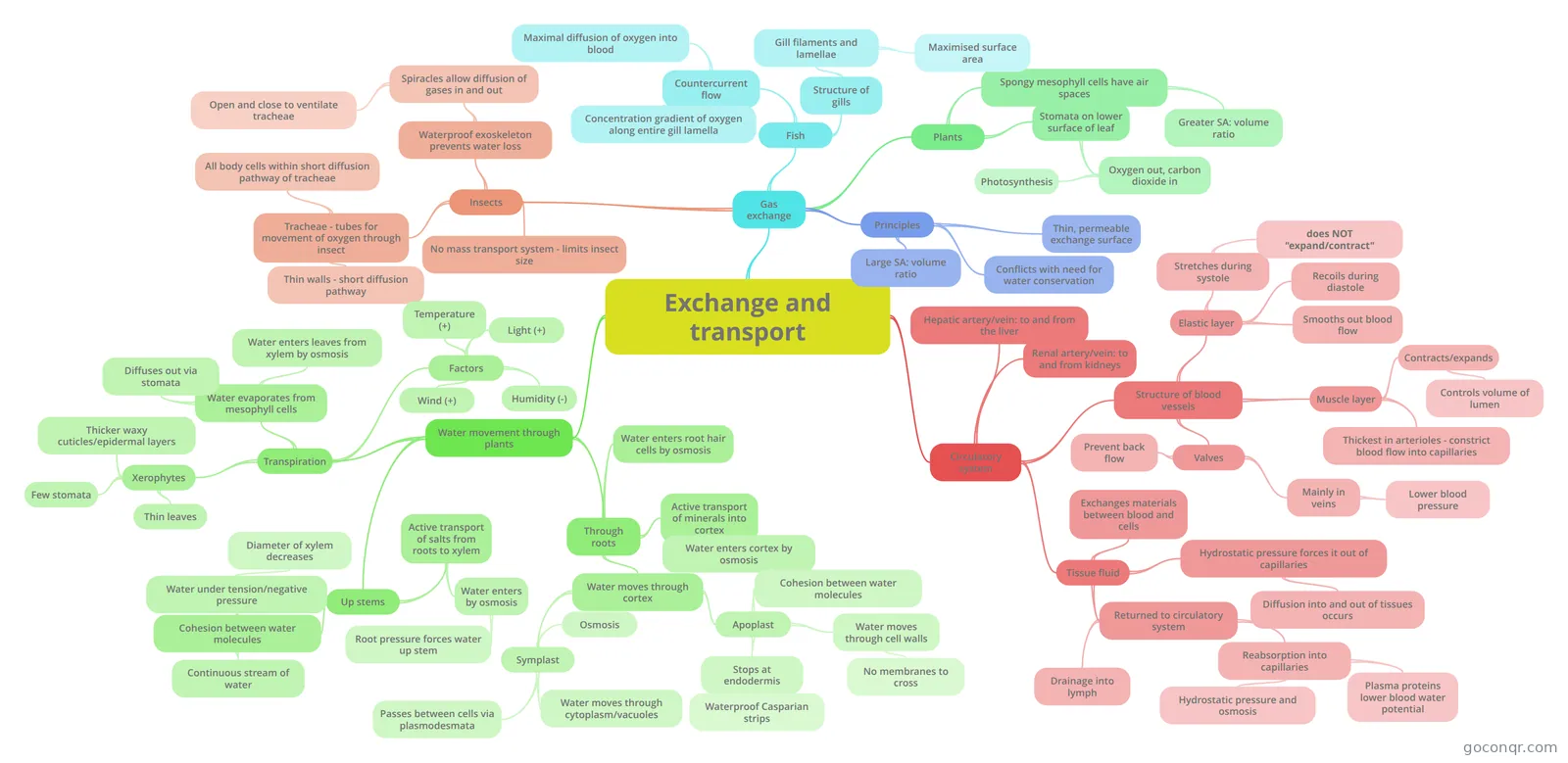 Mind map Exchange and transport
-
Mind map 11. Gas exchange in humans Syllabus (extended) 2021
Quizzes
See all 28 quizzes-
13 questionsMammalian Lungs Label this diagram of the lungs
-
20 questionsB8 Gas Exchange in Mammals Quiz What helps oxygen to be absorbed rapidly into the blood in the lungs?
-
11 questionsMammalian Gas Exchange Which of the following determine an organism's need for an exchange system?
-
15 questionsExchange Surfaces and Breathing Quiz Name four substances an organism needs to exchange with its environment.
-
6 questionsFish and Insect Gas Exchange
-
4 questionsRespiratory system Label the parts of the respiratory system.
-
7 questionsVentilation and Spirometers
-
8 questionsBiology 3.1.1 Inspiration and expiration Quiz on Biology 3.1.1 Inspiration and expiration, created by Sam Gunnell on 14/02/2019.
Mind maps
See all 86 mind maps-
The lungs and lung disease Revision of lung structure and lung diseases from 4.5 of Nelson Thornes AS Biology book plus extra informat...
-
Exchange and transport
-
11. Gas exchange in humans Syllabus (extended) 2021
-
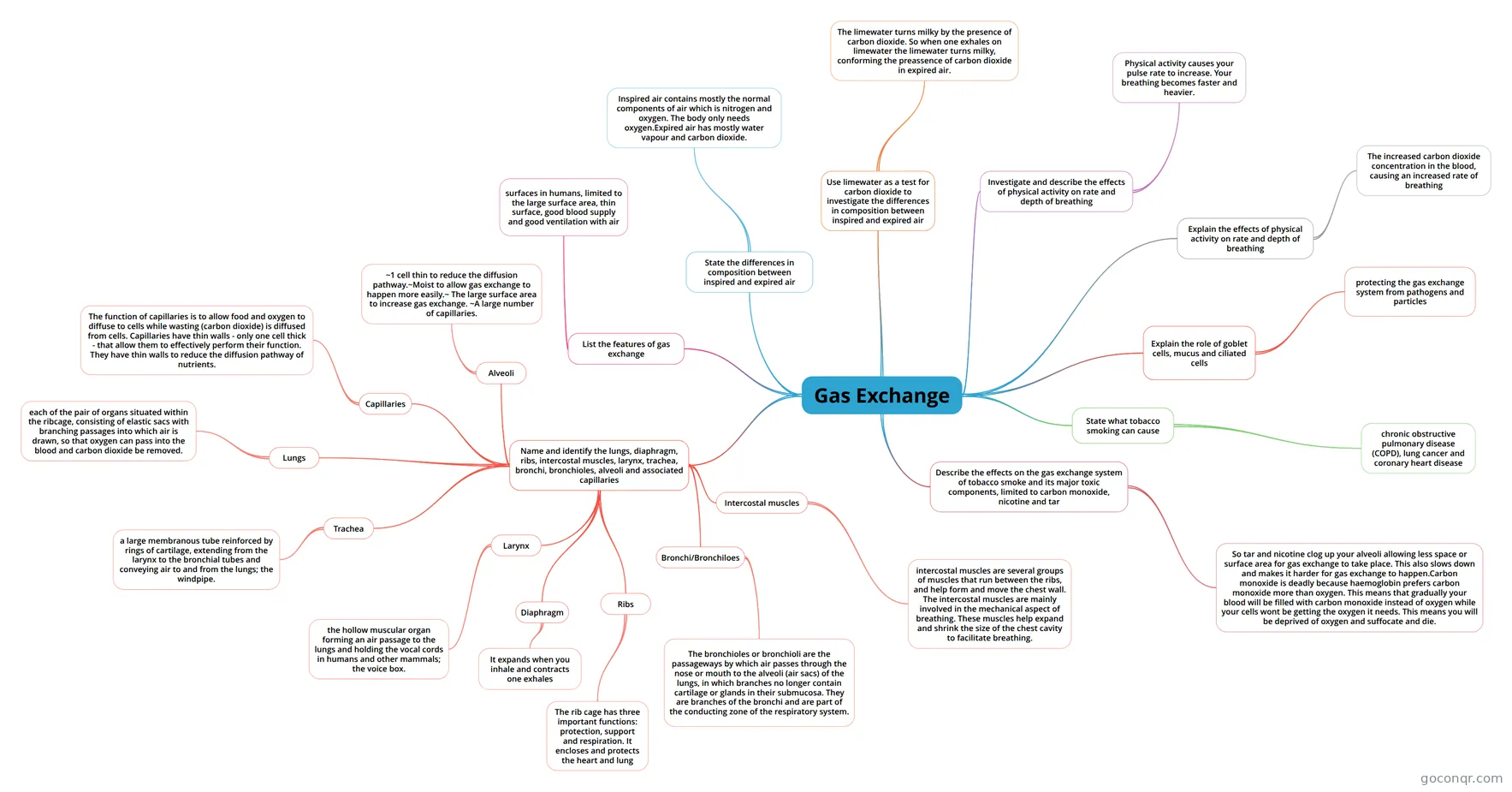 Gas Exchange
-
Transport in animals AS UNIT F211, module 2 transport in animals. unfinished
-
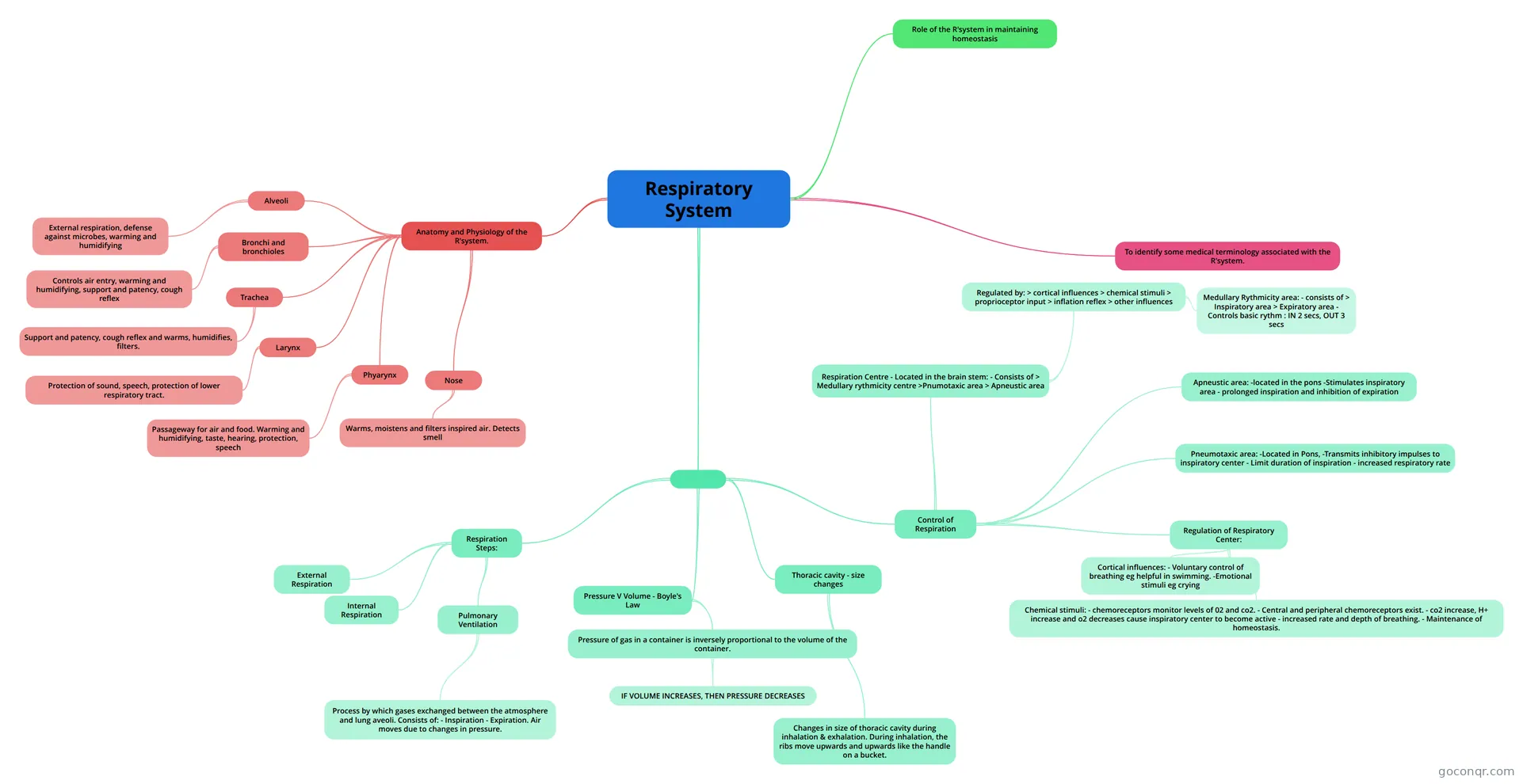 Respiratory System
-
Human Breathing System
-
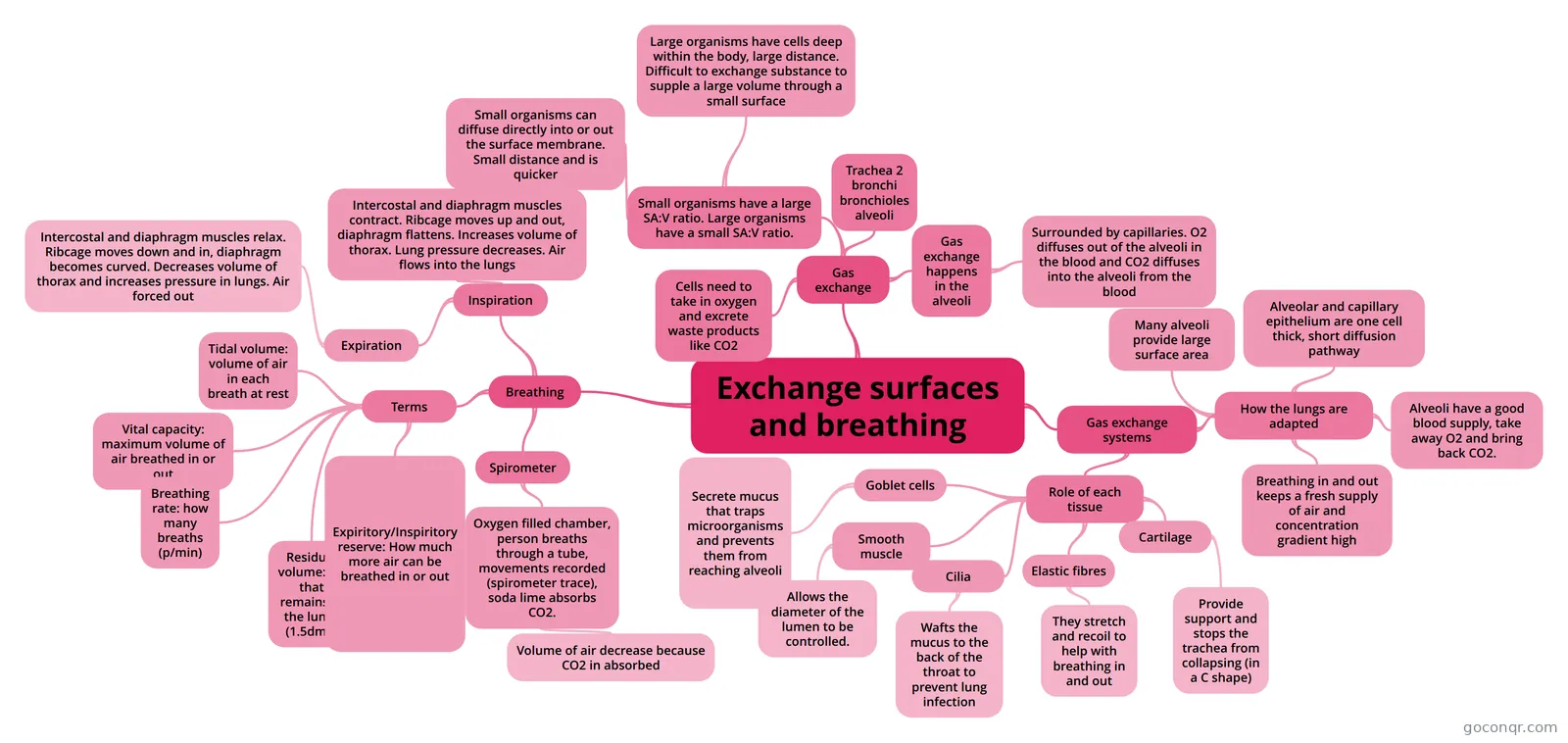 Exchange surfaces and breathing
Flashcards
See all 103 flashcards-
92 cardsOCR biology module 3 How is size related to SA:V in animals?
-
43 cards13.1-13.10: EXCHANGE AND TRANSPORT Things that need to be interchanged between an organism and the environment
-
33 cardsAs Biology Exchange Surfaces Module 3
-
38 cardsTransport in Animals- A-level OCR Biology What are the name of the two major Valves?
-
109 cardsAS Level AQA Biology: Unit 3 (Organisms exchange substances with their environment) 3.3: Organisms exchange substances with their environment
-
18 cardsOCR biology F211 exchange surfaces and breathing. Why do multicellular organisms need specialised exchange surfaces?
-
20 cardsModule 3.2 breathing and respiration. 3.2 Breathing and respiration.
-
20 cardsBreathing and Respiratory System What does Repiration refers to ???
Flowcharts

Notes
See all 17 notes-
breathing , gaseous exchange and respiration Study, draw and label over each diagram G.e.s. of fish G.e.s. of insects The gaseous exchange surface of an earthworm G.e.s. of an amoeba Breathing the mechanism 1. Define the term breathing 2. Outline the sequence of...
-
How breathing works How we breathe:* Air is warmed, moistened & filtered as it travels through the mouth and nasal passages.* It then passes through the trachea and one of the two bronchi into one of the lungs.* After passing into the ma...
-
Biology AQA 3.2.7 Gas Exchange Large Surface Area to volume ratio smal smaller diffusion pathway
-
Lungs Lungs - how they work. Breathing in. Intercostal muscles contract Diaphragm muscles contract Rib cage moves up and out Elastic tissue stretches Diaphragm moves down Volume in lungs increases Pressure in lungs decrease...
-
OCR Biology- AS- Exchange and Transport Module 2 Exchange and Transport1.2.1 Exchange Surfaces and Breathinga) Single celled and small organisms have a large volume:surface area ratio. This means that they do not need specialised area to exchange from becau...
-
Biology 2.13 InsectsWaterproofing over body surfaces. Rigid outer skeleton and a waterproof cuticle over it.Small surface area to volume ratio. Minimise area water is lost.Gases move into trachea and tracheoles down concentration ...
-
Lung disease Pulmonary Ventilation- The amount of air taken into the lungs in 1 minutePV= Tidal volume x ventilation rateTidal volume- volume of air in each breath (usually about 0.4dm3)Ventilation rate- number of breaths per...
-
Gas exchange and breathing by CGP Gas exchange and breathing You need to get oxygen from the air into your bloodstream. You also need to get rid of carbon dioxide that is in your bloodstream. Funnily enough, this exchange of gases happens in your gas ...
Slides
More Biology and natural sciences topics
About Respiratory System and Gas Exchange
GoConqr OriginalWhat the resources cover
The page starts with the basics of exchange. Flashcard decks such as OCR biology module 3 ask how size relates to surface area to volume ratio, what makes a good exchange system, and what changes during inspiration and expiration. The Exchange and transport mind map links gas exchange to fish, plants and insects, and to the circulatory system.
Human lungs and breathing
Several resources focus on the mammalian system. The Mammalian Lungs quiz asks you to label the lungs and alveoli and match definitions to each area. The mind map 11. Gas exchange in humans lists the features of a good gas exchange surface: large surface area, thin surface, good blood supply and good ventilation. The mind map The lungs and lung disease covers the trachea, with its cartilage rings, muscle and ciliated epithelium, and goblet cells.
A sensible order to work in
- Skim a mind map to see the whole topic on one screen.
- Work through a flashcard deck on exchange surfaces until the key terms feel familiar.
- Take a quiz, such as Exchange Surfaces and Breathing Quiz, to find what you still miss.
- Return to the map or deck for those gaps, then retry.
Later, move on to lung function, spirometers, haemoglobin and the carriage of oxygen, where there are separate quizzes, maps and notes.
Beyond humans
There are resources on other organisms too. Fish and Insect Gas Exchange is a quiz, and Xerophyte Adaptations. is a mind map for plants. Some resources also pair breathing with transport in animals, including the heart and the cardiac cycle.
Where it sits
This unit belongs to the The Human Body strand in Biology and natural sciences. Many resources name AQA, OCR, GCSE, IGCSE, A-level or IB courses, so check the title against your own course before you start.
Ready to begin? Open a mind map you like, then test yourself with a quiz and see how it goes.
Frequently asked questions
Which resource should I start with?
If you want an overview, open the Exchange and transport mind map, which links gas exchange in fish, plants and insects to the circulatory system. If you prefer to test yourself, try the Mammalian Lungs quiz, which asks you to label the lungs and alveoli and match definitions.
What do the mind maps on this page cover?
There are over 800 mind maps. They cover exchange surfaces, the features of human gas exchange surfaces, lung structure and lung disease, emphysema, haemoglobin, lung function, and gas exchange in insects, fish and plants. Some also link breathing to wider transport in animals.
Are the resources free to use?
Yes. Every resource listed here is free to open, study and take, with no account needed. They were made by GoConqr users, not by GoConqr itself, so it is worth checking them against your own course notes.
Which exams do these resources suit?
Most resources are at secondary level. Titles and excerpts mention A-level Biology, GCSE Biology, IB Biology, AQA Biology and IGCSE Biology, and several decks refer to OCR modules. Look at the title of each resource to match it to your course.
Can teachers use this page?
Yes. Teachers can use the quizzes, flashcard decks, notes and slide sets as ready-made material, such as the slide sets on the human respiratory system for GCSE Biology. A free account also lets you make your own quizzes, mind maps, flashcards and notes.
What if I cannot find what I need?
Try a related title. Breathing, ventilation, lung function, haemoglobin and exchange surfaces are often grouped under different names. Resources on transport in animals, such as the heart and the cardiac cycle, may also help with the topic you are after.