
Mind map
Mumbai: Case study of Urbanisation
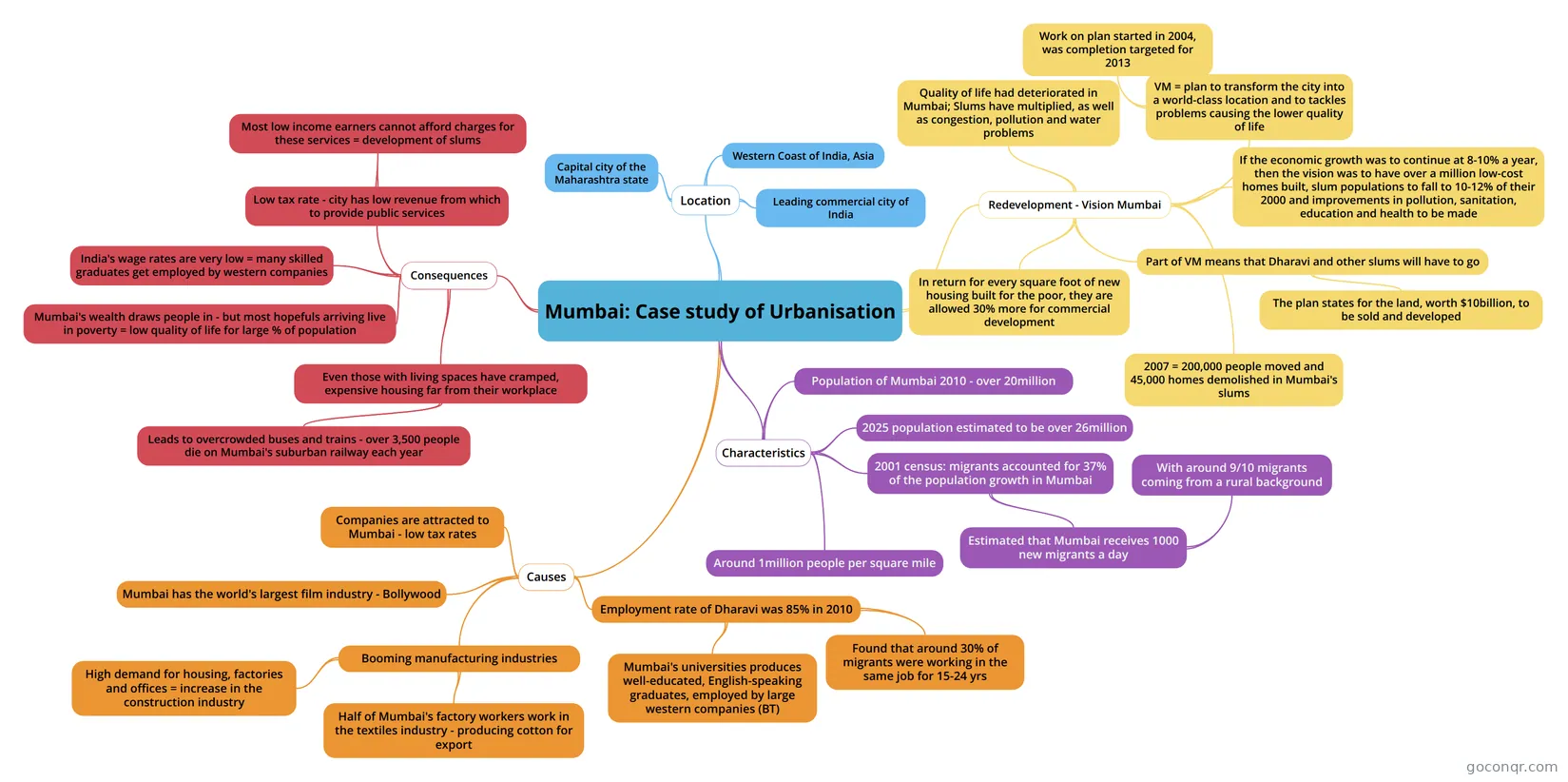
Mind map: Mumbai case study of urbanisation
Map content
Mumbai: Case study of Urbanisation
Location
- Western Coast of India, Asia
- Leading commercial city of India
- Capital city of the Maharashtra state
Characteristics
- Population of Mumbai 2010 - over 20million
- 2025 population estimated to be over 26million
- 2001 census: migrants accounted for 37% of the population growth in Mumbai
- Estimated that Mumbai receives 1000 new migrants a day
- With around 9/10 migrants coming from a rural background
- Estimated that Mumbai receives 1000 new migrants a day
- Around 1million people per square mile
Causes
- Employment rate of Dharavi was 85% in 2010
- Found that around 30% of migrants were working in the same job for 15-24 yrs
- Mumbai's universities produces well-educated, English-speaking graduates, employed by large western companies (BT)
- Companies are attracted to Mumbai - low tax rates
- Booming manufacturing industries
- Half of Mumbai's factory workers work in the textiles industry - producing cotton for export
- High demand for housing, factories and offices = increase in the construction industry
- Mumbai has the world's largest film industry - Bollywood
- Employment rate of Dharavi was 85% in 2010
Consequences
- Low tax rate - city has low revenue from which to provide public services
- Most low income earners cannot afford charges for these services = development of slums
- India's wage rates are very low = many skilled graduates get employed by western companies
- Mumbai's wealth draws people in - but most hopefuls arriving live in poverty = low quality of life for large % of population
- Even those with living spaces have cramped, expensive housing far from their workplace
- Leads to overcrowded buses and trains - over 3,500 people die on Mumbai's suburban railway each year
- Low tax rate - city has low revenue from which to provide public services
Redevelopment - Vision Mumbai
- Quality of life had deteriorated in Mumbai; Slums have multiplied, as well as congestion, pollution and water problems
- VM = plan to transform the city into a world-class location and to tackles problems causing the lower quality of life
- Work on plan started in 2004, was completion targeted for 2013
- If the economic growth was to continue at 8-10% a year, then the vision was to have over a million low-cost homes built, slum populations to fall to 10-12% of their 2000 and improvements in pollution, sanitation, education and health to be made
- Part of VM means that Dharavi and other slums will have to go
- The plan states for the land, worth $10billion, to be sold and developed
- In return for every square foot of new housing built for the poor, they are allowed 30% more for commercial development
- 2007 = 200,000 people moved and 45,000 homes demolished in Mumbai's slums
Information
- Description
- A Levels Geography (Mumbai) Mind Map on Mumbai: Case study of Urbanisation, created by Hannah Burnett on 28/12/2014.
- Created by
- Hannah Burnett
- Views
- 913
- Tags
- Rating