
Mind map
Proteins

Map content
Proteins
amino acid
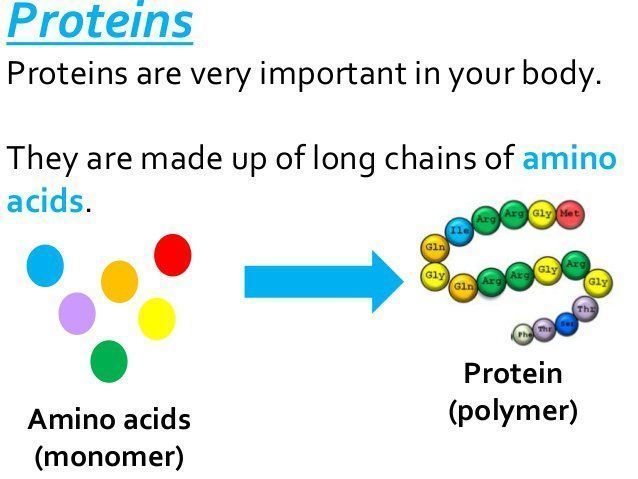
- Are buiding blocks of protein
- Contains
- Carbon
- hydrogen
- Oxygen
- nitrogen
- sometimes sulphur
- Each amino acid consist of the central alpha carbon some grups are attached
- Hydrogen atom
- a carboxyl (COOH)
- An amino (NH2)
- a unique R group or side chain
- determines amino acid prpperties
- amino acids have tow funtional grups
- an amino functional group
- a carboxyl functional group
- Properties of amino acid R groups
- non polar
- polar
- some amino acid have charged R groups
General functions of proteins
- enezymes
- Digestion
- metabolism
- Transport and storage
- Oxigen transports
- fatty acids transport
- iron storage
- structural support
- Skin and bone ( collagen)
- Elastic Ligamenst ( elatin)
- Immune protection
- antibodys
- movement
- muscle contractions (actin and myosin)
- Hormones
- Blood glucose relulation (insulin and glycogen)
- enezymes
Protein structure
- Primary Structure
- Each amino acid is linked by peptide bond
- The sequence of amino acids in the polypeptide chain
- dislphide bridges are also part of the primary structure
- Secondary structure
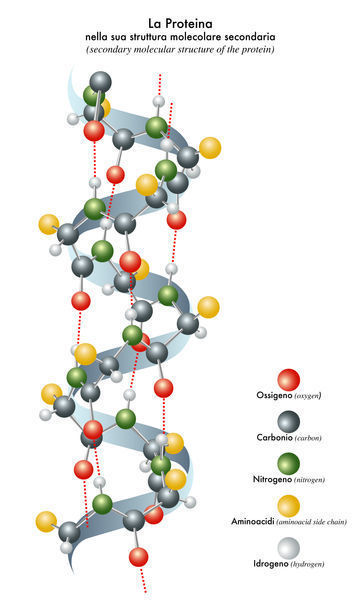
- Allpha helices
- Beta pleated sheets
- The areas of finding or coiling within a protein
- Amino acids interact non-covalent between thr amino acids side chains
- hydrogen bonding coils the polypetide into a stabilised secondry structure
- Tertiary Structure
- the final 3D shape of a protein
- the function of a protein depends on thethe function of a protein depends on the
- the forces which give rise to and stabilise the tertiary structure are
- ionic bonds
- salt bridges and electrostatic interactions between side chains of amino acids
- hydrogen bonding
- occurs between side chains between the hydrogens on one amino acid and the hydrogens on another amino acid
- hydrophobic interactions
- in water soluble proteins non-polar amino acids are located on the hydrophobic inside of the molecule away from the hydrophilic medium surrounding the protein
- hydrophobic regions are further stabilised by Van der Waals forces
- ionic bonds
- Quaternary structure
- involves the clustering of several individual polypeptide chains into a final and precise 3D shape
- polypeptide chains into a final and precise 3D
- Primary Structure
formation of a protein
- the alpha carboxyl group is joined to the alpha amino group another amino acid by a peptide bond
- froms a peptide bond
- condensation reaction
- leads to the formation of a chain of amino acids called a peptide bond
Main categories of proteins
- Fibrous
- provide mechanical support to cells and to entire organisms
- insoluble in water and physically tough
- polypeptide chains form a single repetitive structure which is twisted regularly and arranged in bundles or sheets
- elongated molecules whose secondary structure is the dominant structural feature
- Globular proteins
- are relatively sepherical
- Fibrous
Proteins are molecules composed of amino acids
Images and files in the map

Information
- Description
- Mind Map on Proteins, created by Valeria María Castillo Ventura on 15/03/2021.
- Created by
- Valeria María Castillo Ventura
- Views
- 9
- History
-
- Created by Valeria María Castillo Ventura · Mar 15, 2021
- Copied by Valeria María Castillo Ventura · Mar 15, 2021
- Rating