
Mind map
Gestalt Theory of Illusions

Map content
Gestalt Theory of Illusions
Explaining Fictions
- a well known illusion is the Kanizsa triangle, a brighter than white triangle is perceived in the middle, even though the edges of the shape are not physically there
- illusions like this can be explained by Gestalt - when we see a figure which is incomplete, our perception makes a whole shape using CLOSURE, we complete the edges to make a regular or familiar shape, this is the figure of the figure-ground relationship
- with the Kanizsa triangle, the arrow heads, 'bitten' cirrcles and the space around them become the ground
- when the circles are replace with dots, we see 2 interlocking triangles, similarity organises the dots and lines and continuity joins the lines to form a triangle
- with the Kanizsa triangle, the arrow heads, 'bitten' cirrcles and the space around them become the ground
Which do we recognise first?
- Peterson (1994) conducted an experiment to see which we do first, divide the stimulus into figure-ground, or recognise the object
- participants briefly saw images and judges whether a black or white area was the figure, they generally said it was the black area, however, when the images were turned upside down, it took them longer which shows they were recognising the object before they organised it into figure-ground
- Peterson (1994) conducted an experiment to see which we do first, divide the stimulus into figure-ground, or recognise the object
Explaining Distortions
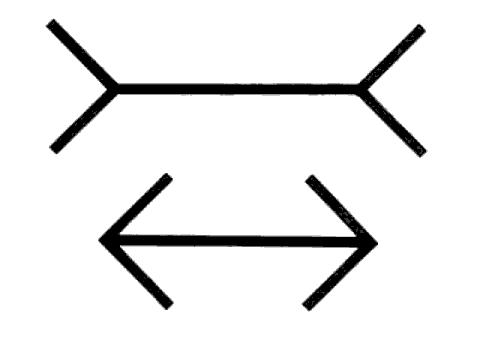
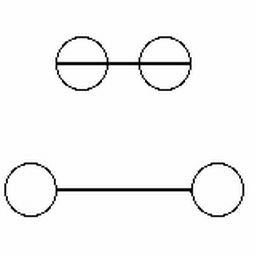
- Gestalt theory can explain the Muller-Lyer and still works when the fins are replaced with circles, this suggests that in perceiving the figure as a whole, we tend to add the fins or circles to the central lines, in the 'shorter' lines, it pulls the whole image together making it look smaller, in the 'longer' lines, the ends extend beyond the central lines, stretching the figure out and making it look longer
Explaining Ambiguous Figures
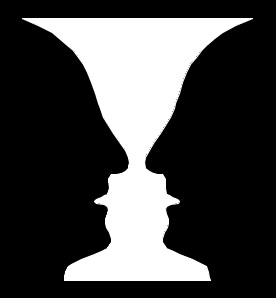
- we separate the figure from the ground and normally an image cannot be both, when something can be figure or ground, it is an ambiguous figure
- it is an illusion because we cannot tell whether the black or the white area is the figure, both are meaningful objects
Evaluating
- Strengths: it provides a good explanation for ambiguous figures when they are black and white, explains fictions well (see weaknesses)
- Weaknesses: cannot explain any distortions other then the Muller-Lyer, it suggests we should see a 6 pointed star in the Kanisza triangle, but we don't - we see 2 triangles, it seems to use different explanations at different times
Images and files in the map
Information
- Description
- GCSE Edexcel Psychology Unit 1
- Created by
- sophieisnotakise
- Views
- 2,688
- Tags
- Rating