
1. Learning objectives
Slides in this set (8)
-
-
Explain the terms scale and complexity
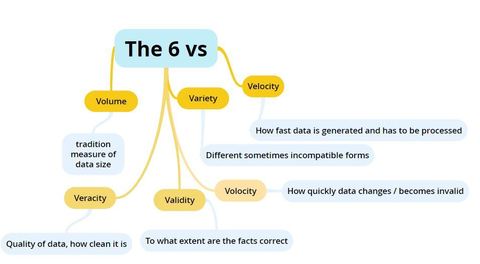
- Scale is more than just data volume – megabytes or petabytes: One way in which computer scientists classify the scale of data is by the three Vs:
- Volume: our traditional measure of data size – how much there is of it.
- Variety: in many different, sometimes incompatible forms and representations.
- Velocity: how fast new data is generated and has to be processed.
- Scale changes how the data is managed and analysed and step changes occur up and down the volume dimension.
- We can estimate the complexity of data along several dimensions and could be at the high end of the all 6 vs. However the volume could be small and complex if the structure is complex ie mixed date formats.
-
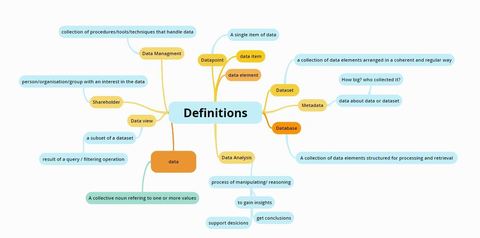
Distinguish between these terms
-
Diagrams of the data cycle / pipeline
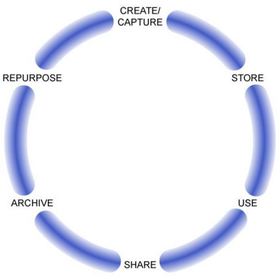

- Caption: Data Cycle
- Caption: Data pipeline
-
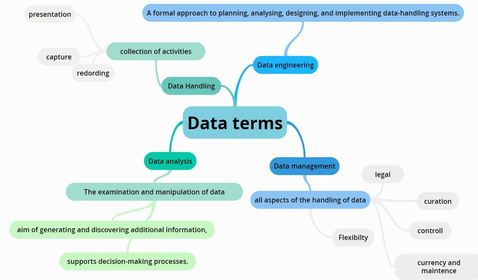
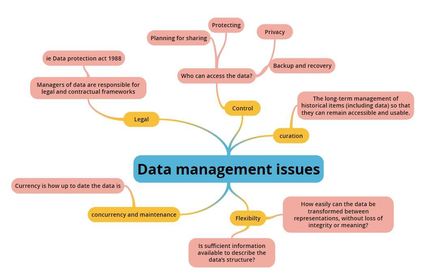
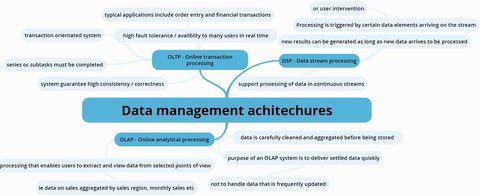
Describe the issues in data management
-
-
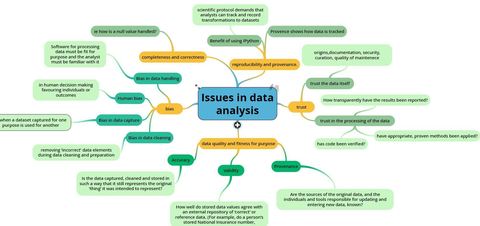
List main issues in data analysis
-
Ethics and professionalism in data handling
- Ethics Summarized as 'Doing the right thing' there are many debatable and vague terms in this area. In our daily lives we leave digital traces, this exhaust data drives analytical engines and feeds results back to individuals. Organisations have started experimenting with ways to affect our subconscious behavior. For vulnerable groups of people such as addicts, bereaved or the elderly this can be distressing.
- Digital privacy is a key topic an the moment and has many areas.
- Professionalism In a professional position decisions should also be approached ethically. Professional bodies such as The Chartered Institute for IT (BCS) and Association of Computing Machinery (ACM) publish codes of professional conduct although theses are often high level policies.
Information
- Description
- Data management (part 1) Slide Set on 1. Learning objectives, created by Claire Lemon on 18/09/2016.
- Created by
- Claire Lemon
- Views
- 0
- Rating