
Introduction to Data Science
113 resources created by 108 users
This Introduction to Data Science page on GoConqr gathers community-made mind maps, quizzes, flashcards and notes, from data-analytic thinking and big data to toolkits, business problems and notebook practice. It's built for university students and professional candidates revising the basics or preparing for DP-900, and for teachers after ready-made material. There are over 100 resources here, including more than 10 quizzes and over 80 mind maps. Pick a map to get your bearings, then try a quiz to see what sticks.
Top Introduction to Data Science resources
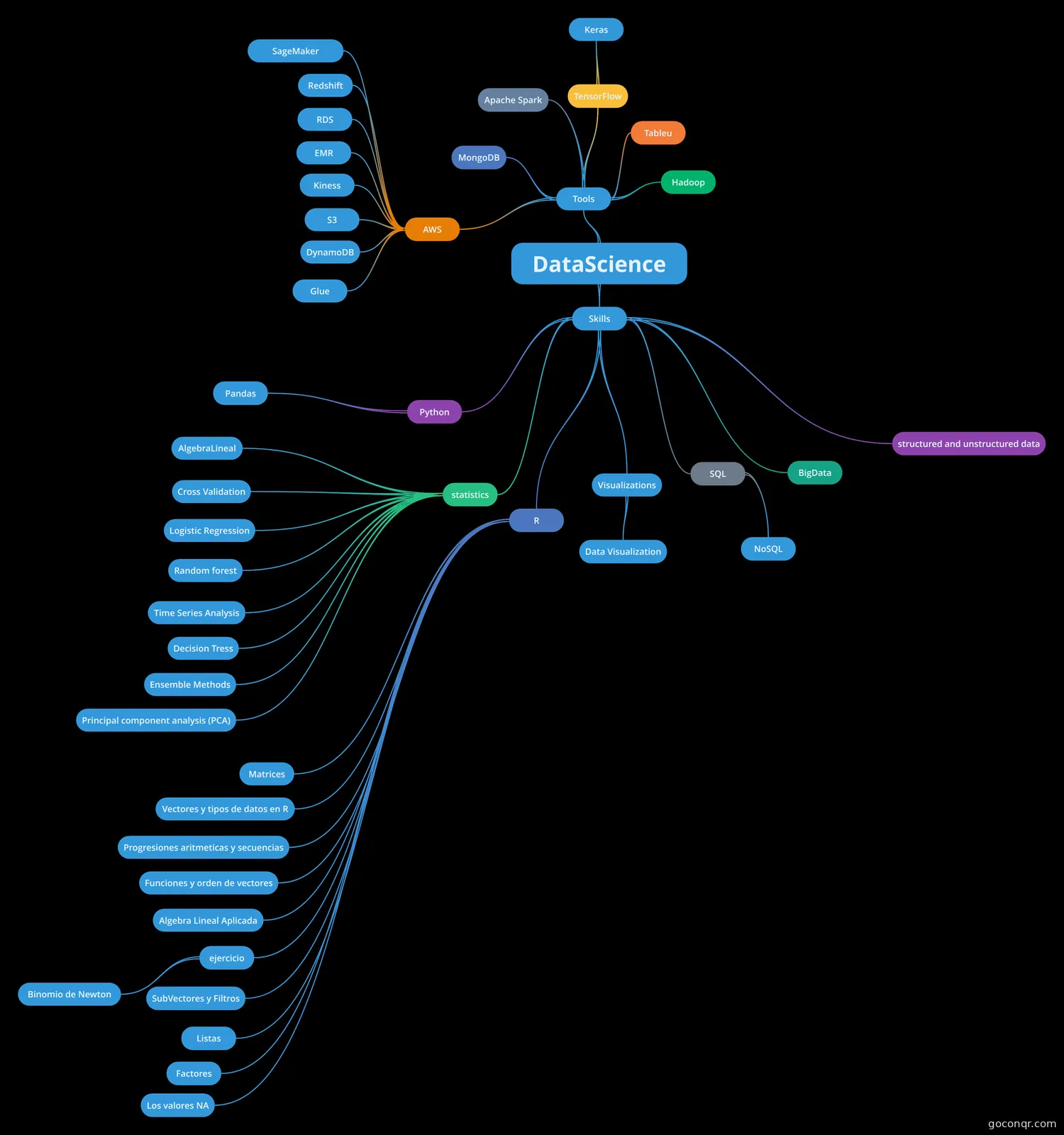
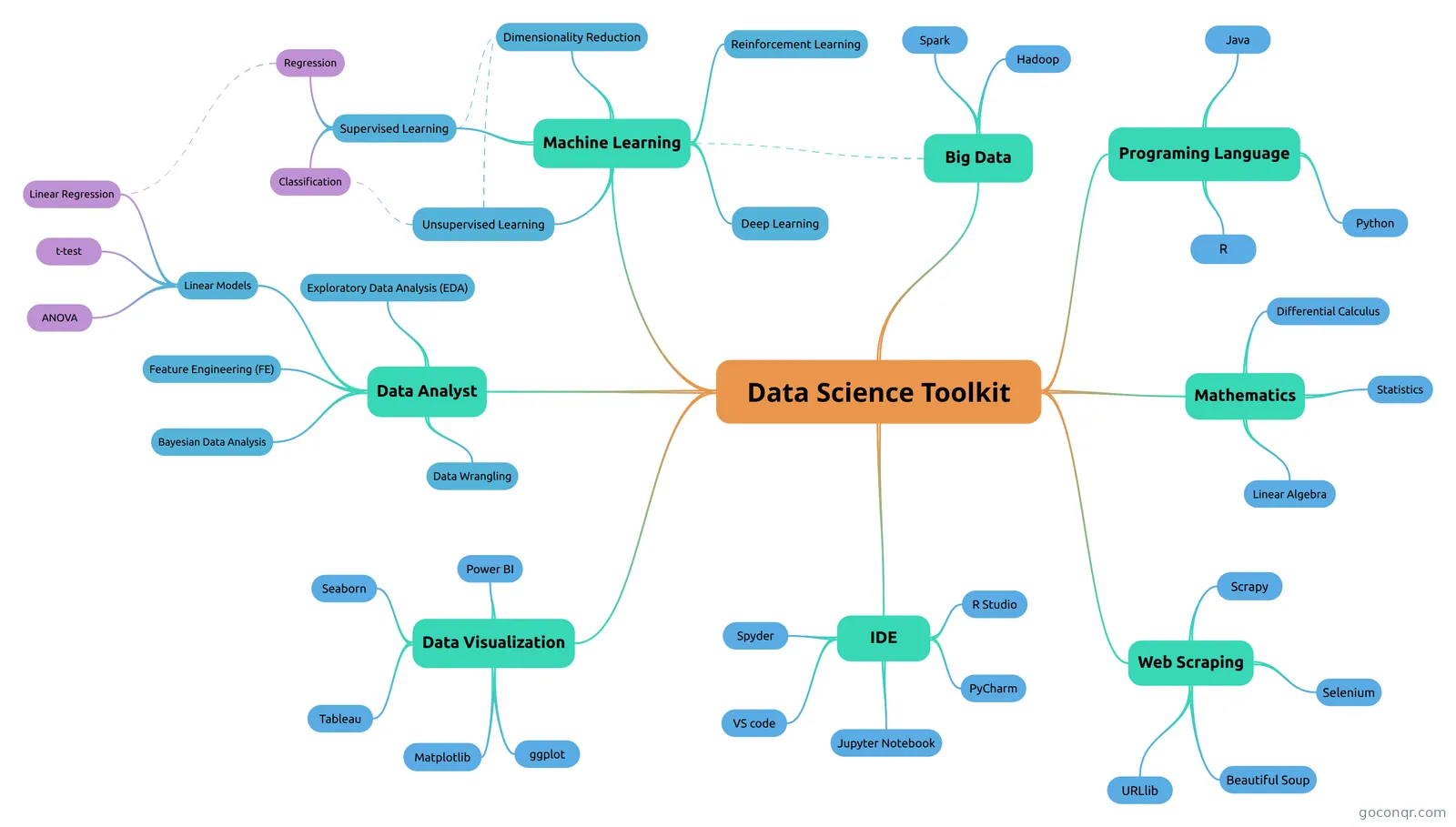
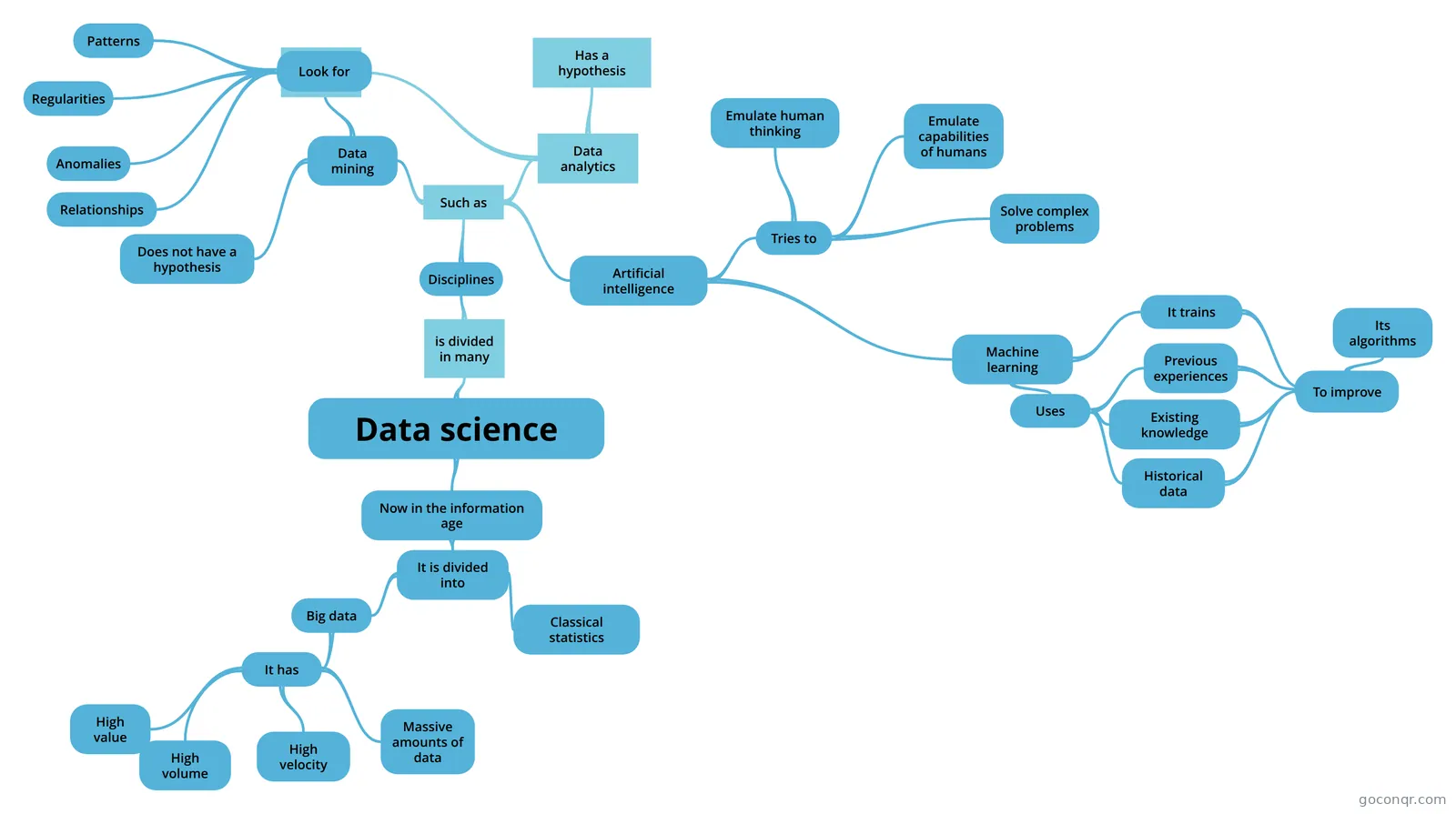
Mind maps
See all 86 mind mapsFlashcards
More Databases and data science topics
About Introduction to Data Science
GoConqr OriginalWhat this page covers
The unit is mostly mind maps, with a smaller set of quizzes, flashcards and notes. Together they move from the basic question of what data science is towards the tools and business uses around it.
- Data Science Toolkit links big data, mathematics, machine learning, web scraping, data visualisation and programming languages.
- Data Scientist looks at data manipulation in R, including the apply family of functions.
- Advanced Analytics relates business analytics, business intelligence, data mining and predictive analytics.
- Beyond Interactive: Notebook Innovation at Netflix looks at how notebooks are used for data-driven work.
Where to start
Begin with a broad map such as Introduction to Data Science or Data Science Toolkit. They give you the vocabulary. Next, read the slide set on learning objectives, which explains scale and complexity and the three Vs of data.
Then move to the maps on data-analytic thinking and business problems. The business problems map uses a customer-offer example to show classification and the data mining process.
Using quizzes and maps together
Read a map first, then close it and take a quiz. Try Module 1 - Intro to Data Science and Module 2 - Intro to Data Science in order, or the quiz called Introduction to Data Science for a general check. Any question you miss tells you which branch to reread.
If you are preparing for DP-900, the quizzes DP-900, DP-900 part1 and DP-900 - 3 are listed here.
Flashcards for the terms
The Data Science/Engineering Review deck covers feature engineering, imputation, outliers, dimensionality reduction and the training, validation and test sets. It suits short, repeated sessions once the maps feel familiar.
Where it fits
This unit sits in the Data Science and Analytics strand of Databases and data science. Choose one map and one quiz today, and see how far you get.
Frequently asked questions
Which resource should I open first?
Start with a broad mind map such as Introduction to Data Science or Data Science Toolkit. They lay out the main ideas and terms in one view. After that, the slide set on learning objectives explains scale and the three Vs, which makes the later maps easier to follow.
What do the mind maps cover?
They range widely. Some cover data-analytic thinking and business problems, others big data, advanced analytics, stream and batch processing, and R data manipulation. There is also a map on data science for decision-making under uncertainty, using a finance case about the housing crisis.
Is there anything for DP-900?
Yes. The page lists quizzes called DP-900, DP-900 part1 and DP-900 - 3. They are community-made, so treat them as practice rather than an official paper. Pair them with the maps on data fundamentals and big data to revisit any topic you find difficult.
Who are these resources for?
They are mainly for university students and professional candidates, with some useful material for teachers who want ready-made maps, quizzes or flashcards. Most of the content is at university level, so it suits learners meeting data science formally rather than younger beginners.
Are the resources free, and who made them?
Every resource listed here is free to open, study and take, with no account needed. They were made by GoConqr users, not by GoConqr itself. A free account also saves your quiz scores and lets you make your own quizzes, maps, flashcards and notes.
What if I can't find the topic I need?
Try the related maps with broader names, such as Data Science, Big Data or Data Fundamentals, since topics are often covered inside them. You can also use the notes, like Ask the Right Question, or write your own map to fill the gap.