
Flashcards
TV4001 Upper Respiratory Tract Surgery
Cards in this deck (35)
- 1Components of a (respiratory specific) clinical examinationSignalment, history and CS, physical exam of respiratory pattern, chest shape/movement, and other respiratory signs (coughing, discharge, dyspnoea, etc.)
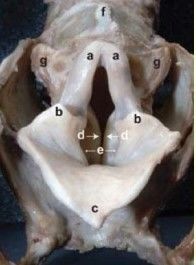
- 2—a - corniculate processes of arytenoid
b - cuneiform processes of arytenoid
c - epiglottis
d - vocal folds
e - laryngeal ventricles
f - cricoid cartilage
g - muscular processes of arytenoid - 3Laryngeal nervous supplyVagus nerve (extrinsic ms)
Recurrent laryngeal nerve (intrinsic ms)
Cranial laryngeal nerve - cricothyroid m - 4Sinus technique + indicationsSinostomy (tube)
Flushing frontal sinus
Fungal infections - 5Nose surgery technique + indicationsRhinotomy (dorsal or transpalatal)
FBs, neoplasia, infections, tooth displacement, idiopathic rhinitis - 6Brachycephalic airway syndrome (BAS) signalment + CSBrachycephalic breeds
Young adults
Heat, stress, obesity, exercise
Acute dyspnoea + distress
Chronic stridor - 7BAS pathologyHypoplastic trachea
Elongated soft palate
Stenotic nares
Redundant pharyngeal mucosal folds
Eversion of laryngeal ventricles
Eventual laryngeal collapse - 8Elongated soft palate pathophysiologyTraps epiglottis + obstructs glottis
- 9Stages of laryngeal collapse1. Everted ventricles
2. Medial displacement of cuneiform cartilage
3. Dorso-ventral collapse of arytenoids - 10Emergency treatmentOxygen
Cage rest
Cool animal down
Axiolytics/sedation
Corticosteroids
Intubation - 11BAS surgical optionsNaroplasty (wedge, punch, alarpexy)
Soft palate resection (uvulectomy)
Ventriculectomy of everted ventricles
Partial laryngectomy/tie-back
Tracheostomy - 12BAS surgical considerations pre/post-opInflammation - corticosteroids
Temporary tracheostomy
Oxygen
GIT protectants + prokinetics
If collapsed larynx - extubate as late as possible - 13Suture material for uvulectomyFine monofilament absorbable
- 14Aetiology of laryngeal paralysisRecurrent laryngeal nerve neuropathy --> vocal cord abductor atrophy (cricoarytenoid dorsalis) --> failure for rima glottis to abduct
- older male Labs, poodles, etc.
Congenital in Huskies + Bouviers; <1 year CS - 15Laryngeal paralysis CSChanged/absent voice
Retching while eating
Dyspnoea (inspiratory)
Cyanosis + collapse
Signs slowly progressive until collapse. - 16Laryngeal paralysis DiagnosisEndoscope under light GA (w/o premed)
- thiopentone best
Doxapram stimulant - 17Surgical options for laryngeal paralysisUnilateral tie-back (crico-arytenoid lateralisation)
Partial laryngectomy - 18Surgical complications of laryngeal diseaseAspiration pneumonia
Scar formation - webbing - 19Temporary tracheostomy characteristicsEmergency procedure to bypass upper airways
Tube must be 50-60% of lumen
Cuffed, uncuffed, +/- inner cannula - 20Temporary tracheostomy post-op careClean every 2 hours
Humidification every 2 hours
Suction/brushing 4 x daily at least
2nd intention healing post-removal - 21Permanent tracheostomy indicationsIrreparable URT damage
Laryngeal collapse
Neoplasia - 22Permanent tracheostomy post-op careKeep peri-operative site clipped
Regular cleaning of opening
Avoid inhalation irritants + swimming
Specialised scarf - 23Tracheal collapse signalment + pathogenesisToy breeds, older aged
Weakening of cartilagenous rings
Flaccid dorsal membrane
Graded 1-4 based on severity - 24Tracheal collapse CSHonking cough
Dyspnoea
Abdominal breathing
Progressive respiratory distress
Exercise intolerance
Cyanosis - 25Tracheal collapse diagnosisEndoscopy (tracheoscope)
Fluoroscopy (dynamic lesion)
Radiographs - 26Tracheal collapse medical treatmentWeight loss
Bronchodilators to decrease intra-thoracic neg pressure
Antitussives (butorphanol)
Corticosteroids (caution)
Harnesses > collars
Avoid resp irritants - 27Tracheal collapse surgical treatmentStents
External ring support (plastic rings, sutures) - 28Complications of surgical tracheal collapse correctionStents - fracture, migration, granuloma formation
External support - tracheal necrosis, laryngeal paralysis, collapse before/after sutures/rings - 29Forms of tracheal neoplasiaBenign - Chondroma, Leiomyoma, Osteoma
Malignant - above sarcomas - 30Surgical options for neoplasiaBiopsy for type
Wide, marginal, or full-thickness excision - 31Tracheal FB aetiology, CS, diagnosis, treatmentAspiration of objects
Acute coughing + dyspnoea or chronic pneumonia
Endoscopy + radiology
Endoscopic removal or lobectomy - 32Pathogenesis, CS, and diagnosis of oesophageal-tracheal fistulaMostly erosion of oesophageal FB into trachea
Chronic coughing during eating/drinking
Radiography + contrast - 33Tracheal resection indicationsTracheal severance (bite wounds)
Strictures
Tumours
Primary repair of tracheal disruption - 34Tracheal resection surgical techniquesSplit cartilage tecnique
- monofilament absorbable or non-absorbable material
- engage 2-3 rings with tension-relieving sutures
- Simple interrupted for suture line - 35Tracheal resection complicationsStenosis
Information
- Description
- Surgical techniques and indications for nasal, pharyngeal, laryngeal, and tracheal surgery in small animals
- Created by
- Alinta Kalns
- Views
- 9
- Rating