
Business Valuation, Intangible Assets and Mergers & Acquisitions
334 resources created by 264 users
This Business Valuation, Intangible Assets and Mergers & Acquisitions page on GoConqr gathers community-made quizzes, mind maps, flashcards, flowcharts and notes, from discounted dividends and DCF to LBO models and the valuation of intangibles. It's built for university students working through corporate finance and teachers after ready-made material. There are over 300 resources here, including more than 200 mind maps and over 20 flashcard decks and 7 quizzes. Pick a topic, test yourself with a quiz, then make your own maps and flashcards.
Select topic
- Valuation Fundamentals19
- Enterprise Value and Equity Value15
- Valuation Methods and Approaches71
- Income Approach and Discounted Cash Flow19
- Asset-Based and Cost Approaches9
- Market Approach and Comparable Valuation19
- Real Options Valuation8
- Valuation of Intangible Assets94
- Intellectual Property and Technology Valuation32
- Private Company and Private Equity Valuation9
- Stock and Bond Valuation6
- Merger and Acquisition Strategy12
- Acquisition Valuation and Deal Structuring10
Top Business Valuation, Intangible Assets and Mergers & Acquisitions resources
-
30 questionsAsset Valuation, Stock and Market Efficiency When valuing common stock, capital gains determine a majority of the stock's current value.
-
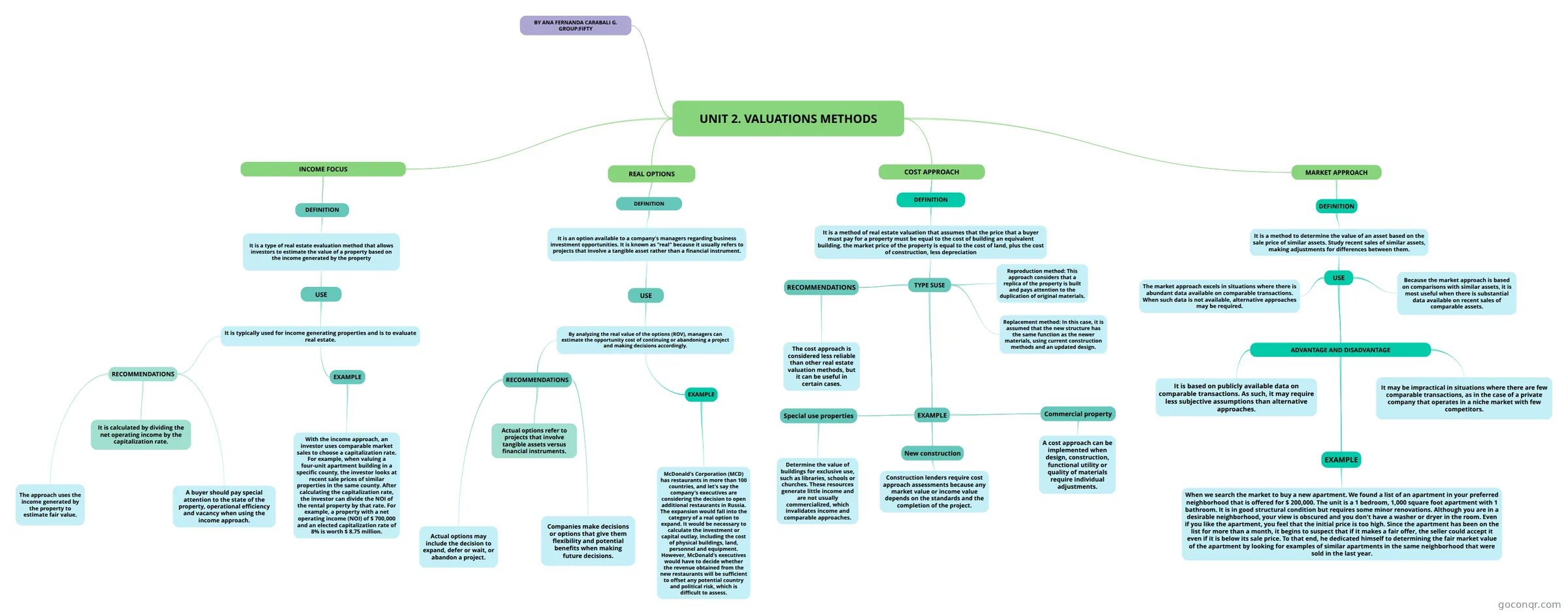 Mind map UNIT 2. VALUATIONS METHODS Ana-Carabali
-
 Mind map Methods of "Income" valuation
-
Mind map The Principles and Context of the Valuation of Intangibles
-
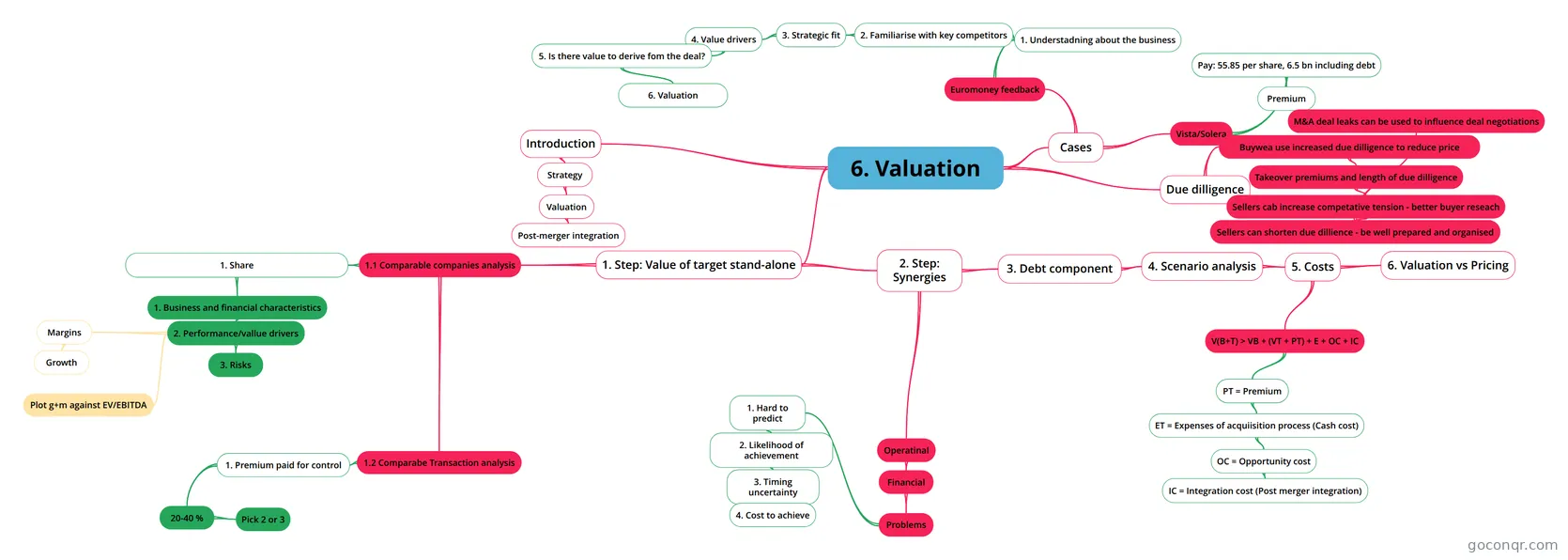 Mind map 6. Valuation
-
 Mind map The Principles and Context of the Valuation of Intangibles The Principles and Context of the Valuation of Intangibles
-
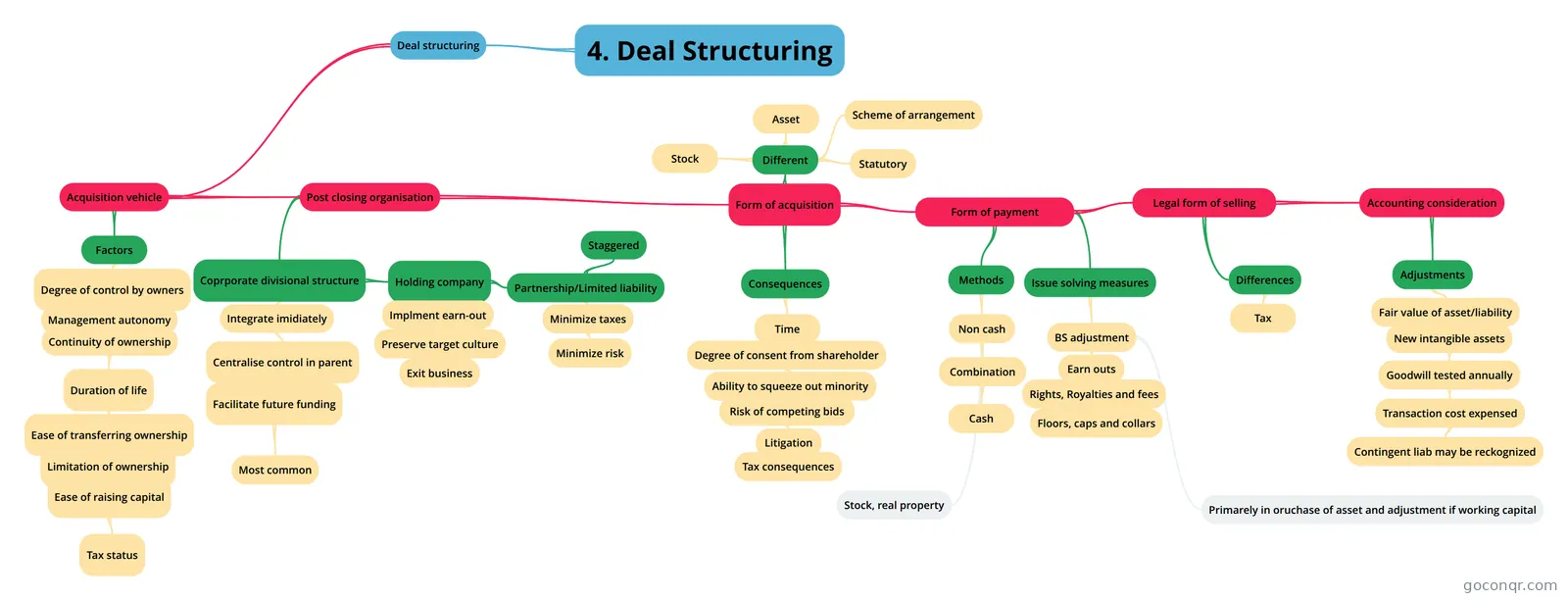 Mind map 4. Deal Structuring
-
Mind map 1. The M&A market
Quizzes
Mind maps
See all 281 mind maps-
UNIT 2. VALUATIONS METHODS Ana-Carabali
-
Methods of "Income" valuation
-
The Principles and Context of the Valuation of Intangibles
-
6. Valuation
-
The Principles and Context of the Valuation of Intangibles The Principles and Context of the Valuation of Intangibles
-
4. Deal Structuring
-
1. The M&A market
-
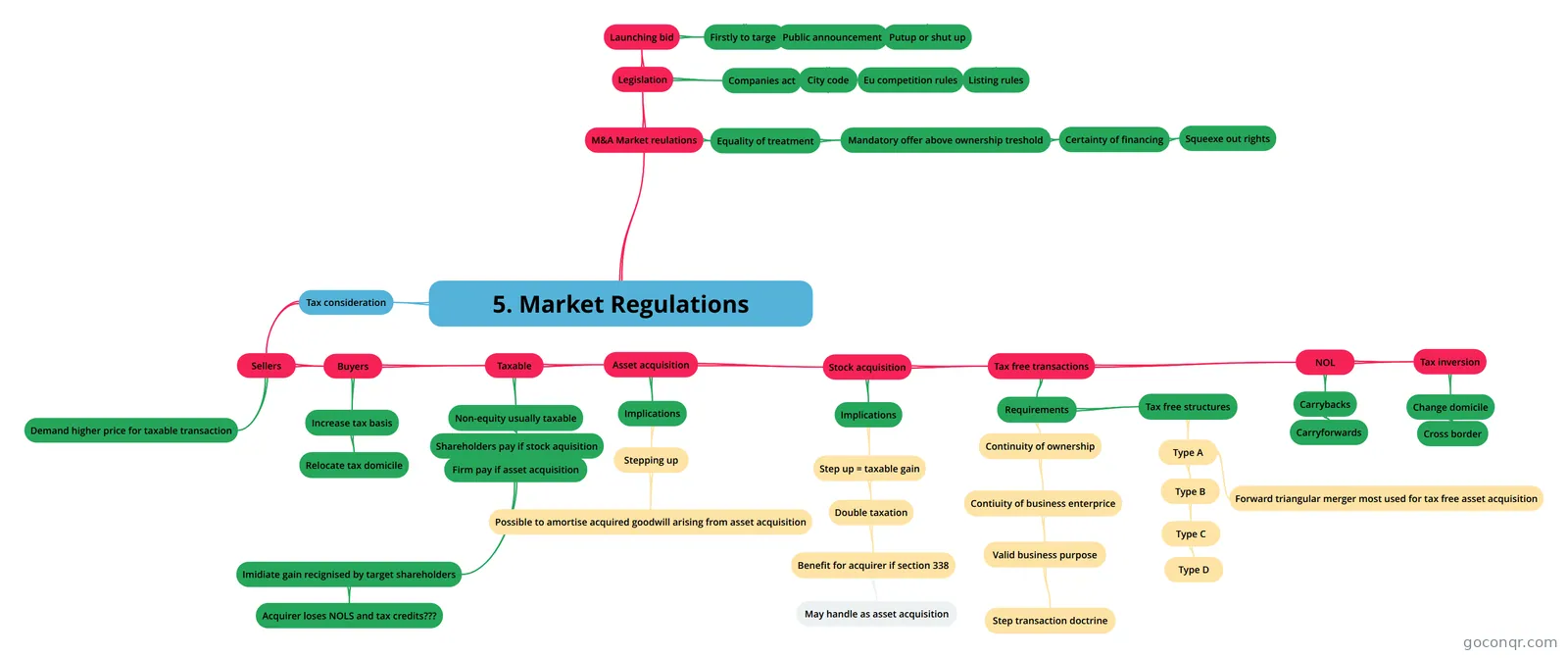 5. Market Regulations
Flashcards
See all 29 flashcardsFlowcharts
See all 13 flowchartsTopics in Business Valuation, Intangible Assets and Mergers & Acquisitions
More Finance and banking topics
About Business Valuation, Intangible Assets and Mergers & Acquisitions
GoConqr OriginalWhat this unit covers
The page brings together three strands of corporate finance: valuing businesses, valuing intangible assets, and the mechanics of mergers and acquisitions. Most items are mind maps, with flashcard decks, a handful of quizzes, flowcharts and notes alongside them.
Where to start
Begin with the core valuation theory. The flashcard deck Chapter 7 Valuation theory and concepts asks what valuation methods exist, how the discounted dividend model works and how cost of equity fits into it. Then move to Ch 2 - Calculating Net Present Values, which covers discount factors, present value and future value. FIN-I: Bond & Stock Valuation defines face value, coupon rate, maturity date and yield to maturity.
- Learn the basics of discounting and net present value.
- Move on to dividend, earnings and free cash flow methods.
- Add cost of capital with Return Concepts, which includes WACC, beta adjustment and IRR.
Maps for methods and intangibles
The Business valulation mind map links discounting delayed perpetuities, the dividend valuation model, the price earnings method, discounted earnings and free cash flow to equity. Comparables Analysis and Valuation Theory help you compare approaches. For intangibles, many maps cover the principles and context of valuing intangibles and valuation of intangible assets in global operations. There are also maps on intellectual property, a high-growth venture-backed company and Netflix's business model.
Deals and M&A
The LBO Model deck covers what a leveraged buyout is, why private equity firms use leverage and how a basic model runs. Investment Banking Mixed looks at transaction cost theory and the main drivers of M&A activity. The quiz Synergy gain and Swap Ratio lets you check your calculations.
Using quizzes and maps together
Read a map first to see how the methods connect. Then take a quiz such as Lecture 7- Valuation methods and note what you missed. Return to the matching flashcards for those gaps. Teachers can set a map or a deck as pre-reading. This unit sits in the Corporate Finance strand of Finance and banking, so choose a topic and try one quiz today.
Frequently asked questions
Which resource should I open first?
Start with the flashcard deck Chapter 7 Valuation theory and concepts. It asks which valuation methods exist and how the discounted dividend model is written. If discounting feels shaky, Ch 2 - Calculating Net Present Values covers discount factors, present value and future value before you go further.
What do the mind maps cover?
Most of the page is mind maps. Some break down valuation methods such as dividend models, price earnings and free cash flow. Many others cover the principles of valuing intangibles and intangible assets in global operations. There are also maps on M&A topics like deal structuring and market regulations.
Are there quizzes on this page?
Yes, there are over 5 quizzes. Titles include Asset Valuation, Stock and Market Efficiency, Synergy gain and Swap Ratio, and Lecture 7- Valuation methods. They suit a quick check after reading a map or working through a flashcard deck.
Are the resources free, and who made them?
Every resource listed here is free to open, study and take, with no account needed. They were made by GoConqr users, not by GoConqr itself. A free account also saves your quiz scores and lets you make your own quizzes, mind maps, flashcards and notes.
Who is this page for?
It is for university students studying corporate finance, from discounting and bond valuation to LBO models and intangible assets, and for teachers who want ready-made material. Most resources are at university level, with a small share aimed at professionals.
What if I cannot find my topic?
Scan the titles for related terms, since valuation appears under names like DCF, NPV, Equity Value & Enterprise Value and Private Company Valuation. If your topic is still missing, you can build your own mind map or flashcard deck and use it alongside the resources here.