
Insurance Principles and Operations
513 resources created by 351 users
This Insurance Principles and Operations page on GoConqr gathers community-made quizzes, mind maps, flashcards, notes and slide sets, from basic insurance concepts and policy contracts to insurer ownership, claims management and taxation. It's built for university students and professional candidates, school students, and teachers after ready-made material. There are over 490 resources here, including more than 90 quizzes and over 210 mind maps, with some decks aimed at CAIB and licensing exam study. Pick a topic, try a quiz to find your gaps, then build your own revision sets.
Select topic
- Risk and Risk Management17
- Insurance Terminology40
- Principles of Insurance40
- Types of Insurance62
- Types of Insurers and Regulation13
- Insurance Distribution and Intermediaries7
- Insurance Contracts and Policy Provisions35
- Insurance Underwriting and Pricing13
- Life Insurance9
- Health and Disability Insurance11
- Home and Auto Insurance16
- Commercial Insurance13
- Insurance Claims Management18
Top Insurance Principles and Operations resources
-
40 questionsBasic Insurance Concepts & Principles (Fourth Edition - 2013) from SCI website Which one of the following insurance policies does NOT require proof of insurable interest in the event of ...
-
50 questionsBasic Insurance Concepts & Principles - exampdfs 01 The Insurance market comprises: 1) buyers 2) sellers 3) intermediaries
-
151 cardsProperty and Casualty Flash cards Insurance All of the following statements concering Coinsurance are true EXCEPT:
-
80 questionsBasics of Insurance A monoline policy:
-
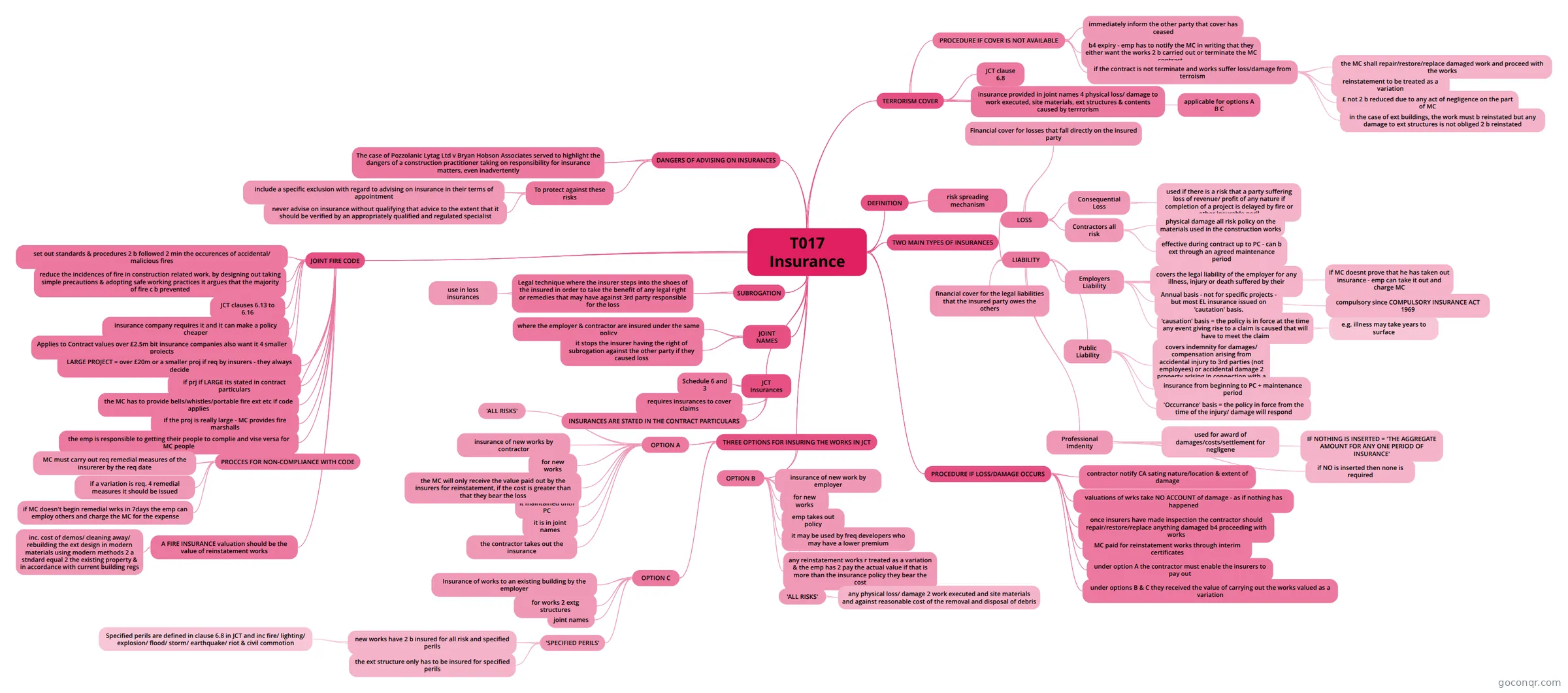 Mind map T017 Insurance
-
40 cardsPFP 3301 Exam 4 Flash cards for TTU PFP 3301 Exam 4 with Diosdardo
-
32 cardsPractical Business Math Procedures - Chapter 20 Key Terms Flash Cards Flash cards for the Key Terms section of Practical Business Math Procedures Chapter 20.
-
16 cardsCAIB 2: Chapter 6 Key Terms
Quizzes
See all 107 quizzes-
40 questionsBasic Insurance Concepts & Principles (Fourth Edition - 2013) from SCI website Which one of the following insurance policies does NOT require proof of insurable interest in the event of ...
-
50 questionsBasic Insurance Concepts & Principles - exampdfs 01 The Insurance market comprises: 1) buyers 2) sellers 3) intermediaries
-
80 questionsBasics of Insurance A monoline policy:
-
4 questionsLLMIT A primary purpose of insurance as a risk transfer mechanism is to
-
10 questionsWhole Life Insurance vs. Term Insurance Sort This insurance is a good choice for young people who can't afford the higher costs of permanent insurance, ...
-
200 questionsPCIL sample question pt 1 1. What is the correct definition of a pure risk?
-
92 questionsAIC 303 The liability of one party for the damages suffered by another is based on:
-
183 questionsINSURANCE 100/100 Traditionally, risk has been defined as
Mind maps
See all 219 mind maps-
T017 Insurance
-
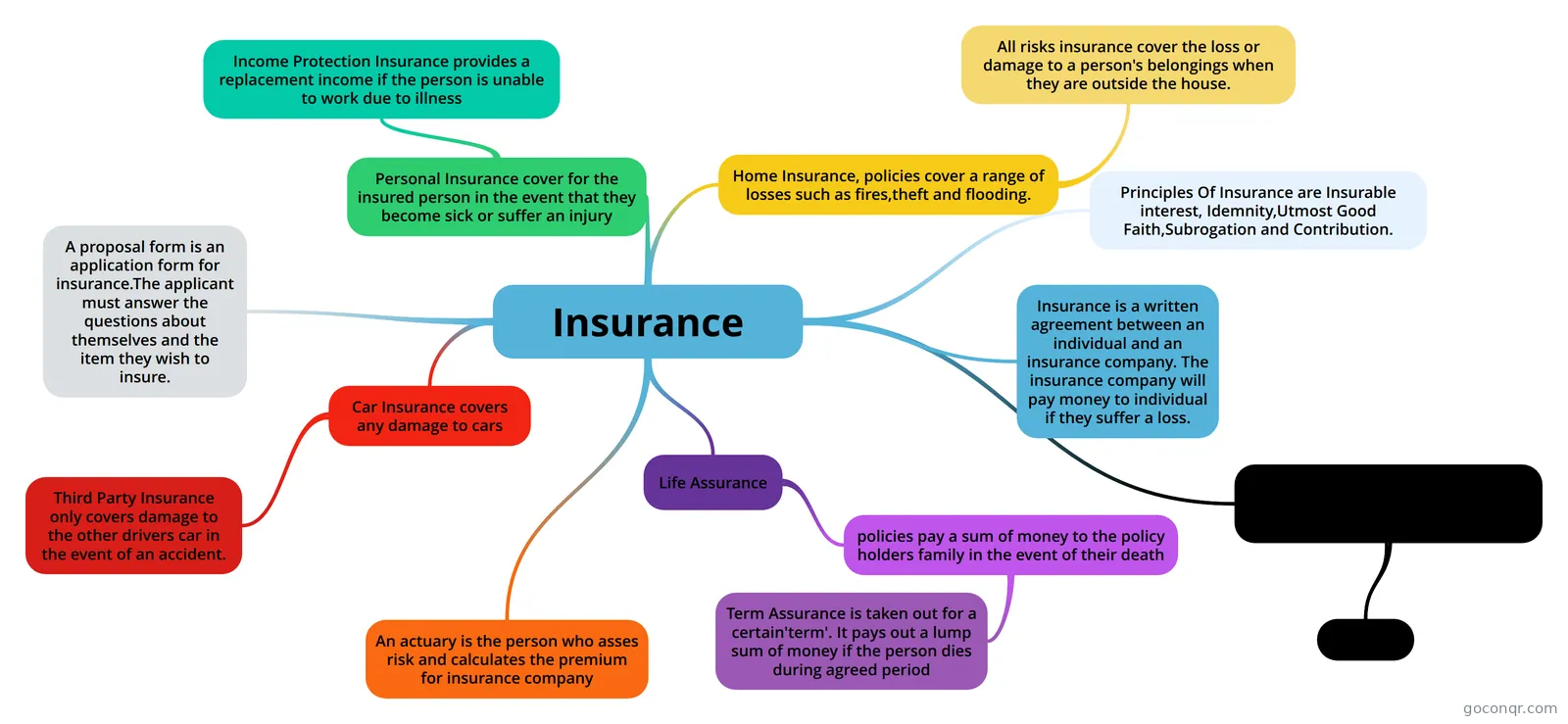 Insurance Easy, readable mind map for students in Junior Cert , Higher Level , Business studies. Just simple definiti...
-
Intro To Insurance Mind map used to ease the New trainee on board by showing the Mind Map rather than a bulk of text book with...
-
Unit 1: Insurance Fundamentals
-
Life Insurance
-
Context of Actuarial Work test
-
Process & Procedures
-
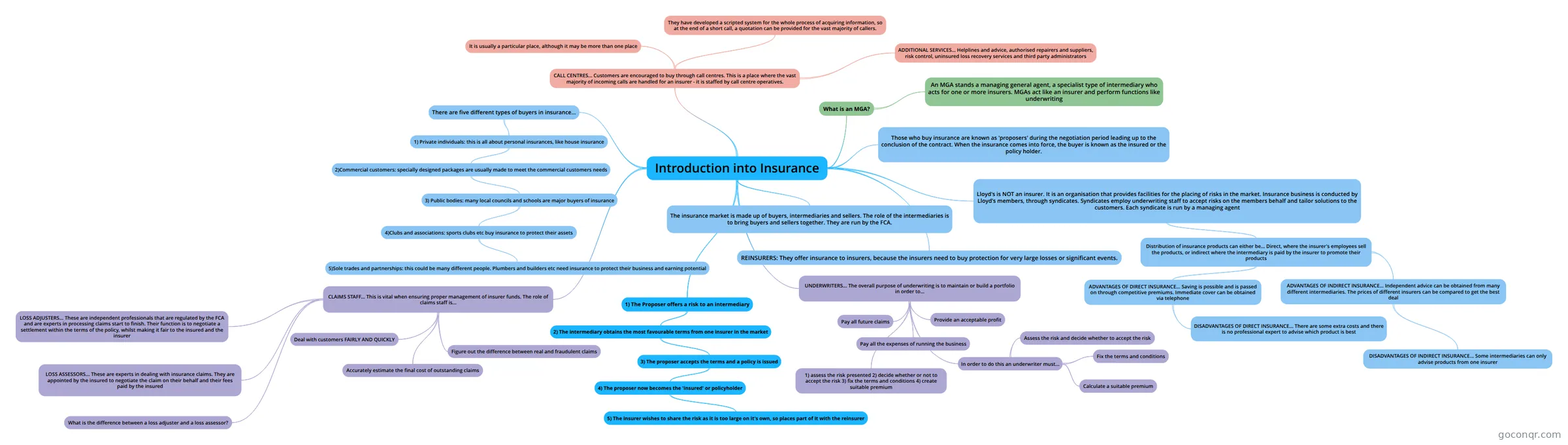 Introduction into Insurance Revision for exam
Flashcards
See all 156 flashcards-
151 cardsProperty and Casualty Flash cards Insurance All of the following statements concering Coinsurance are true EXCEPT:
-
40 cardsPFP 3301 Exam 4 Flash cards for TTU PFP 3301 Exam 4 with Diosdardo
-
32 cardsPractical Business Math Procedures - Chapter 20 Key Terms Flash Cards Flash cards for the Key Terms section of Practical Business Math Procedures Chapter 20.
-
16 cardsCAIB 2: Chapter 6 Key Terms
-
9 cardsCAIB 2: Chapter 5 Key Terms Bailee for hire
-
110 cardsDefinitions Introduction to Insurance
-
14 cardsCAIB 2: Chapter 2 Key Terms
-
13 cardsCAIB 2: Chapter 1 Key Terms
Flowcharts
Notes
See all 18 notes-
AdBanker 10, 11, 12 ,13, 14, 15 Characteristics of a Disability Income Policy Elimination Period – The elimination period (sometimes referred to as a “time deductible”) is the length of time an individual must be totally disabled and have to wait be...
-
INSURANCE 2.The meaning of non-compulsory insurance Non-compulsory insurance is voluntary/the insured has a choice whether to enter into an insurance contract. It is not required by law, but it can provide protection for busine...
-
AD Banker Ch 1 Guide + Test Questions 1.Which of the following individuals represents the insurance company when selling an insurance policy? Producer The producer or agent is licensed to represent the insurance company when transacting insurance bus...
-
Flood Insurance Flood Insurance Need to Know: Why overland insurance isn't covered Preconditions for strong flood management Options flood insurance Government role in supporting flood inrance 3 key reasons explaining why overland fl...
-
Health and Life Insurance Health insurance refers to a group of insurance benefits provided to a living individual as a result of sickness or injury, Health insurance is unique because the benefit is payable to the insured or to a health care ...
-
AD Banker Ch 3 Guide + Test Questions
-
1: Why Do We Have Insurance? What is Insurance? Insurance addresses people's and business's concerns about the possible financial effects of an unforeseen event, like a fire, or an auto accident. It is also a risk management technique that transf...
-
Untitled RISKS AND INSURANCEIntroduction : A risk transfer mechanism -a means by which an individual or commercial organisation will pass on(transfer) the risk that it faces to another party 1.1 Risk and chance: Risk may be de...
Slides
Topics in Insurance Principles and Operations
More Finance and banking topics
About Insurance Principles and Operations
GoConqr OriginalWhat this unit covers
This unit sits in the Insurance strand of Finance and banking. The resources start with core ideas: what insurance is, how risk is spread, and how a policy works. The mind map called Insurance describes insurance as a written agreement in which the insurer pays if the individual suffers a loss, and it mentions the proposal form. Other maps look at insurer ownership, claims management, insurer financial performance and the structure of the insurance market.
Where to start
Begin with the overview material. Try the mind maps Intro To Insurance and Insurance Basics, then read the note Why Do We Have Insurance? in the list. Next, take the quiz Basic Insurance Concepts & Principles (Fourth Edition - 2013) from SCI website. It asks about captive-style insurers and about alternative distribution channels, so it shows quickly which areas need work.
Building up with flashcards
The CAIB 2 key term decks work chapter by chapter. Chapter 5 covers terms such as bailee for hire, common carrier and valued bill of lading. Chapter 6 covers physical protection, perimeter protection, burglary and robbery as insurers define them. The deck PFP 3301 Exam 4 compares homeowners forms, from HO-1 to HO-3. These suit professional candidates and university students who need precise definitions.
Using quizzes and maps together
- Read a mind map on a topic, such as Insurance Contract or Claims Management.
- Take a quiz on the same topic, for example Required Provisions of the Insurance Contract.
- Note the questions you missed and go back to the map.
- Finish with the flashcards to fix the wording.
Teachers can use the slide sets, such as Types of Insurers - Insurance Companies or Carriers, and the practice exams as ready-made class material. School students on a business course will find the Business Test- Insurance quiz a gentle first check.
Make it your own
Once you know the gaps, pick one topic and write your own flashcards or a map of it. Making a set yourself is a good test of what you really remember.
Frequently asked questions
Which quiz should I try first?
Start with Basic Insurance Concepts & Principles (Fourth Edition - 2013) from SCI website. It covers broad ideas, including how insurers market products through alternative channels. If you want something shorter, Basics of Insurance asks about risk, pure risk and monoline policies. Both help you see which topics to revise next.
What do the mind maps cover?
The mind maps range from simple definitions to detailed topics. Insurance explains the agreement between an individual and an insurer. Others cover insurer ownership, claims management, workers' compensation, long term care, health insurance policy and insurance and taxation. Use them to get an outline before taking a quiz.
Are these resources free to use?
Yes. Every resource listed here is free to open, study and take, with no account needed. They were made by GoConqr users, not by GoConqr itself. With a free account you can also save your quiz scores and make your own quizzes, mind maps, flashcards and notes.
Which exams do the resources suit?
Some resources mention CAIB, such as the CAIB 2 key term decks, and others mention an insurance licensing exam, such as the Pathfinder P&C License Quiz Chapter 2. The page also lists material for university students and school students. Check each resource's title and content to see if it fits your course.
Is there anything for teachers?
Yes. Teachers can use slide sets like Home Owners Forms Compared and Types of Property Losses Examples, plus notes with test questions and practice exams. These are ready to open and share in class or set as revision tasks for students.
What if I cannot find the topic I need?
Browse the other formats first, since a topic may appear as a mind map, deck or note rather than a quiz. If it is still missing, you can make your own flashcards, maps or quizzes on it. Creating them is a useful way to revise.