
Introduction to Finance
310 resources created by 279 users
This Introduction to Finance page on GoConqr gathers community-made quizzes, mind maps, flashcards and notes, from sources of finance and cash flow to ratio analysis, break-even and bonds. It's built for school students revising a topic, university students filling gaps, and teachers after ready-made material. There are over 300 resources here, including more than 20 quizzes, over 180 mind maps and over 70 flashcard decks, with school and university material side by side. Pick a resource, try a quiz to find your gaps, then build your own.
Select topic
- Financial Management27
- Financial Systems and Markets23
- Sources of Finance37
- Personal Finance and Payments9
- Investments and Investment Funds21
- Time Value of Money and Valuation7
- Investment Appraisal17
- Cash Flow and Working Capital24
- Budgets and Variance Analysis6
- Costs, Revenue and Break-even Analysis7
- Financial Statements and Ratio Analysis11
- Careers in Finance8
Top Introduction to Finance resources
-
104 cardsHSC Business Studies - Finance Role of Financial Management
-
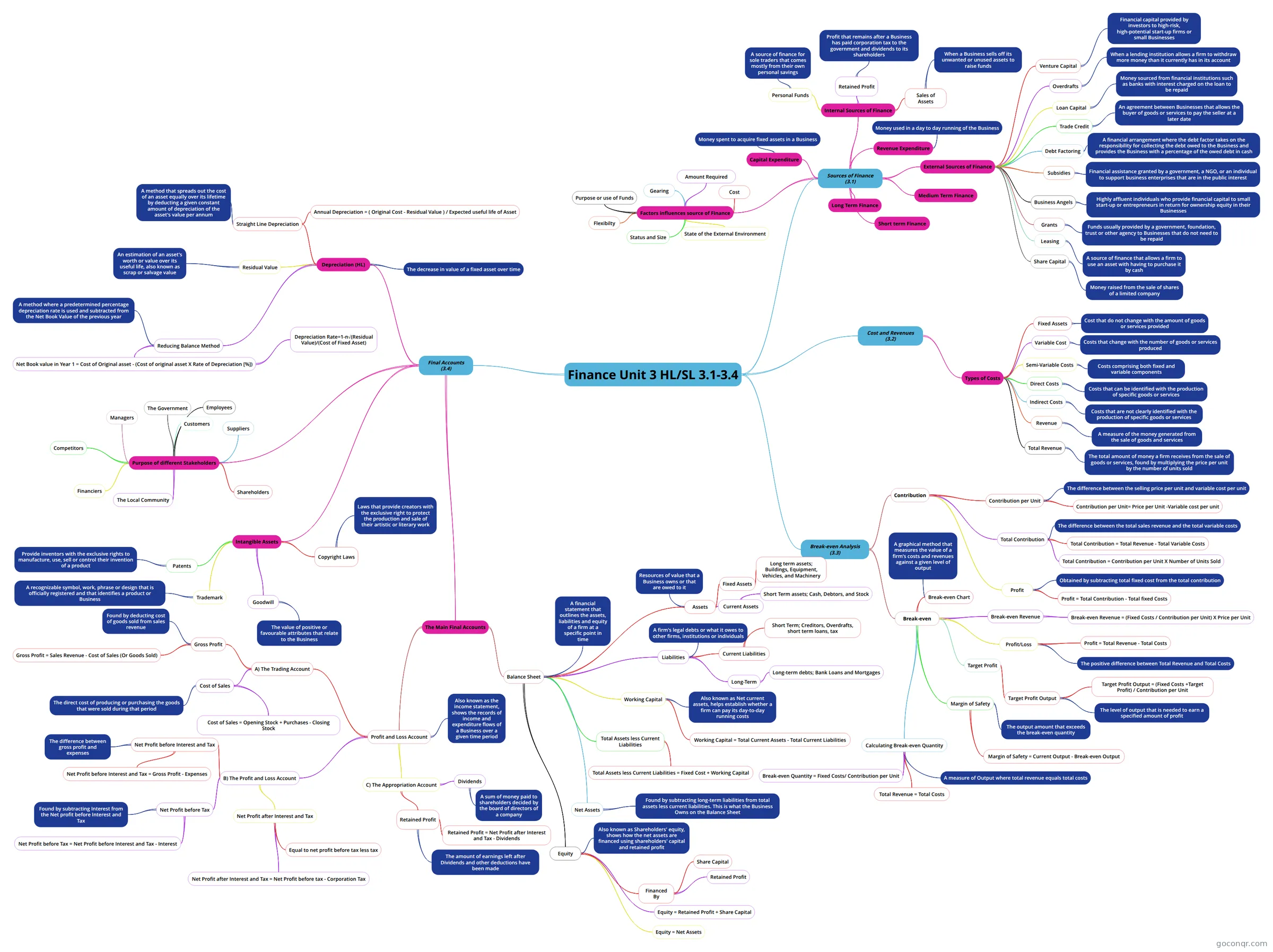 Mind map Finance Unit 3 HL/SL 3.1-3.4 Since Fiance is one of the biggest unit in Business and Management it is split into to Mind Maps; this is t...
-
23 questionsBusiness Finance - Chapter 1 What is the Accounting equation?
-
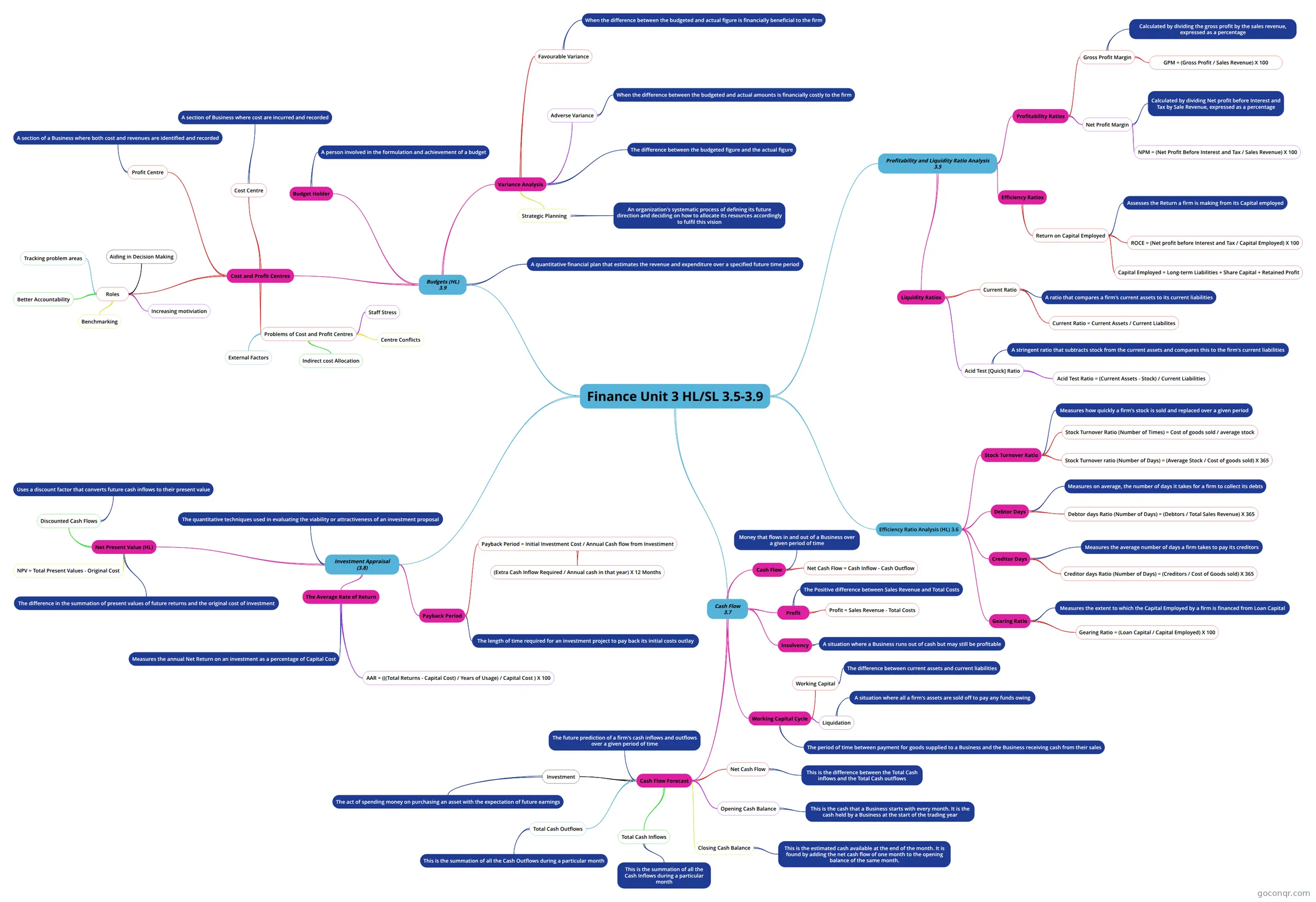 Mind map Finance Unit 3 HL/SL 3.5-3.9 This is part 2 of the Finance Unit from the IB Business Management Syllabus
-
12 questionsFIN 302 Final Exam Review 1 What are the three basic questions that are addressed by the study of finance?
-
26 cardsbusiness finance 3.2-3.3
-
78 questionsHSC Business Studies 2000-2015 - Finance Questions What is a source of new capital for a public company?
-
51 cardsfinance key definitions short term finance
Quizzes
See all 25 quizzes-
23 questionsBusiness Finance - Chapter 1 What is the Accounting equation?
-
12 questionsFIN 302 Final Exam Review 1 What are the three basic questions that are addressed by the study of finance?
-
78 questionsHSC Business Studies 2000-2015 - Finance Questions What is a source of new capital for a public company?
-
20 questionsJB....4040304305 Mog and Miller dividend irrelevancy proposition states that
-
12 questionsFinance exam ch 1 Which of the following statements is most correct?
-
10 questionsFinance 001 Which of the following statements is CORRECT?
Mind maps
See all 193 mind maps-
Finance Unit 3 HL/SL 3.1-3.4 Since Fiance is one of the biggest unit in Business and Management it is split into to Mind Maps; this is t...
-
Finance Unit 3 HL/SL 3.5-3.9 This is part 2 of the Finance Unit from the IB Business Management Syllabus
-
BUSS2 - Finance
-
BANKING AND FINANCE banking and finance
-
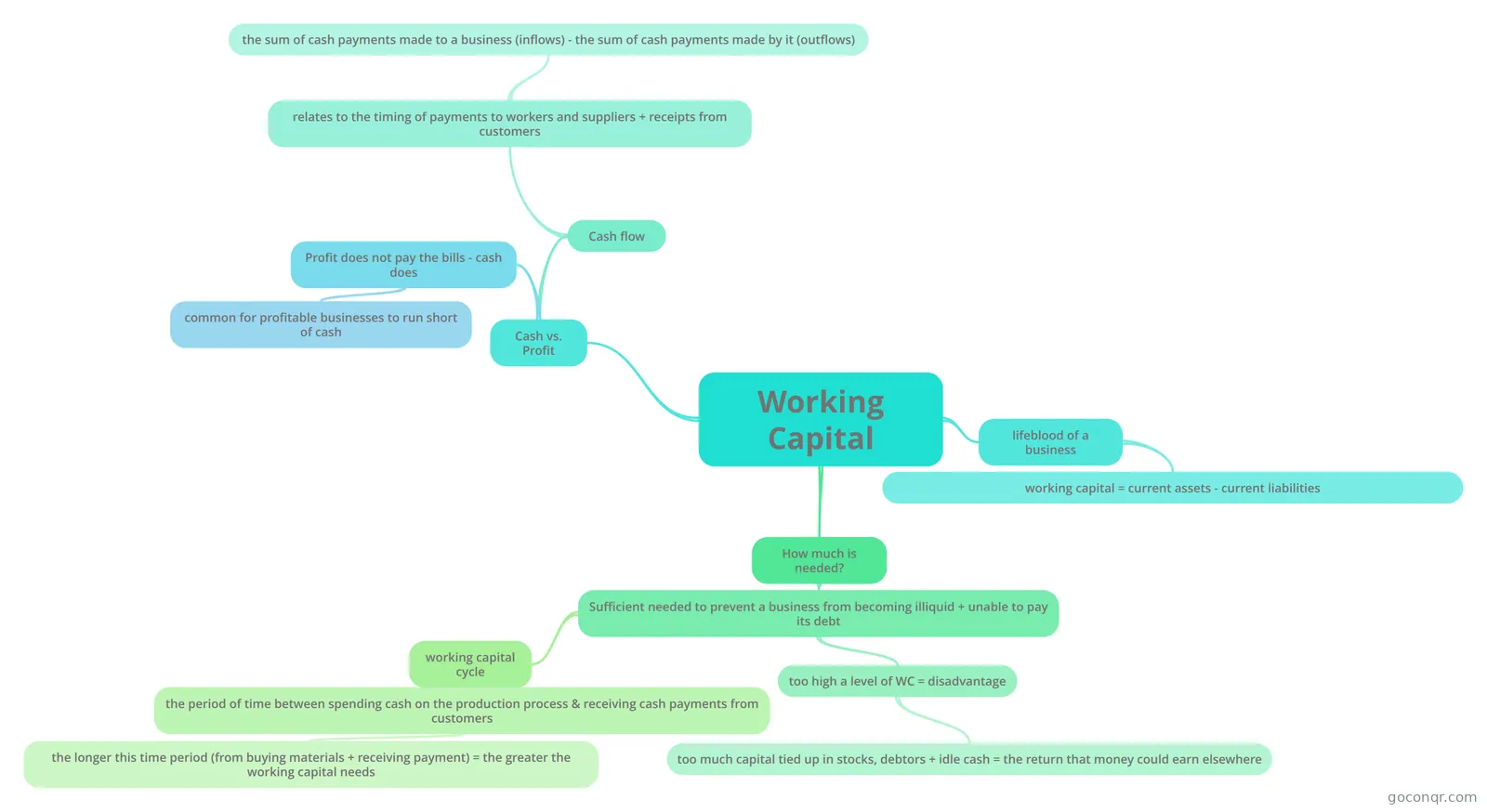 Working Capital
-
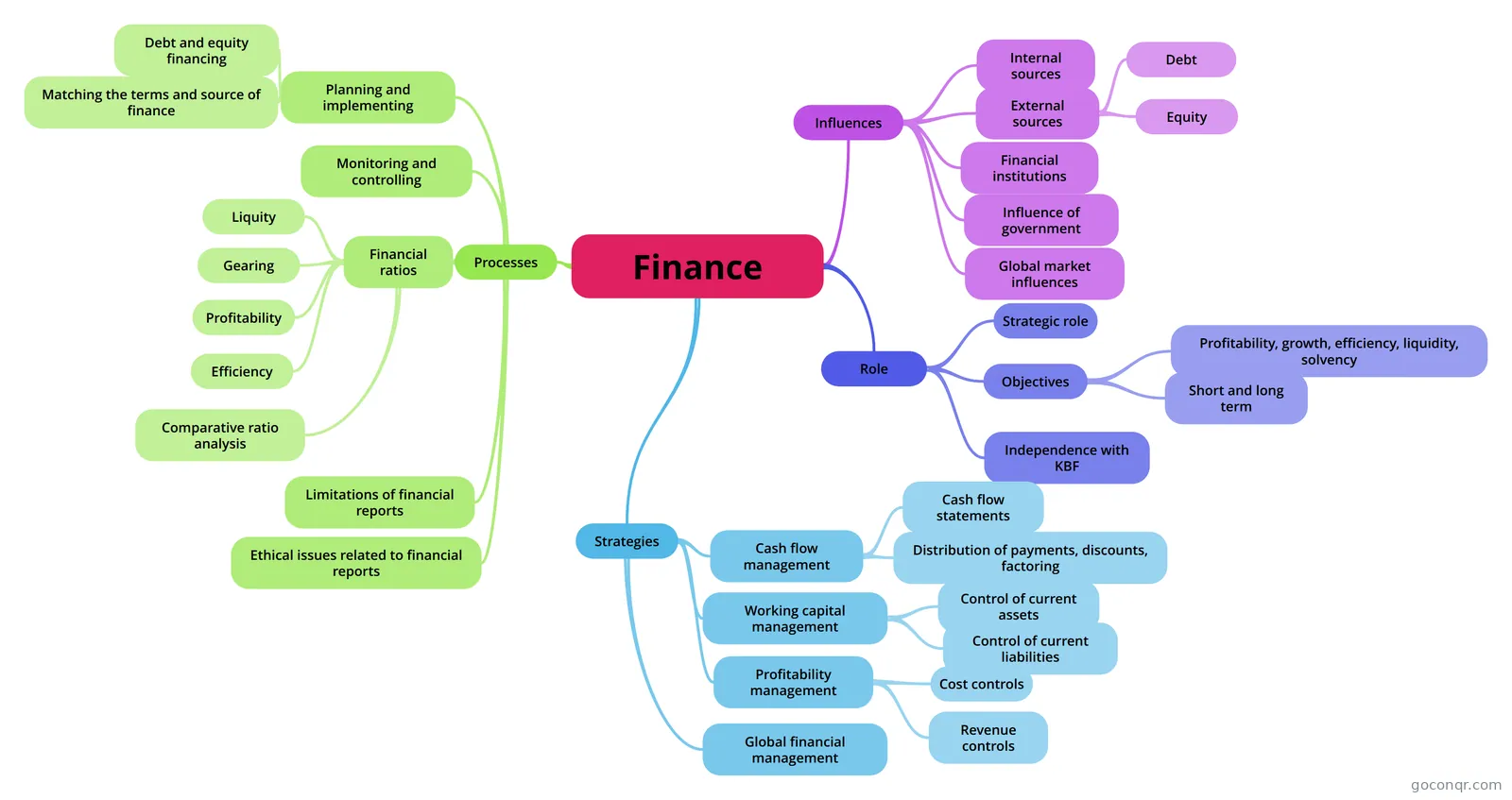 Finance
-
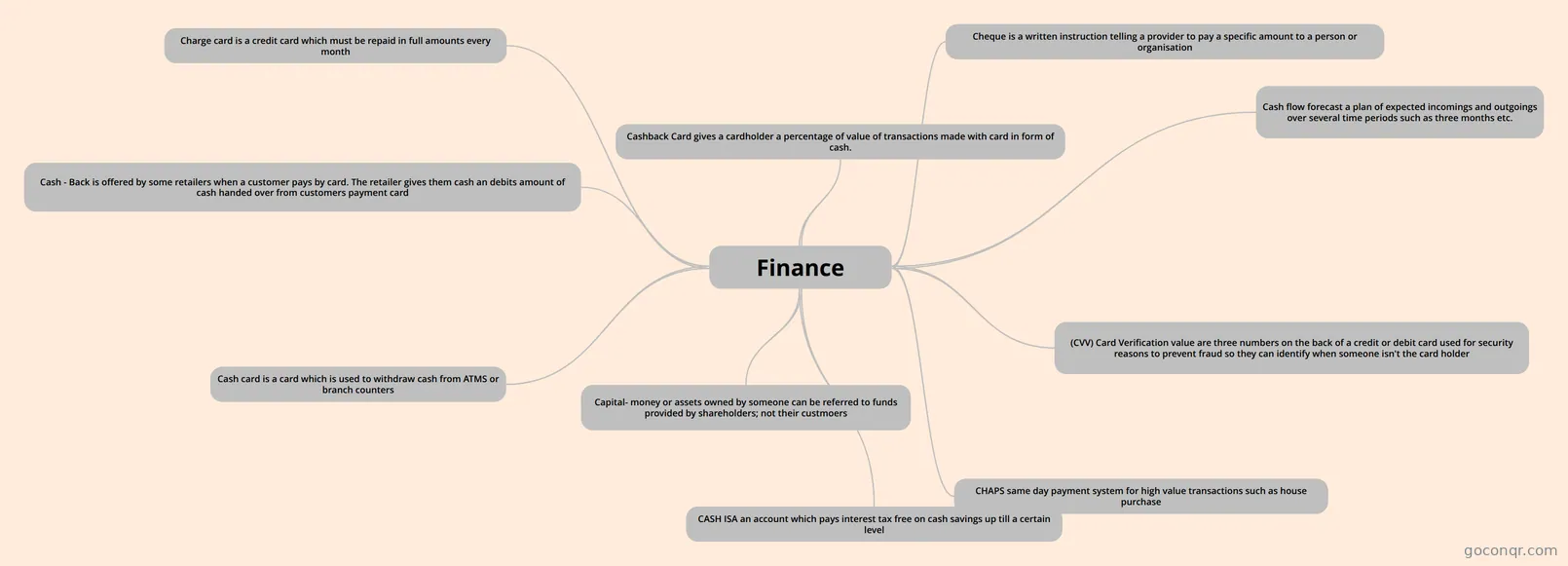 Finance
-
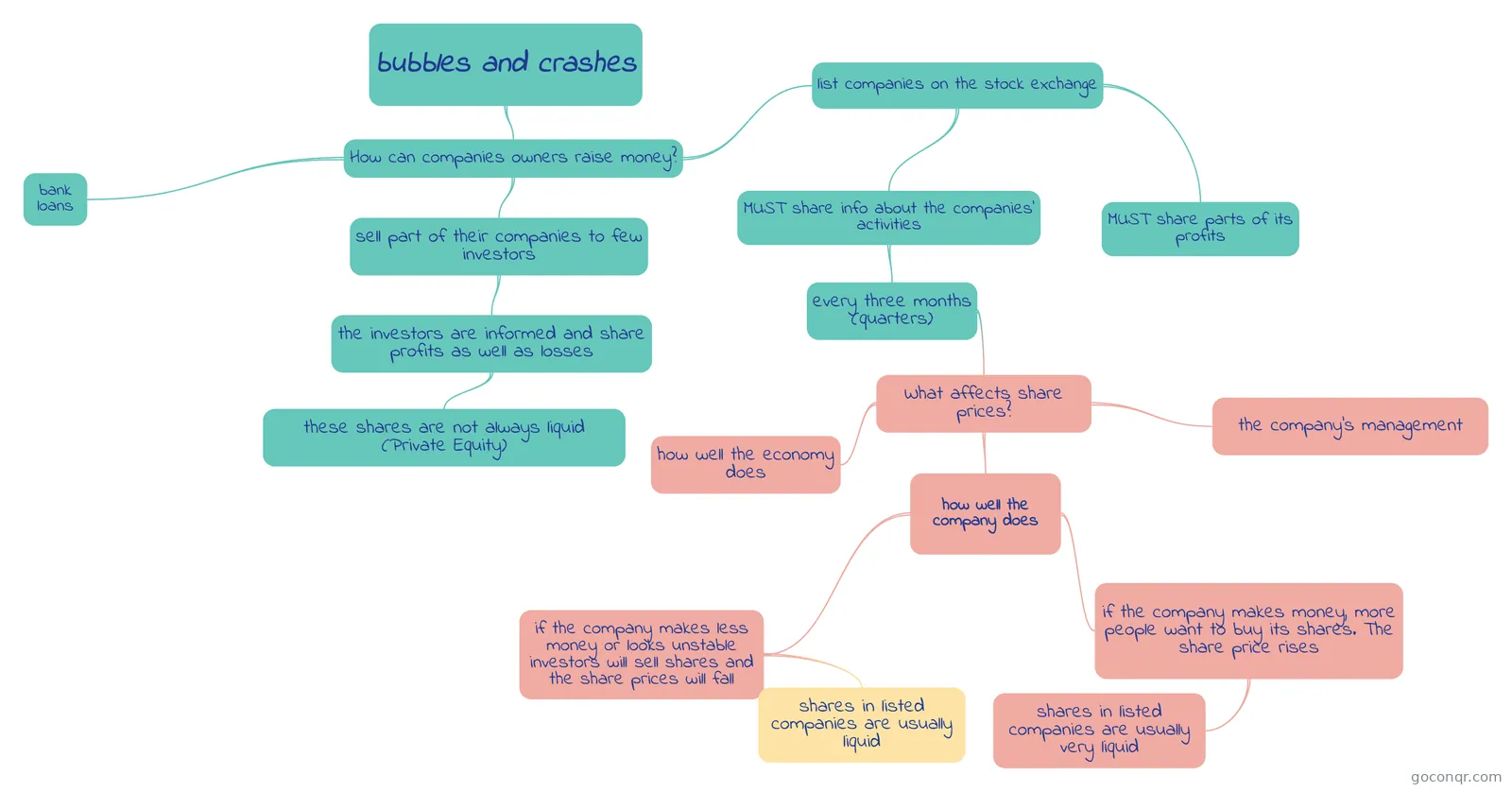 bubbles and crashes this is part of Money Factor, A Kid's Guide to money and finance available on www.ooberkidsrepublic.com
Flashcards
See all 74 flashcards-
104 cardsHSC Business Studies - Finance Role of Financial Management
-
26 cardsbusiness finance 3.2-3.3
-
51 cardsfinance key definitions short term finance
-
56 cardsFinance Test 1
-
26 cardsFIN2601 - LU1 - The Role and environment of managerial finance FIN2601 - Financial Management Flashcards on LU1 - The Role and environment of managerial finance, created ...
-
24 cardsWeek 1: Business/Corporate Finance What are the three types of managerial decisions?
-
7 cardsFinancial Terms The Budget Before clicking on this card to see an explanation, consider what you already know? Do you feel ...
-
8 cardsFinance in BUSS2 What is ROCE and how do you work it out?
Notes
See all 15 notesTopics in Introduction to Finance
More Finance and banking topics
About Introduction to Finance
GoConqr OriginalWhat the resources cover
The mind maps are the backbone of this unit. Finance Unit 3 HL/SL 3.1-3.4 sets out sources of finance, capital expenditure (money spent to acquire fixed assets) and revenue expenditure (money used in the day-to-day running of a business). Its companion, Finance Unit 3 HL/SL 3.5-3.9, moves on to profitability and liquidity ratio analysis, including gross and net profit margin formulas.
Other maps look at working capital, overtrading, cash flow forecasts, bonds, securitisation and financial intermediation. Flashcards cover break-even terms such as margin of safety and contribution per unit, and university-style topics such as present value and the NPV decision rule.
Where to start
- Open one of the broad maps called Finance to see the role, objectives and sources of finance in one view.
- Move to the flashcards HSC Business Studies - Finance to learn the liquidity, profitability, efficiency and solvency objectives.
- Look at Sources of Finance and the cash flow maps next.
- Finish with ratios, break-even and investment appraisal.
Using quizzes and maps together
Read a map first, then test yourself. Business Finance - Chapter 1 asks about the accounting equation and shareholder wealth, while Finance Chapter 1: Overview of Finance suits a first check of the basics. Note what you missed, go back to the matching map branch, then retry the quiz.
Exam-minded school students will find material linked to GCSE Business, A-level Business and IB Business Management. University students can use the corporate finance decks and quizzes to fill gaps.
Where this unit sits
This unit belongs to the Foundations of Finance strand in Finance and banking. It is the place to build the core vocabulary before moving to more specialised topics.
Choose a map or a deck that matches your course, work through it, and make your own version to fit your notes.
Frequently asked questions
Which resource should I open first?
Start with one of the mind maps called Finance, which lay out the role, objectives and sources of finance in a single view. Then try the quiz Business Finance - Chapter 1 to see which basics need another look before you move on to cash flow and ratios.
What do the mind maps cover?
They cover sources of finance, capital and revenue expenditure, profitability and liquidity ratios, working capital, cash flow forecasts, bonds, securitisation and financial intermediation. There are over 180 of them, so you can usually find one that matches the wording of your course.
Are the resources free to use?
Yes. Every resource listed here is free to open, study and take, with no account needed. They were made by GoConqr users, not by GoConqr itself, so it is worth checking a resource against your own course notes.
Which levels and exams do they suit?
The mix is mostly school and university material. Listed resources mention GCSE Business, A-level Business, IB Business Management and similar courses, while the university decks look at corporate finance topics such as present value and risk and return. Teachers can use either set.
What if I cannot find the topic I need?
Try a nearby resource first, such as a broad Finance map or the glossary-style flashcards, since many cover several topics. If something is still missing, a free account lets you make your own quiz, mind map, flashcards or notes.