
The Financial System and Institutions
24 resources created by 22 users
This The Financial System and Institutions page on GoConqr gathers community-made mind maps, flashcards, quizzes and notes, from financial intermediation and the Bank of England to regulation, bonds and insurance companies. It's built for university students and professional candidates, school students, and teachers after ready-made material. There are over 300 resources here, including more than 20 quizzes, over 190 mind maps and more than 60 flashcard decks. Pick a topic, try a quiz to find your gaps, then build your own revision set.
Top The Financial System and Institutions resources
-
33 cardsSection 5 - The financial sector Functions of the financial sector inc postlude
-
19 cardsCemap1 Unit 1&2 Why do people use financial intermediaries?
-
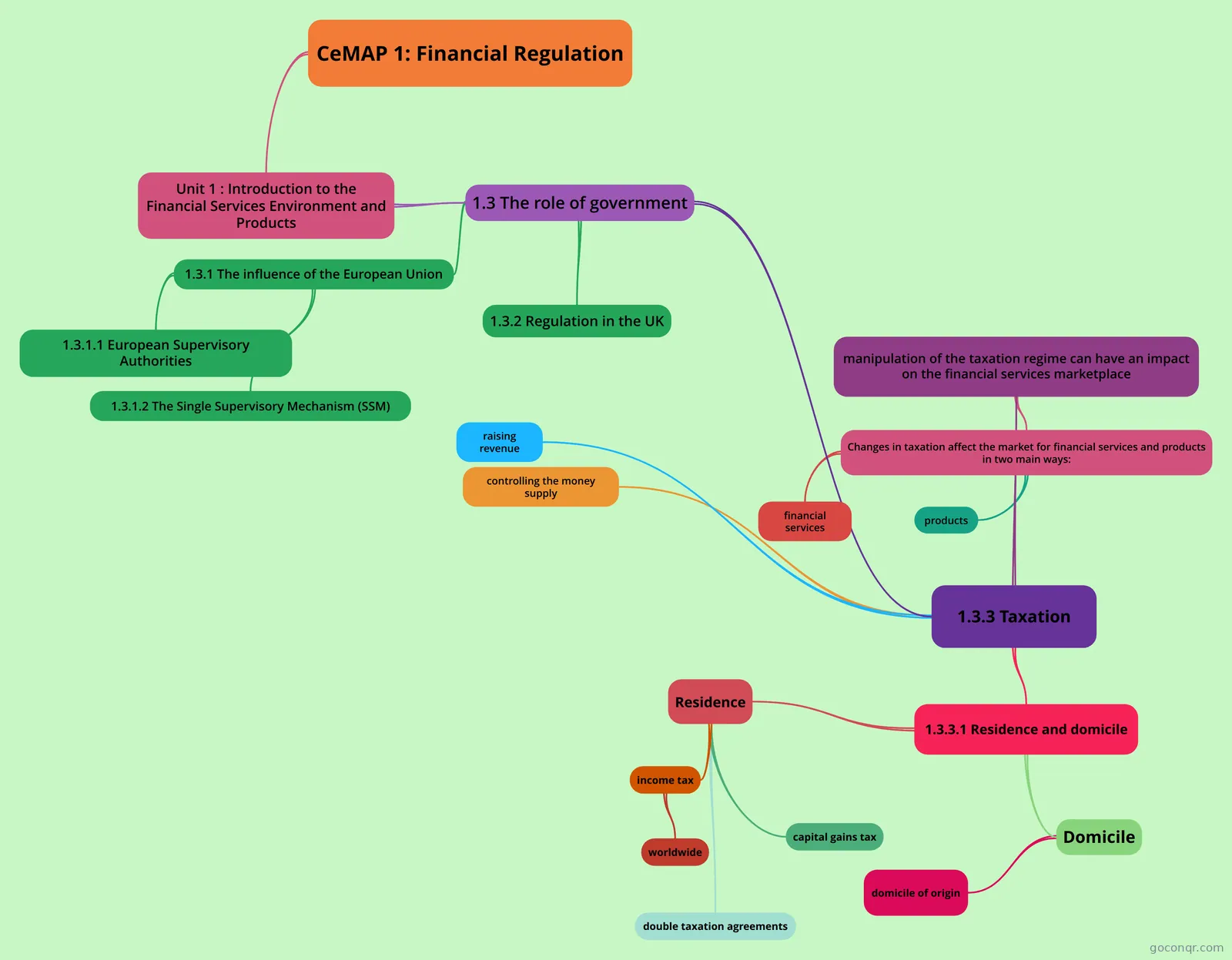 Mind map CeMAP 1: Financial Regulation Mortgage Advisor course part 1
-
87 questionsFINA 365 (Ch. 1 - 3) Depository financial institutions include all of the following EXCEPT
-
11 questionsDisintermediation Revision Notes Copyright George Higginson
-
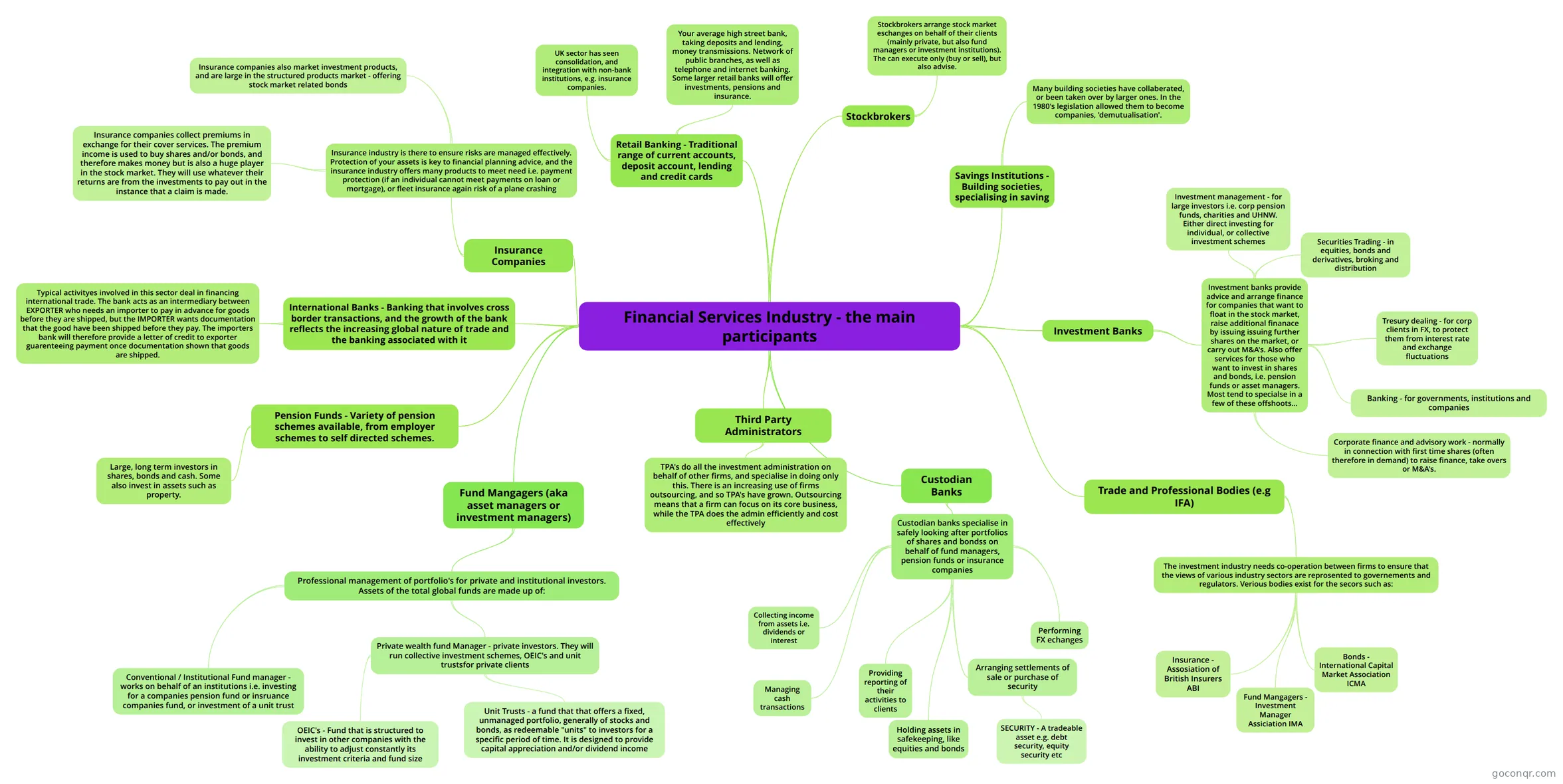 Mind map Financial Services Industry - the main participants
-
Mind map OVERVIEW OF FINANCIAL MARKET, INSTITUTIONS & MONEY (I)
-
34 questionsUnit 8: Part 3 Finalissimo ISAs are only available to British adults
Quizzes
-
87 questionsFINA 365 (Ch. 1 - 3) Depository financial institutions include all of the following EXCEPT
-
11 questionsDisintermediation Revision Notes Copyright George Higginson
-
34 questionsUnit 8: Part 3 Finalissimo ISAs are only available to British adults
-
8 questionsFinancial Instruments A treasury bill is an instrument for short-term borrowing by
-
2 questionsFinance 1001 1. Why is it important for financial-services firms to comply with the Occupational Safety and Health Admin...
Mind maps
-
CeMAP 1: Financial Regulation Mortgage Advisor course part 1
-
Financial Services Industry - the main participants
-
OVERVIEW OF FINANCIAL MARKET, INSTITUTIONS & MONEY (I)
-
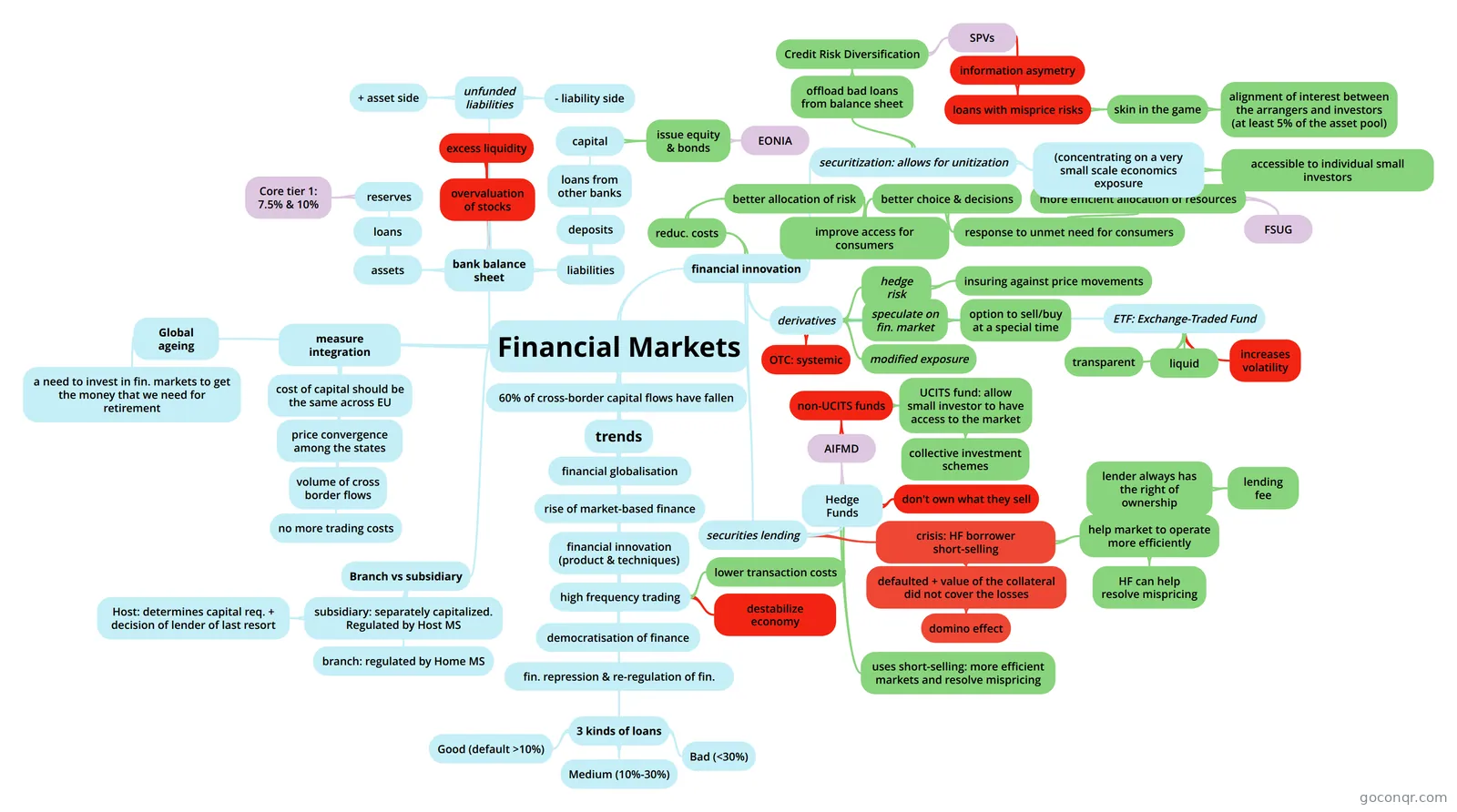 Financial Markets
-
Financial Markets & Institutions
-
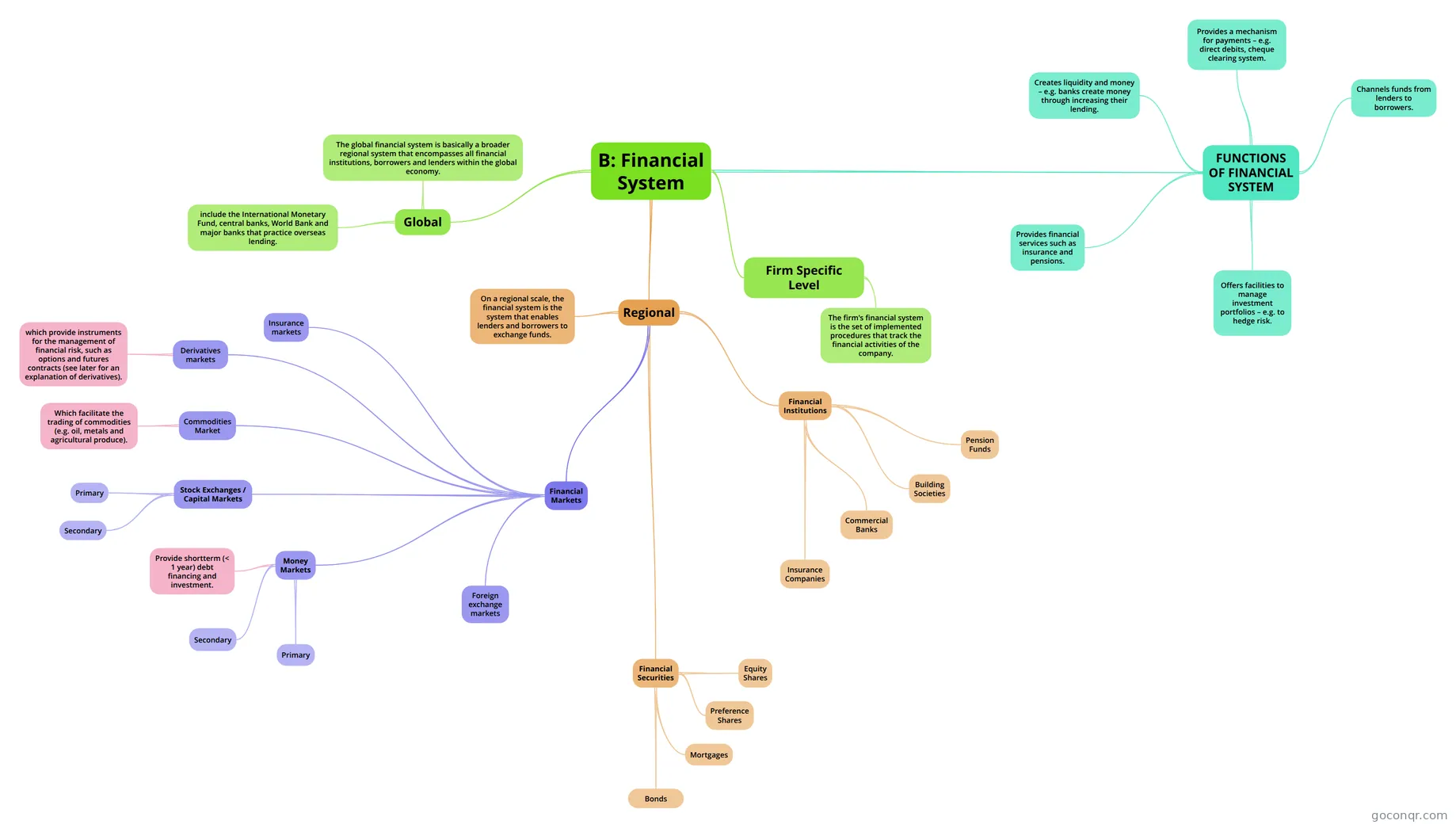 B: Financial System
-
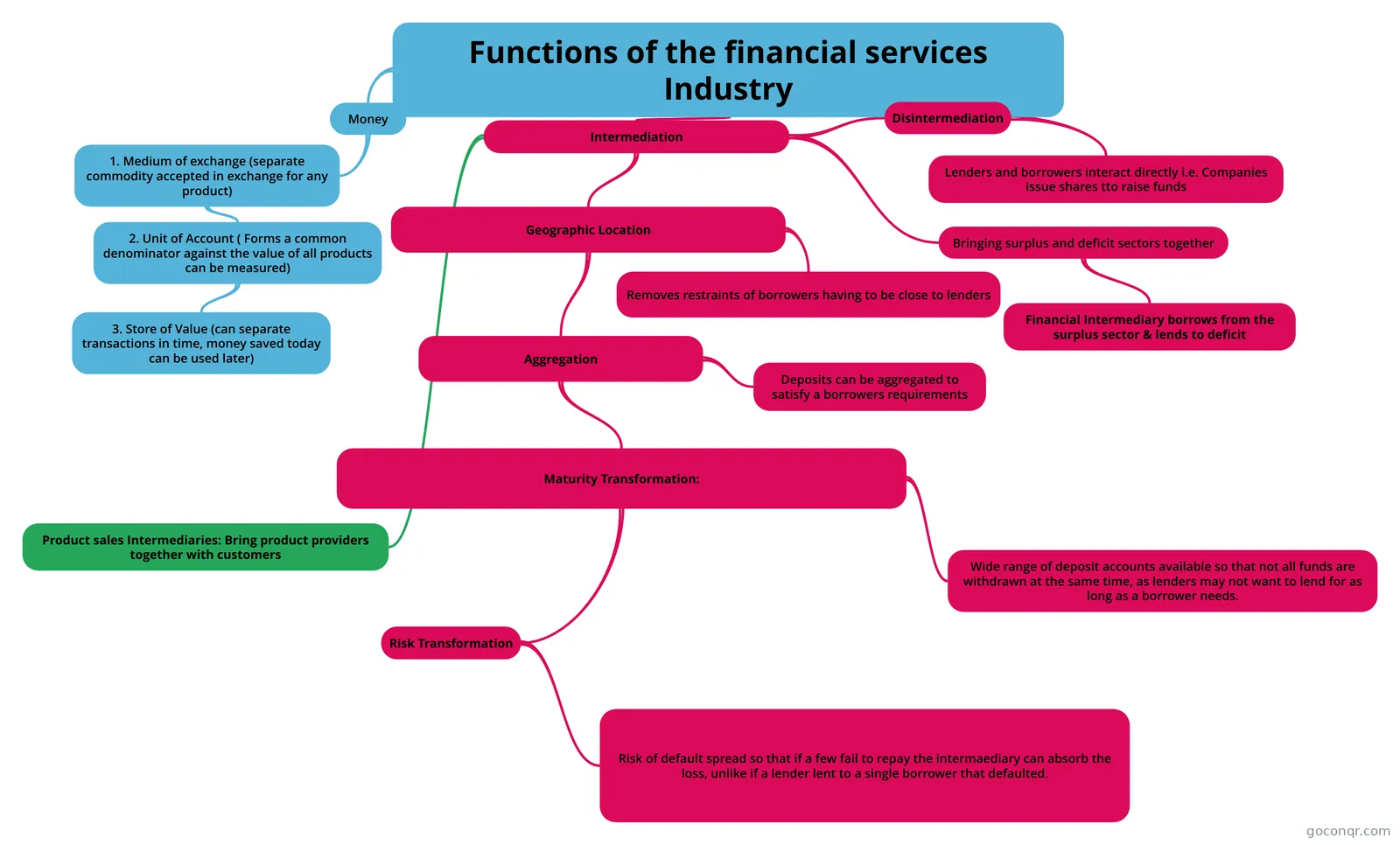 Functions of the financial services Industry
-
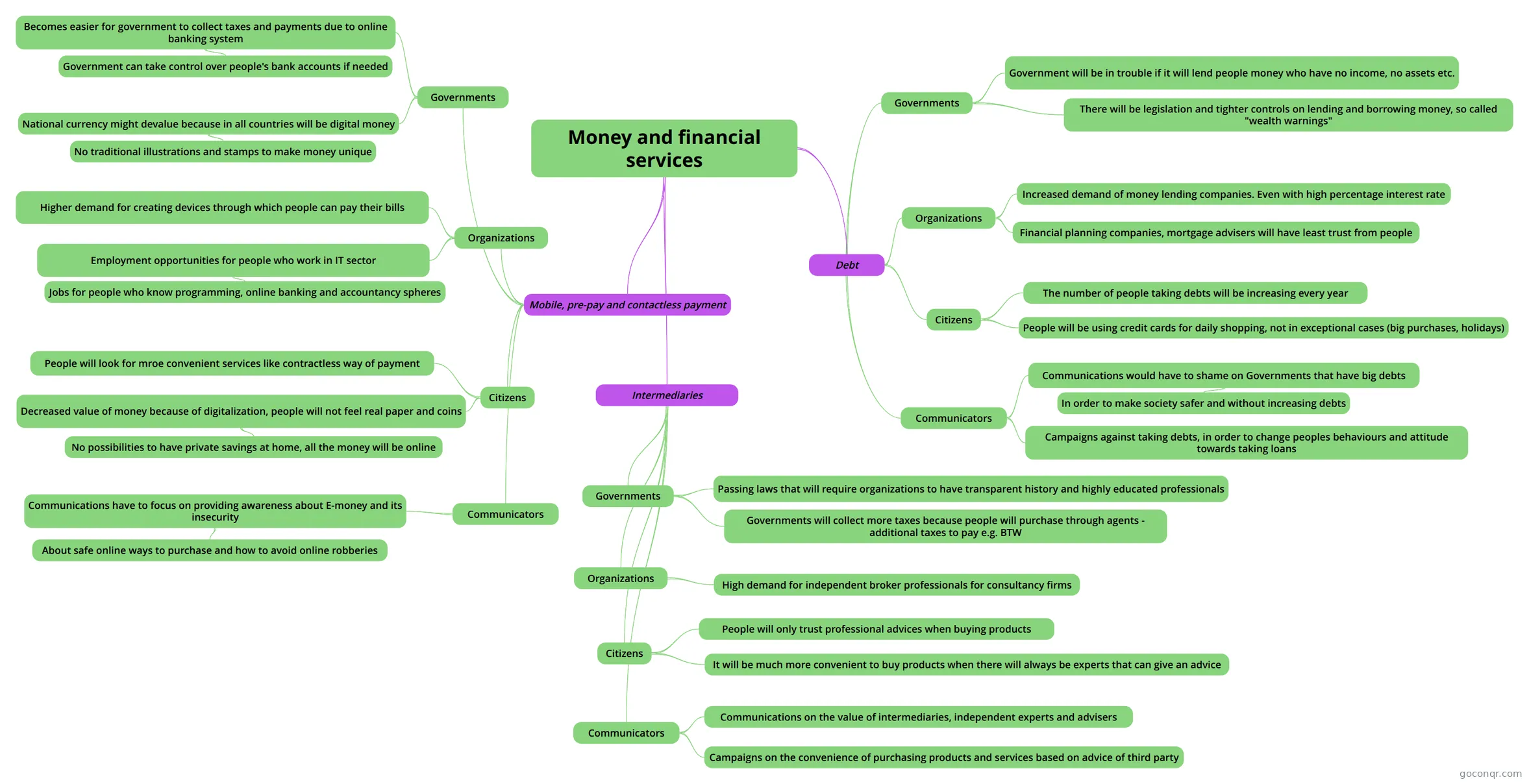 Money and financial services
Flashcards
See all 10 flashcards-
33 cardsSection 5 - The financial sector Functions of the financial sector inc postlude
-
19 cardsCemap1 Unit 1&2 Why do people use financial intermediaries?
-
22 cardsCeFS key terms Topic 4
-
8 cardsECO205 Chapter 2 An Overview of the Financial System
-
99 cardsCeFS Unit 2 Key Terms
-
10 cardsSustainability What involves sustainability?
-
7 cardsbank 1 course sort of banks and financial banks intitutions
-
5 cardsSecurities Firms
Notes
More Finance and banking topics
About The Financial System and Institutions
GoConqr OriginalWhat this unit covers
The page brings together material on how a financial system works and who takes part in it. The mind maps Overview of the Financial System and Financial Intermediation set out direct and indirect finance, and how intermediaries link the surplus sector with the deficit sector. COMPARING FINANCIAL SYSTEM sets bank-based and market-based systems side by side, with France, the USA, the UK, Germany and Japan as examples.
Where to start
Begin with the big picture. Open the mind map Why do Financial Intermediaries Exist? and then Financial Institutions. Next, move to the flashcard deck Banking, which covers bank revenues and expenses, maturity mismatch, credit risk and interest rate risk. The deck Section 5 - The financial sector adds the functions of a central bank.
Material for professional exams
Some resources mention CeMAP and CeFS. The deck Cemap1 Unit 1&2 asks why people use financial intermediaries and what maturity transformation means. The mind map CeMAP 1: Financial Regulation looks at the role of government. The deck CeFS key terms Topic 4 lists terms such as current account, direct debit and overdraft.
Using quizzes and maps together
- Read a mind map on a topic, such as financial markets or bonds.
- Take a quiz on it, for example Finance Chap 3 - Intermediaries or Financial Instruments.
- Note what you missed, then go back to the matching map or flashcards.
- Repeat with the deck on that topic until the terms feel familiar.
Where it fits
This unit sits in the strand Money, Banking and the Financial System, within Finance and banking. Most of what is listed is at university level, with some school and professional material too. Everything was made by GoConqr users, so styles and course names vary. Choose a map or deck that matches your course, open a quiz, and see what you already know.
Frequently asked questions
Which resource should I open first?
Start with the mind map Overview of the Financial System, which explains direct and indirect finance. Then try Why do Financial Intermediaries Exist? to see how intermediaries work. Once the ideas make sense, the flashcard deck Banking helps you learn the key terms, such as maturity mismatch and credit risk.
Are there resources for CeMAP or CeFS?
Yes. Some listed resources mention both exams. Cemap1 Unit 1&2 is a flashcard deck on intermediaries and the Bank of England, and CeMAP 1: Financial Regulation is a mind map. CeFS key terms Topic 4 is a deck of everyday banking terms. They were made by users, so check them against your own course.
What do the mind maps cover?
There are over 190 mind maps. They cover financial intermediation, financial markets, financial instruments, bonds, insurance companies and pension funds, non-bank institutions, and the UK financial services structure. Others compare financial systems between countries. Use them to get an overview before you test yourself.
Which levels is this page suitable for?
Most of the resources are aimed at university students and professional candidates, with a smaller share for school students. Teachers can use the maps, decks and quizzes as ready-made material for a class or revision session.
Do I need an account to use these resources?
No. Every resource listed is free to open, study and take, with no account needed. A free account also saves your quiz scores and lets you make your own quizzes, mind maps, flashcards and notes.
What if I can't find my topic?
Look at the neighbouring resources first. Topics like fintech, convertible bonds, unit trusts and international financial institutions have their own items. If your exact topic is missing, you can make your own mind map or flashcards, using the listed ones as a guide.