
Personal Finance and Financial Literacy
95 resources created by 72 users
This Personal Finance and Financial Literacy page on GoConqr gathers community-made quizzes, mind maps, flashcards and notes, from household budgets and personal banking to credit, taxes and the personal life cycle. It's built for school students revising a topic and teachers after ready-made material. There are over 2,200 resources here, including more than 70 quizzes, over 300 mind maps and more than 1,700 flashcards, mostly at secondary level. Pick a unit, try a quiz to find your gaps, then build your own revision sets.
Top Personal Finance and Financial Literacy resources
-
35 questionsSpecimen Paper A - Unit 2 - Practices of Managing Money (FIS) A sensible minimum amount for an emergency fund for most families would be three to six months':
-
28 cardsUnit 3 Savvy Consumer Bait and Switch AJA
-
20 cardsUnit 2 - Personal Banking ** Certificate Of Deposit ** Brandon Keeton
-
22 questionsUnit 8 - Taxes Part 1 You have just been charged taxes on your wages. This is...
-
21 cardsKey Terms Chapter 21 Stocks, Bonds, & Mutual Funds Key Terms for Chapter 21: Stocks, Bonds, & Mutual Funds
-
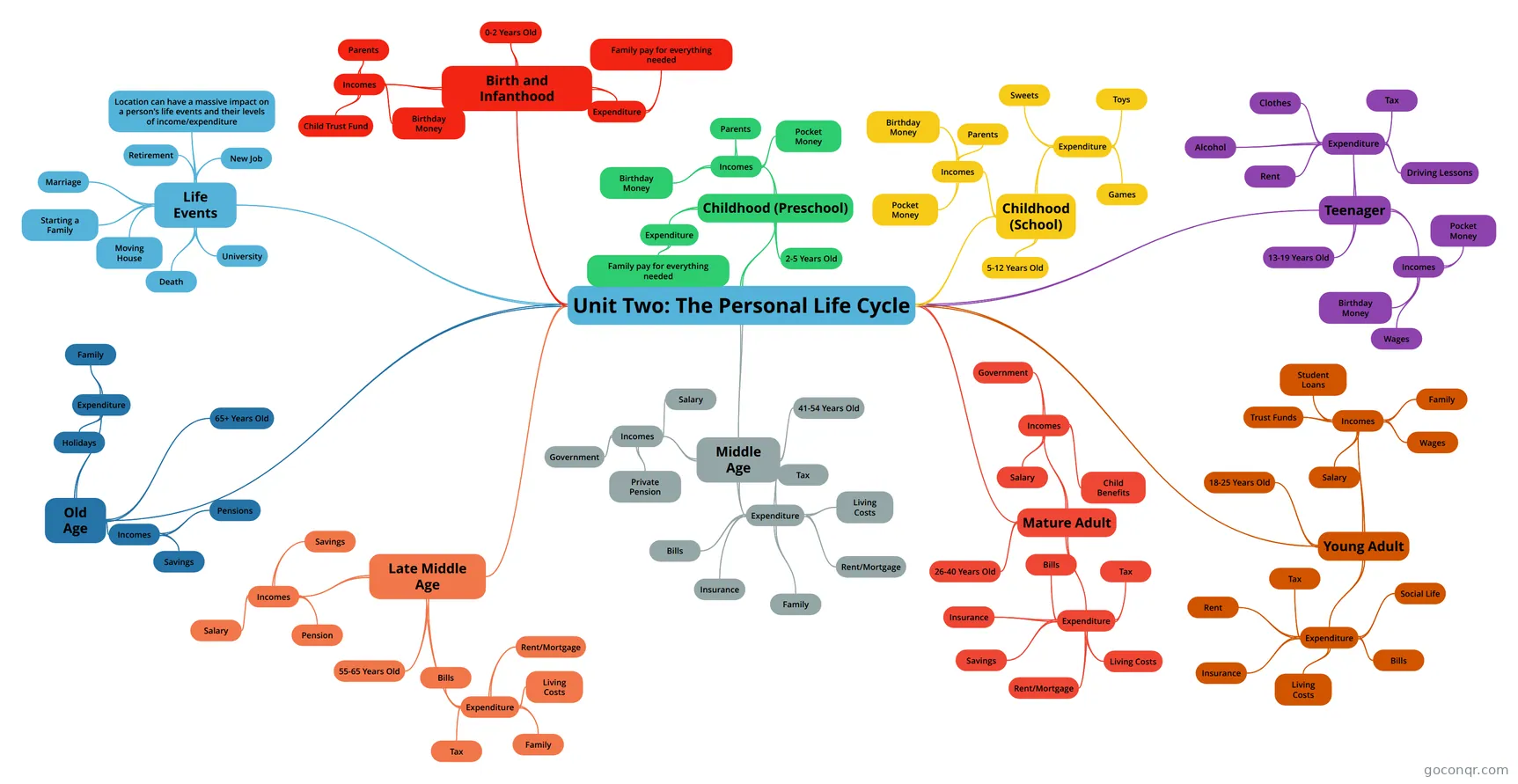 Mind map Unit Two: The Personal Life Cycle
-
35 questionsSpecimen Paper A - Unit 1 – Finance, the Individual and Society (FIS) The most popular country for British people wanting to emigrate to is:
-
8 questionsPersonal Finance Unit 1, Topic 8 What is 'Exchange Rate'?
Quizzes
See all 17 quizzes-
35 questionsSpecimen Paper A - Unit 2 - Practices of Managing Money (FIS) A sensible minimum amount for an emergency fund for most families would be three to six months':
-
22 questionsUnit 8 - Taxes Part 1 You have just been charged taxes on your wages. This is...
-
35 questionsSpecimen Paper A - Unit 1 – Finance, the Individual and Society (FIS) The most popular country for British people wanting to emigrate to is:
-
8 questionsPersonal Finance Unit 1, Topic 8 What is 'Exchange Rate'?
-
5 questionsTopic 1 Who created the new coin designs in the UK in 2008?
-
14 questionsObjective 2.03, 2.04 and 2.05 (PF) Tara is trying to figure out how much she is actually worth. Which formula should Tara use to calculate her...
-
12 questionsObjective 1.02 and 1.03 (PF) Which of the following is likely to have the least influence on an individual’s values?
-
6 questionsObjective 1.01 (PF) Mark is wondering how he can improve his intellectual well-being. Which would contribute the most to his in...
Mind maps
See all 24 mind maps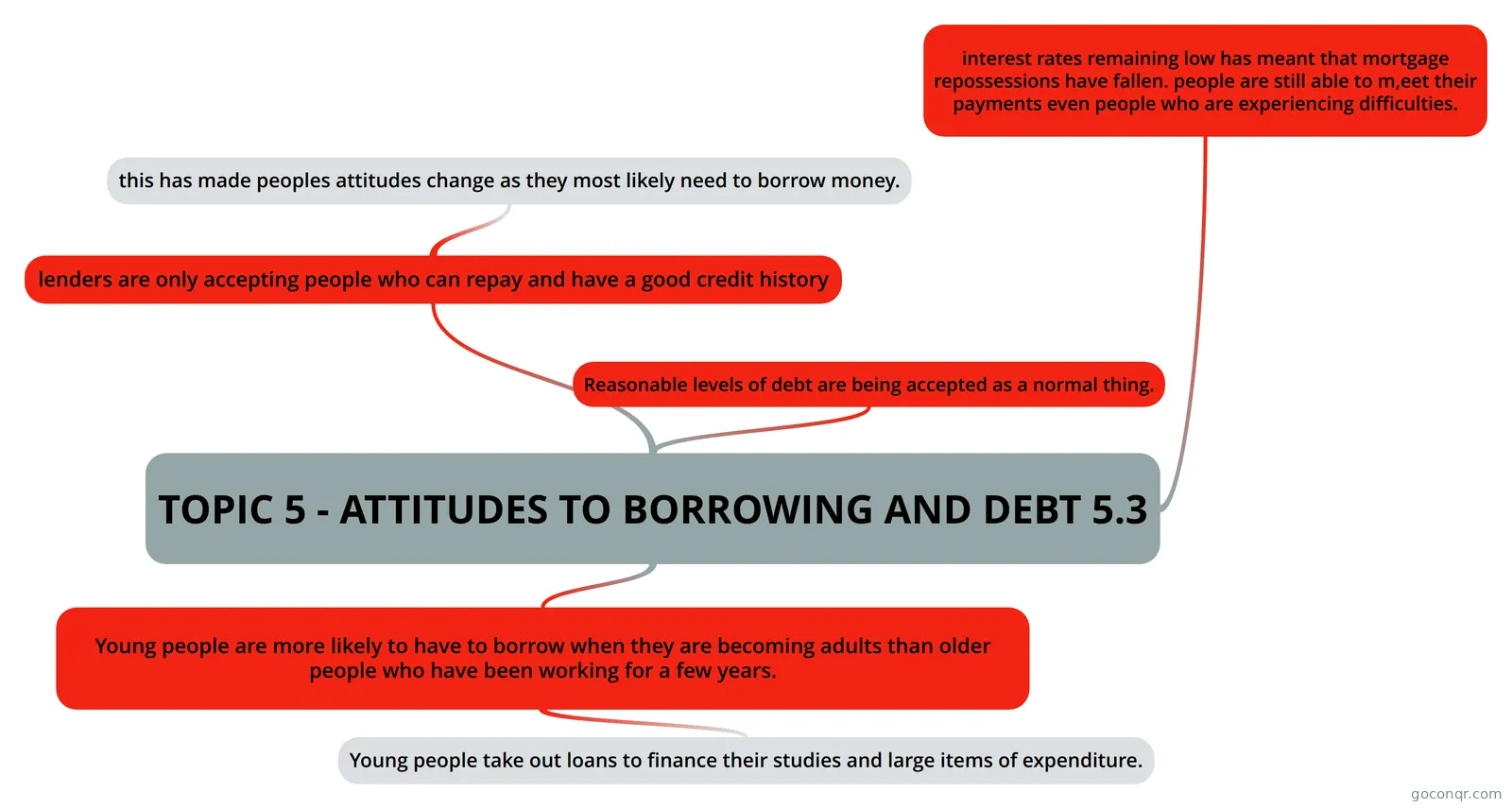
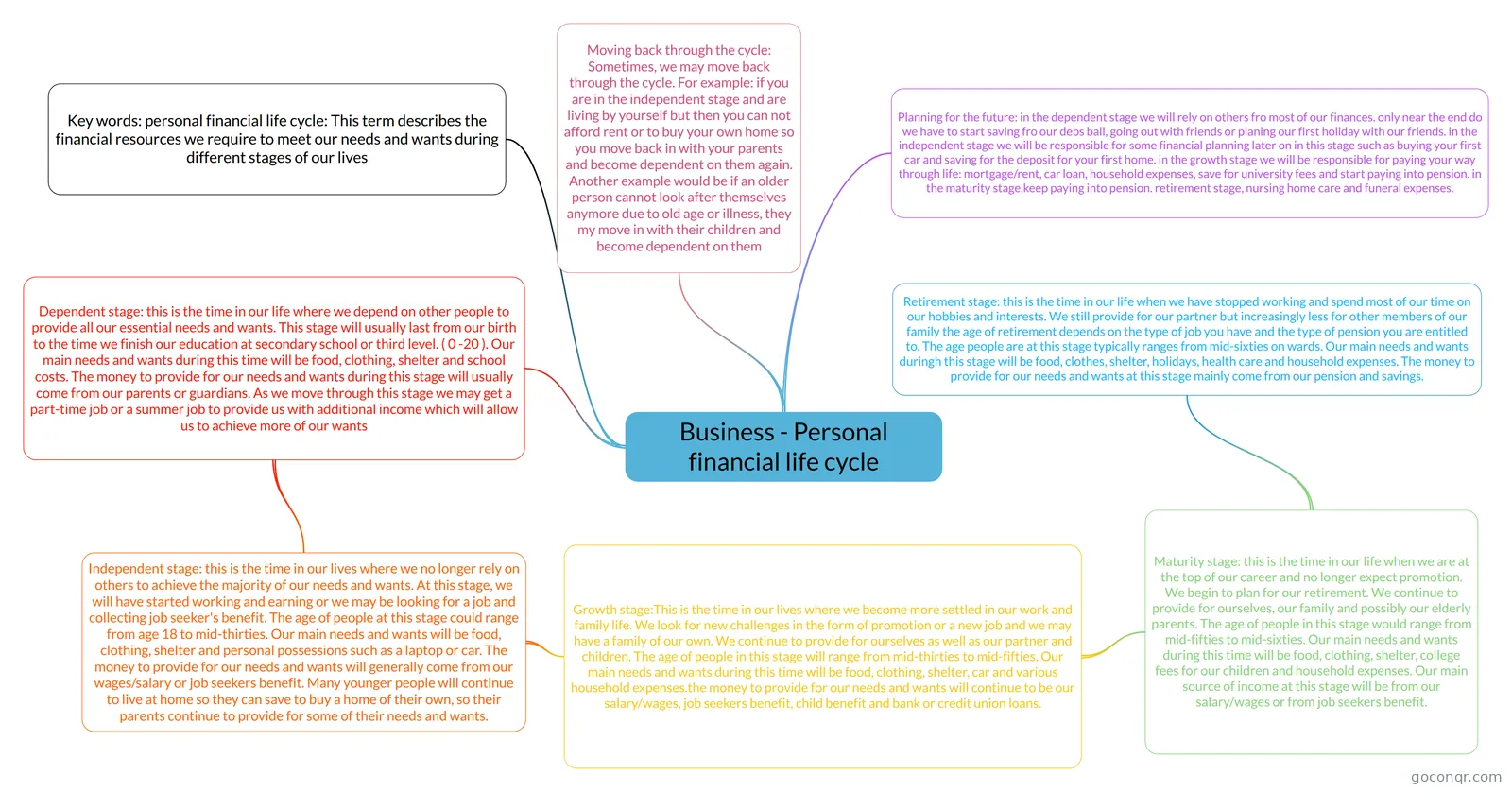
Flashcards
See all 48 flashcards-
28 cardsUnit 3 Savvy Consumer Bait and Switch AJA
-
20 cardsUnit 2 - Personal Banking ** Certificate Of Deposit ** Brandon Keeton
-
21 cardsKey Terms Chapter 21 Stocks, Bonds, & Mutual Funds Key Terms for Chapter 21: Stocks, Bonds, & Mutual Funds
-
11 cardsFlashcards on Financial Management flashcards on key terms in Financial Management
-
48 cardsFFL High School All themes, review for the final exam
-
29 cardsCeFS key terms Topic 6
-
24 cardsCeFS key terms Topic 10
-
32 cardsPersonal Finance Vocab What is a mutual fund?
Flowcharts
Notes
-
Green Group Internet Activity BANKRATE.COMMr. Jackson recently moved here from California, he is currently renting and is interested in purchasing a home. There is a beautiful house located on his block and he has fallen in love. He has come to us...
-
college succes reviw CREDITS TERMS credit burea: is a agency that checks credit infomation and keeps a complete file on people ho apply for and use credit . credit card: is a plastic card that gives acces to a line of credit ,...
-
Investing Investing What is Investing?Investing is putting your savings to work. Putting money into financial schemes, property or commercial venture with the expectation of earning a profit.Reasons for Investing: Earning an in...
-
Budgeting IncomeIncome is money that we receive.Regular income is received on a regular basis e.g every week or month.Additional income is received irregularly e.g overtime.ExpenditureFixed Expenditure is expenditure of a fixed...
Slides
More Finance and banking topics
About Personal Finance and Financial Literacy
GoConqr OriginalWhat this unit covers
The resources here follow the everyday money topics a personal finance course tends to cover. Mind maps such as household income, Household budgets and Types of Expenditure deal with where money comes from and where it goes. Others look at Methods of saving, Methods of borrowing and CONSUMER CREDIT.
Where to start
Begin with vocabulary. Many flashcard decks are built around course units, such as Unit 2 - Personal Banking, which covers terms like Certificate of Deposit and Direct Deposit, and Unit 3 Savvy Consumer, which has terms like Bait and Switch and Brand Loyalty. For investing words, try Key Terms Chapter 21 Stocks, Bonds, & Mutual Funds, with entries such as Bond Yield, Dividends and Net Asset Value.
If you are working towards CeFS, the CeFS key terms decks are split by topic, so you can take them one at a time.
Using quizzes and maps together
- Read a mind map first to see how a topic fits together.
- Take a quiz on the same topic, for example Unit 8 - Taxes Part 1, which asks who is exempt from paying taxes.
- Note the questions you missed and go back to the matching map or deck.
The specimen papers are useful for exam-style practice. Specimen Paper A - Unit 2 - Practices of Managing Money (FIS) includes a question on a sensible emergency fund of three to six months' essential expenditure.
Where it sits
This unit belongs to the Personal Finance strand of Finance and banking. It also links to the life cycle, with the Unit Two: The Personal Life Cycle mind map running from birth and infanthood to old age.
Choose one topic today, open a map or a deck, then try a quiz and see what you remember. Teachers can pick out a set to share with a class.
Frequently asked questions
Which resource should I open first?
Start with a mind map on your topic, such as household income or Household budgets, to see the big picture. Then take a quiz like Unit 8 - Taxes Part 1 to check what stuck. If you need vocabulary, the Unit 2 - Personal Banking flashcards are a good first deck.
Are the resources free to use?
Yes. Every resource listed on this page is free to open, study and take, with no account needed. They were made by GoConqr users, not by GoConqr itself, so it is worth checking that a set matches your own course before you rely on it.
What do the mind maps cover?
They cover household income and budgets, types of expenditure, saving, borrowing and consumer credit. There are also maps on the role of money, housing, and the personal life cycle. Several are numbered by topic, which makes it easy to follow them in order.
Which exams and levels do these suit?
Most resources are at secondary level, so they suit school students. Listed resources mention CeFS, GCSE, GCSE Business Studies and Junior Cycle Business Studies, as well as LIBF. Check the title and content against your own specification before you start revising from a set.
Can I make my own revision sets?
Yes. A free account lets you save your quiz scores and create your own quizzes, mind maps, flashcards and notes. That is handy if you want to combine terms from several decks, or if a teacher wants a set tailored to one class.
What if I cannot find what I need?
Try a nearby topic. Saving, borrowing, credit, taxes and insurance appear in several formats, so a note or mind map may fill a gap that a quiz does not. You can also build your own resource on the missing topic.